Features

Forever war: will Zelensky and Putin be brought to an exhausted peace?

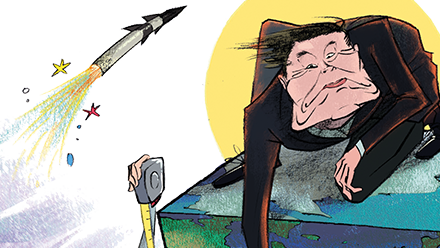
Volodymyr Zelensky stood proudly on the steps of 10 Downing Street this week, flanked by Sir Keir Starmer and the leaders of France and Germany, ready to discuss Europe’s latest package of support for Ukraine’s ongoing war effort. Though the conflict has, as of this week, lasted longer that the first world war, Zelensky is in some ways in the most heroic period of his presidency. Ukraine not only continues to stand firm against intense Russian assaults but also seems to be regaining a strategic advantage with its long-range drone strikes. Europe has stepped up to replace US funding and diplomacy and the fall of Hungary’s Viktor Orban has unlocked a €90 billion loan package. Yet it is also the most sordid period of Zelensky’s presidency.

From Holbein to Snapchat, how royals have mastered their own image

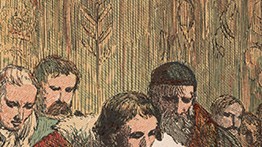
When Aston Villa won the Europa League recently, the focus was less on the football than on the Prince of Wales bawling ‘Sweet Caroline’. And while images of Wills bouncing in his box and cheering his favourite team wouldn’t seem to connect to a Tudor court painter, they probably wouldn’t exist without him. This year marks 500 years since Hans Holbein came to London and invented royal image-making at a stroke. The German-born artist’s vision of Henry VIII – legs apart, shoulders wide and with a codpiece the size of a prizewinning marrow – was an instant hit and remains the most famous image of our most famous king. More than that, it set a trend. Ever since, image-making has been as much a tool of the royal trade as throne, crown and sceptre.

Thanks to Trump, Tehran is winning

Among examples used to demonstrate the law of unintended consequences is the possibly apocryphal ‘cobra effect’. British colonial administrators in Delhi once offered a bounty for dead cobras to control the city’s snake population. Enterprising Indians immediately started breeding cobras. When the British cottoned on and cancelled the bounty, the breeders released the snakes, resulting in even more cobras. Donald Trump and Israeli Prime Minister Benjamin Netanyahu’s war with Iran may be having a similarly unwanted effect, only with a more dangerous cobra. Rather than removing a cornered regime, they have helped to strengthen it, elevating the influence of the powerful Islamic Revolutionary Guard Corps (IRGC) at the expense of both the Supreme Leader and his top mullahs.

Might England just do it in the World Cup?

The World Cup has never been just a football tournament. Even if we don’t realise it at the time, it tends to reveal something about us. In Germany 2006, it was all about Baden-Baden and the WAGs: the shallowest point of that celebrity-obsessed age. For more romance and happier memories, go back to Italia 90. Pavarotti bellowing ‘Nessun dorma’, Gazza blubbing, Maradona weaving his magic, Roger Milla hip-wiggling the corner flag. Italia 90 was the last gasp of the old order: modestly paid players with mullets and perms; heaving terraces; the USSR, Yugoslavia and Czechoslovakia playing their last tournaments.

‘Make Germany normal again’: an interview with Germany’s exiled spy chief

Hans-Georg Maassen is an unlikely dissident. In his trademark three-piece suits and small glasses, he looks more like a law professor. Indeed, that is what he studied, earning a doctorate on the legal status of asylum seekers in international law. This bourgeois exterior is the perfect cover for a man who was Germany’s top spy, charged with protecting the country from the far-right and Islamists. But now he is no longer under the quiet protection of the German state; he is its victim. He is under investigation from the agency he once led, the Federal Office for the Protection of the Constitution (BfV). Like George Smiley, Maassen is a remnant of an older and more powerful country, soldiering on in spite of the decline, trying to preserve what he can.

Norman Balon was much more than ‘London’s rudest landlord’

Norman Balon, who has died at the age of 99, missed the point when he defined himself as ‘London’s rudest landlord’. There, I think, he mingled self-publicity and self-defence. People didn’t go to the Coach and Horses, Soho, to be shouted at by him; they shouted at each other quite enough. Really he was the actor-manager of a twice-daily claustrophobic, drunken extemporisation in his pub which embodied bohemianism and self-destruction in the last two decades of the 20th century. Remember that 40 years ago the Coach was thick with cigarette smoke, that many customers were drunk daily, at lunchtime, and that no one was fearful of what they said. Things were not then as they are now. The Spectator contributed a lot to Norman’s decades of celebrity.

Why I take frog poison

You picture the rainforest, naturally. A clearing at first light, a shaman with thousand-yard eyes, the canopy screeching overhead. What you do not picture is a fourth-floor flat on an east London estate, a woman wafting sage around your head and the slow realisation that you have just handed over £150 to be – quite literally – poisoned. This is kambo. And at the lowest ebb of my late thirties, becalmed in a miasma of self-loathing and suffering from PTSD following a moped accident in Thailand, I had decided it was precisely what I needed. Made from the dried skin secretions of a giant monkey frog, it is also, as of last month, suspected of having killed its first Briton.

Can Reform see off the threat from Restore?

Nigel Farage has always prided himself on being able to see off any threat from his right flank. But now a new force has emerged in the form of his ex-colleague Rupert Lowe. When the two Reform MPs fell out 15 months ago, friends shared memes of Farage’s past fallen rivals ascending to heaven. ‘Come and join us, Rupert!’ they exhorted. Instead, Lowe fought back, setting up his own party, Restore Britain. In the Makerfield by-election on 18 June, one poll puts Restore on 7 per cent– enough to stop Reform and hand the seat to Labour’s Andy Burnham. Restore’s strategy is simple: use Farage’s playbook against him. Like Farage, Lowe has put his faith in social media, building up a noisy following that can then be turned into a campaigning force.

Decluttering is the ultimate act of love

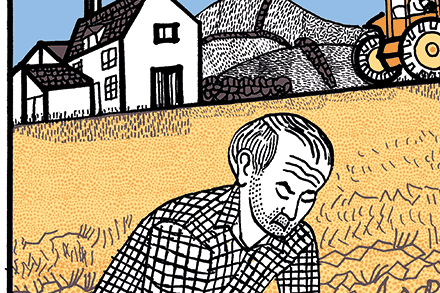
‘You are going to die before me and leave me to deal with this, and I will curse your soul for all eternity,’ I once said half-jokingly to my husband over a glass of wine. We were having one of our regular conversations about what he was going to do about his late uncle’s possessions, which had arrived at our house in lorry-loads about a year after we had married. ‘Why don’t you do half an hour of sorting every weekend? I will help you,’ I would suggest in reference to the multiple barns, basements and attics at our farm, which were now piled high with three generations’ worth of male hoarding. But with an increasing number of children in the house and no sense of urgency, progress was slow.

Russia won’t give up Armenia without a fight

Since January, Karapetyan, leader of the Strong Armenia party, has been unable to leave his hilltop mansion to campaign ahead of Armenia’s parliamentary elections on Sunday. Last year, he waded into a fight between the Armenian Apostolic Church and the country’s prime minister, Nikol Pashinyan, leader of the Civil Contract party. His call for Pashinyan to stop pursuing clergymen critical of Pashinyan’s efforts to establish peace with neighbouring Azerbaijan was interpreted as a call to overthrow the government. Karapetyan was arrested, interrogated and spent six months in pre-trial detention before his sentence was commuted to house arrest. He denies the charge. How do you fight an election if you’re under house arrest?

The real ‘Thucydides Trap’ Beijing and Washington must avoid

These are good times to be a scholar of the classical world. Last summer, Donald Trump issued an order that all federal architecture needed to be ‘beautiful’, noting that the Founding Fathers ‘wanted America’s public buildings to inspire the American people and encourage civic virtue’. George Washington and Thomas Jefferson had therefore ‘consciously modelled the most important buildings in Washington, D.C., on the classical architecture of ancient Athens and Rome’. It was time to go back to these principles, said Trump. From now on ‘classical architecture shall be the preferred and default architecture for Federal public buildings’ in the District of Columbia.

Cuba is next on Trump’s hit list

It’s hot in Havana. The summer’s electrical storms have arrived, lighting up the sky, while down on the ground we’ve been without power for 16 hours, meaning no sleep. The four-month-old US oil blockade is biting, but Cuba’s government still refuses to bend the knee to Washington, so surveillance aircraft are circling. An aircraft carrier, the USS Nimitz, has arrived in the neighbourhood. We expect an attack at any moment. Donald Trump has made it clear that after Venezuela and Iran, Cuba is next on his list for decapitation. His administration wants a change of government and the economy opened up. Cuba’s 95-year-old ex-president Raul Castro has been indicted for murder, opening the way for an abduction like the one in Caracas in January.

How Iran turned Trump’s propaganda against him

On 19 November 1941, King George and Queen Elizabeth paid a visit to Woburn Abbey, home of Britain’s covert propaganda war against the Nazis. Surrounded by a park full of rare monkeys, and among corridors bearing Old Masters, the King and Queen were presented with ‘Britain’s Secret Army’, a fleet of radio stations that broadcast subversive content deep into enemy territory. Sefton Delmer, who before the war had been a foreign correspondent for the Daily Express, presented his new German station. While the officious BBC German Service was lecturing Germans about the virtues of democracy and the evils of fascism, Delmer was trying something different.

The Pope’s AI intervention shames our politicians

I was born into a sternly Presbyterian culture. Politically, I’m more Orange than Donald Trump’s skin tone. But today I am on my knees giving thanks to the Pope. He has produced the most powerful political document of the year, taking on the greatest challenge of our times. His first encyclical, Magnifica Humanitas, deals with the changes which will be wrought to all our lives by artificial intelligence in the months and years ahead. AI will transform our economies and societies massively and irrevocably; it will change what it means to be human; it may even mark the end of humanity itself. If it takes the Pope to alert us to this revolution then perhaps the Reformation wasn’t such a good idea after all.

Is the West deserting Ukraine at precisely the wrong moment?

Moscow is coming under direct drone attack, the Russian economy is creaking, patriotic bloggers are ever more apocalyptic in their predictions of military disaster and evidence is piling up that Russia’s elites are becoming seriously disillusioned with the war and Vladimir Putin himself. Is this the moment for Britain to desert Ukraine by easing sanctions and refusing to commit more money to Kyiv’s military? Last week, the British government issued licences for the import of gasoline products from Russia refined in a third country. No. 10 also approved  licences for British companies to continue to service tankers carrying Russian liquefied natural gas (LNG).

Your mocktail is pathetic

Mocktails. Even the name sounds dodgy. Who is this apparently innocuous canned drink mocking, pray? Probably you, if you’ve shelled out close to four quid for a can of artfully tinted water. Like much today, mocktails in tins make me want to cross my arms and make a ‘humph’ noise. When I was a girl, you drank alcohol from the age of 14 or – if you were on primitive antibiotics for VD, this being the sexed-up 1970s – you drank plain tonic with a twist, hoping that no one would spot the absence of gin and mock you as a milquetoast. In the 1980s, my American father-in-law introduced me to a cocktail without alcohol, the Shirley Temple. The contempt in the name was clear: composed of ginger beer, lime juice and grenadine, with a cherry on top, this was a drink for small children.

Remembering my gloriously unfiltered father

Nothing can prepare you for the death of your father because, by definition, it’s a once-in-a-lifetime event. You have these ideas in your head about how it’s going to be: the children gathered at the bedside saying all the moving, important things that hitherto they’d held back; the fond paternal benison. But the reality, in my experience, is unlike the scenes in literature. My dad couldn’t wait to get rid of us. He was far too preoccupied with the intimate, difficult and very personal business of dying to indulge our let’s-pretend-everything’s-normal chit-chat. His last words to me – perhaps to anyone – were: ‘I’m feeling really buggered. Call me a nurse.