Features

Pick a painting

  Alexander McCall Smith   There is a painting in the Scottish National Gallery of Modern Art that I find quite haunting. It is called ‘A Portrait Group’, and is by the Scottish artist James Cowie. Cowie painted this picture in 1933 and then reworked it in 1940. He was an art teacher, and often used his pupils as models. In this painting, he didn’t get the models to sit together, but created the painting from separate studies he had made of various sitters. For me it is about friendship. Here are four young people on the cusp of their adult lives. What lies ahead of them? Will they find friendships as strong as those of these early years?

The meaning of time

The physicists Marc Warner and Emanuele Moscato met Professor Carlo Rovelli, author of the bestselling Seven Brief Lessons on Physics. Together they questioned him about his latest book, The Order of Time, which has been compared with the work of Stephen Hawking. Their conversation explains and explores the meaning of time, as it is and as we perceive it to be.   A theory of time  A practical reader of your book The Order of Time might wonder why we care about time, when it seems so obvious and so universal. Why would a physicist pay any attention to it? Nobody is obliged to be informed about the reality of the world, but it is a fact that time works differently to our common experience of it.

Look back in wonder

Ihad completely forgotten about the letter. It’s not that surprising, as I’d received it in February 1981. I was 18 and living with my parents in Northolt, west London. And for at least the past 25 years it had been in the garage in a box. Forgotten. That was until we decided something had to be done about the mess and had a good old sort out. My daughter found it and  asked: ‘Who’s this from, Dad?’ I knew who it was from the minute she handed it to me. It was from John Osborne, writer of Look Back in Anger. As a sixth- former I’d read the play and loved it. I saw myself in the character of Jimmy Porter, the original angry young man. I remember that I was terribly unhappy when I wrote to him — problems at school.

Paper chasers

Christmas books pages usually invite columnists to nominate their publishing event of the year. Well, here’s a corker: The Ties that Bind: Citizenship and Civic Engagement in the 21st Century, published by the House of Lords Citizenship and Civic Engagement committee. That obscure body has 12 members and takes itself seriously. The Ties that Bind was the fruit of hearings it held into ‘civic engagement through the prism of the civic journey each one of us who lives in Britain will undertake’. Its 168 luxuriant pages of red and black print, published ‘by the Authority of the House of Lords’, has nine chapters, bullet points, footnotes, boxes, appendices and a further wodge of evidence online.

What happens next?

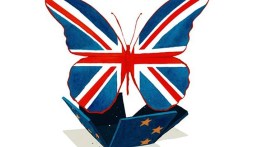
Parliament is in deadlock over Brexit. So what can we expect in the coming days and weeks after the vote? These are the scenarios currently being war-gamed. May’s deal passes A political shock: Theresa May squeaks over the line after convincing Brexiteers that it was her deal or no Brexit — and Remainers that it was her deal or a no-deal Brexit. The DUP then rains on May’s parade. Seething over the backstop, it declares that the confidence and supply agreement is over for good. This scenario could involve delaying the initial vote in the hope this gives MPs time to come around. It passes on a second vote Theresa May’s deal fails to pass first time round by 50 votes.

Brexit’s crunch point

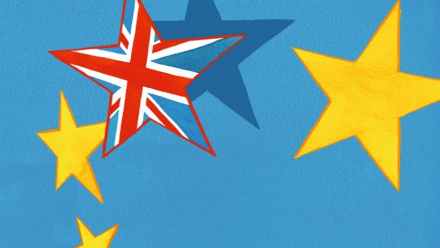
Unless Theresa May delays the vote, 11 December 2018 might be about to become one of the most important in recent British history; more important even than 23 June 2016. If MPs vote down Theresa May’s withdrawal agreement, as nearly all ministers expect them to, they will set Britain on course for either the softest possible Brexit or a second referendum. In the process, they may well split the Tory party. Theresa May’s strategy has been to play chicken with Parliament. Her team saw virtue in intransigence and calculated that at the last moment MPs would get out of her way. They thought that fear of no deal would bring former Remainers into the fold. Simultaneously, Leavers would reluctantly take this imperfect Brexit over the risk of no Brexit at all.

Check your brags

Over the past 20 years, the old British trait of self-deprecation has been killed off. And in its place, boasting is booming. Last week, I was told by an 80-year-old Scottish businessman what a successful shipping tycoon he is, how wonderful his poems are, and why young women find him so attractive. Over a three-hour dinner, he never drew breath, never asked a question and only ever talked about his brilliant self. Tycoon types have always shown off, but now the habit has migrated down the generations and from men — the traditional show-offs — to women. I can no longer face seeing one old friend in her thirties, because every time I see her she says: ‘You know what? I’m bloody good at my job.

Yellow fever

I met a friend for lunch in Paris last Sunday. He and his wife had come up from the countryside for a weekend’s shopping. As we sat down, their nerves were still frayed from the previous day. It was, they told me, the most terrifying few hours of their lives. Trapped between the rioters and the police, they retreated to their hotel, where staff instructed them to stay in their room. The mob soon arrived and against a background noise of helicopters, police sirens, breaking glass and detonations, they tried unsuccessfully to force their way inside the hotel while singing an ode to the Révolution. It has been said that the gilets jaunes movement is to Emmanuel Macron what the miners’ strike was to Margaret Thatcher in the mid-1980s. Not in the slightest.

Define ‘Islamophobia’

Sadiq Khan is an Islamophobe. Not just any old Islamophobe, and not just in the woollier parts of the web. According to a group part-funded by the EU called the Islamic Human Rights Commission (IHRC), the mayor of London, a practising Muslim, is one of the four ‘politicians and figures of note in the UK who [have] flagrantly displayed the most Islamophobia’ in 2018. Barack Obama is an Islamophobe. Cathy Newman, the Channel 4 News presenter, is an Islamophobe. So are Louise Casey, who led an inquiry into the Rotherham grooming scandal, Michael Wilshaw, the ex-head of Ofsted, and Maajid Nawaz, the Muslim counter-extremism activist.

Farewell to the Vishnu

The world knew him as ‘Bush 41’. I knew him by a different name -during the time I worked for him as his speechwriter when he was vice president. In those days, the staff called him ‘the Vishnu’. (Bear with me.) It was his own devising. He’d been to India on a state visit, where they’d presented him, amid much pomp and ceremony and clanging of brass, with a statue of the four-armed Vedic deity. Its plaque described the Vishnu’s numerous godly qualities, among them: omniscience, omnipotence, and his title ‘Preserver of the Universe’. Mr Bush immediately recognised a kindred godhead. He began referring to himself, in staff memos and aboard Air Force Two’s loudspeakers, as ‘the Vishnu’.

‘We’re all travelling together’

‘But what must it be like for the fish?’ We’re talking about cormorants, Neil MacGregor and I, and the spectacular way they dive for food, when he pauses to consider the situation from the perspective of a fish. ‘I mean just think, there you are swimming along with lots of chums and then suddenly there’s this great whoosh and the chum next to you has just disappeared! He’s vanished! And of course you can’t see the cause of it.’ MacGregor tilts his head. The sunlight in the offices of Penguin on the Strand seems to condense to a point in his eye. ‘Can you imagine it?’ he says. I can’t. It’s not easy to empathise with an anchovy, but MacGregor has a gift for inhabiting other points of view.

Telling tales | 29 November 2018

Germaine Greer described biographers as ‘vultures’. I prefer to think of myself as a version of Philip Marlowe or Sam Spade: vultures hunt by instinct but the two private investigators went after secrets with deliberate foolhardy masochism. It’s human nature to want to know more about the writers we admire — but what you discover isn’t always pleasant. Most recently, I completed a life of Ernest Hemingway. It was a joy to write mainly because after reading thousands of unpublished letters I felt relieved at having been spared an encounter with the living ‘Papa’. I knew of his reputation as a fibber but I was astonished to find that from his teens onwards he was pathologically incapable of distinguishing fantasy from truth.

Home truths | 29 November 2018

King’s Cross station at 10.30 p.m. is not a happy place. Most commuters have long returned to their centrally heated homes, leaving the concourse free for the homeless to roam randomly in search of a few coins from stragglers. I was there to catch a late train to Potters Bar last week and almost missed my Cambridge--bound service due to the numerous men and women who approached and asked for money. Some looked dishevelled, disturbed, miserable; others were polite and seemed resigned to rejection. I keep thinking about one man in particular. He said he was an ex-soldier — a ‘veteran of conflict’, as he put it — and that he had not eaten all day. It was chilly but he was wearing shorts and had a soiled blanket over his shoulders.

Bullets across the strait

On Europe’s eastern borderlands, trouble is brewing. Two headstrong leaders — Vladimir Putin and his Ukrainian counterpart Petro Poroshenko — both with authoritarian tendencies and both facing sagging popularity at home, have swapped trading insults for exchanging bullets across the Strait of Kerch. The frightening truth is that war would suit both presidents’ short-term interests. Poroshenko faces re-election in March, and with his ratings running at 15 per cent he stands little chance of victory without a nation-uniting conflict to boost his standing.

On the side of Goliath

According to which bit of hype you read, there’s a copy of one of Lee Child’s Jack Reacher thrillers sold somewhere in the world every four seconds, or every seven, or every nine. It’s a cute statistic and (as Child wryly notes), there’s an element of Barnum & Bailey hucksterism to it. But suffice to say he sells a lot of books —around about the 100 million mark to date, in 42 languages. Reacher fans tend to binge-read the lot, and nobody (including Child) can remember the titles. The novels tell the story of a former military policeman called Jack Reacher who hitchhikes around the United States with nothing but a folding toothbrush, a bank card and the clothes he stands up in. Reacher doesn’t look for trouble, but it seems to find him.

The Corbyn effect

What’s wrong with UK financial markets? The global economy is recovering, but British stocks and shares are not keeping pace. The pound has failed to recover from the slide it experienced in the wake of the EU referendum. This is frequently blamed on investors being spooked by Brexit, even more so by the possibility of a no deal. But has anyone actually asked the markets what is spooking them? Look closer and it becomes clear that while Brexit is a problem for some investors, most are much more worried about a far bigger risk, even if they rarely speak about it in public. It is the possibility of a Corbyn government. Since last year’s election, when the Labour leader came within a stone’s throw of No. 10, it has been impossible to write off the idea of a Corbyn victory.

May’s toxic legacy

At David Cameron’s final Prime Minister’s Questions, a Labour MP asked him how his plan to get the Tories to ‘stop banging on about Europe’ was going. The chamber erupted in laughter and Cameron gave a rather sheepish response. Afterwards, one of those who had prepared Cameron for PMQs wondered whether he should have given a more robust answer. Surely, he argued, the party would stop banging on about Europe now that the referendum had settled the question. How naive that seems in retrospect. It is now becoming clear that the referendum only succeeded in ushering in the most bitter battle in the Tories’ 40-year civil war over Europe.