Features

The right to party depends on following the party line

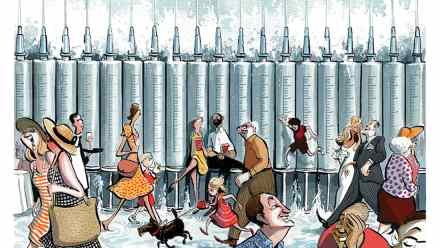
For most of this year, Boris Johnson’s proudest boast has been that Britain had the fastest vaccine rollout of almost any country in the world. The jabs were seen as our passport to freedom and the end of restrictions. Early indications among both old and young suggested similar excitement to get vaccinated. When Twickenham stadium opened a pop-up vaccine centre in May to offer 15,000 jabs to the over-18s it drew longer queues than the rugby. Ministers were delighted with the enthusiasm. If this was any sign of what was to come from youth uptake, they thought, the rest of the rollout would be plain sailing. But now there’s a problem. Plenty of jabs are still on offer, but fewer people want them. Vaccine rollout has slowed to a third of its former pace.

The crisis in Lebanon is a warning for the West

 Beirut On the highway into Beirut the other day, we drove past a petrol queue that was more than two miles long. On and on it went, the drivers sweating and swearing in brutal heat. Some had run out of fuel while they waited, having to push their cars when the queue inched forwards. There were people on laptops working from their cars during the day-long wait. Petrol queues are an everyday fact of life in Lebanon, but this was something else. Seeing that I was a foreigner, a frustrated driver gestured at the long line ahead of him and shouted: ‘Lebanon!’ He was summing up the fury and disgust felt by the Lebanese at what has happened to their country.

My 46 days on the road with John Woodcock

Although it was a miracle that he survived until a few weeks before his 95th birthday, the death of John Woodcock, the unrivalled cricket correspondent of the Times from 1954 to 1988, has left an enormous hole in many people’s lives, not least my own. I first met Wooders, as he was known to one and all, at a party at the old Hyde Park hotel in Knightsbridge in May 1962. Two days later as a result of our conversation, I found myself at the Bat and Ball ground in Gravesend on behalf of the Times, without ever before having written a word in anger, trying to put together 500 words about the first day of Kent’s game with Somerset. I had been working in the City and hating it.

Organic food isn’t better for us – or the environment

It is mystifying to me that organic food is still widely seen as healthier, more sustainable and, most absurdly, safer than non-organic food. Following the publication of part two of Henry Dimbleby’s National Food Strategy last week, the organic movement was quick to suggest that organic food and farming offer a way to achieve the strategy’s vision. ‘The recommendations of the National Food Strategy offer genuine hope that by embracing agroecological and organic farming, and adopting a healthier and more sustainable diet, we can address the climate, nature and health crises,’ said Helen Browning, chief executive of the Soil Association, Britain’s most vocal organic lobbying organisation.

The strange death of the English garden

Gardening is dead. It had been ailing for a long time and it sometimes looked as though it might pull through. But I knew it had finally kicked the bucket when the last of the three patches of grass I used to be able to see behind my house was replaced with a plastic lawn. Then there was a ghastly death rattle: plastic ivy was draped over an electric gate which serves to let the owner’s car into the paved area formerly known as the front garden. And that came after the arrival of dozens of plastic balls in the neighbourhood. They are supposed to be imitations of Buxus sempervirens trimmed into a ball shape but their relentless perfection and over-vibrant colour means they don’t deceive anyone. They must be wonderfully low-maintenance.

How Leni Riefenstahl shaped the modern Olympics

It’s an uncomfortable truth, but the Olympic Games in their modern form were pretty much invented by the Nazis. They came up with the idea of the torch relay, for example, the one that begins in Olympia and ends with the lighting of the cauldron at the opening ceremony. But it wasn’t the events at the 1936 Olympics that were new, so much as the way they were presented and filmed. Even today, the style of coverage owes much to Leni Riefenstahl, Hitler’s favourite filmmaker and arguably the most gifted and influential female director of the 20th century.

In the post-pandemic economy, the workers are the boss

The world of coronomics continues to surprise us. Last summer forecasters warned of a wave of redundancies after the biggest economic crash in 300 years. Peak unemployment — spurred on by lockdowns — was expected to near 12 per cent, ushering in a new era of chronic financial pain and instability for millions of workers. But the Treasury’s furlough scheme has kept the headline figure down. Unemployment has hovered around 5 per cent, less than half the original prediction. The problem this summer isn’t mass unemployment but worker absenteeism. Job vacancies are now more than a third above pre-pandemic levels. There is no shortage of available work, only a shortage of those willing to do it. At the last count, 2.

Rhodes to redemption: why Oxford needs a monument to Benjamin Jowett

Not since September 1642, when a mob of Parliamentary soldiers opened fire on the sculpture of the Virgin Mary carved into the side of the University Church, has Oxford been in such a fury over statues. The ‘Rhodes must fall’ campaign that started among radical students in 2016 has now spread to the senior common rooms, particularly the SCR of Worcester College which, astonishingly, has taken over from Balliol and Wadham as the headquarters of the workers’ revolution.

Will abusive chefs get their just deserts?

Professional kitchens have always seemed like pressure cookers: hot, sweaty, stressful. The caricature of a head chef is angry, sweary, unable to keep a lid on his temper. He shouts at underlings for the most minor of infractions. Recent events have shown how pervasive that stereotype still is. A number of ex-employees of the Kitchin Group, the set of restaurants owned by celebrity chef Tom Kitchin, have made allegations of a range of abuse, from being denied food, drink and breaks to deliberate burning and sexual harassment. Two senior members of staff have been suspended pending investigation. But the response from the food industry has been muted. Many have simply ignored the claims; others have made excuses.

Nanny Boris: the PM’s alarming flight from liberalism

‘Freedom day’ is coming, but how free will we actually be when it arrives? Boris Johnson is to abolish all coronavirus restrictions on 19 July. But in the small print, we find a strange caveat. The government will be ‘encouraging’ businesses to demand proof of vaccination from customers if there’s a ‘higher risk’ of the virus spreading on their premises. If they do not do so, then the government reserves the power to force them to. It’s a voluntary system — until it’s not. In a rather Orwellian turn, ‘freedom day’ means freedom for some, but not others. The unvaccinated might find their freedoms curtailed in ways that would have seemed astonishing not so long ago.

Cuba libre: why Cubans have reached breaking point

Havana There is an astonishing patience in the Cuban people, born of endless waiting. When a store has, say, chicken, people queue, often for days. But on Monday, outside the Zanja police station in central Havana, people weren’t waiting for food. They were waiting — patiently — for news of family members who had been arrested during unprecedented protests at the weekend. The demonstrations flared like a petrol fire. Cubans had settled down for lunch, many preparing to watch the Euro 2020 final, when news spread of a march in the town of San Antonio de los Baños on the outskirts of Havana.

Lil’ Kim: should the West prepare for chaos in North Korea?

On 24 June, North Korean state TV aired a short interview with an unnamed Pyongyang resident. The man, who appeared to be in his fifties, said that his fellow countrymen had all been left heartbroken and in tears when they saw the new, ‘emaciated’ look of Kim Jong-un. The country’s hereditary dictator, who hadn’t been seen in public for a month, recently re-emerged looking rather different. Even now it’s a bit of a stretch to call him ‘emaciated’, since his estimated body weight is nearly 19 stone. Still, it is a big drop from the 23 stone he weighed only a month earlier. However, it was not Kim’s weight loss but the interview itself which was truly surprising.

How China bought Cambridge

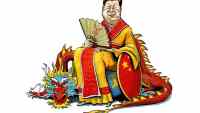
One of the first places Professor Stephen Toope visited as Vice-Chancellor of Cambridge University was the Chinese embassy in London. He posed for photographs with ambassador Liu Xiaoming and the two men discussed furthering the ‘golden era’ of China-UK relations. Shortly after that 2017 meeting, Toope told Xinhua, China’s state news agency: ‘There will be more opportunities to engage actively with China, a country with an extraordinarily growing influence which a university like Cambridge must pay attention to.’ Fast forward three and a half years and the shine has come off the ‘golden era’. But word has been slow to reach Cambridge, where Professor Toope continues his headlong pursuit of Chinese money.

Is this the last chance to save the Church of England?

I am a key limiting factor. That’s a new one for a clergyman of the Church of England. We’ve traded under parson, cleric, priest, minister, padre and even pie-and-liquor, but never before have I heard us described as ‘key limiting factors’. That this phrase was used during the announcement of a new C of E-endorsed scheme — to create 10,000 new lay-led churches in the next ten years — adds future injury to present insult. ‘Lay-led churches release the Church from key limiting factors,’ said Canon John McGinley introducing the initiative.

Marxism, football and Trump’s demise: Tom Holland and Francis Fukuyama in conversation

TOM HOLLAND: The title of your latest book, a book of interviews, is After the End of History. This alludes to what I guess must still rank as your most famous book and I wonder: is the fame of that book a burden? Do you feel like a famous rock star whose fans want him to play the greatest hits? FRANCIS FUKUYAMA: You know, it is really only when I meet up for interviews with journalists who want to talk about very general types of topics that the issue comes up. TH: Since it is the title, could we just nail down what you mean by ‘the end of history’? You think of it as kind of a process rather than an end.

Why everyone should try streaking

One evening a few summers ago, I convinced a friend to run with me up Portobello Road completely naked. As we reached the finish line, we could hear the sirens in our wake. We were accosted by two policemen. I was convinced they would throw us in the slammer. Instead, the officers gently told us that it would be wise to put our clothes back on. One of them, having seen my body gleaming in the pale moonlight, suggested that I should really consider getting a tan. I have long enjoyed streaking. People wonder why someone would choose to expose themselves in such a way. There are a few explanations. Public nudity is often an act of rebellion or defiance — see John and Yoko back in the 1960s.

What’s behind Cambridge’s anonymous reporting system?

Here is a challenge. Cambridge University provides an electronic Daily News Digest to anyone who wants to see how the university is being reported in the press. Will the News Digest include this article? On past form, that seems unlikely. When arguments arose in the past few weeks about Cambridge’s Report + Support website, which offered the opportunity to make anonymous denunciations against individuals deemed to have committed ‘micro-aggressions’ (such as being critical of a student’s work, even if it is bad, or praising the English of a non-native speaker), the Digest went quiet. A few days after the Telegraph published a letter against the website signed by 25 senior academics, a cryptic link was provided to an out-of-date edition of the newspaper.