Features

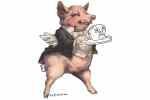
Top dog: how animals captured politics

‘Bishops are a part of English culture,’ T.S. Eliot wrote in 1948, ‘and horses and dogs are a part of English religion.’ It was a joke. Is it still? Today the fervour for animal lives is so strong that at times it can certainly feel religious. Politicians like to tell us that we are a ‘nation of animal lovers’ because it is such an uncontroversial truth. But if love for animals comes at the expense of humans, that’s not an example of moral worth. It’s a sign of moral collapse. The evacuation of Kabul offered a clear example. Pen Farthing, a former soldier who had settled in the city, was offered a flight home, but said he would not travel without the dogs and cats in his animal sanctuary. It seemed preposterous.

At last, a dose of up-close culture in London

In London for the first time in 18 months, I was as excited as a child on a birthday outing. We were desperate for a dose of up-close culture after months of Zoom, so we crammed in three exhibitions, two plays and a couple of first-class meals that I didn’t have to cook. Glorious. It helped that we had two of the few blue-sky days of this otherwise wretched summer and that I’d deliberately fallen off the wagon. My husband John says that I’m much nicer when I’m drinking. Apparently, when giving my kidneys a holiday, I’m altogether less joyful. We stayed at the Chelsea Arts Club in Old Church Street. It took ten years to persuade the club that cooking and writing are arts so it should accept me as a member — it prefers painters and sculptors.

Technology is robbing us of the power to forget

Two years ago, Lauren Goode, a senior writer at Wired magazine, cancelled her wedding and it was awkward. These things always are, but you get over it because the brain slowly learns how to skip over painful memories. Or it did, before social media. Goode has made a career out of wittily stripping away the pretensions of consumer tech, and when her wedding plans blew up consumer tech had its revenge. She ended her eight-year relationship in 2019 — but the internet didn’t get the message and kept confronting her with ‘a cyborg version of me, a digital ghost, that is still getting married’.

Prison island: Australia’s Covid fortress has become a jail

Australians have a reputation for rugged individualism, grit and competence. But when it comes to the pandemic, we have seen another side to my country: insecure, anxious and frozen by the fear of death from Covid. A recent global poll found that Australians more worried about the virus than any other western country. They have been scared witless by the hysteria of politicians, chief medical officers and the media. At first, Australia’s Covid strategy was hailed as a triumph: it had moved fast, minimised deaths and was on course to make enough AstraZeneca vaccine to double-jab the whole country. The route out seemed plausible: sit tight, vaccinate, then reopen.

Meeting Ahmad Massoud, the Sandhurst graduate taking on the Taliban

The Taliban do not yet control all of Afghanistan. As most of the country fell to the Islamic militant group with terrifying speed, Panjshir valley, about 100 miles north of Kabul, leading deep into the Hindu Kush mountains, remained unconquered. It is now the last province beyond the Taliban’s control. While many Afghan politicians have fled the country, Ahmad Massoud — leader of the National Resistance Front, the anti--Taliban resistance in Panjshir — has decided with (perhaps) a few thousand followers to try to turn the valley into a final redoubt. He has vowed that if war breaks out, his rebels will fight ‘to the very last breath’. His pledge may well be put to the test. This week hundreds of Taliban fighters entered the valley, preparing for a siege.

China’s #MeToo moment

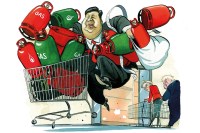
The employee alleged that she was forced to drink heavily at a banquet during a business trip and was then sexually assaulted by her boss. She informed her managers, but they failed to act and told her to keep quiet. So she staged a protest in the company canteen and shared details of her ordeal in an 11-page document posted on a company message board. The company was Alibaba, China’s e-commerce giant, and the document quickly spread, creating a firestorm online. Chief executive Daniel Zhang struggled to contain the damage, saying he was ‘shocked, angry and shameful’. He fired the accused manager, and the two others who had failed to act were forced to resign. ‘We must rebuild, we must change,’ he said.

Why men share trivia

It was halfway through lunch that something reminded my friend Marcus about Ray Charles and his plane. ‘Did you know he used to fly it himself?’ he asked the rest of us. ‘When it reached cruising altitude he’d insist on taking the controls. Obviously his passengers were terrified. They thought a blind man playing chess was one thing, but flying a plane? Someone asked him once why he did it. He said: “Because it’s mine.”’ This triggered a memory of my own. ‘It was the same with his car,’ I said. ‘One day he insisted on driving it. When his chauffeur tried to stop him, Charles said “Who paid for the car?” They were at an intersection. Charles ploughed straight into another car.

Dismantling the environmental theory for Covid’s origins

With a laboratory leak in Wuhan looking more and more likely as the source of the pandemic, the Chinese authorities are not the only ones dismayed. Western environmentalists had been hoping to turn the pandemic into a fable about humankind’s brutal rape of Gaia. Even if ‘wet’ wildlife markets and smuggled pangolins were exonerated in this case, they argued, and the outbreak came from some direct contact with bats, the moral lesson was ecological. Deforestation and climate change had left infected bats stressed and with nowhere to go but towns. Or it had driven desperate people into bat-infested caves in search of food or profit. Green grandees were in no doubt of this moral lesson. ‘Nature is sending us a message.

My post-viral battle and what it tells us about long Covid

One morning in 1966, I woke up seeing double. I splashed cold water over my face and blinked a few times but I still saw double. I had had glandular fever the previous month, for which there was no treatment except rest and paracetamol, and the GP said in time it would cure itself — and though tiredness dragged on I was soon back to normal. But now I began to ache all over again, my temperature was up, glands swollen, and when I lay down I went to sleep for six hours. The GP was confident that, double-vision apart, mononucleosis had returned in a mild form, but asked me if I was experiencing anything unusual. I said my head was full of boiled socks, I could not concentrate or focus, let alone work, and when I tried to read, the letters moved around and jumbled in front of me.

I’m a stranded Aussie – get me back in there!

In early March last year, I was self-isolating in my flat in London. Even though there were only a few hundred confirmed cases of Covid a day, I had met someone the week before who had tested positive. This was before anyone knew much about the virus, but people were worried by the news coming out of China and northern Italy. I made frantic calls to 111 to try to get a test. No luck. ‘Why don’t you just come home?’ my mum in Sydney asked. ‘I can’t,’ I replied. ‘I work here as a journalist, I have a flat, I have shelves full of books too heavy to ship back. I have a life. If it gets really bad, I’ll be on the first flight home — I promise.

170,000 people go missing every year in Britain – my father was one of them

A couple of Southern Hemisphere summers ago, in January 2019, I was at the Michael Fowler Centre in Wellington, New Zealand. It was an unseasonably chilly evening as I sat listening to an emotional solo piano performance by Nick Cave. He sang a rendition of Leonard Cohen’s ‘Avalanche’, a wonderfully gloomy piece of psychology set to music about the death of a father. This rather well-known Cohen track has particular significance for me. It always prompts thoughts of a slightly lesser-known L. Cohen, my own father, who had disappeared without trace 50 years earlier. Whatever became of him? Where did he end up? What might he have been doing at the same moment I was listening to Nick Cave that evening?

Right as rain: don’t blame climate change for the British weather

I spend a lot of my life worrying about the climate. When you have more than 100 miles of precious chalk streams under your care, rain becomes the currency of your life. Too much in summer. Too little in winter. Or sometimes the other way around. Other times a bit of both. For us river folk, as for farmers, the weather is never quite right. Who do I blame when it is not quite right? Well, mostly us. People. Society. Urbanisation. Too many people sucking too much water from too few rivers. Water companies pumping untreated sewage into already critically depleted rivers. Politicians who allow the building of houses on floodplains. Agriculture that gets a free pass to plough, plant and spray pretty much whatever it likes in sensitive river catchments. Do I blame climate change?

Why I swapped my country pile for a tiny London pad

‘Londoners searching for more space during Covid are buying up English country manors,’ said a Wall Street Journal headline in January — and that was certainly the trend reported by eager out-of-town estate agents. The middle classes,spurred by a temporary stamp-duty cut, were deserting the city in search of green pastures, home offices and the safety of low rural infection rates. Except for me, that is. I was going the other way, swapping my ‘country manor’ for a flat that’s as compact as it is uncompromisingly urban in the historic enclave of Seven Dials. Why?

China is finding out the price of ‘zero Covid’

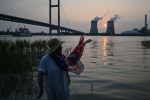
In January my 80-year-old grandmother had a large birthday party in her home city of Nanjing. For the British branch of her family, stuck in lockdown, it was surreal to see photos and videos of what can only be described as a banquet. A hundred people hugging, drinking, laughing — it was as if Covid didn’t exist. Normal life seemed to have returned to China, while in England even outdoor dining was a fantasy. Seven months on, the British are the ones ditching masks, hugging friends and heading to the beach while the Chinese face what state media has called the most serious domestic recurrence of the virus since the start of the pandemic. The fresh outbreak started in Nanjing, which the rest of China now views with the same mix of sympathy and disdain it once did Wuhan.

How corporations rebrand poverty

The other week, when I was shopping in Margate, I saw a number of posters from Boots urging support for its campaign against ‘hygiene poverty’. Barely aware of the term, I looked it up online and was soon presented by claims that much of Britain is gripped by a crisis of personal neglect because of penury. According to the charity In Kind Direct, more than a third of people have either had to cut down on their hygiene essentials or go without them completely due to lack of money. The same charity warns that 43 per cent of parents of primary schoolchildren have had to ‘forgo basic hygiene or cleaning products’ because of the cost. These figures sound terrifying but do they bear any relationship to the reality of modern life in our country?

Like it or not, the Taliban are now players on the world stage

Many years ago, before the Soviet withdrawal from Afghanistan in 1988, I was based in Peshawar in Pakistan, near Afghanistan. I was responsible for British diplomatic reporting on the war and engaging with Afghan leaders. I came to know the Taliban. They were, to put it mildly, not particularly nice guys: intensely parochial, geographically and politically sectarian, xenophobic, misogynistic, tribal and rigid. As fierce Pashtuns, the biggest minority in Afghanistan, they would kill other ethnicities wantonly: Shia Hazaras in particular, as apostates, were killed. They detested Ahmad Shah Massoud, the ‘lion of Panjshir’ and a hero of the resistance to the Soviets, because he was a Tajik.

Are we seeing a new kind of Taliban?

Are we seeing a new kind of Taliban? The men who seized Kabul with such ease last weekend are doing their best to sound more moderate. Women, they say, should be allowed to work and have an education. They have offered amnesty to officials of the now-deposed Afghan government, something the old Taliban never dreamed of doing. It’s far too early to tell just how much of this will last. But the more interesting question is not about the elders but the next generation of Taliban: the young commanders who were really the ones who conquered Kabul. The Taliban never really showed much interest in exporting their type of Islamic revolution around the world. They only cared about Afghanistan. But the new, younger members are much more militant and radical.

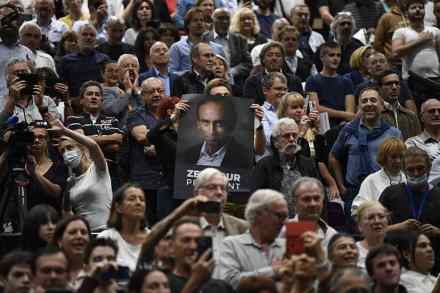
Liberté, égalité, vacciné: France’s Covid passport revolt is just beginning

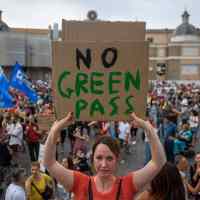
Montpellier Three weeks ago, 100,000 demonstrators turned out on the streets of France to protest President Emmanuel Macron’s hastily passed law to require vaccination passports to get on a train, eat at a restaurant or visit a shopping centre. A week later, the number had more than doubled. Last Saturday, it doubled again. One police union estimated that close to 500,000 had turned out, although as usual the Interior Ministry claimed a much lower number. Enormous demonstrations were staged not just in Paris but in more than 150 cities and towns across France, as well as in the overseas territories of Guadeloupe and Réunion. All this in the middle of the sacred summer holiday season. On the current trajectory, one million could be on the streets by September.