Features

How I missed the Matt Hancock story

I want to apologise: I have let myself down. I let others down too, and I’m sorry. Not because, Matt Hancock-style, I breached social distancing guidelines with a steamy office affair — but because I missed the scoop. I was sent a compromising picture of the then health secretary and his mistress almost a week before the Sun newspaper sensationally revealed their relationship — and I did not believe it was him. Having never knowingly undersold my ability to break big stories, this is embarrassing to say the least.

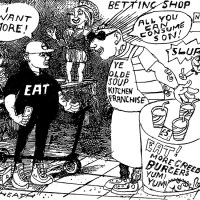
Cake expectations: afternoon tea has gone OTT

The other day, I came across a description of afternoon tea written by Alfred Douglas in 1920: ‘Two kinds of bread and butter, white and brown, cucumber and tomato sandwiches, cut razor thin, scones, rock buns and then all the cakes — plum, madeira, caraway seed — the meal had about it the lavishness of a Victorian dinner.’ There are a few things about this feast which I find striking. It includes two kinds of bread and butter. Sliced bread and butter never features on the modern table but a century ago, people used it to fill themselves up; it took the edge off your appetite. Note also the simplicity of the cucumber and tomato sandwiches. Both are excellent if they’re made from good stuff. The crucial thing was that they were cut thin.

Lockdown killed my mother – and thousands like her

I barely recognised my mother when I saw her in the hospital bed the night she died. It had been many months since we were last able to meet, when she was still a force of nature. Now there was almost nothing left of her. The death certificate records that Elizabeth Carol Chamberlain died of dementia and kidney disease aged 88. But it was lockdown that really killed her. For my parents, like so many people of their generation living out their later years in care homes, lockdown offered not protection but imprisonment. ‘It’s cruel,’ Mam would say, over and over again, in the painful and awkward phone calls that we shared over the last year or so. ‘Just cruel.’ ‘What have you been doing?’ ‘Nothing. Staring at the walls.

Don’t pity me for living in London

Londoners have had to learn, more than ever before, to master the art of fielding pity. We’ve been on the receiving end of lots of it this year from people living in the country who care about us, which makes it worse because we’re supposed to be grateful. I’m still smarting from a few recent zingers: ‘I do feel sorry for you, being cooped up in that small house.’ ‘It must be stifling there. We’ve got a nice breeze down here.’ ‘It’s all so lovely and green. Even London must be looking quite green.

Angela’s ashes: Merkel is leaving the EU in chaos

Perhaps the most absurd thing ever said about Angela Merkel is that she was the de facto leader of the western world. She has certainly been one of Europe’s most successful politicians, if you define success as political survival. But as she comes to the end of her 16 years in office, her luck is deserting her and the mess she has created is becoming horribly apparent. She leaves behind a split EU that is not just unled but might now be unleadable. Humiliating reminders of Merkel’s imploded authority come regularly. Take her latest idea to keep British tourists out of the EU this summer. Germany is imposing a mandatory 14-day quarantine for UK arrivals, whether they are vaccinated or not, and Merkel wanted other EU states to do the same.

Is anywhere in the world still safe for China’s Uighurs?

Amannisa Abdullah was in the last weeks of her pregnancy when her husband, Ahmad Talip, was arrested in Dubai. ‘He was on his way to buy a dress for our unborn girl,’ she says. Ahmad, who had lived and worked in Dubai for nearlyten years, never arrived at the shop and his family have not seen him since. He was held at a local police station for several days and then was deported to China in 2018, where he is reportedly in prison. ‘He just disappeared. We don’t know where he is or what he is accused of,’ says Amannisa, who fled to Istanbul. Ahmad is a Uighur Muslim. His story is not exceptional. Hundreds if not thousands of Uighurs, a severely persecuted minority from western China, have been detained in recent years in the Middle East and in Asian countries.

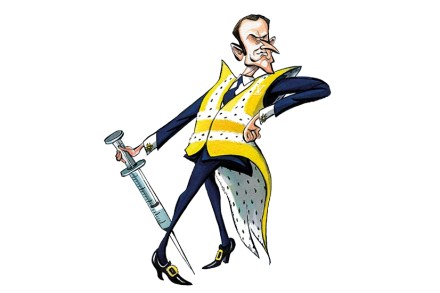
The Covid divide: there’s one rule for the elite, another for us

This week was meant to be the moment when we could celebrate the return of freedom. Instead, we’re left still navigating a maze of rules. Couples are working out what a ‘Covid-secure wedding’ means (spoiler: no dancing or hugging). Family reunions — once planned for Christmas, then delayed to Easter — are being pushed back into the autumn. Birthday parties have been axed again. No one wants to break the law, or risk asking others to do so. Ministers make a great show of obeying the rules. The weekend before Boris Johnson announced the delay to ‘freedom day’, he was bumping elbows with Joe Biden and Justin Trudeau at the G7 in Cornwall, posing for socially distanced photos. It was the picture of Covid security.

The house mafia: the scandal of new builds

‘We don’t just have snags with this house — “snags” suggests issues that are minor,’ says Kelsey Aldritt of her new-build Persimmon house just outside Pembroke, Wales. ‘This house has had major problems from the moment we moved in.’ Kelsey is six months pregnant and the doctor has told her not to get stressed, but with a house like this, stress is unavoidable. ‘It really angers me that Persimmon gave us such a defective house,’ says Kelsey’s partner, Theo. ‘Nothing is built right — and I don’t want Kelsey upset, worrying about chasing Persimmon to do repairs, not at a time like this.’ The case of Kelsey and Theo is far from exceptional.

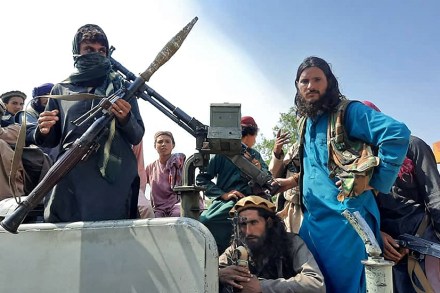
Triumph of the Taleban: the unfolding disaster in Afghanistan

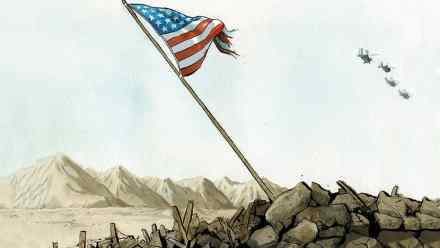
There’s an apocryphal story, told and retold by journalists many times over the course of America’s longest war. A Taleban prisoner is sitting, relaxed, across the table from an American interrogator: ‘You may have all the watches,’ the prisoner says, ‘but we have all the time.’ Now, the Taleban’s patience is finally paying off. President Joe Biden has promised that the last US soldier will be out of Afghanistan by the heavily freighted date of 11 September. In fact, all the troops may be back on American soil by the even more symbolic date of 4 July. Other Nato soldiers — including a small British training mission — are hastily lowering their flags and scuttling out. They leave in their wake an unfolding disaster.

Why is modern architecture so ugly?

In Chesham and Amersham last week, Tory voters punished the government, not only for building on greenfield sites, but for allowing the construction of too many ugly, badly designed buildings. The British public are fed up with modern architecture. Despite polls that prove this time and time again, architects simply ignore people’s views. Indeed, if the public has the temerity to criticise their latest works, there is uproar — as I have discovered to my cost. At a dinner in late 2019, I asked Norman Foster, the ‘starchitect’ of such things as London’s widely derided City Hall and the Berlin Reichstag, if he was pleased by the government’s new Building Better, Building Beautiful Commission.

What Sweden’s political crisis says about Europe’s collapsing centre

Uppsala Nooshi Dadgostar is Sweden’s new political star. A young, softly spoken politician with Iranian immigrant parents and an unfinished degree in law, she became the leader of the Vansterpartiet (‘Left party’) late last year — taking over from Jonas Sjöstedt, a bleeding-heart version of Jeremy Corbyn who struggled to shake off the party’s communist past. Most of her predecessors have tried but failed to become a central part of the national political conversation. But this week, she succeeded: by taking out the Swedish Prime Minister. If he tinkered with rent controls, she said, she’d topple him with a vote of no confidence. She was as good as her word.

Even a robot assistant can’t help you make sense of Japan

Tokyo The late A.A. Gill, in his notorious ‘Mad in Japan’ essay, concluded that the only way you could make sense of Tokyo was to think of it as a vast open-air lunatic asylum, with inmates instead of residents. Gill would have loved Arisa. I don’t think I’ve ever encountered anything more stereotypically Japanese than Arisa. She’s a multilingual robot concierge at Nishi-Shinjuku station in central Tokyo, one of the thousands of new automatons installed in the city ahead of the Olympics next month. She has a rather creepy Doctor Who look to her — she could be Davros’s girlfriend — and she’s there to assist tourists.

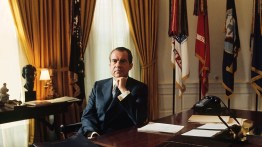
The new leviathan: the big state is back

‘In this present crisis, government is not the solution to our problem; government is the problem,’ proclaimed Ronald Reagan in his inaugural speech as American president. Forty years on, the leaders of the G7 have reversed this mantra. In Cornwall last week they declared that the government, and more specifically its $12 trillion of economic support, had not only been the answer during the pandemic but would continue to be the answer during the recovery. They committed ‘to support our economies for as long as is necessary, shifting the focus of our support from crisis response to promoting growth into the future’. It would have been quite possible for leaders to have drawn a very different conclusion: bloated government bureaucracies have failed.

The fraudulent business of recycling

I am a litter picker. No, not one of those high-minded volunteers who have proliferated of late with litter-picking sticks and black bags, but a professional: I am paid to empty the bins and collect the debris left by the public in a small park in Middle England. And I’m angry, not with the great British public who leave the stuff but with the real litter louts who are the root cause of the problem. As summer approaches and people who have been stuck indoors crowd into the beauty spots and on to the beaches, litter becomes a hot topic and it is important to be clear where the blame lies. When I became a bin man, I thought I was contributing to a cleaner, healthier planet.

The art of politics: what ministers hang on their walls

On the walls of the Chancellor’s office hangs a print of Eric Ravilious’s lithograph ‘Working Controls while Submerged’ (1941). Two engineers in blue overalls heave the levers of a submarine. A third slumps asleep on a bench. An image, perhaps, of the ship of state, several hundred feet underwater, but by no means sunk yet. We might picture Rishi Sunak in the Treasury control room, changing the gears, working the pumps, keeping the country bumping along even at the bottom of the economic ocean. Or perhaps Sunak looks at his four framed screen-prints by the artist Justine Smith — ‘Pound’, ‘Euro’, ‘Dollar’, ‘Yen’ — and thinks: if only it were so easy just to print money.

The Sun goes down

A couple of weeks ago Ally Ross, the longtime TV critic at the Sun, was summoned to the managing editor’s office. Such confrontations normally involve expenses. At the Daily Express in the 1950s one Middle East correspondent submitted his — one camel: £125. The narrow-eyed managing editor pointed out that if the camel was bought, it must have been sold, and they would be grateful if the claim was adjusted. Another form turned up 30 minutes later — burying a dead camel: £200. This conversation with Ally was not about money. It was much more serious. It was solemnly explained to him that he had used the word ‘woke’ in his column — and it had been decreed on high that ‘woke’ was synonymous with racial injustice.

The true cost of cheap money: an interview with Andy Haldane

Britain’s economy is growing at the fastest rate in 200 years. Job adverts are 29 per cent above their pre-pandemic levels and employers say they can’t reopen because they can’t find staff. Wages are rising at the fastest rate in ten years. But here’s the question: how much more support does the economy need from the Bank of England’s printing press? Should the BoE stick to its pledge to bring QE up to £895 billion or stop £50 billion short? Its members met to discuss this last month and decided (as they always do) to press ahead — by eight votes to one.