Exhibitions

Buried treasure | 26 November 2011

In recent years there has been a surge of interest in the treasures hidden in our public art collections, many of them rarely if ever on view. The Tate Gallery is perhaps the principal offender here, showing only a tiny percentage of its glorious and wide-ranging holdings of British art, but attention is now being directed towards our provincial galleries and museums. Since 2003 the Public Catalogue Foundation has been recording and publishing the oil paintings held in galleries and civic buildings, county by county, and issuing invaluable volumes of colour illustrations to show us what usually remains invisible. By its calculations, a shameful 80 per cent of these paintings are not on view.

Meeting point

I prepared for this exhibition in Düsseldorf by taking the short train journey down the Rhine to Cologne, which would hate to be thought of as a twin city. Its gigantic cathedral is as I first saw it some 40 years ago, still black with soot (but where would you start to clean it?), and the streets still remind me of Swansea, but without the sense of space. The same low-rise blocks of anonymous postwar buildings are on every side, with the same seemingly temporary shops and takeaways, only with Würstel as well as burgers. Where Swansea has the fine Glynn Vivian Art Gallery, Cologne has the Wallraf-Richartz, now in a handsome new building adorned in the old-fashioned manner with the carved names of artists whose works are held within.

Trading places

Venice and Alexandria were, as far as the Venetians were concerned, twin cities. According to legend, St Mark had visited Venice before going to Alexandria, where he preached, performed miracles and was martyred. When two Venetian merchants stole the saint’s remains from Alexandria in 828, they were merely fulfilling the prophecy of the Angel that had appeared to Mark in the lagoon and, addressing him with the ringing words ‘Pax tibi Marce, Evangelista meus’, had predicted that a great city would arise upon these waters, which was to be his last resting place. The origins of the mythical links between Venice and Alexandria were as much mercantile as mystical.

Adventurous rogue

Historically, British artists have not been good at money management. George Morland (1762–1804) was chronically insolvent; Benjamin Haydon (1786–1846) served four jail terms for debt and eventually killed himself after being reduced to pawning his spectacles; even Sir Thomas Lawrence (1769–1830) died leaving debts of £30,000. But the painter who turned serial defaulting into an art was George Chinnery (1774–1852). Absconding was the making of him as an artist suggests a new exhibition, The Flamboyant Mr Chinnery, at Asia House. A Londoner and fellow student of Turner at the Academy Schools, Chinnery launched his portrait-painting career in Dublin four years before the Act of Union emptied the Irish Parliament of MPs, and his studio of sitters.

Into battle

The charge of the Scots Greys at Waterloo: you’ll know it from the Risk board game. Hundreds of soldiers on lustrous white horses, manes billowing as they gallop straight at the viewer. A magnificent sight, but the stuff of nonsense: the horses probably weren’t all greys and they definitely weren’t turned out as if for Ascot. This is one fact to emerge from War Horse: Fact or Fiction?, the exhibition now showing at the National Army Museum in Chelsea (until August). Other myths are dispelled. Contrary to popular opinion, the history of British cavalry is not one of heroic failure. Even the bloodiest charges succeeded in their military aims. To adapt Tennyson, the Light Brigade did and died in the valley of death.

Back to the future | 19 November 2011

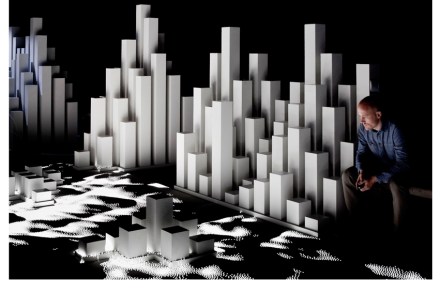
High Arctic, the inaugural exhibition in the newly opened Sammy Ofer wing at the National Maritime Museum, Greenwich (until 13 January), brings a thoroughly 21st-century, technology-driven museum experience to this historic site. It’s an exhibition, Jim, but not as we know it. In 2010 Matt Clark, creative director of the art and design practice UVA, joined an expedition of artists and scientists to the Arctic archipelago of Svalbard. High Arctic, which he describes as ‘a monument to an Arctic past set 100 years into the future’, is a response to this trip; an attempt to address, in a non-preachy way, the issue of man’s impact on the environment.

Intelligent design | 12 November 2011

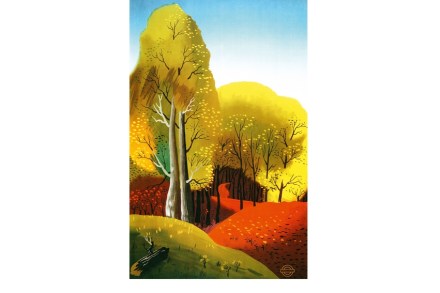
In 1935, Paul Nash observed that Edward McKnight Kauffer (1890–1954) was responsible for the change in attitude towards commercial art in this country. An American, Kauffer arrived in England in 1914 during a period of European study. He liked it and decided to stay, enabled to do so by his remarkable ability to design posters. In 1915 Frank Pick commissioned him to produce the first of what became a remarkable stream of some 140 posters for London Transport. Hugely impressed by Vorticism, Kauffer became a friend and ally of Wyndham Lewis and introduced the Modernist sensibility into commercial art.

Bird watching | 12 November 2011

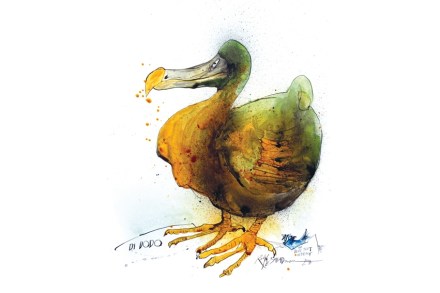
The setting is appropriate: Rochelle School is on Arnold Circus in Shoreditch, at the end of Club Row, once famous for its pet market, where, until it was closed down in 1983, you could buy caged birds from around the world. Now the school is hosting an exhibition entitled Ghosts of Gone Birds (till 23 November), a wide-ranging and stylistically eclectic show with a single emotive theme: extinct birds. More than 100 artists, musicians and writers, including Peter Blake, Margaret Atwood and Ralph Steadman, have made work in aid of BirdLife International’s Preventing Extinction scheme. Steadman did one picture and then found himself gripped by the theme, and went on to produce 100 witty, poignant and highly original bird portraits (‘Dodo’, above).

Sensation seeker

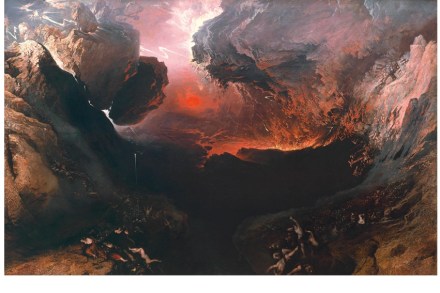
For far too long, John Martin (1789–1854) has been dismissed as ‘Mad’ Martin, the prophet of doom. In the eyes of many, this unacademic painter was a grotesque curiosity, producing colossal pictures of apocalyptic destruction, crude dramas of catastrophe and tumult, much to the delight of the populace. The mere fact that he was so popular an image-maker made him irredeemably vulgar (rather like Lowry today), and the cognoscenti looked for faults rather than appreciating his strengths. In fact, Martin was a reforming inventor as well as a painter, much concerned with draining the marshes around London and ensuring a pure water supply for the capital, simply because he wanted, as he says in his ‘autobiography’, to improve the condition of the people.

Landscapes of grief

The caption on the photograph (above) makes a difference: ‘A young boy grieves at the funeral of his father who died of Aids at Ndola, Zambia, 2000.’ There were two million Aids orphans in Zambia alone. ‘I care about not letting this tragedy go unseen,’ Don McCullin said. Shaped by War: Photographs by Don McCullin, at the Imperial War Museum (until 15 April 2012), shows 250 items from the long career of a man best known for his photojournalism, from Vietnam onwards. The boy at Ndola looks straight at the lens, if he is looking outwards and not into the empty future, or back into the life with his father that has gone. Light from one side catches tears that have coalesced in the valley by his left nostril.

Ford Madox Brown: Pre-Raphaelite Pioneer

Photographs of roadworks feature regularly in the Hampstead Village Voice but, even with the postmodern fashion for grungy subjects, no contemporary residents have made paintings of them. Yet that, astonishingly, was what Ford Madox Brown did in the 1850s, lugging his two-metre canvas on to The Mount, off Heath Street, to do it. Brown’s unlikely masterwork ‘Work’ was the first ‘Pre-Raphaelite’ painting bought by Manchester Art Gallery, where it is now the centrepiece of a major exhibition dedicated to the artist. I put ‘Pre-Raphaelite’ in inverted commas because Brown — a prickly individual with a deep distrust of all ‘Bodies, Institutions, Art unions & academies’ — was never strictly a member of the Brotherhood.

Fra Angelico and the Masters of Light

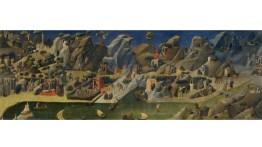
Fra Angelico (1395–1455), Il Beato (‘the Blessed One’) to his contemporaries as well as to John Paul II, who beatified him in 1982, is probably best known today for his frescoes in Florence’s San Marco, the Dominican convent where he lived as a monk. Perhaps fearing that some art-lovers will question the wisdom of mounting a Fra Angelico exhibition without the San Marco frescoes, the show’s curators have included a video of them. They need not have worried. Even without the frescoes, the 25 Fra Angelicos at the Musée Jacquemart-André, together with a well-chosen assortment of pictures by the friar’s colleagues working in the same religious vein, are more than enough to make this a rich exhibition.

Claude Lorrain: The Enchanted Landscape

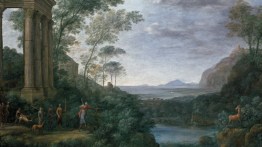
Claude Gellée (c.1600–1682), known as Claude Lorrain, started life as a pastry cook and despite turning his attentions from pies and patisserie to painting he never lost his love for confection. Although he is revered as the father of the landscape tradition and was hailed by Constable as ‘the most perfect landscape painter the world ever saw’ there is precious little that is natural in his paintings. Claude instead mixed his pictorial ingredients — a tree, a ruin, a river — just as he had his butter, flour and eggs and whisked up poetry-frosted views that delighted the delicate palates of his noble patrons.

The only way is up | 22 October 2011

Homes may continue to lose value, the euro becomes shakier by the day, the unemployed stay unemployed and even the Chinese economy shows signs of overheating, but the international art market seems to know only one direction: up. For the first half of 2011, Christie’s sold $3.2 billion in fine and decorative art (an improvement of 25 per cent on 2010), while its rival Sotheby’s auctioned items worth $3.4 billion (up 38 per cent on the previous year). The bubble appears to be far from bursting, and the autumn sales promise to provide plenty of entertainment for those who like to see big prices on both sides of the Atlantic.

Melancholic visions

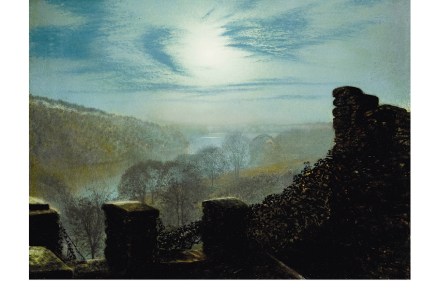
At the less than enticing Guildhall Art Gallery, a purpose-built museum that manages immediately to depress the spirits by its utterly unsympathetic design, is a major exhibition of John Atkinson Grimshaw (1836–93), the celebrated Victorian painter of moonlight. The show is the brainchild of Jane Sellars, director of the Mercer Art Gallery, Harrogate, where it was on view before coming to London. I wish I’d had the time and energy to see it in Harrogate, where I’m sure it looked entirely at home in the very particular spaces of the Mercer. Exhibiting in the Guildhall is an uphill battle with the architecture. Even Grimshaw, chock-full of atmosphere and drama, has a hard time of it here.

Blots on the cityscape

As the 414 bus swings left from the Edgware Road at Marble Arch you avert your eyes, hoping you won’t have to look at the thing looming up in front of you for a single second longer than you have to. Even so, you know it’s there — a blot on the sky, a gulp of polluted air. I’m talking about a 33-ft-high bronze sculpture in the form of a decapitated horse, muzzle pointed downwards, in the middle of Marble Arch. The epitome of ghastly good taste, it looks like an expensive knick-knack from Harrods blown up to a size that would have appealed to Saddam Hussein. When the thing arrived, the Evening Standard assured us that it would be on view for only one month.

Pictorial intelligence

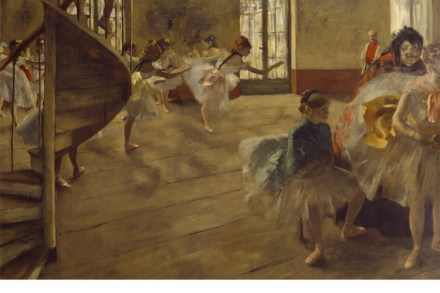
Edgar Degas (1834–1917) was born into a banking family, always knew he wanted to be a painter and was fortunate enough to be encouraged in his enthusiasm by his parents. After a classical training he began to paint portraits and history subjects, before seeing the relevance of real life and developing ways in which to depict it. Influenced by Manet and allied to the Impressionists, he was nevertheless not a committed member of the group and was impatient at its definition of painting. He remained classical in his approach to picture-making but fused this with a keen interest in colour and texture, and an awareness of how photography and Japanese prints had influenced ideas of space and vision.

Unfit for purpose

In recent months, two new museums have opened to much acclaim: The Hepworth in Wakefield and Turner Contemporary in Margate. Now Colchester is receiving the dubious benison of a new building. What is this assertive new generation of museums in England supposed to be about? Leisure, business or art? There’s precious little of the last in the much delayed Firstsite gallery in Colchester, a long pavilion by Rafael Viñoly Architects clad in gold-coloured metal which looks wonderfully out of place in the Roman city of Camulodunum (the name also chosen for its inaugural exhibition). Don’t get me wrong: I live in East Anglia and would welcome a great new museum in Colchester, as a centre for excellence and a potentially worldwide audience.

Medieval frescoes

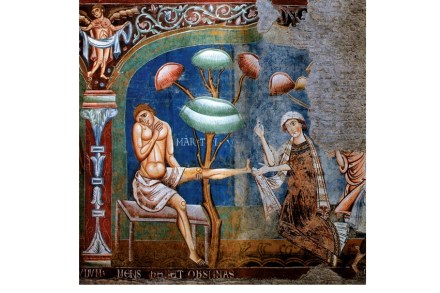
Rome contains many hidden treasures, but the most remarkable of the lot is concealed on the Caelian Hill, above the Colosseum, in the medieval monastery of Santi Quattro Coronati. It’s a cycle of frescoes dating from around 1250. It is extremely rare for painting from this period to survive anywhere, but it’s even rarer in Rome, where the rebuilding of the city by the Counter-Reformation popes destroyed almost all medieval painting. The paintings are in a vast vaulted gothic hall, the walls of which — about 800 square metres of them — were originally completely covered in frescoes. About half the original paintings remain: an earthquake, and the construction of additional windows, have destroyed the rest.