Exhibitions

The good, the indifferent and the simply awful

‘There is only one thing worse than homosexual art,’ the painter Patrick Procktor was once heard to declare at a private view in the 1960s. ‘And that’s heterosexual art.’ It would have been intriguing to hear his views on Queer British Art at Tate Britain. All the more so since it includes several of his own works, including a fine line-drawing study of the playwright Joe Orton, completely naked except for his socks — which he kept on because he felt they were sexy — and reclining somewhat in the manner of Manet’s Olympia. In fact, many of those included might have had reservations — Oscar Wilde, for example, one of whose characters observed, ‘The only artists I have ever known who are personally delightful are bad artists.
Home is where the art is

The house in which I lived in Tokyo was built by my landlady, a former geisha. It stood on a plot of land given to her by her last lover. It was small, full of light and positioned to enjoy the large ginkgo tree in the garden next door. It was easily the best designed house I have ever lived in. Nostalgia for that house and my former life in Tokyo overwhelmed me as I wandered through the new exhibition at the Barbican — The Japanese House: Architecture and Life after 1945. Exhibitions on architecture are notoriously hard to pull off but this succeeds triumphantly. Japanese domestic architecture has consistently produced some of the most influential examples of modern design. By the end of the second world war B-29 bombing had destroyed a third of Japanese housing stock.

Cut it out

How do you make a work of art? One method is to cut things up and stick them back together in a different order. That is, roughly speaking, the recipe for collage. Thus in 1934 Max Ernst snipped away at a pile of illustrations to 19th-century novels, reassembled them in an altered fashion, and came up with Une semaine de bonté — or A Week of Kindness — a surrealist novel in pictures. Some of its pages are displayed in The Ends of Collage, at Luxembourg & Dayan, 2 Savile Row, W1. In one a woman reclines on an ornate, neo-baroque bed, while all around the waves of the sea are rippling over her coverlet; in another a male leaps astonishingly high in a moonlit street, his head transformed into that of an enormous bird.

A word in your ear

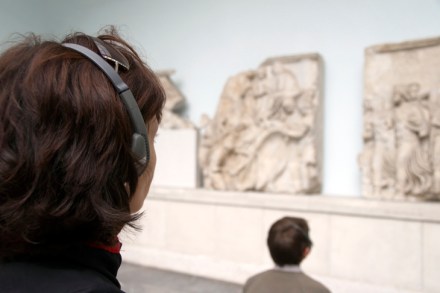
Do you, or do you not, fork out for an audioguide — one of those necklace-like, strappy contraptions you’re offered at the beginning of exhibitions, which cost an extra £3.50? The nation is divided. Some loathe them — as I was reminded reading an obituary of the historian Eric Christiansen, which said, ‘The British Museum’s Viking Exhibition in 2014 drew his wrath as visitors blocked everyone else’s view as they listened to their headsets, while ignoring any object which did not have a spoken description.’ I blushed, because that’s exactly what I do. Not in room one or two, when I’m still all energy and excitement and take pains to look at every single item with equal attention.

Home help

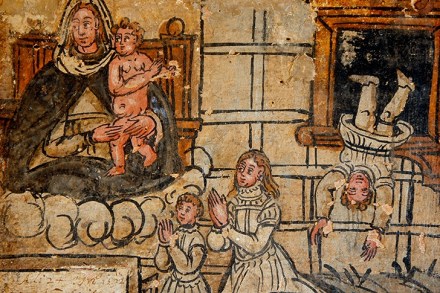
There have been many explanations for what happened in the Italian Renaissance. Some stress the revival of classical antiquity, others the rise of individualism. A pioneering exhibition at the Fitzwilliam Museum, Cambridge, Madonnas and Miracles: The Holy Home in Renaissance Italy, takes a different line. It’s all about the 15th- and 16th-century household — and the religious furnishings and fittings it contained. To a 21st-century eye some of these are distinctly bizarre. Early on, there is a painting of the ‘Madonna and Child’ by a follower of Filippo Lippi — just the kind of thing one expects to find in an art gallery. Underneath it is a brightly painted wooden figure of the infant Christ, very similar to the one in the picture.

Snap happy

These days the world is experiencing an unprecedented overload of photographs, a global glut of pictures. More and more are taken every day on smartphones and tablets. They zip around the world by the billion. When I went to Wolfgang Tillmans’s exhibition at Tate Modern, the galleries were full of people taking snaps of the exhibits. Some visitors posed to have their pictures taken in front of the larger ones — huge photographic prints of such diverse subjects as the waves of the Atlantic Ocean, a weed growing in a London garden and a hugely enlarged close-up of a male bottom. These, and a great many more, are shown in galleries with a messy, provisional look, more like a classroom or workshop than a conventional exhibition of art.

On the make

Rudolfo Paolozzi was a great maker. In the summer, he worked almost without stopping in the family’s ice-cream shop, making gallon after gallon of vanilla custard. In the slack winter months, when the shop made its money on cigarettes and sweets, he built radios from odds and sods. It was on one of these homemade radios that he heard Mussolini’s declaration, on 10 June 1940, that Italy, the country he had left for Scotland 20 years before, had entered the war. That night a mob attacked the ice-cream shop at 10 Albert Street, off Leith Walk in Edinburgh. The family lived above the shop and later, Rudolfo’s son Eduardo, then aged 16, would remember how it had been before and what the men had done.

American psyche

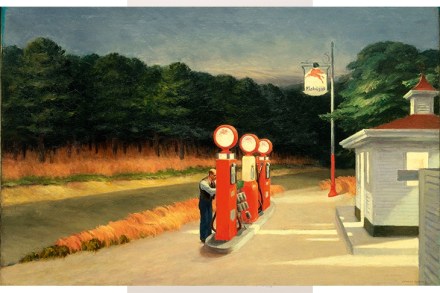
The latest exhibition at the Royal Academy is entitled America after the Fall. It deals with painting in the United States during the 1930s: that is, the decade before the tidal surge of abstract expressionism. So this show is a sort of prequel to the RA’s great ab ex blockbuster of last autumn. It might have been called, ‘Before Jackson Began Dripping’. Not much in this selection, though, can compare to the power of the abstract expressionists at their peak in the Forties and Fifties — not even an early work by Pollock himself. But it does include a couple of masterpieces by Edward Hopper, plus several pictures so brashly over the top as to be quite interesting, several others that are simply terrible — and one of the world’s most familiar images.

The good, the bad and the ugly

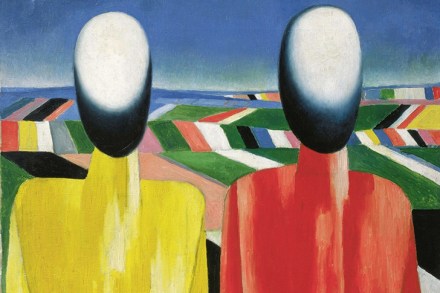
Vladimir Putin notoriously declared the collapse of the Soviet Union in 1989 to be one of the greatest disasters of the 20th century. However, as Revolution: Russian Art 1917–32 — an ambitious exhibition at the Royal Academy — helps to make clear, the true catastrophe had occurred 82 years earlier, in 1917. Like many of the tragedies of human history, the Russian revolution was accompanied, at least in the early stages, by energy, hope and creativity as well as by murderous cruelty and messianic delusion.

Sunny delight

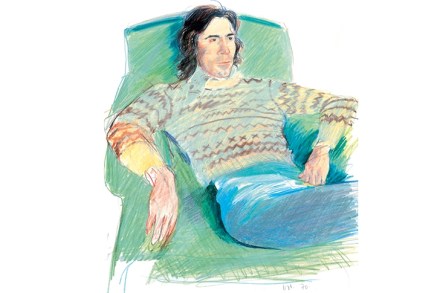
No Californian could have painted Hockney’s pools. No La-La Land artist, raised on sun and orange juice, would have done tiles and diving boards and tan-lined bottoms as the boy from Bradford did. It had to be a Hockney, brought up, the fourth of five children, in a two-up two-down. Hockney, who aged three had sheltered from bombs with his mother Laura, father Kenneth, four siblings and a lady neighbour in the cupboard under the stairs. A Yorkshire child steeped in Typhoo tea and fortified by meat and potatoes from Robert’s Pie Shop. A painter who had bicycled the Wolds in the rain, and lived in the garden shed of an Earl’s Court boarding house when a student at the Royal College of Art in London.

Seeing everything in black and white

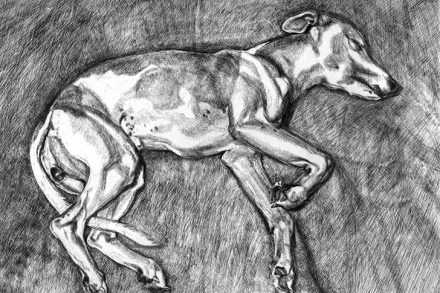
Two divergent approaches to printmaking are on view in an exhibition of graphic work by Francis Bacon and Lucian Freud at Marlborough Fine Art, Albemarle Street. For the former, media that depend on line, such as etching, were of little interest, since — as his friend Freud would point out — Francis couldn’t draw very well. But, Freud would add, Bacon’s painting was so brilliant that he made you forget that limitation. Bacon’s prints were essentially reproductions of his oils, signed and numbered by the artist. The etchings Freud made in the last three decades of his life were not like that at all. Though the models for the etchings were often the same as those for his paintings, his approach was entirely distinct.

Great leaps forward

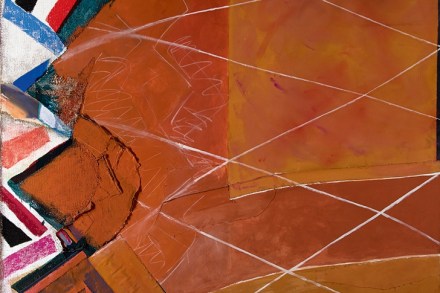
In the 1940s Lucian Freud took another young painter, Sandra Blow, up to the top of a bombed church in Soho. There were just two prongs of masonry left and Lucian promptly launched himself through space from one to the other. ‘You can’t possibly expect me to do that,’ she exclaimed. ‘Just think of it as if you were on the escalator in Selfridges,’ he replied. History does not relate whether she was persuaded by this comforting analogy, but as a small exhibition at the Fine Art Society demonstrates, Blow (1925–2006) spent the rest of her career making jumps. These were mainly of the visual and stylistic variety. There is an exhilarating feeling of rushing through air about ‘Stripes’ (1978), for example.

Shape shifter | 12 January 2017

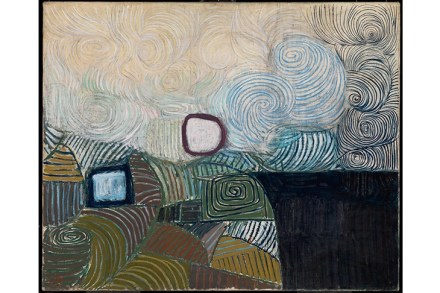
Victor Pasmore once told me how he greeted Pablo Picasso at Victoria station. The great man had come to Britain in 1950 to attend a communist-sponsored peace congress in Sheffield. In person Pasmore found him surprisingly different from the solemn art-historical giant suggested by books. ‘He did nothing but joke all the time, non-stop, and he was no more a communist than the local fairy.’ Instead, Pasmore felt, ‘Picasso was 100 per cent anarchist.’ Something similar could be said about Pasmore himself, as can be seen from a fine exhibition devoted to his work from the 1930s to the ’60s at the Djanogly Gallery, Nottingham (moving on to Pallant House, Chichester, on 11 March). Few artists made more abrupt stylistic swerves.

Ways of seeing

‘Radical’ is like ‘creative’, a word that has been enfeebled to the point of meaninglessness. Everybody seems to want to be both, but nobody has any clear idea of what might be involved. In the case of this exhibition, radical could refer either to aesthetic or political themes; neither seems quite right. Never mind, ’modernist’ has, with the passage of time, become more firmly anchored. We now know it was a movement in the arts that began in about the 1880s and ended in, very roughly, the 1950s or ’60s. It was a period in which art became preoccupied with form as a determinant — rather than the servant — of content.

Trivial pursuits | 1 December 2016

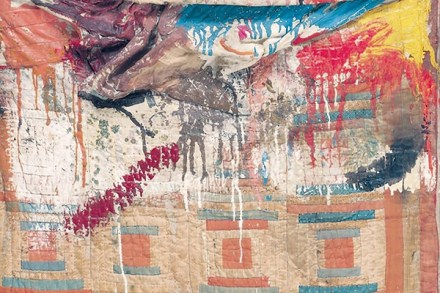
Robert Rauschenberg, like Autolycus in The Winter’s Tale, was a ‘snapper-up of unconsidered trifles’. Unlike Shakespeare’s character, however, he made them into art. Rauschenberg’s most celebrated piece, ‘Monogram’, on view in the grand retrospective of his work at Tate Modern, comprises, among other bits and pieces, a rubber shoe heel, a tennis ball, and a car tyre-plus-oil paint on stuffed angora goat. Next to it is another amalgam from the mid-Fifties, incorporating ‘paint, paper, fabric, printed paper reproductions, sock and army-issue flare parachute on canvas’.

The beast in man

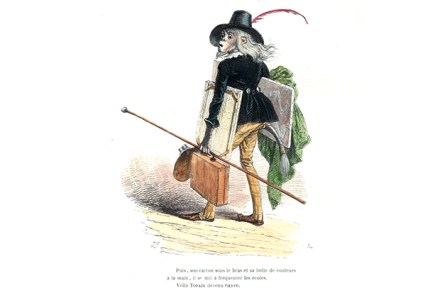
Ernest Hemingway loved going to the zoo, but not on Sundays. The reason, he explained, was that, ‘I don’t like to see the people making fun of the animals, when it should be the other way around.’ He would probably have enjoyed Animality, an entertaining exhibition at Marian Goodman Gallery, Lower John St, W1. It contains quite a few jokes, but generally the laugh is on Homo sapiens. The humour tends to comes from an age-old ploy: birds, reptiles and mammals wearing clothes. It was the basis, for example, of many works by the caricaturist J.J. Grandville of cats, bears and other such fauna dressed up as early 19th-century French citizens.

Serious concerns

It’s funny, isn’t it, how a dust jacket on a book can draw you to it from the other end of a room — always supposing the illustration is by Edward Ardizzone. In fact, is there anything more suggestive of delight than a book illustrated by him? It’s the Midas touch even for unprepossessing authors. The exhibition of his work at the House of Illustration finishes off with a wall lined with them: The Little Grey Men, Jim at the Corner, Italian Peepshow, Johnny’s Bad Day, Eleanor Farjeon’s Book... you’ll recognise lots.

Order, order | 10 November 2016

The catalogue to Pallant House Gallery’s latest exhibition features a favourite anecdote. It is 1924 and a competition is being held to find the woman with the most pleasing vital statistics. As a paradigm, the judges choose the Venus de Milo. Thousands of women queue up to find out whether their measurements — not only bust, waist and hips, but thighs, calves, neck, wrists even —approximate closely enough to those of the ancient sculpture to earn them the prize of £5. No one thinks to mention that the Venus is missing both arms. Classical myth was all the rage after the first world war. When the world felt like chaos, it was only logical to go back to the beginning.

Enigma variations | 3 November 2016

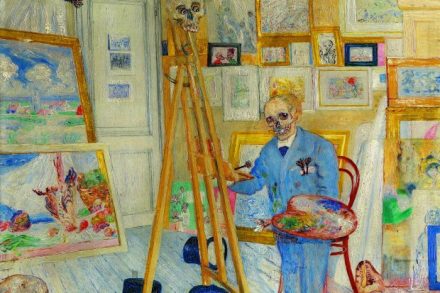
On 2 August 1933 one of the more improbable meetings of the 20th century took place when Albert Einstein had lunch with James Ensor. Apparently, Einstein attempted to explain his theory of relativity to Ensor, who doesn’t seem to have understood it. That evening the painter gave a speech, entitled ‘Ensor to Einstein’, ending with a sort of apology. Painters, he exclaimed — ‘alas and alack!’ — were slaves to vision and resistant to ‘positive reason, to calculations, to probabilities’. However, Intrigue: James Ensor by Luc Tuymans at the Royal Academy is an exhibition that is subject to the principle of relativity.

Halloween hire

To use a vulgar phrase, I can’t get my head around this exhibition. It seems anything but ‘vulgar’. Daintily laid out and dimly lit in the gloomier cloisters of Fortress Barbican is a series of dresses — the chaps hardly get a look-in, save for some of those white-knee-britched, jaboty, gold-laced-coat get-ups that people like Philip Green struggle into for their fancy-dress parties — some ancient, some modern, a lot very pretty, a few laughably ludicrous; anyone wanting a frightening clown costume for Halloween will find inspiration here. The clothes are, for the most part, exquisitely made. Many are elegant, and several supremely extravagant; however, the organisers of the exhibition seem to be trying to lump them all into the ‘vulgar’ basket.