Exhibitions

Emotional rescue

In the 1880s the young Max Klinger made a series of etchings detailing the surreal adventures of a woman’s glove picked up by a stranger at an ice rink. At a certain point the glove washes up, nightmarishly large, beside a sleeping man’s bed on to which a shipwrecked sailor is desperately hauling himself. Storm-tossed billows merge with rumpled pillows in an image simply titled ‘Angste’. Klinger’s nightmare vision came back to haunt me at the exhibition Tracey Emin, ‘My Bed’/JMW Turner. Yes, you read that right. Since its loan to the Tate in 2015, Emin’s most famous oeuvre has been partnered in exhibitions with the work of Francis Bacon at Tate Britain and William Blake at Tate Liverpool.

It’s the thought that counts

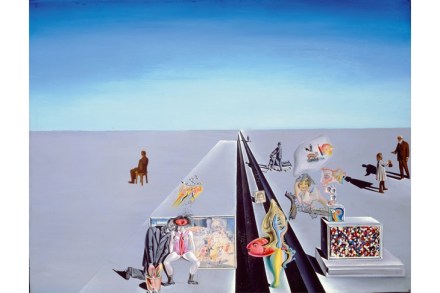
During a panel discussion in 1949, Frank Lloyd Wright made an undiplomatic comment about Marcel Duchamp’s celebrated picture of 1912, ‘Nude Descending a Staircase, No. 2’, in the presence of the artist. ‘I am sure he doesn’t himself regard it as a great picture now.’ At this Duchamp bridled, exclaiming in his excellent English, ‘I beg your pardon, sir!’ However, the architect had a point, as the exhibition Dalí/Duchamp at the Royal Academy bears out. I came away from it reflecting that Duchamp wasn’t a very good painter. This is not the point, obviously, that the RA intended to make.

Raw materials

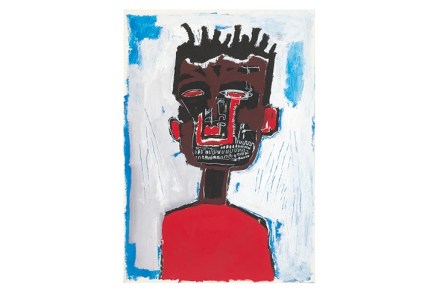
‘Art by its very essence is of the new… There is only one healthy diet for artistic creation: permanent revolution.’ Jean Dubuffet wrote those words in 1963, and when Jean-Michel Basquiat burst on to the New York art scene 20 years later — barely out of his teens, untrained and black — he seemed to embody them. Together with his friend Al Diaz, he had grabbed attention in the late 1970s with a campaign of cryptic graffiti signed SAMO© targeted on the SoHo gallery district. Born to middle-class Haitian-Puerto Rican parents in the South Bronx, Basquiat didn’t waste time tagging trains. He knew the value of location; his dad was an accountant. Photographs of the graffiti fill a room in the Barbican’s exhibition Basquiat: Boom for Real.

I spy | 28 September 2017

Where was Degas standing as he sketched his ‘Laundresses’ (c.1882–4)? Did he watch the two women from behind sheets hanging to dry? Or was he hidden by steam from the basins? The laundry women are unselfconscious, unguarded. One reads aloud from a list, calling out shirts, collars, cuffs to be washed and ironed. Another leans over her workbench, staring into the placket of a folded shirt like Narcissus into his pool. Neither is the least bit bothered by the artist making a rapid chalk sketch to be worked up later in pastel. Nor the two men in ‘At the Café de Châteaudun’ (c.1869–71), reading a newspaper with monocle and magnifying glass. Degas might be peering at them over the top of his menu. A coffee, a croissant, a sneaking sketch.

Mothers’ ruin

At the heart of Basic Instincts, the new exhibition at the Foundling Museum in London, is an extraordinarily powerful painting of a mother and baby. At one time the ‘Angel of Mercy’ was sold as a greetings card by its owner, the Yale Center of British Art in Connecticut, presumably intended as something you might send your own mother or child. But take a second glance and you might well wonder who bought the card and who they might have sent it to. In Joseph Highmore’s Georgian scene, a young, fashionably dressed woman is splayed across the canvas, her feet in delicate silk shoes, a tiny baby, naked, resting precariously on her lap.

Space odyssey | 14 September 2017

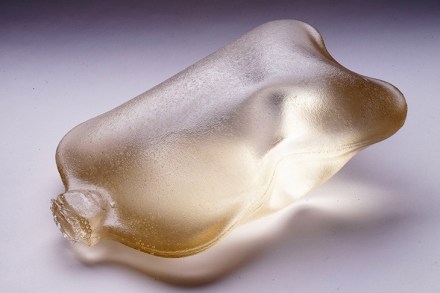
Rachel Whiteread is an indefatigable explorer of internal space. By turning humble items such as hot-water bottles and sinks inside out — that is, casting the cavities — Whiteread has accomplished one of the traditional tasks of art: revealing structure, beauty and mystery in the everyday. Her work is a remarkable contribution to an overlooked genre: the sculpture of inanimate things or still-life statuary. Nonetheless the large-scale, mid-career Whiteread retrospective at Tate Britain, which ought to be a triumph, does not quite come off. Ironically, since her idiom is derived from minimalism, the exhibition fails to observe the law that less is more.

Silent films

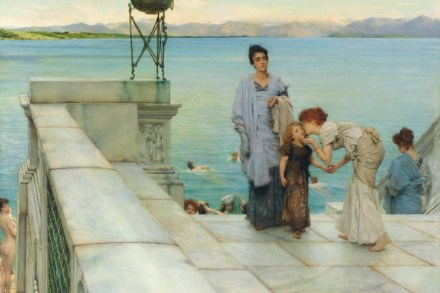
On 15 September 1888 Vincent van Gogh was intrigued to read an account of an up-to-date artist’s house in the literary supplement of Le Figaro. This described a purple house in the middle of a garden, the paths of which were made of yellow sand. The walls were glass bricks ‘in the shape of purple eggs’. Such aesthetic dwellings were all the rage; Van Gogh dreamed of having one himself in Arles. But as one learns from an exhibition at Leighton House, it was another 19th-century Dutch artist, Lawrence Alma-Tadema, who actually inhabited two such establishments — one off Regent’s Park, the other in St John’s Wood. On paper, Van Gogh and Alma-Tadema have a great deal in common.

Snap, crackle and op

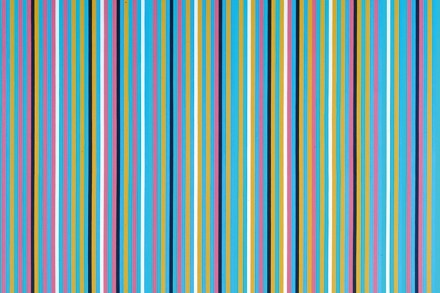
Stand in front of ‘Fall’, a painting by Bridget Riley from 1963, and the world begins to quiver and dissolve. Something you normally expect to be static and stable — a panel covered with painted lines — undulates and pulses. In addition to just black and white, the pigments actually present, other hues appear and disappear: faintly luminous pinks and greens. To her irritation, the artist was once told, ‘as though it were some sort of compliment’, that ‘it was the greatest kick’ to smoke dope while looking at this painting. The remark, much though it affronted Riley, is wonderfully characteristic of its epoch, the mid-1960s. We usually think of op art itself as dating from the era of Mary Quant, the Beatles and LSD.

Nothing is quite what it seems

One day, somebody will stage an exhibition of artists taught at the Slade by the formidable Henry Tonks, who considered Cézanne a ‘curiously incapable’ menace, and a cracking show it will be. Until then, we must take what we can from exhibitions like True to Life: British Realist Painting in the 1920s & 1930s. Here, many of Tonks’s pupils, and others schooled with similar exactitude, can at last reclaim their rightful positions in British art after decades in the wilderness, pushed into the shadows by the alpha art of abstraction and the ironies of pop. True to Life is a marvellous show. The portraiture is the stand-out stuff, dominated by the limpid virtuosity of Meredith Frampton and Gerald Leslie Brockhurst.

Object lesson | 3 August 2017

Why did Henri Matisse not play chess? It’s a question, perhaps, that few have ever pondered. Yet the great artist provided an answer, which is quoted in the catalogue to Matisse in the Studio, a marvellous new exhibition at the Royal Academy. He did not care, he explained, ‘to play with signs that never change’. It’s a revealing reason in several ways. For one thing, it underlines how different Matisse was from his younger contemporary Marcel Duchamp: the most celebrated chess-player in art. Duchamp loved logic, so his work tended to turn into a series of theorems.

Maximum wattage

On his deathbed in 1904, George Frederic Watts saw a extraordinary spectacle. He witnessed the universe coming into being: the ‘breath of the Creator acting on nebulous matter’ causing ‘agitating waves & revolving lines’ to fly out in all directions. With hindsight, it is tempting to conclude that Watts had a vision not, as he thought, of reality in ‘a glorious state’, but of abstract painting. The beautifully installed exhibition at the Watts Gallery, Compton, Surrey, celebrating the bicentenary of his birth actually contains a few pictures that — surprisingly for a great Victorian — put one in mind of Jackson Pollock.

A game for two

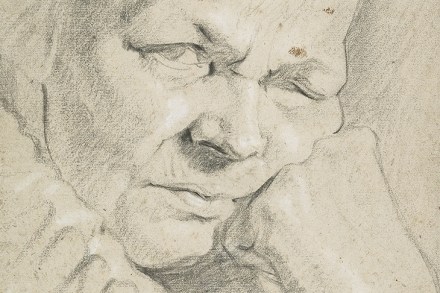
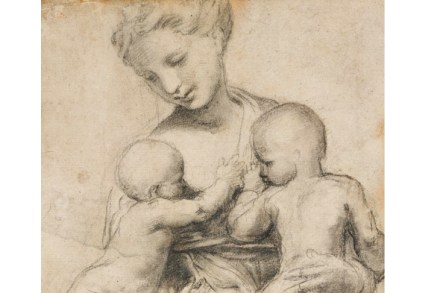
Some art can be made in solitude, straight out of the artist’s head. But portraiture is a game for two. That’s the lesson of The Encounter: Drawings from Leonardo to Rembrandt, a marvellous little exhibition at the National Portrait Gallery. It is essentially a medley of Old Master works on papers from various British collections — which might sound a little on the quiet side. But that would be the wrong conclusion: on the contrary it poses intriguing questions and is full of visual pleasures. [caption id="attachment_10230102" align="alignnone" width="530"] 'Head of an Elderly ManWearing a Cap, probably Mino da Fiesole' (c.

Repo women

Aren’t you getting a little sick of the white cube? I am. I realised how sick last week after blundering around White Cube Bermondsey, where the walls are so pristine no label is allowed to sully them, struggling to work out what I was looking at. I was reduced to photographing the works in order and tracing my itinerary in ink on the ground plan — shoot first, ask questions later — and even then I had to keep getting the attendants to tell me where exactly on the plan I was. One of them admired my wiggly drawing. Well, it was a surrealist exhibition. Dreamers Awake sets out to repossess surrealism for women.

American quartet

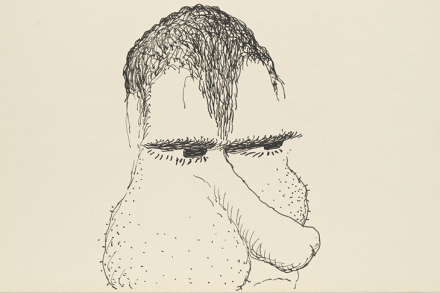
Politics and art can make for an awkward mix. Much more than with religious subjects it seems to matter whether the viewer shares the artist’s beliefs. But whatever you think of Richard M. Nixon, it would be hard not to enjoy Philip Guston’s satirical drawings of him and his cronies at Hauser & Wirth, Savile Row. These were the most exuberant, scatological, obsessive and imaginative such works since 1937 when Picasso produced an extraordinary strip-cartoon vilification and lampoon entitled ‘The Dream and Lie of Franco’. Indeed, the two series have a good deal in common. Picasso portrayed the Generalissimo as a sort of obscene, moustachioed set of bagpipes.

The better angels of our nature

Late one afternoon, early in the year, I was walking through the Vatican Stanze with a small group of critics and art historians. While we were admiring the Raphael frescoes that fill these private apartments of the Renaissance popes, Matthias Wivel, curator of the Michelangelo & Sebastiano exhibition at the National Gallery, made the most eloquent case for the painter I have ever heard. Suddenly, I felt a new enthusiasm for Raphael. Essentially what he said is that Raphael is the supreme master of depicting human beings in interaction. Each of the frescoes around us, Wivel pointed out, was made up of a huge number of figures, all engaged with each other in fluently orchestrated groups.

Dealer’s choice

One evening a few weeks ago I was on my way to the opening of an exhibition at the Venice Biennale when I stopped for a moment in a quiet campo off the main drag. An elderly priest was standing on the steps of the church of Santa Maria della Fava in the weak sunshine. On impulse I stepped inside and he followed. For a while I looked at Piazzetta’s altarpiece, ‘The Madonna with St Philip Neri’ (c.1725). Then — as if silently to indicate that I should have a look at this too — the priest switched on the light to illuminate Giambattista Tiepolo’s ‘Education of the Virgin’ (c.1732)on the opposite side of the nave. It was indeed worth contemplating.

Being and nothingness | 25 May 2017

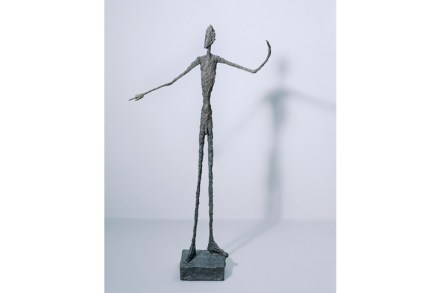
Size, of course, matters a great deal in art; so does scale — which is a different matter. The art of Alberto Giacometti (1901–66) illustrates the distinction. There are very few major artists who have produced objects so physically minuscule. But the smaller and thinner his people are, the vaster the space they seem to inhabit. That’s where scale comes in. There was a period of about five years, wrote his friend the critic David Sylvester, ‘when every figure Giacometti made (with one exception) ended up an inch high more or less.’ You encounter just such a work about halfway around Tate Modern’s big new Giacometti exhibition.

League of nations

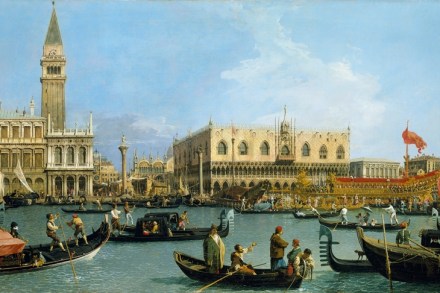
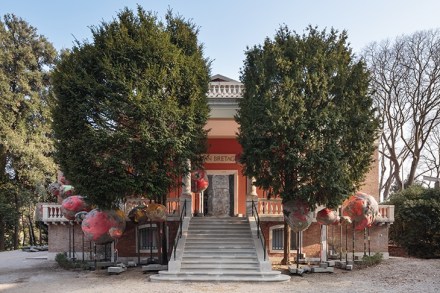
‘Are you enjoying the Biennale?’ is a question one is often asked while patrolling the winding paths of the Giardini and the endless rooms of the Arsenale. It is not easy to answer. The whole affair is so huge, so diverse and yet — in many ways — so monotonous. Like the EU, an organisation with which it has something in common, La Biennale di Venezia believes in the principle of subsidiarity. Therefore individual nations are allowed to do what they like within their own pavilions. However, there are also strong homogenising forces at work — so much of what is on view in the national pavilions and elsewhere tends to fall into certain approved categories: notably video art, photography (often rather dull) and messy installation.

Put a spell on you

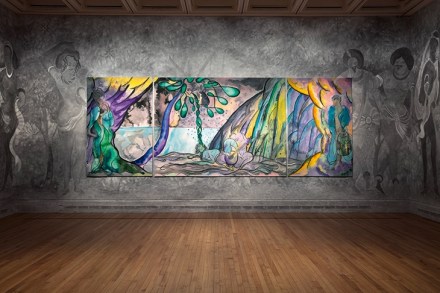
Many of the mediums from which art is made have been around for a long time. People have been painting on walls, for example, for about 40,000 years. Similarly, figures have been fashioned out of stone and metal for millennia, and still are. But if there is one ancient medium you might think was now definitely over and out, it would be tapestry. But no! In this era of artificial intelligence and omniscient Google, the ancient practice of painstakingly twining coloured wool into pictures is undergoing an unexpected revival. The latest contemporary artist to give tapestry a go is Chris Ofili. His exhibition Weaving Magic at the National Gallery gives some clues as to why he — and other figures such as Grayson Perry, Marc Quinn and Craigie Horsfield — find it appealing.

Constable on sea

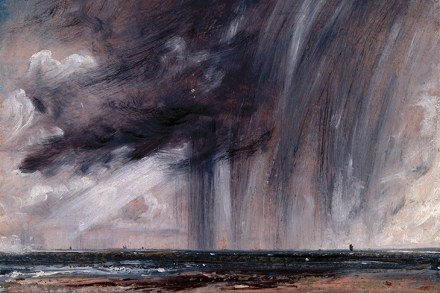
John Constable was, as we say these days, conflicted about Brighton. On the one hand, as he wrote in a letter, he was revolted by this marine Piccadilly, populated with: ‘ladies dressed & undressed — gentlemen in morning gowns and slippers on, or without them altogether about knee deep in the breakers — footmen — children — nursery maids, dogs, boys, fishermen’, all mixed together ‘in endless and indecent confusion’. On the other, as a brilliantly conceived little exhibition at the Brighton Museum & Art Gallery makes clear, the town was one of a small number of locations that were crucial to his art.