Columns

The return of Keir vs Andy

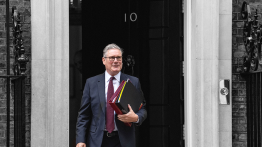
When Labour MPs met to hear from their leader on Monday, there was one group who felt particularly aggrieved. In the government’s reshuffle following the resignation of Angela Rayner, the party’s powerful north-west caucus had suffered a ‘machine gunning like nothing else’, in the words of a senior party official. Some 40 per cent of the reshuffle casualties are from this region. The changes risked, in the words of one aide, ‘reopening the whole Keir and Andy psychodrama’. Within hours, Andy Burnham, the mayor of Greater Manchester, had duly attacked Keir Starmer’s new ‘London-centric’ line-up. Lucy Powell, a close Burnham ally, who was sacked as leader of the Commons, announced that she was running to replace Rayner as Labour’s deputy leader.

Can anyone save Britain from self-destruction?

Tens of thousands of people turned out on the streets last week to protest against mass immigration. The protestors were promptly labelled ‘racist’ by their own government, ‘far-right’ by the New York Times and as having links to ‘neo-Nazis’ by the Guardian. The protests in question happened in cities across Australia, including Sydney – but frankly those sentences could have been written about similar protests in Britain and in almost any western country. Coincidentally, the past weekend also saw the ten-year anniversary of the German chancellor Angela Merkel opening the doors of Europe, saying ‘We can manage’ and allowing Europe to become the home of anyone in the world who wanted to move in.

The truth about the trans school shooter

True, one of the earliest school shooters, Brenda Spencer, who shot up a playground in San Diego in 1979, was a girl – famously providing the peg for the Boomtown Rats’ hit ‘I Don’t Like Mondays’. But that was a long time ago. Since, American mass shooters have been overwhelmingly male. One would expect, then, that when the culprit in a high-profile attack on young children is a woman, that anomaly would merit journalistic remark. After all, following these baffling bursts of nihilistic animosity, there’s little enough to say. Yet after ‘Robin’ Westman opened fire on kids at mass in a Catholic school in Minneapolis last week, segments of the media were conspicuously incurious about how ‘she’ came to be consumed by such commonly masculine rage.

Leave the countryside alone

I used to volunteer at a wildlife sanctuary, counting sheep and goats on an agreeable patch of chalk downland in Kent. On hot days the goats would hide in the dense, cool woodland and it could take a long time to find them. Occasionally they broke out of the reserve because our gates were of poor quality, so I was delighted to see one morning that new gates had been installed, shiny metal ones. When I got up close, though, there was a surprise in store. All of the new gates were adorned with a picture of a woman in a burka and an injunction to abide by the Countryside Code. This struck me as peculiar, not to say borderline Islamophobic. We had never experienced trouble with Muslim women ignoring the Countryside Code.

‘He’s like a passive-aggressive Gordon Brown’: inside Keir Starmer’s No.10 reshuffle

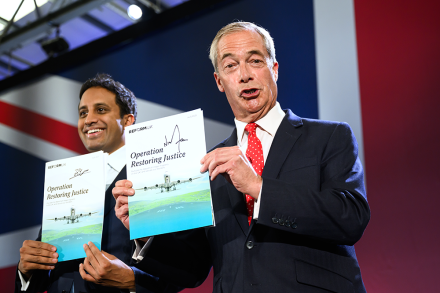
Isaac Levido, the Tory election strategist who helped secure Boris Johnson’s landslide victory in 2019 and saved the Tories from oblivion in 2024, says (with the wisdom of grim experience) that ‘politicians are confidence players’. They perform best when their tails are up. In 2019 he had a candidate with his tail up who took the public with him. In 2024, in Rishi Sunak, he had a leader who had suffered a major crisis of confidence and projected a self-fulfilling air of doom. This eternal truth is likely to be reinforced on Saturday when Nigel Farage takes to the stage in Birmingham for the first party conference speech he has given as a potential prime minister.

Why the row about the England flag matters

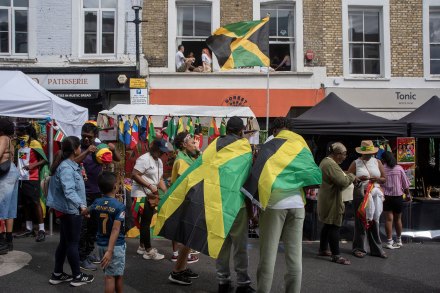
At the end of Sky News’s coverage of last year’s Notting Hill Carnival, its correspondent recited the usual list of arrests, stabbings and so on before concluding her piece to camera by saying: ‘But overall it’s been a really peaceful and enjoyable day.’ This year the honour of summing up the beauty of the event was left to Sky’s arts and entertainment correspondent, Katie Spencer. The reason it is important for two million people to gather in the tight streets of Notting Hill over the August bank holiday, she said, is because of ‘resistance to racism’. ‘This is a place where community comes together,’ she went on, ignoring all the shops in the area that had been boarded up. ‘You don’t walk around constantly looking over your shoulder.

The ADHD racket

In 1620, in the Staffordshire market town of Bilston, a teenage boy decided he didn’t much fancy going to school. Rather than resort to conventional methods, 13-year-old William Perry claimed that he was possessed by a demon. His symptoms included reacting with spasms to the reading of the first verse of St John’s Gospel and peeing blue urine. Thousands flocked to Bilston to witness his supposed possession. King James I, who wrote a book on necromancy and black magic, took a personal interest in the case. It was only when the Bishop of Coventry had the bright idea of reading him the equivalent scriptural passage in Greek – a language the boy didn’t speak but the Devil presumably could – and drew no reaction that suspicions were aroused.

Angela Rayner and the spite of Labour

As a snapshot of our country, you’ll be pressed to find anything quite so resonant as the one which depicts a leading member of our Skankerati sitting in an inflatable off the southern coast of the UK with tattoo and vape in attendance. There has been much debate of late about the very large numbers of other people bobbing about in the English Channel – and the possible value they might be to our benighted economy. We could ask the same question about Angela Rayner. On paper she is a huge cost to the Exchequer, one which would easily outstrip even a fairly successful Albanian drug dealer.

The left’s fightback against Labour has begun

If there is a hallmark of Keir Starmer’s leadership, it is a willingness to bash the left. For five years, he has repeatedly sided with his moderate factions to make Labour electable. Corbynites have been purged from parliament and the party machine. Principles and policies have been changed to meet the electorate’s approval. Last summer’s election result appeared to vindicate the Prime Minister’s strategy. But with Starmer’s authority crumbling, the British left is aiming to reassert itself and wreak its revenge from outside, rather than inside, the Labour party. ‘This Labour government is here to appease Reform. We are here to defeat Reform’ Three groups pose a threat to Starmer. The first is the new ‘Your Party’, led by Jeremy Corbyn and Zarah Sultana.

The oppression of Sally Rooney

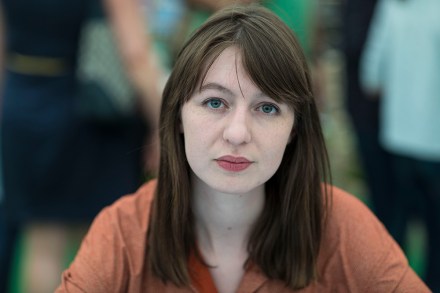
Almost a decade ago the Irish academic Liam Kennedy published a tremendous book with the title Unhappy the Land: the Most Oppressed People Ever, the Irish? It is a dissection of one of the most curious pathologies in the world: the desire to have been oppressed; a glorying in being repressed. Kennedy, like a few other brave writers (Ruth Dudley Edwards, Malachi O’Doherty, Kevin Myers) has the courage to point to an under-examined seam in Ireland’s history. Specifically he takes aim at the mawkishness that exists in contemporary Irish affairs. The desire to be the first victim, perhaps the greatest victim, of all victims, anywhere in the world. You see similar strains of aspiring victimhood in other mini-nationalisms.

My shoplifting shame

On reflection, a tradition of shelving many desirable goods within ready reach is extraordinary – especially because the premises in which these wares are invitingly presented provide unfettered access to every passerby. By and large, it’s dead easy to pick up one of these desirable objects – or dozens, should forethought ensure the possession of a bag – and walk out. What would possess anyone to organise such elaborate, unprotected arrays of stuff – altruism? Idiocy? A nationwide honour system, that’s what. Urbanites are astonished by unmanned farm stands that leave cartons of eggs for the taking beside a little sign and a jar. Yet offline retail is also dependent on a little sign (the price on the shelf) and a jar (the checkout counter).

Nigel Farage is banking on a political sea change

Nigel Farage is adept at riding the currents of British politics. When he named Reform after the Canadian party in 2020, it was a statement of intent. Like Preston Manning in the 1990s, he aimed to displace this country’s main centre-right party and refashion it in his image. But where Manning fell short, handing over the reins to Stephen Harper, Farage aims to go one better by becoming prime minister himself. A keen angler, Farage has spent his few moments of downtime this summer fishing. On one such trip, he took an assembled group of journalists to the English Channel to highlight the small boat crossings.

When national flags are a warning sign

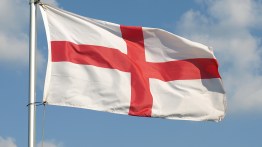
I don’t quite see the point of flying Union flags in Tower Hamlets, or complaining about it when the council takes them down. This squalid little fiefdom run by the deeply corrupt Lutfur Rahman is not part of the UK: it is a suburb of Sylhet, with all that such a location might entail. This would include the mayor himself, who once rigged the votes and used imams to intimidate voters. Of course it is true that London is headed the same way as Tower Hamlets and will get there depressingly soon, an upheaval aided by the self-flagellating liberals who still choose to live in the capital and whose yearning for self-annihilation is close to absolute. The temptation is to write off our first city, and maybe others, too, come to that.

Clive of India must not fall

The only MP I have ever really wanted to marry is Thangam Debbonaire. The former Labour MP for Bristol West and I have little in common. But it has sometimes been a desire of mine to marry her and take her surname, so becoming Mr Debbonaire. Marital relations would doubtless be fraught, but on the plus side there would be the thrill of friends being able to say things like ‘Darling, you know the Debbonaires are coming for dinner?’ Which would more than make up for it. Since being booted out by the voters at last year’s general election, Debbonaire has been elevated to the House of Lords, where she still attracts my attention.

Give J.D. Vance a glimpse of real Britain

We’re used to strange sights in north Oxfordshire. The first person I ever met in our small Cotswolds town was a lady who brandished a tin of homemade mackerel pâté at me. It was delicious, but the nature of her greeting gives you an idea of the kind of eccentricity that’s familiar in this part of the world. Yet despite the area’s high tolerance of the bizarre – hardly diminished by the presence of Jeremy Clarkson up the road – I’ve lately witnessed a series of events that have stood out as particularly unusual. I recently took a train surrounded by dozens of confused Americans and their children carrying mounds of luggage bearing ‘VP Vance’ tags.

Of course shoplifters are scumbags

A familiar cliché, which in history has been disproved time and again, is that a police force cannot operate without the consent of the people. Tell that to the residents of what was once East Berlin. But that old canard raises a different problem. Which people are giving the consent? The ones who abide by the law, or the ones who are disposed to breaking it? I wondered about this when I read two stories over the weekend, both of which suggested to me that the police have long since lost the support of that first group of people, that more numerous community, the people who don’t habitually break the law.

Has Zelensky become a liability?

Is Volodymyr Zelensky becoming a liability for the West and for his own country? We are entitled at least to pose this question as we (I mean America and Europe) are funding this war.  The fact is that neither side seems capable of winning, so let’s park the sermonising and look for the compromise in which so many wars – just wars as well as unjust ones – have always ended I ask because it is clear, and for years has been clear, that the conflict with Russia must end in a compromise, and the shape of that compromise should not be in doubt. Russia must be given a ladder to climb down and this must involve land.

Haircuts are a human right!

During the immigration deluge in the wake of Russia’s invasion of Ukraine, it seems one Afghan and one Indian national who threw themselves on the mercy of much-besieged Ireland got lost in the shuffle. Fobbed off with €25 vouchers, they were obliged to sometimes sleep rough for two months, without access to food and hygiene and exposed to hardship and fear. They’ve sued the Irish state. Knowing Irish NGOs, I bet they got help. The government has argued that the pressures on Ireland’s hospitality at the time were severe enough to qualify as a force majeure. Their reception centres were full to bursting and there was no room at the inn (and haven’t we heard that before). The Irish High Court sought a ruling from the European Court of Justice.

My victory over Mohammed Hijab

One of the occupational hazards of being a journalist is being hounded by litigants. Indeed, one of the reasons why much of the media finds it easier to report fluff than to write about difficult issues is that the latter can be costly in terms of money, as well as time. Three years ago I wrote a column in this magazine about some of the downsides of diversity. At the time there had just been serious disturbances in Leicester between local Hindus and Muslims. One of the people who decided to throw himself into the middle of that trouble and to try to make things worse was an online pugilist known as Mohammed Hijab. Hijab had already been filmed intimidating Jews in Golders Green and whipping up a crowd of masked men outside the Israeli embassy in London.

The lies of the land

You can gauge the fragility of an ideology by the blind fury with which it reacts to questioning. So it is with neo-liberalism. Teacher Simon Pearson, for example, was sacked for suggesting that the jailing of Lucy Connolly – who said very nasty things about asylum seekers – was an example of two-tier justice and that, while her words were indefensible, she should not have been sent to prison. One could counter that opinion, but only at the risk of coming into collision with hard facts concerning sentencing – hence the sacking. Best to get shot of your political opponents, especially when he or she is demonstrably correct. Only by doing that can the ideology cling on.