Features

Features

Bring back New York

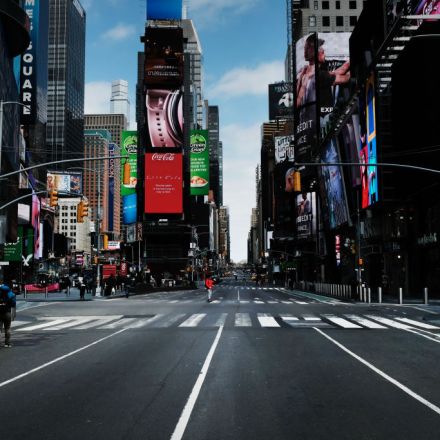
New York is back. It’s so back. It’s extra back. It’s better than ever. It’s really not. I’ve been a New York supremacist my entire life. I’ve been to your city. Your city is fine. Your city is not New York City. Your city has the one deli, the one restaurant, the one street. My city has them all. But in the time of “equity,” the best city is being brought down to size. My teen years were spent in the bad old New York. Drinking on Ludlow Street when it had one bar, going to Limelight on Wednesday nights, hanging out with squatters in Tompkins Square. New York was in peril and as I smoked weed in front of police officers on St Mark’s Place, I knew it. Everyone carried a weapon and looked out for deranged people who might push you on the tracks. That was life.
New York
stone

Are New England’s stone heaps Native Americans’ sacred ruins?

Brightman Hill lies deep in the forests of Hopkinton, Rhode Island. It is named for the Brightmans, one of the families who farmed it, and evidence of its agricultural past is, to most observers, unambiguous: old building foundations, a nineteenth-century burial ground, an extensive network of stone walls and hundreds of stone heaps, the results of field clearing. But in 2019, a federally-funded survey of Brightman Hill shattered these traditional interpretations. The surveyors, Ceremonial Landscapes Research, LLC, are a small group of antiquarians led by Alexandra Martin, a registered professional archaeologist who recently earned her doctorate in anthropology. Instead of stone heaps and walls, the surveyors reported “linear stone groupings” on Brightman Hill.

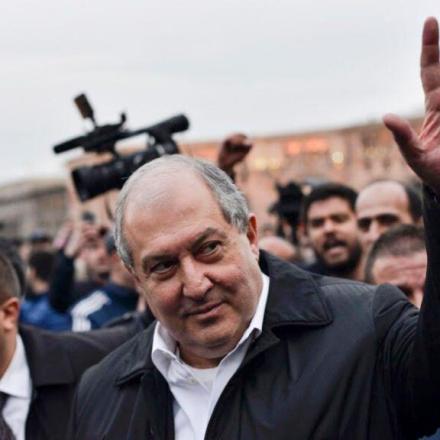
Will Armen Sarkissian save Armenia?

Yerevan, Armenia Armen Sarkissian, the president of Armenia, is incandescent with rage. “Five thousand brave and selfless Armenian soldiers were killed in this war,” he tells me at his office, referring to last year’s conflict with Azerbaijan and Turkey. “There must be accountability for their deaths.” Sarkissian strikes me as the only Armenian politician whose anger comes with a constructive program of national revival. The man once described by Zbigniew Brzezinski as the “Vaclav Havel of the Caucasus” radiates no grievances against foreign powers.

jews

Eighty years after Wannsee

Eighty years ago in January, fifteen men sat around a table at a villa near Berlin and decided to eradicate a nation. To be precise, they decided how to eradicate a nation. Their decision, their “solution” as they perversely termed it, would lead to the murder of more than six million European Jews, though that is the easy-to-remember round number to which we so often default. The murders had started long before the Nazi leadership met at Wannsee in January 1942: this was not the first time a group of European leaders had planned to rid themselves of the Jews. The meeting clarified not just the goal of wiping out Europe’s Jewry, but the path to solving the “Jewish problem” by modern means.

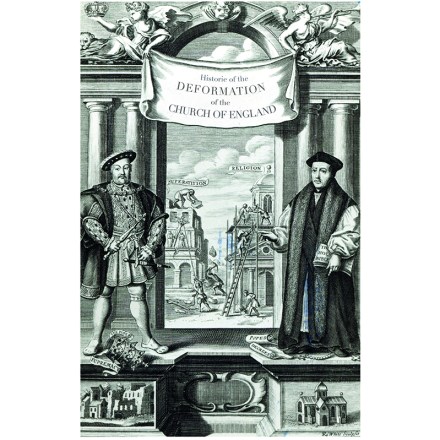
The Tudor roots of wokecraft

In January 2019, I received an email from an administrator at Georgetown University, where I was a graduate student. She and my department chair wanted to meet with me to “discuss concerns that have been raised by some of your peers about classroom comments and behavior.” This meeting, they told me, would “function as the start of a conversation.” They didn’t say where the conversation might lead. I concluded that the next step would be a formal disciplinary hearing. I was terrified. Three-quarters through a two-year program, I was in danger of being forced to leave without a degree. And for what? I scanned my memory for deviant statements. There were a few: I’d alluded in print to certain essential biological differences between men and women.

reformation
foreign policy

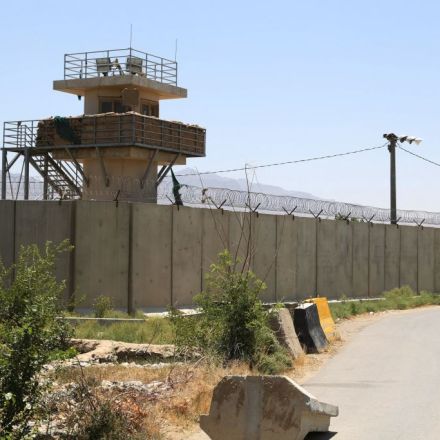
The next chapter in American foreign policy

The new year begins a new chapter in American foreign policy. For the first time since 2001, we are not at war in Afghanistan. More than that, we no longer have an architectonic strategy for our role in world affairs. We had one during the Cold War: to win it. And we had one afterward, too: a decade before 9/11, our policy elite had already committed to the idea that we must police the world for the good of the liberal international order. The lead-up to the first Gulf War was the opening paragraph of that chapter, the ignominious retreat from Afghanistan its last line. Our policy mandarins have not changed their minds, but the world has changed too much for their grand design to have any meaning in 2022.

How the 1960s institutionalized us

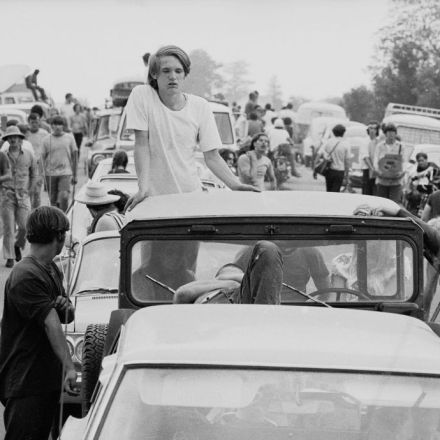
I was recently on Steve Bannon’s show, The War Room, to talk about my book The Long March. It was first published in 2000, so you might think that it is steeped in the sepia tones of another age. Doubtless in some ways it is. But in essentials, I believe, we are living now with the fruits of ideas that were but tender shoots when I was writing that book. Its subtitle is “How the Cultural Revolution of the 1960s Changed America.” The 1960s! Aren’t we done with that silly decade yet? It was sixty, not twenty, years ago that Sgt Pepper taught the band to play. Haven’t we moved on? You tell me.

revolution
dive

The dive is alive

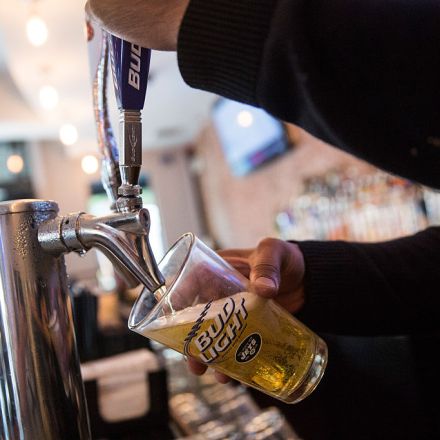
Last summer, Covid claimed yet another casualty. The Post Pub, tucked away under a low ceiling on L Street in Washington, was a throwback to a different age, one of noontime highballs and midnight shots on the house. Yet while the past had been swinging, the future for the little downtown watering hole was bleak, and so it announced that it would have to close. For me, the loss was personal. The Post was where I had deepened countless friendships over glasses filled and then unfilled with foamy brown. It was where, in 2018, I looked up at the TV above the bar, saw the words “fire and fury” on the same chyron as “North Korea,” and wondered for a fleeting second whether that was where I might die (it wouldn’t have been a bad end, all things considered).

The China reckoning

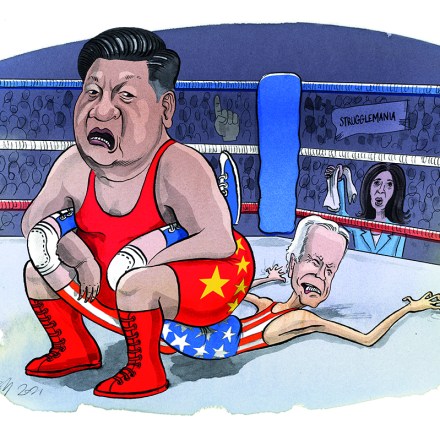
Fifteen years ago, I remarked to an acquaintance over lunch that it looked like China might eat America’s lunch in naval power. My interlocutor, a person well-known in leadership positions in the China studies community, scoffed at my comment. Over the next few years, he never missed an opportunity to ridicule my wild-eyed prediction. I often wonder what he thought in February 2021 when, less than a month after becoming president, Joe Biden warned US senators that if America didn’t “get moving, [China is] going to eat our lunch.” I claim no credit for prescience, just a historian’s sensitivity to trends over time. The fiftieth anniversary of President Richard Nixon’s visit to China falls in February 2022.

china
omicron

It’s the Dawn of Omicron

It’s 4 a.m. and instead of sleep, powerlessness is on my mind. It’s a concept I’m quite familiar with, being that I’m in recovery: it’s the idea one must embrace to “take the first step.” The idea is, by admitting your powerlessness over whatever behavior or substance you are abusing, you begin on the journey of liberating yourself from the bondage of addiction. It’s a paradox I had a hard time reconciling in my early days of sobering up. A great line about step one in some of the Alcoholics Anonymous literature plays on a loop as I stare at the ceiling. “Who cares to admit complete defeat. Practically no one, of course. Every natural instinct cries out against the idea of personal powerlessness.” However, the list of things I’m powerless over has grown long.

Get set for the Great Reset

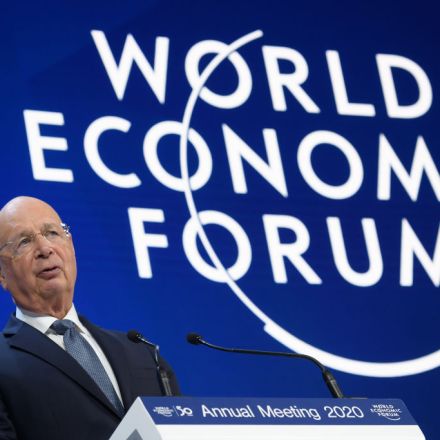
'Welcome to 2030. You’ll own nothing. And you’ll be happy.” This is not a quotation from George Orwell or Aldous Huxley. It is not even supposed to be dystopian. If it is fiction, it is not because it is implausible, but because it has yet to be accomplished as fact. These are the opening lines from a social media video issued by the World Economic Forum in 2016, and generated from “the input of members of the WEF’s Global Future Councils.” These visionaries have further delights in store for us: “Whatever you want, you’ll rent... The US won’t be the world’s leading superpower… You’ll eat much less meat… A billion people will be displaced by climate change. We’ll have to do a better job at welcoming and integrating refugees.

reset