Calla Jones Corner

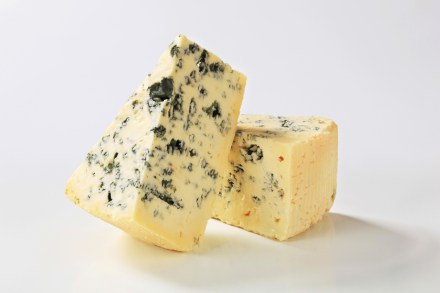
Macron is facing a Roquefort revolution

From our UK edition

I love Roquefort, having been introduced to it when I was 16 by our French exchange student Geneviève, whose father was a producer of the cheese. She brought some in her luggage, wrapped in many layers of brown paper so that the unique, pungent smell wouldn’t invade her clothes. My parents, gourmet cooks and gourmands, immediately started incorporating Roquefort into their menus. Back then it was difficult to find a blue cheese on the US east coast (although Wisconsin had been making one for centuries). When a food shop called Amanda’s opened in Westport, Connecticut, my Swedish mother would drive the seven miles from where we lived to buy Roquefort and other international gustatory goodies (kuminost – a mild Swedish cheese with cumin – was also on her weekly list).

Why is French hospital food so bad?

From our UK edition

This summer has been the hottest on record where I live in Burgundy. It could have been disastrous for the grapes as temperatures reached nearly 40°C. Luckily, most of the vineyards in the Côte d’Or were able to move les vendanges to mid-August instead of early September, when they were expecting to harvest. Apparently, it will be a good year nevertheless. I moved to the little village of Meursault eight years ago in October, to help with grandchildren. My daughter Annabelle works for Domaine Roulot and her husband is winemaker for Domaine de Montille. They were busy harvesting the grapes that autumn. Not any more – most vignerons here, and probably elsewhere in France, think cooler summers will never return.

The joy of French school lunches

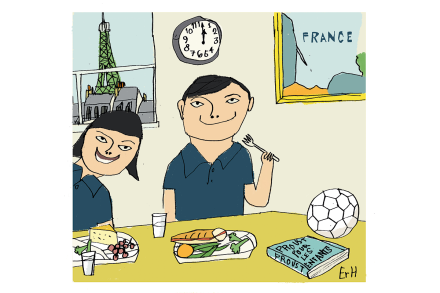
Since moving to France, one of my greatest pleasures has been rushing to pick up my two grandchildren from the tiny schoolhouse in the village of Monthelie. I can’t wait to hear about what they had for le déjeuner. Le déjeuner scolaire, a three- to four-course lunch, subsidized by the government, is sacrosanct. The French even have a phrase for socializing and eating together: la commensalité. They know that “a family that eats together, stays together.” I remember when America, where I used to live, understood that, too. Rarely do you see the French eating lunch or dinner alone in restaurants, bistros or cafés. The exception is for une pause café or morning coffee, when the French do prefer to be alone with a croissant, newspaper and quite possibly a cigarette.

The art of April Fools’ Day

From our UK edition

The French claim authorship of April Fools’ Day, dating it to the late Middle Ages. Back then, those who celebrated the year’s beginning on 1 January under the new Julian Calendar made fun of those who still went by the old one. A paper fish was attached to the unsuspecting backs of Gregorian diehards and the festival became known as Poisson d’Avril. The joke has been somewhat lost in the intervening centuries, denoting either the start of the fishing season, the astrological symbol for late March, or some play on the phrase ‘taking the bait’. The era of mass media has seen many of us become April Fools (or fish).

Breakfasts, massages and reinvigorating Swiss thermal waters

Last January, one of the first things my son-in-law wanted to know was if I’d found a “boy toy” after spending a week at Lavey-les-Bains, following our Christmas holiday in Burgundy, where half of us now live. The other half lives in Australia. The renowned Swiss thermal waters lie under the Dents du Midi that rise above Lac Léman in the Swiss canton of Valais like four, glistening white, enamel incisors. Applicants for Swiss nationality must name Les Dents if applying for a Swiss passport in le Valais or le Vaud where we lived for sixteen years, from 1968 to l984. My answer was “no.

Swiss

The fine wines of Meursault

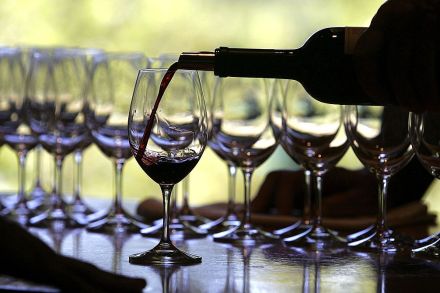
In November, I was privileged to attend the 91st Paulée de Meursault. There are three coveted invitations at that time of year in this part of Burgundy: the world-famous wine auction held in Beaune and the luncheons called la Paulée de Beaune and la Paulée de Meursault. La Paulée de Meursault celebrates the fine wines grown in this small village. It is home to eighty wine-growing families and the area is known for its charm and terroir, that unique blend of soil and climate that has been producing exceptional white and red grapes for centuries. I had heard from our family about this festive celebration ever since our daughter and son-in-law moved to France fifteen years ago to work in wine.

Meursault

In a balloon over Burgundy

I said I’d never go up in a hot air balloon again. But that was a terrified me forty-five years ago. And here I was, relaxed and enjoying the views of the French Côte d’Or with my family and a handful of French people at 1,500 meters, hovering over vineyards, pastures and fields. In 1979 I was contacted by Hans Büker, a thirty-nine-year-old German balloonist who was hoping for some free publicity in the International Herald Tribune, for which I was the Swiss correspondent. Büker was trying to launch a ballooning festival in Château d’Oex in the Bernese Oberland, known for its cheese and rolling pastures pierced by imposing alps.

balloon

Culling cookbooks

How do you choose ten cookbooks out of more than a hundred collected over sixty years? With difficulty. After my beloved husband Richard died, I decided that the only place I would want to live without him was in Meursault, France. The most difficult part was having to leave behind my cookbook collection. For a food writer, it was a daunting challenge. Here is what made the cut. I obviously couldn’t get rid of my father Bob Jones’s The Outdoor Picture Cookbook, published in 1954 and launched to Americans over their morning coffee on NBC’s Today show. He demonstrated how to cook his famous grilled chuck steak as Arlene Francis and Dave Garroway looked on with a bevy of buckets at the ready in case of fire.

cookbook

Cycling and sleeping in wine country

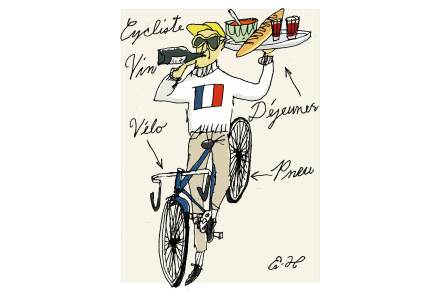
Tom Kevill-Davies and I are sitting on the deck of the Hungry Cyclist Lodge chatting about food and adventures. This enchanting forty-six-year-old man, a cyclist and a chef, arrived in the village of Auxey-Duresses in Burgundy eleven years ago, where he found an abandoned mill that was ripe for renovation. He met Aude, a local teacher, and they have two toddlers. Perhaps Tom is better known (but only slightly) for his captivating bestseller The Hungry Cyclist which he wrote in 2009. The book recounts his two-year-long trip by bike from New York to the beaches of Brazil. The Lodge is neither a B&B nor a gîte. Tom thinks of it as more like an auberge, “a home away from home,” he says.

cycling

How to make the perfect clafoutis

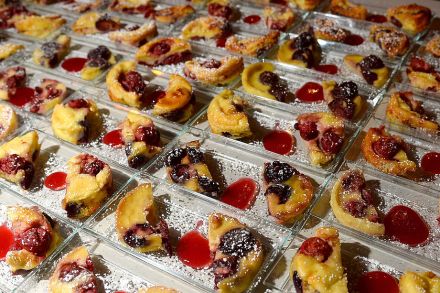
Clafoutis. Difficult to pronounce. But oh-so divine and easy to make. Originating in the Limousin region in south-central France, its name comes from the Provençal clafir, “to fill.” So popular was it “to fill” a dish with fruit and batter, that by the nineteenth century, the renown of clafoutis had spread from the Limousin to other regions of France and bordering countries. This classic and elegant summer dessert is usually made with cherries, among the first fruits to ripen, but also with other stone fruit as they appear — apricots, plums, berries and on into the fall with pears.

clafoutis

My father’s trunk reminds me of one of my earliest Memorial Days

Perhaps we all have our first memories of celebrating Memorial Day. Mine comes from 1945 when my father returned from the Pacific Theater of World War Two. I was only two. My father didn’t have to go to war as he had a family and was “safe” from the draft. Nevertheless, he volunteered after being recruited by the newly founded OWI, or Office of War Information. The OWI wanted men and women, like my father, whose graphic, photography, writing and communication skills at J. Walter Thompson, the worldwide advertising agency, had been noted and would help defeat the Japanese. He felt it was his patriotic duty and was buoyed, no doubt, by having close friends with families who had volunteered.

A terrible tale of a French village

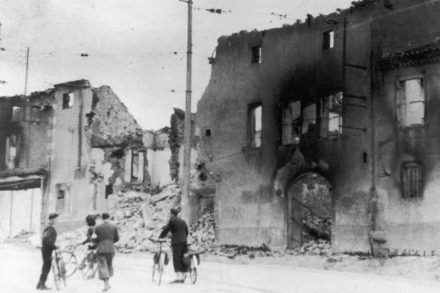
The new prime minister of France, Gabriel Attal, has promised to “take care” of Oradour-sur-Glane. The village, in west-central France, was the scene on June 10, 1944, of an infamous Nazi massacre of 643 men, women and children, shot or locked in the local church and burned alive. Only six villagers escaped to tell the tale; the last of them died in 2023. For years Oradour-sur-Glane has been a site where schoolchildren were taken to learn about what France endured during World War Two. Recently the abandoned village has become overgrown with vegetation, but with the eightieth anniversary this summer, the descendants of the victims are making sure they are not forgotten.

Oradour

How now, Hausfrau?

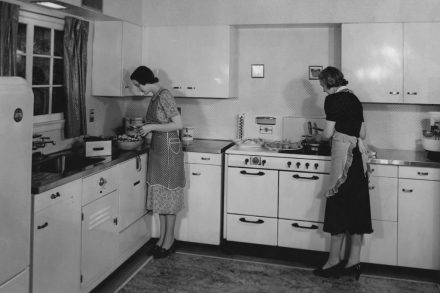
It’s summer and very warm on the famed Café Tomaselli terrace in the heart of Salzburg. Nevertheless, I’m sipping a hot coffee and nibbling strudel (mit Schlagobers — whipped cream, of course!) with Melissa (Missy) Baldino. We are talking food, fashion and Rike & Co., the charming entrepreneur’s new business. Missy launched Rike & Co. this past October from her charming Victorian home in Cambridge, Massachusetts. It may seem a bit incongruous in this age of hyperfeminism to be selling aprons and housedresses. But “Rike & Co.,” Missy says, “is all about family and being fashionable while cooking and doing housework and everything else that many of the fairer sex still enjoy doing.

Why the Romans loved asparagus

From our UK edition

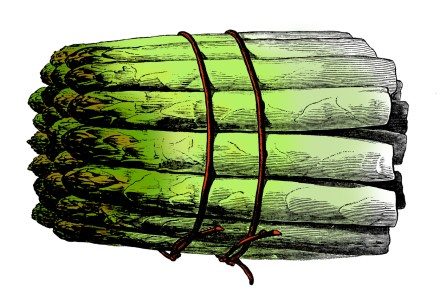
It is said that asparagus was Emperor Augustus’s favourite food. And France is, despite its Gallic spasms, a fundamentally Roman civilisation. Ask nine out of ten Frenchmen if they will have asparagus on their Easter table and they will say ‘mais oui’. The crunchy, slightly bitter stalk has enthralled humans for millennia due to its strange flavour and supposed medicinal properties. Those proto-French Romans were huge fans of the plant. You may even learn an asparagus recipe or two from studying their methods. The French smother their asparagus spears in hollandaise or béarnaise sauce Most of the information on Roman cuisine comes from visual depictions found in frescoes and mosaics that depict what went on during banquets at the time.

Wild boar: a nuisance and a delicacy

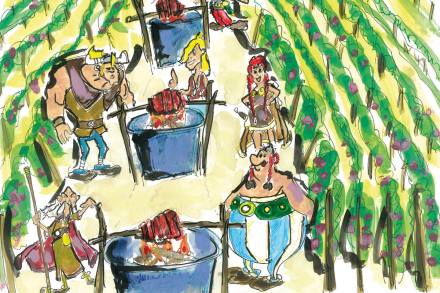
"Comment trouvez-vous le sanglier?" Guillaume parent/hunter/head rôtisseur, asked me last spring, in the tiny village of Monthélie, next to Meursault, where my family lives and where I now live. We were there to enjoy a wild boar banquet. Guillaume, who was dressed as Obélix, Astérix’s sidekick, known for his voracious appetite (especially for wild boar), had roasted three sanglier shoulders on spits over coals from old wine vines. Many of the other villagers had also dressed as famous characters from the comic book series, which often depicts les Gaulois feasting on sanglier after defeating the Romans. Never mind that they are subsequently themselves defeated by the Romans at Alise-Sainte-Reine, an hour north in the Auxois region.

boar

Inside my mother’s purse

From our UK edition

I’ve been carrying with me a little black silk purse with a tortoise shell closing since my mother died 11 years ago. I suppose it’s one of the last things left from my beloved, stylish mother. To help me pick out a replacement, I enlisted my seven-year-old granddaughter, Maélle, a fashionista like me and her great grandmother The little black purse has been sitting in the bottom of my bigger purses; let’s call them handbags, although ‘handbag’ seems so old fashioned a word. I only use ‘handbag’ now to remember my French licence plate – EY 107 HB, ‘every year I buy 107 handbags’ – having moved here following my husband’s sudden death a year ago.

Confessions of a speeding granny

From our UK edition

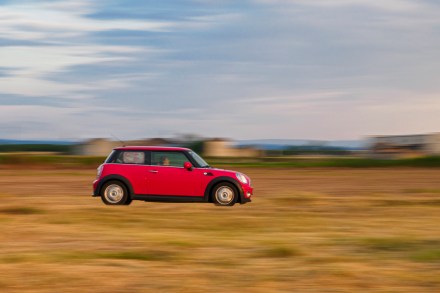
I suppose it was going to happen. But not inevitably. After 66 years behind the wheel, I’ve finally gotten a speeding ticket. In France. During those years, I’ve put the pedal to the metal in an Alfa Romeo (Spider Veloce with Weber carburetors), a zippy MG (my mother’s), a 375HP Corvette Stingray (my first husband’s), occasionally an e-type belonging to a friend and a swanky but stodgy Mercedes. A French camera finally caught up with me as I was ripping up a Burgundian country road from Nolay to Autun, going 105 kph in a 90 kph zone in my new (to me) Mini Cooper. My grandchildren have begun to love ‘Puddle’ as much as (or more than) they love me.

Olé the Swiss way

From our UK edition

I would never attend a Spanish bullfight. I find the ‘sport’ abhorrent, from the enthusiasm of the crowd for blood and gore to the inevitable killing of the poor, innocent bull. I know it’s a cultural thing but that doesn’t make it civilized. I’m even hoping, during the famous annual ‘running of the bulls’ in Pamplona, that some idiot aficionado is flipped in the air, run through by a bull’s horns and will then wake up and realize what it’s like to be on the losing side in such a match.  But Spain is not the only country in Europe where innocent bovines are attacked with a crowd cheering them on. It may be hard to believe, but in tranquil, fair-minded, neutral Switzerland, there exists a version of bullfights.

I love my coronation stool

From our UK edition

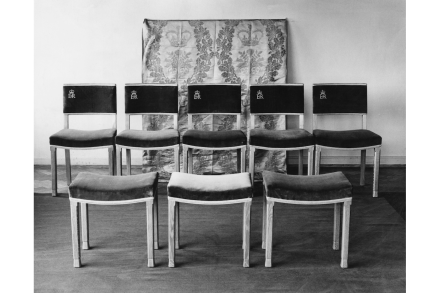
My British fiancé, Richard, came with a dowry. Lest anyone think I married money, china and sterling-for-eight, let me set you straight: Richard's dowry was a huge, wooden salad bowl, a carpet sweeper and a stool. My dowry had the china, sterling and a vacuum cleaner.   No stools were made for Charles III’s coronation, although many chairs have been for important guests. What a shame The salad bowl was significant to our courtship as it held the grand salads that Richard indulged in on his terrace in Grandvaux, a tiny village, above Lutry on Lac Léman.

The Roald Dahl I knew

From our UK edition

In May 1962, I was recuperating from a nasty broken leg – the result of a traffic accident in Paris – at my husband’s aunt Margot and uncle Brian’s enchanting cottage about an hour outside of London in Hertfordshire. The Dulantys' cottage, called The Fisheries, was built in the 1820s in the village of Chorleywood, in a Constable-like setting on the bank of the River Chess. I spent the first couple of days mostly on a sofa in the living room, overlooking the painterly scene, enhanced by Brian's peacocks. The three pairs strutted around the property, displaying their gorgeous plumage and screeching as if they were the rightful owners. But on the third day, boredom set in.