James Jeffrey

James Jeffrey is an editor for the Catholic Herald, a writer and a Camino guide.

Burnt out? Try a monastery

From our UK edition

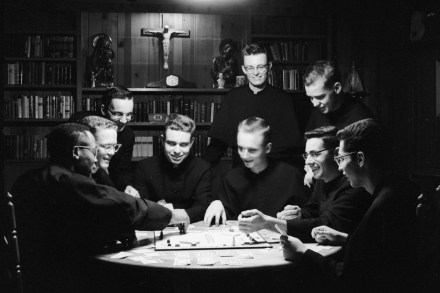
‘What time are morning prayers tomorrow?’ I asked the monk who, after meeting me at the monastery entrance, was taking me to my room. He checked a noticeboard listing the various Offices of the Day, the routine of prayers monks carry out each day of their lives. I followed his finger along the listings. Oh bloody hell, I thought. Lauds on Friday morning was at 5.30 a.m., and I had arrived at the Abbey of St Matthias late Thursday afternoon. Winter darkness was descending on the German city of Trier and I had trudged nearly 40km of the Jakobsweg, Germany’s Camino. Fortunately, the monk – like the rest of his Benedictine order – was a practical man and could see my bedraggled state. He shook his head: ‘That’s far too early, don’t worry – you need to rest.

Germany still feels divided

From our UK edition

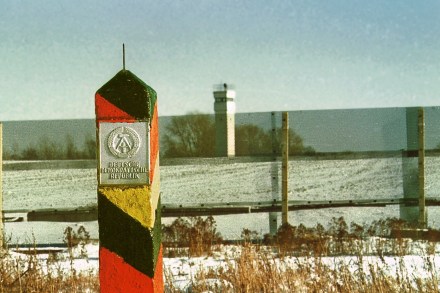
As the S-Bahn tram slid along Bernauer Straße, through its windows I could see tourists posing for photos beside the remains of the Berlin Wall. Everyone fixates on the border that cut through West and East Berlin. We forget that Berlin itself was deep in the GDR and that hundreds of kilometres to the west another border ran down the entire seam of West and East Germany. Observation Post Alpha, the West’s most important military observation post on that border, still stands today as a memorial to the folly of geopolitical games. It was erected to overlook the so-called Fulda Gap, an area of land deemed strategically vital by the Allies. This was where hordes of Russian tanks would charge through in the event of a full-scale attack on the West.

In the forests of Germany’s soul

From our UK edition

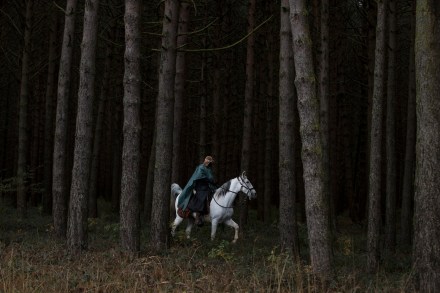
There’s good reason oak leaves have long been incorporated into German military decorations like the Iron Cross. The oak tree is the tree of Germany – its leaves standing for strength, courage and tradition – something I witnessed while hiking from Berlin to Erfurt through the former communist lands of the Deutsche Demokratische Republik. Traversing what used to be East Germany on foot, I realised the extent of its forest cover (and how poor the UK’s is in comparison). There are forests everywhere – about a third of present-day Germany is covered by woodland that is also protected thanks to the political influence of the Greens – and these enclaves are entwined in the German psyche.

The sorry state of France’s churches

From our UK edition

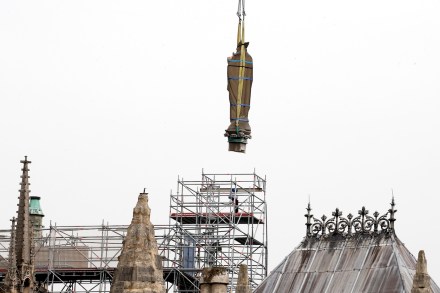
There’s something unsettling about a statue with its head lobbed off. Sure, it’s just a piece of stone. But it represents something. There are headless statues in churches all over France, statues of bishops, martyrs, saints. It’s not surprising those statues came out of the French revolution badly; the church and its clerics weren’t popular. But the revolution was nearly 250 years ago. How come the heads haven’t been put back on? It seems lax of the church authorities, to say the least. After all, the church in France is often referred to as fille aînée de l’Église, the ‘eldest daughter of the Church’. Its roots go back to the Apostolic Age when Jesus’s earliest disciples landed in Gaul.

Where is the British Houellebecq?

From our UK edition

The British literary scene has no one like the French novelist Michel Houellebecq. We are worse off for it. His novels combine a startling number of blowjobs with beautiful writing about God, religion and love. The British publishing industry would never allow someone who is white, male, very heterosexual, sides with Christianity against Islam, writes about the male condition and, perhaps most controversially, takes down modern feminism. Perhaps they think Brits just aren’t good at dealing with abstracts. It’s true that the Anglo-Saxon mind prefers to stick with everyday practicalities; we struggle with the existential truths in the likes of Atomised.

What my walking boots taught me about death

From our UK edition

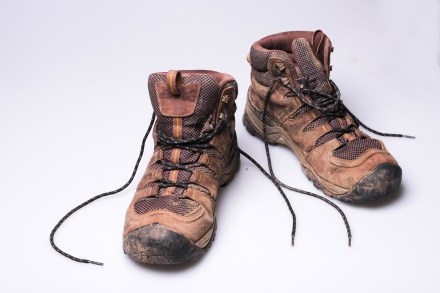
It’s unlikely you’ll find a sorrier-looking pair of hiking boots than mine. As a result of my Camino addiction, the backs of my boots are literally crumbling, while the fronts have split open like a French baguette. They look like prime candidates for the hiking boot version of assisted dying – to put them out of their misery. But on my last pilgrimage, and in recognition of my complacency, I began treating my boots like royalty. I applied leather grease at the end of each day, packing them with newspaper to draw out the moisture. In short, I put those boots before all else. They are lasting far longer than I thought possible. These boots got me thinking about my recent experiences of palliative care: three cases in as many months at the start of the year.

What Sandhurst teaches you about self-care

From our UK edition

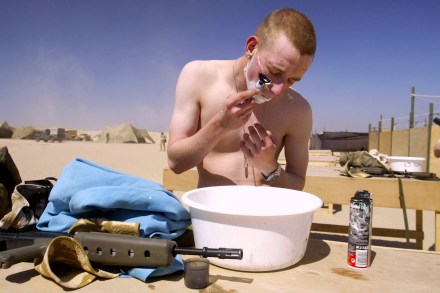
Anyone who attended the Royal Military Academy Sandhurst will never look at a shaving razor in the same way. Ever since my officer training days, when you had to shave on exercise at 4 a.m. in a cold, wet forest, unable to feel your fingers, shaving has been an important topic. Having escaped those dank woods, I’ve tried to embrace shaving at its most comfortable and alluring: using a stylish cut-throat razor, aided by rose-scented shaving cream whipped into a lather by a badger-hair brush. That doesn’t cut it in airport security, where even a lone razor blade could get you pinned down on the floor. So I have tried to find a happy medium, reverting to the type of Gillette razor I used at Sandhurst. But good luck trying to find a two-bladed Gillette Excel blade.

Who really lost when the Berlin Wall fell?

From our UK edition

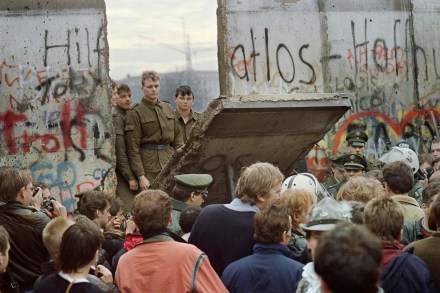
The fall of the Berlin Wall was meant to have been the crowning moment for the West, and for the principles of empowering liberation and freedom. Obviously so – I used to think. Now I’m more along the lines of, well, yes and no. The fall also seems in some ways to divide the former good times from the current bad times, both for Germany and for the rest of us. Such thoughts came to mind after I headed to Berlin to witness the New Year’s Eve fireworks display, during which the city is turned into the most attractive war zone you’ll encounter. I stayed with my brother, a creative type who, like many others artistically inclined, settled in Prenzlauer Berg, an area formerly in East Berlin. With the Wall down, people were drawn to the low prices and atmosphere of artistic liberty.

A pilgrimage to St. Francis’s holy sanctuary at La Verna

Beneath a stunning Della Robbia Crucifixion a lone candle burns on the floor of the Holy Stigmata Chapel in the sanctuary of La Verna. The immense tranquility belies the astonishing events that occurred in 1224 on this rocky outcrop in central Italy’s Umbrian hills. The chapel marks the spot where, two years before his death, Saint Francis, retreated to fast and pray with two of his brother friars. After some weeks, Francis saw a six-winged Seraphim, apparently crucified, who appeared and imposed the five wounds of Christ’s Passion on his body — in paintings the angel appears to be “lasering” St. Francis, who is often depicted as a sort of Franciscan version of Willem Dafoe getting it at the end of the film Platoon — including the nails protruding. Heady stuff.

la varna

An apocalyptic dog walk in Seville

From our UK edition

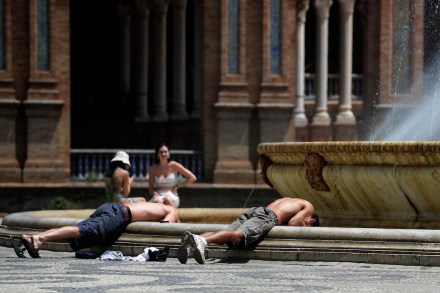
She looked up at me imploringly from the simmering pavement as the sun beat down on one man and his dog in Seville. ‘You haven’t peed yet, Amaya, we need to walk on a bit more,’ though I realised the injustice, as we were both so dehydrated neither of us had much chance of fulfilling such obligations. I found myself unexpectedly dog-sitting in the Andalusian capital after my English landlady got rather tipsy and, in a moment of reckless abandon, committed to booking a flight back to the UK to spend time with her family for the first time in a year.

Why are men being told to worry?

From our UK edition

What’s a guy got to do these days to take a pee in peace? Standing at the urinal in London King’s Cross train station, I was trying to embrace the present, not dwell on the failures of the past or the great trials to come; and for a brief moment, I felt that Zen-like tranquillity that, as all guys know, is key to avoid a freeze moment at a public urinal. But then, ‘MALE SUICIDE IS AN INCREASING PROBLEM. IF YOU OR ANYONE YOU KNOW ARE HAVING THOUGHTS...’ blared the Tannoy system. My inner Buddha fled. I left the public toilets thinking, ‘hmm, I don’t think I’ve been feeling particularly suicidal of late... But maybe?’ I was soon gazing at the latest poster campaign for prostate cancer (anti, not pro). One in eight!

Give me nonsensical Naples over sterile Singapore

From our UK edition

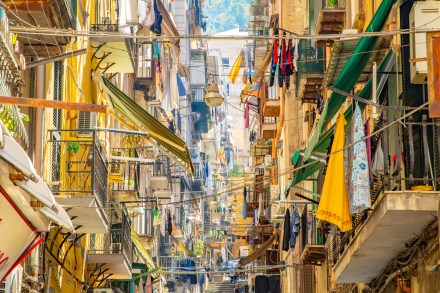
Naples is dirty, noisy, haphazard, and full of kamikaze scooter drivers. It is also sensual, liberating, and jolly. But that doesn’t seem to appeal to many people today, who prefer everything to be ordered, measured; all uncertainty removed. In city form, it’s known as Singapore: unlike Naples, everything there is clean, tidy, and works. It’s also a sterile, soulless, mini dictatorship. Everyone looks a little sticky, ruffled; no one cares about a sweat patch breaking out – shock horror J.G. Farrell’s wonderful book The Singapore Grip describes the fall of Singapore during the second world war. There are many parallels between the city back then and Naples now: the elegant decay and human vitality.

Why have women stopped smiling at me?

From our UK edition

No one seems to be talking about how the faces of most of the female population appear to have frozen. I increasingly find myself gazing admiringly at groups of young men – like some sort of proud avuncular patriarch – who seem the only people left capable of smiling. Like knights of old, they are protectors of an arcane tradition that is dying out. Women form the bedrock of civilisation: without them on side, things ultimately go awry for any society The so-called ‘bitch face’ look is chic at the moment. Look at billboards and none of the models are smiling. It’s all very Bret Easton Ellis.

I envy the hippies of Finisterre

From our UK edition

I can’t stop thinking about Pierre. I first met him at the end of December in a Finisterre bar much favoured by the hippy types drawn to the strange energies of the western coast of Galicia. With his sunned and bearded swarthy face, solid build and tattoos, I initially thought he was a Galician fisherman. But when I dropped a napkin on the floor and he swooped to pick it up for me, I was struck by this conscientious and unexpected behaviour. I’ve noticed a correlation between missing the odd tooth, having a weathered face and being open and warm-hearted The next day I ran into him at a bar beside the small harbour.

The mystical power of Assisi

From our UK edition

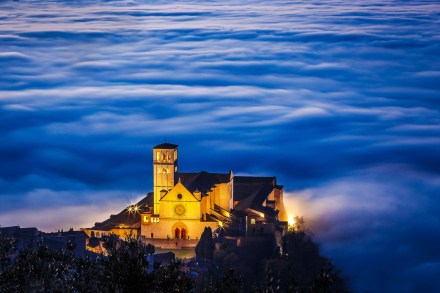
In the courtyard of the bishop’s palace, the young man who would become Saint Francis stripped naked in front of his parents and various town and church officials. He handed his clothes with a bag of money on top to his father, saying: ‘I give these back to you. From now on I have one father; the Father in Heaven’. Deep in the basilica is a striking painting depicting a six-winged Seraphim angel bestowing the stigmata with what looks like lasers It was a turning point in his life (not to mention devastating for his parents).

In praise of the späti, Berlin’s late-night corner shops

From our UK edition

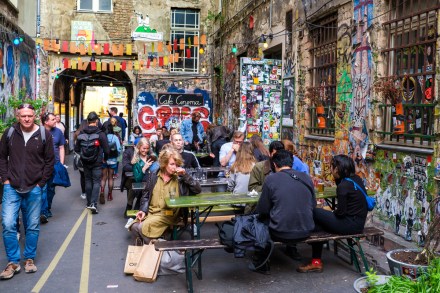
The späti is a Berlin institution. These late-night corner shops began popping up in the former German Democratic Republic for workers clocking off from their evening shifts. Serving as a mixture of mini-supermarket and meeting place, spätis have outdoor seating, often wobbly wooden tables and benches on which locals sit and drink cheap bottles of beer from the amply stocked fridges. Spätis are much cheaper than bars, with most beers going for around €1.50 a bottle Spätis are much cheaper than bars, with most beers going for around €1.50 a bottle (and some as big as half a litre). They continue a quiet and benign form of East German egalitarianism, attracting to their benches any character that can afford the low price of a drink.

Gaza and the terror of tank warfare

From our UK edition

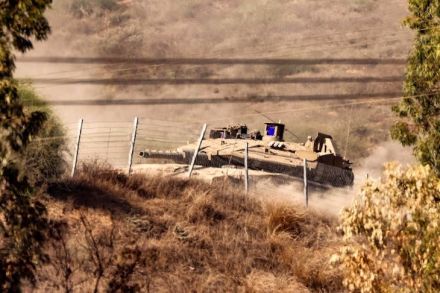
As Israel encircles Gaza City, the Israeli Defence Forces (IDF) is conducting what we in the British Army call Fibua, or Fighting In Built-Up Areas. Less ceremoniously, it's known as Fish – fighting in someone's house – or Fish and Chips – fighting in someone's house and causing havoc in people's streets. But the flippant name belies the danger – and terror – of these operations. My taste of Fibua came in 2004 during tank operations in Al Amarah in southern Iraq. While my experience might be a little out of date, the fundamentals of urban combat for tanks haven't really changed. The tank is a formidable weapon.

Forget grim British cider, and go to Spain for some ‘sidra’

From our UK edition

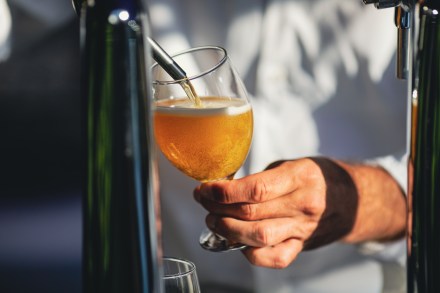
I always thought drinking cider was a bit lame. But then I did a Camino pilgrimage that took me through Spain’s northern Asturias region. I now think cider is cool.  Cider is a phenomenon in Asturias, where the art of imbibing sidra, as it is called, is elevated to a ceremonial form. We have the Trooping the Colour; they have sidra pouring.  When the barman pours the sidra bottle from above his head, the glass down at knee level, while looking dead ahead with the subsequent mini waterfall hitting the glass through dead reckoning: that’s not lame. The pourer even tilts the glass away from him, dramatically shrinking the ‘aperture’ available at the top of the glass.

Brussel or Bruxelles? Even the locals can’t agree

Brussels is the source of all evil to many of those who supported Brexit, and even for Americans. “What’s a good Christian boy like you doing in Satan’s den?” was the question of an Austin friend when I told him work had brought me to the capital city of the European Union. To its critics, Brussels is the bastion of the worst sort of Big Government, with the European Commission and Parliament issuing diktats to more than 500 million people across twenty-seven nations. But while the city is “full of nets” with which to trap you, as described by another friend who worked here on human rights legislation, it’s also a city of “hope.” Brussels has a rich comic book culture. There are the intrepid reporter Tintin and his sidekick Snowy.

brussels

On the death of a pilgrim

From our UK edition

John Brierley, who died last month, was a legendary pilgrim that you’ve probably never heard of. Admittedly, these days most people aren’t familiar with any pilgrims. Just going to Sunday mass is unorthodox. The vast majority of us who respected Brierley never met him and probably, like me, never saw a video clip of him or even heard him talk. We knew him only from his series of Camino de Santiago guidebooks. But that was enough. Having been translated into numerous languages and sold around a million copies, his books shepherded countless pilgrims like me on their long travels across continental Europe toward the remarkable city of Santiago de Compostela in north-western Spain.