Robert S. Erickson

Jane Clark Scharl delivers artful truths in Sonnez Les Matines

As preface to his verse play King Victor and King Charles (1842), Robert Browning made a striking assertion about the claims poetry has on truth. In dramatizing King Victor Amadeus II of Sardinia’s abdication and subsequent attempt at re-accession, Browning said, he had produced a “statement” on the subject “more true to person and thing than any it has hitherto been my fortune to meet with.” Naturally, that “statement” — peculiar word for poetry — differs considerably from the historical record. Yet the merits Browning ascribes to his version — not surpassing beauty, but truth to “person” and “thing” — we would tend to call prosaic, the province of history or science or some other species of nonfiction.

sonnez

Taking in Good Night, Oscar and New York, New York

Mental illness is horrifying and hilarious, like politics or killer clowns. And unlike those two subjects, it can be staged without tackiness or gimmicks. King Lear’s all the more tragic for losing his marbles and out-fooling the Fool. I was nevertheless surprised to see a show exploit the premise as heartily as Good Night, Oscar does, for laughs and gasps alike. The new play about the mid-century pianist, actor, comedian, and all-around firecracker Oscar Levant gets more mileage out of old-school “mental-health struggles” — alcoholism, drug addiction, schizophrenia, OCD, wifebeating, electroshock therapy — in a taut hundred minutes than Dr. Phil could in a whole season.

Oscar

Bringing back Stephen Sondheim and enduring a new Andrew Lloyd Webber

On Sunday April 16, the curtain went down on Andrew Lloyd Webber’s Phantom of the Opera for the last of 13,981 performances on Broadway, a titanic thirty-five-year run grossing north of $1.3 billion. The end of an era? Not quite — dating back to the 1979 opening of Evita, Lloyd Webber musicals have run continuously on the Great White Way for forty-four years. That streak is now hitched to the fortunes of Bad Cinderella, which opened just weeks before Phantom closed. The show gets a lift from a lush score and some winning numbers, as well as sumptuous set design. The whole premise, however, turns out to be a pumpkin, and it may spell midnight for the composer’s magical run within the year.

Lloyd webber

Broadway brings back Bob Fosse’s Dancin’

To kick off the new revival of Bob Fosse’s Dancin’, a lone performer comes onstage to inform us that, per the recommendation of the WHO, the CDC, the US Surgeon General and sundry others, the evening’s proceedings will not include any plot, message, or moral. I pinched myself. Wearing Fosse’s signature bowler hat, the speaker, played by Manuel Herrera, promises nothing but “dancing, some singing... and more dancing” — and for the most part, this dazzling two-and-a-half-hour musical revue lives up to that promise. Directed and staged by Wayne Cilento, who danced in the original production, the first revival of Dancin’ on Broadway is a treasure trove for Fosse fanatics, a smart introduction for the unfamiliar and a delight for everyone between.

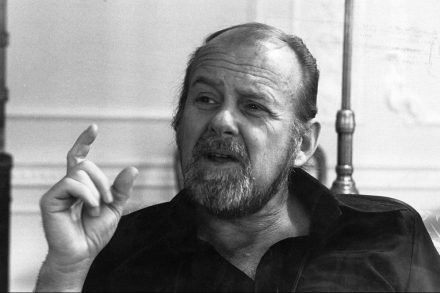
bob fosse

A stripped back Doll’s House on Broadway

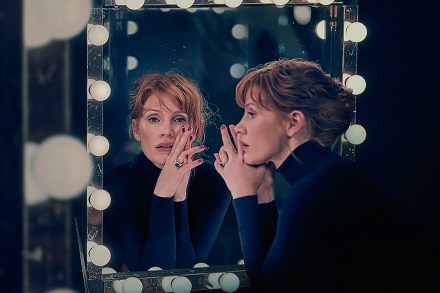
The difference between a divorce and a funeral seems lost on the director Jamie Lloyd; ditto for bird cages and prisons and, in the end, Henrik Ibsen’s A Doll’s House (1879) and a sanatorium. Lloyd’s new, minimalist production on Broadway is so stripped of ornament, so unremittingly rote, that this reviewer nearly handed his valuables to an usher and asked for a padded room. At the play’s close, the director has the embattled housewife, Jessica Chastain’s Nora Helmer, make her defiant exit through the back wall of the theater upstage; a garage door opens and she strides onto the rain-soaked pavement, probably to be harassed by tweakers or shoved into oncoming traffic. Peals of laughter erupted in the audience — here was our chance!

doll's house

& Juliet and Titanique: two newly minted cult classics

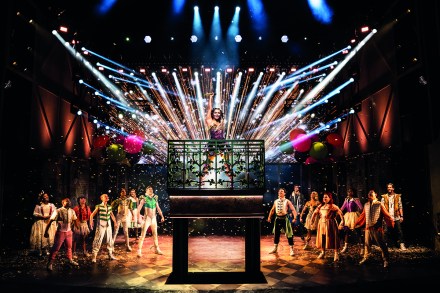
Fears that the new pop-parody musical & Juliet would be a vehicle for steamrolling Shakespeare are understandable but unfounded. It’s true that, on Broadway as in the rest of the arts, holding dead white males up for flagellation is now almost a cherished ritual — a recent example being last season’s Six, a glitzy feminist paean danced on the grave of Henry VIII. There’s a healthy dose of girl power in & Juliet, too, and I don’t doubt that a few heedless theatergoers came with tomatoes in hand, hoping to find the Bard pilloried. Let me tell you a secret: the theater world still adores Shakespeare, even in 2023. To renounce him is to swear off your mother’s milk.

Juliet

The Some Like It Hot revival is cream-puff theater

The new Some Like It Hot on Broadway has bass player Jerry (J. Harrison Ghee), disguised among Big Sue’s Society Syncopators as “Daphne” to hide from the Chicago mob, decide to embrace the drag lifestyle and elope with his elderly suitor Osgood (Kevin Del Aguila) by the show’s end. (The 1959 film closes with Jerry straining to extract himself from Osgood’s clutches.) Many theatergoers will not expect this update, setting up a bit of dramatic irony too delicious to be unintentional. What’s a drag show, after all, without a few surprises? To my knowledge, this irony has gone entirely uncapitalized by headline-writers across the nation. Some Like a Hot Dog! Speakeasy, Don’t Tell! Billy, but Wilder! Jack’s Lemon!

some like it hot

Ebony and ivories

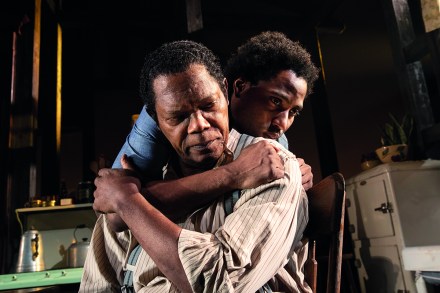
In the early going of The Piano Lesson (1987) there’s mention of a merchant buying up musical instruments in the black neighborhoods of 1930s Pittsburgh. When offers for the titular family piano are rejected by its current proprietor, Berniece, her brother Boy Willie, who has arrived from the south, hopes to sell it to him behind her back. It’s a coy reference to that great Broadway salesman of band equipment, Meredith Willson’s Music Man (1957), and the reversal gives you some idea of playwright August Wilson’s method. Where Meredith built a full musical around a musical zero (Harold Hill is tone-deaf), August composed a stage play from the music of the blues, which he called the “sacred book” of black literature.

piano

An ingloriously dumb adaptation

There’s always been a market for nostalgia. Keats, the huckster of Greek glories, put it best: “Heard melodies are sweet, but those unheard are sweeter.” But the peculiar achievement of Lester Bangs, the cantankerous rock critic played by Philip Seymour Hoffman in the film Almost Famous (2000), is to sell us some self-confessedly unsweet music. True rock and roll, the Bangs character tells us, is “gloriously and righteously dumb” and could suffer no worse fate than to become an “industry of cool.” Of course, by his lights, the golden age has passed; all that remains is “the death rattle, the last gasp, the last grope.” If nostalgia is a drug, he has mainlined the stuff. What are you on, man, and where can I get some?

almost famous

Baldwin and Buckley clash on the New York stage

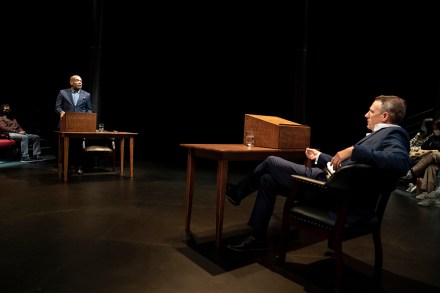
It’s fair to ask what James Baldwin would have made of Baldwin and Buckley at Cambridge, the Public Theater’s recent presentation of his famous 1965 debate against William F. Buckley Jr. It’s not that the show doesn’t strain mightily to champion Baldwin in the contest — it does — but the novelist viewed what he called “problem” or “protest” art with particular scorn. This was a writer who torched fellow travelers Harriet Beecher Stowe and Richard Wright in the same breath for perpetuating, in his view, the same “monstrous legend” of racial inferiority. To call Baldwin an activist or a champion of civil rights doesn’t quite cover it: the man operated on a theological plane, aiming at spiritual transformation. His standards for art were notoriously exacting.

baldwin buckley

Is this Tom Stoppard’s last act?

The London premiere of Leopoldstadt in 2020 made this decade the seventh in which a new Tom Stoppard play has been delivered unto the world, and since the playwright has suggested it may be his last, some words about his legacy seem to be in order. Stoppard is often regarded as the greatest English playwright of the later twentieth century. Harold Pinter is the other popular choice. Both men picked up where Pirandello, Beckett and the absurdists left off. Their respective approaches form two sides of the same post-existentialist coin. Stoppard made his name with the expanded footnote: plays in which a sidelight takes center stage, often bristling with comedy, like the metatheatrical Rosencrantz and Guildenstern Are Dead (1966) or The Real Inspector Hound (1968).

Leopoldstadt

Weighing in on the unauthorized Hamilton

It was probably inevitable that the culture wars would come for Hamilton. The show had something for everyone — parents and kids, pop-culture enthusiasts and history buffs, right and left. It was the unifying, twenty-first-century Great American Musical, if we could keep it. We couldn’t, of course, and the dustup over a rogue Hamilton production in early August at The Door Christian Fellowship Church of McAllen, Texas, gives one indication why. The non-denominational church, situated not ten miles from the Mexican border at the very southern tip of Texas, presented a modified version, censoring risqué sections and making secular bits Jesus-centric. One scene has our hero Alex repenting his sins (his capitalism?

Hamilton

Robert Icke’s smart pairing

On a Saturday in August, stuck in Manhattan  and growing less enamored of the thought, I holed up at the Park Avenue Armory to catch English director Robert Icke’s Hamlet (2015) and Oresteia (2017), playing in repertory. Icke is a darling young thing on the British theater scene, “acclaimed,” as the program informs us, “for his intelligent and accessible productions” of classic texts. Hamlet runs for three hours and forty minutes, Oresteia for three fifteen, which gives you some idea of what is meant (or not) by “accessible.” These are big, bold productions. But for what it’s worth, the cavernous Wade Thompson Drill Hall proved accessible to a packed crowd.

hamlet

Macbeth on Broadway: a Very Modern Scottish play

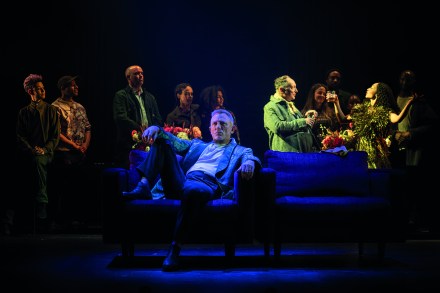
The new Macbeth on Broadway starring Daniel Craig ends up about where you’d expect: a Macbond unhinged and raving about Birnam Wood come to Dunsinane, splattering the castle walls with the gore of his enemies and pummeling Macduff mercilessly until the showstopping reveal that the latter was “of no woman born” but, in fact, “from his mother’s womb/ untimely ripped.” Omit the full-cast kumbaya circle at the end (a too-sweet cherry atop a bloody sundae), and the denouement essentially gives you Shakespearean drama at its most unimaginative — as a Hollywood action blockbuster. This isn’t to say that Shakespeare cries out for bold reimagining. Nor is there anything wrong with giving people what they came to see. It is Daniel Craig, after all.

Macbeth

Throwing curveballs

"This mob is not the people,” declared Henry J. Raymond in his paper, the New York Times, about the Draft Riots in July 1863. Blue-collar workers in New York, mostly Irish, had begun by protesting a new conscription law, but anti-war sentiment quickly became a pretext for widespread destruction, looting and racial violence. Blacks were hunted, their homes and businesses trashed, and scores of them lynched. Raymond wanted no quarter for the rioters: “Give them grape[shot] and plenty of it.” The new musical Paradise Square imagines a “little bit of Eden” in the Five Points slum of downtown Manhattan, July 1863, where, we are told, blacks and Irish did not just coexist peacefully for a time but flourished.

paradise

Midcult madness

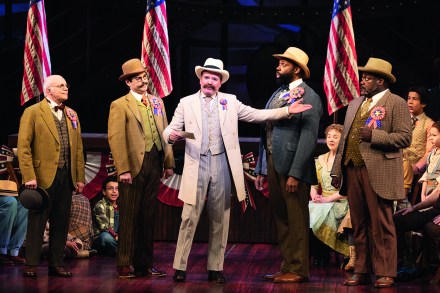
On the same Broadway block as MJ: The Musical is the tale of another song-and-dance man hailing from Gary, Indiana: Harold Hill, doctor of music, huckster of band equipment and Meredith Willson’s titular Music Man (1957). Well, that’s not quite the case: Professor Hill is a lying crook, and his Hoosier backstory is a fabricated ruse. He claims to be a graduate of the Gary Conservatory of Music, class of ’05, but the town of Gary was only incorporated in 1906. Played by Hugh Jackman, this smooth criminal sails into River City, Iowa, promising the Ewarts and Eulalies of the town he’ll make disciplined bandspeople out of their darling Winthrops and Amarylisses.

music

Michael Jackson on Broadway

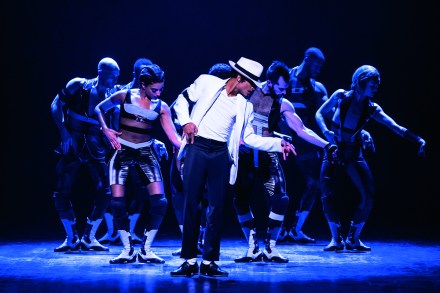
Michael Jackson has a claim to being the most famous man in history. He is certainly the most widely seen and heard. His career straddled five decades and the heydays of radio and television. His Thriller is the best-selling album of all time. He went from playing nightclubs and The Ed Sullivan Show with the Jackson 5 to solo tours that each attracted more than four million fans. For musical celebrity, there is no comparison. The Beatles? MJ owned them, literally: he bought their entire catalogue in 1985. Elvis Presley? Lisa Marie was the King of Rock and Roll’s only daughter, but it took marrying the King of Pop to make her a star.

Jackson

Swing for me

Lots of folks go to swingers’ parties; fewer go by accident. I achieved this distinction, once — and in my defense, I will plead only that my ignorance of the situation was so extreme, my credulity so extensive, that it took my asking one couple, in complete earnest, the most hilarious and incidentally incisive questions a person in my situation could ask — “How did you two meet?” and “How do you know the host?” — in order to set the record straight. To the first, the one said that the other’s husband had introduced them. The answer to the second was the old chestnut about “college roommates,” et voilà! At parties nowadays, I just ask people what they do for work.

company

Nanny bait

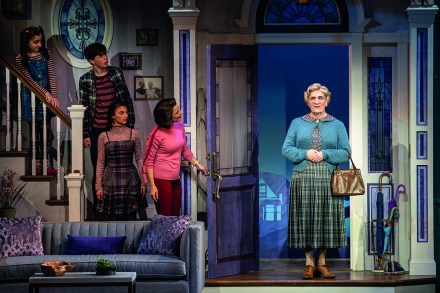
Was Mrs. Doubtfire a children’s movie? You might think so after seeing the new musical version, which opened at the Stephen Sondheim Theatre in early December. The 1993 Robin Williams classic hails from that glorious era of made-to-end-up-on-TV blockbusters at the end of the twentieth century — the movies that so many millennials first came to know piecemeal, catching a scene or two with dad while mom clucked disappointment from the other room. In films like these, each scene is designed to stand on its own, which may explain why the creators of the Doubtfire musical thought they could drop so many of them, barely laundered, right onto the stage.

doubtfire

Truth in Duluth

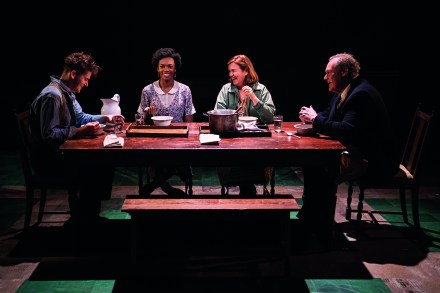
The Venerable Bede writes of a pagan priest in seventh-century England who, sizing up the meager life of man, compares it to a sparrow flying through a well-warmed dining hall on a stormy winter night. The priest admits to knowing nothing about the cold darkness before or after the brief passage. He can only speak to the time the bird spends in the light. In Girl from the North Country (open run at the Belasco Theatre), the season is the Great Depression in 1933, and the dining hall is a flophouse in Duluth, Minnesota, where down-and-outers blow through like so many birds on the wind. The innkeeper, Nick Laine (Jay O.

north country