Alex Perez

Is Miami really on the rise?

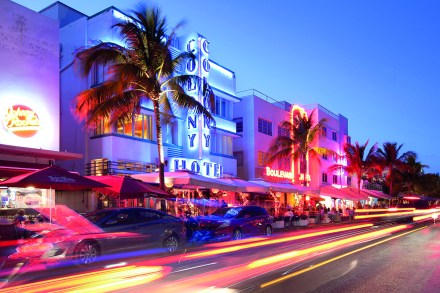
My lunch spot in suburban Miami-Dade County, El Palacio de los Jugos — the Palace of the Juices — is the kind of Cuban joint that specializes in monstrous portions served up by some of the finest mamacitas on the planet. The black beans and rice can be overly greasy and the tropical jugos sickeningly sweet, but one frequents the palace for the only-in-Miami atmosphere; the food is incidental. On any given day there, you’ll run into a construction worker chatting up the gals from the Asian massage parlor next door. Young bros roll up in souped-up Hondas and scarf half a dozen empanadas before rushing off to cook up their next low-level con. The Cuban old-timers sit around, as they’ve done for decades, slamming cafecitos and denouncing los comunistas.
Miami

A grand slam

The majority of us who aren’t touched by genius come to terms with our mediocrity in late adolescence, once our dreams of sports superstardom are dashed or that bumbling first attempt at a novel sets us straight. You won’t be the next Jordan or Hemingway, after all. Getting over the initial shock of one’s dreams being dashed without suffering some kind of crack-up is the mark of high character and perhaps the first sign a man will settle solemnly — but not joylessly — for a well-adjusted life of invisible, middling victories. The best-adjusted man will embrace the comfort of mediocrity and live vicariously through the great men he admires, which is to say that he’ll become a fan.

dyer

Paradais City

The Chilean poet and novelist Roberto Bolaño passed away in 2003, but his specter still haunts the literary world. Bolaño, a singular Latin American genius beloved by the literati, left a massive vacuum after his untimely death, and publishers have been trying to fill it ever since. This has been a great boon to Spanish-language authors whose work was plucked from the provincial world of Latin American letters and now reaches a wide readership in translation. The search for Bolaño’s literary heir has also been a blessing for American readers, as brilliant contenders such as Valeria Luiselli and César Aira are now published by major American presses, adding some much-needed spice to year-end reading lists.

paradais
spring breakers

Beach for America

I don’t know how I first came across Harmony Korine’s Gummo (1997), but in this cult film about the foibles and joys of small-town life, I found a director who understood the cinematic merits of American seediness. Gummo, which features amateur actors in debauched scenes, hosts a collection of freaks unsurpassed in modern cinema, including skinhead brothers, a boy dressed in a bunny suit (he goes by “Bunny Boy”), and a gay dwarf. Though mostly repulsive, Gummo has a transgressive charm that makes it impossible to turn away. Like Korine’s Mister Lonely (2007) and Trash Humpers (2009), Gummo is less about plot and theme than feeling and sensibility. It is an aesthetic experience that stylizes grime to capture the essence of characters one hopes not to encounter in real life.

Dirty realists

I recently finished yet another predictable novel about Brooklyn neurotics and needed a gritty palate cleanser. Raymond Carver’s Where I’m Calling From: Selected Stories seemed ideal. Carver, a master of the short-story form, has long been one of my go-to writers, but, in recent years, he has increasingly lost literary relevance. Twenty years ago, Carver’s terse, minimalistic style was all the rage. Like Hemingway and Bukowski, Carver birthed a sea of mediocre imitators onto the American literary scene. In most US short-story collections published in the Eighties or Nineties, Carver’s stylistic and thematic influence is evident from the first page.

realists
Belfast

Troubles in paradise

As Van Morrison’s lovely, Oscar-nominated “Down to Joy” plays over the opening credits of Belfast, I immediately accepted that I was being primed for the tears that would surely be flowing in an hour and a half. It’s obvious from the outset that Belfast, Kenneth Branagh’s touching Troubles-set coming-of-age story, is pure Oscar-bait, a film engineered to produce both weepy breakdowns and awards. The ingredients are all there. It documents a historical sectarian conflict, one pitting Protestants against Catholics. A beautiful young family, struggling financially, must navigate the chaos that has descended upon them.

Florida’s ‘Don’t Say Gay’ bill plays into DeSantis’s hands

On Tuesday, the Florida Senate passed the Parental Rights in Education bill, and Democrats lost their minds. The Florida left is in a bind these days. Governor Ron DeSantis is shaping the state in his image and Florida is all but guaranteed to go red for the foreseeable future. Yet their recent behavior is desperate even for them. Democrats are having trouble finding suitable candidates to run for statewide elections in 2022 — Debbie Mucarsel-Powell, for instance, isn’t seeking to reclaim her old seat — so it’s not a surprise that they’ve gone all in with the emotional scare tactics and sleight-of-hand rhetorical tricks that increasingly epitomize their party. The approach, however, is misfiring, only serving to prepare DeSantis for his inevitable 2024 presidential bid.

Florida Governor Ron DeSantis (Getty Images)

I’m a Latinx person of letters

A development has reshaped the world of letters. The literary universe is no longer a boys’ club but the playground of woke Brooklyn ladies who’ve swallowed up editorships and literary-agent gigs. The results continue to be predictable: a constant bombardment of books from elite white women about the travails of neurotic Brooklyn ladies, and victim narratives about brown suffering. The fetishization of people of color has come to define the woke relationship with so-called marginalized communities. Virtually every literary book — except for those based in Brooklyn — details the struggles of a victimized minority. The Booker Prize longlist or the National Book Award finalists will annually bombard you with weepy tales of generational POC suffering.

poc
hand of god

Naples and nurture

The climactic scene in the Italian director Paolo Sorrentino’s latest film, The Hand of God, finds the teenaged Sorrentino stand-in, Fabietto, being verbally attacked by an aging director named Capuano, the seaside at their backs. At this point in the film, the young Fabietto (Filippo Scotti), a sullen mama’s boy searching for meaning, has suffered an immense tragedy and is looking for answers. Enter the wise man. The scene, like many in The Hand of God, is on the nose and borders on the melodramatic, but when Capuano (Ciro Capano) yells “how does this city not inspire you?” at Fabietto, he reveals the film’s emotional core. The Hand of God, like Sorrentino’s previous work, is highly stylized and aesthetically beautiful — a true visual feast.

The restaurant that set Miami ablaze

You’d think that a restaurant named Café Habana would be a perfect fit in Miami. But when it emerged this week that the New Yorker-owned joint specializing in Cuban/Mexican fusion was “inspired by a storied Mexico City hangout, where legend has it Che Guevara and Fidel Castro plotted the Cuban Revolution,” all hell predictably broke loose. The restaurant, slated to open in downtown Miami in the spring, has since scrubbed the Castro and Che reference from its website. But no amount of damage control will appease commie-hating Miamians, many of whom are surely cooking up protest plans, pots and pans at the ready. The original Café Habana opened in New York in 1997, and like so many other restaurants before it — the famed Carbone, etc.

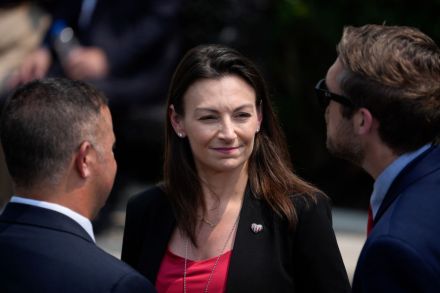
Nikki Fried, clueless Florida Woman

Nikki Fried, Florida’s commissioner of agriculture and Democratic candidate for the state’s governorship, recently compared Governor Ron DeSantis to Hitler. Fried’s deplorable comparison, sadly, was right in line with an erratic gubernatorial campaign laced with desperation and idiocy. Fried has attempted to position herself as Florida’s savior from the supposedly despotically inclined DeSantis. The problem for her — and for anyone who runs against DeSantis for that matter — is that over the course of the pandemic the incumbent has become an extremely popular political superstar. An increasing number of Floridians want him to continue transforming the state as he sees fit.

Serve and volley

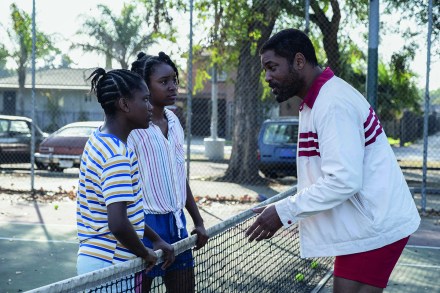
Richard Williams, the mercurial father of the tennis superstars Venus and Serena, is the subject of the wonderful new biopic King Richard, starring Will Smith in an Oscar-worthy performance. Williams is a fascinating figure who, as longtime tennis fans know, planned out the careers of his daughters before they were even born, telling anyone who’d listen that the Compton-bred girls were destined for superstardom. It was a preposterous statement, all the more so since it was made by a man who knew next to nothing about tennis. Yet as we now know, Williams’s vision became reality.

Richard

AOC and the Florida freedom virus

Alexandria Ocasio-Cortez, like many a New York progressive, headed down to the Sunshine State recently. First she was photographed having a drink with her ginger boyfriend. The youngish lovebirds were having a grand old time, and to that, as a Miami native and a lover of all things 305, I say, good for them. That’s what Miami’s here for, even for the haters. AOC is a hater, no doubt, what with her DeSantis-bashing and insufferable histrionics, but a moron she is not. She may be a ditz, but like Trump, she has a preternatural understanding of the social media political ecosystem and how to manipulate it. That's why she decided to come to Miami and decided to be photographed, smiling and maskless. AOC was not caught.

aoc florida

On literary cross-dressing

When Carmen Mola won Spain’s Planeta literary prize for her crime thriller, The Beast, it was widely assumed that she was a female professor with a hardboiled literary style. Think again, mis amigas. Mola was the pseudonymous literary creation of three men: Jorge Diaz, Antonio Mercero and Agustin Martinez. The three scriptwriters smirkingly accepted the million-euro prize at a ceremony in October, and the literary world, home of uppity puritans and shrill wokesters, immediately found itself enmeshed in a scandal highlighting issues relating to authenticity and authorial freedom.

literary
guilty

Jake Gyllenhaal is guilty

Jake Gyllenhaal is losing it. As with so many of his films — Demolition, Southpaw and Nightcrawler, to name a few — the actor’s latest, the unconventional crime thriller The Guilty, finds him yet again portraying a troubled man, beaten down and about to crack up. Joe Baylor is an LAPD cop relegated to working at the 911 call center as the result of misconduct some eight months before. Surly and apathetic, Joe answers the nightshift calls, ranging from drunken mishaps to carjackings, with a disgust he doesn’t care to contain. He longs to return to the streets. The night turns, however, when Joe fields a call from a woman (voiced by Riley Keough) who’s been abducted and is being held in a white van.

Hispanics will not submit to ‘Latinx’

A piece in Politico titled “Democrats fall flat with ‘Latinx’ language” dropped yesterday, and as is always the case with such stories, activists and pundits took to Twitter to decry or defend “Latinx.” What was interesting this time around, however, is that some big-name progressives came out against the term. Fernand Amandi, an MSNBC analyst and the principal at Bendixen & Amandi International, the polling outfit quoted in Politico, tweeted: https://twitter.com/AmandiOnAir/status/1467843020838080512?s=20 According to the poll, only 2 percent of Hispanics refer to themselves as Latinx; 68 percent prefer Hispanic and 21 percent identify as Latino/Latina.

cubans florida latinx

Latinas are the shape of things to come

When we focus on the rise of the Hispanic male Republican, we overlook the emergence of his consort and counterpart, the right-wing Latina. Donald Trump made gains across the board with Hispanics in the 2020 election, but the media fixated on “multiracial whiteness” and “toxic masculinity” in the voting choices of Hispanic men. Meanwhile, Trump gained more votes between 2016 and 2020 among Hispanic women than any other sector of the electorate. The woke tell themselves that Hispanic men, with their supposed chauvinism and machismo, control the lives and voting choices of the Latina. But the opposite is the case. The Latina, with her preternatural seduction skills, holds the power in the relationship. If her curves sway to the right, the men, as they always do, will follow along.

latina

Eternal Eastwood

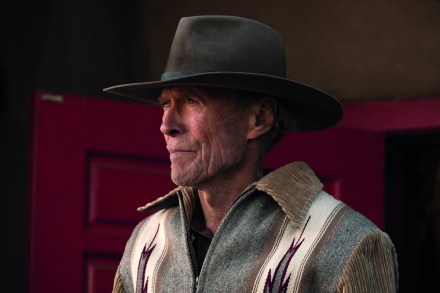
No other actor epitomizes traditional masculinity and classic cool quite like Clint Eastwood. He long ago ceased being human and transformed into the American Man. When you watch an Eastwood movie, your understanding of Clint as the ultimate symbol of a bygone America is so potent that an otherwise mediocre movie like Gran Torino feels greater than the sum of its parts because of his mere presence. This is what an American man is supposed to look and sound like, you think, as Clint snarls and puts up his dukes. These young whippersnappers, they’re no good now, you hear. Which is to say that when you watch one of his films, you’re not watching the actor become a different character, but rather hoping to see ‘Clint Eastwood’.

eastwood

In defense of brilliant idiot athletes

I don’t care what LeBron James thinks or says. That's why, unlike the many conservatives who have turned their backs on sports in recent days, I can still enjoy watching him dominate on the court. LeBron, no matter how much his gaggle of managers and agents and hangers-on try to frame him as some type of renaissance man, is strictly a basketball genius. He’s been pictured quixotically staring at books, putting on his best 'intellectual face,' but I have no doubt that he’d struggle with anything beyond middle-grade young adult fiction. And that’s fine — it’s more than enough to simply be one of the greatest athletes of all time. Too many of you expect too much from our great, hulking superstars.

athletes

Swing states are the best states

Swing state season, that three- to four-month stretch of peak American crazy, is upon us. The big three states — New York, California and Texas — are often considered representative of the American experience, due to their larger-than life branding and enduring economic heft. But, small outlier communities aside, the big three are politically homogeneous and ultimately predictable in their beliefs and voting patterns. That makes them utterly boring and, dare I say, un-American in sensibility come election time. America is a bipolar land of infinite complexity and chaos.

swing