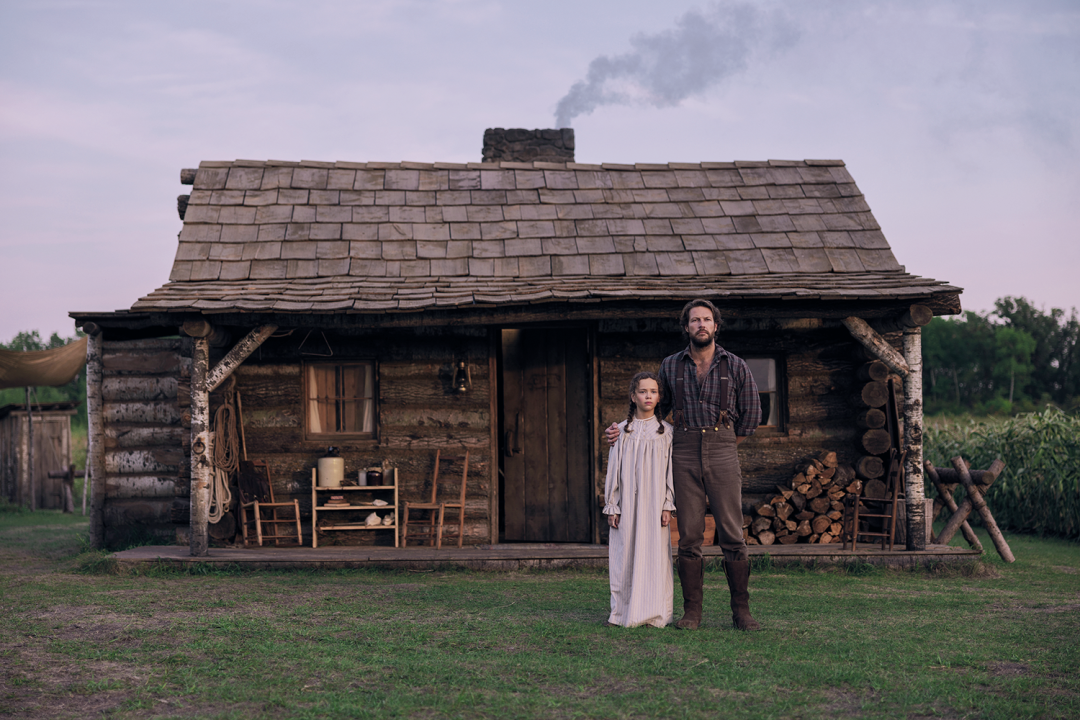

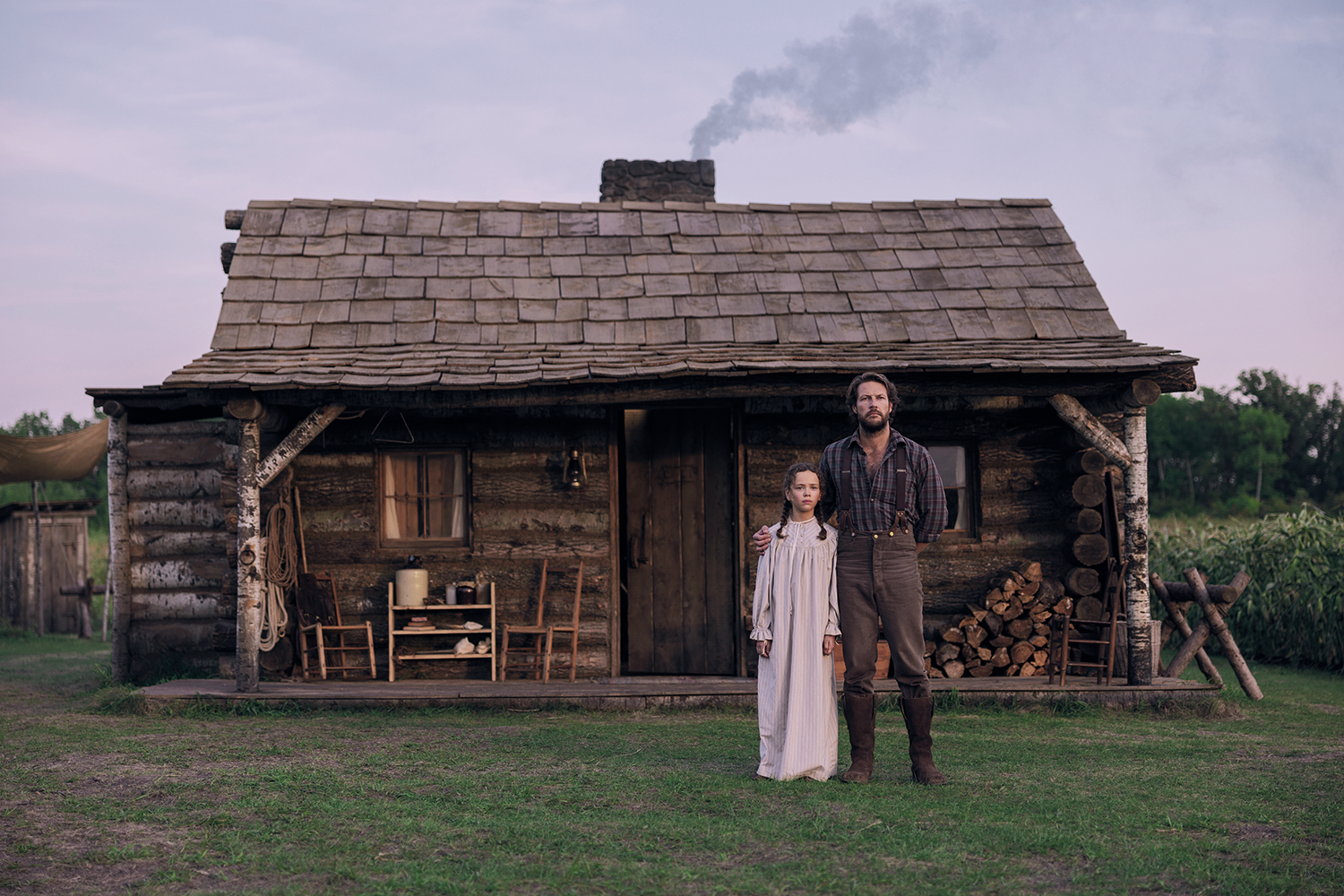
You can tell things have started to get really bad by the fact that they’re bringing back Little House on the Prairie. When a society is in serious crisis – or so I’ve read – it no longer needs edgy, transgressive, exciting art to push boundaries and challenge assumptions. Rather, it needs to be soothed and cosseted with bland, undemanding and familiar comfort food. Nothing, not even The Waltons, does that quite like Prairie.
People griping about the remake have clearly forgotten how dire the original was
I may well have gawped uncritically at quite a few of the original series’ 200-odd episodes, the first of which aired in 1974. The one where the girls get scared of wolves; the one where they are helped through a crisis by a friendly Indian (as we still called them in those days); the one where one of the little blonde girls loses her ribbon and then finds it; the one where the dog barks, but it’s OK, it’s not a wolf but a cute baby porcupine; and the one where it’s the worst ever winter and they can only survive by drawing lots to see which daughter gets eaten first. I just made all these up but that, roughly, apart from the last one, was the extent of the drama.
People griping about the remake have clearly forgotten how dire the original was. Michael Landon Sr., who played the Dad, looked like a Santa Monica hairdresser transplanted to the rural Midwest. He never sweated when he was building his charmingly inept log cabins because his skin was made of spray-tanned plastic.
Apparently the autobiographical books on which the series was based, by Laura Ingalls Wilder, are much more echt. “The only good Indian is a dead Indian,” says one character. Indians were a sore point because, having moved in their wagon out west, the Wilders kept discovering that the land to which they thought they were entitled belonged to the natives. There’s also a strong anti-government theme running through the series because Laura’s daughter, Rose Wilder Lane, who edited the books, was, with Ayn Rand, an early influence on the American libertarian movement.
Much of this, inevitably, has been sanitized in the new TV series which includes a kindly black doctor (who, to be fair, was in the original books), proud, reserved but big-hearted injuns, and bruised, bitter but fundamentally decent frontiersmen. It’s a world where family comes first, cheerful determination invariably triumphs over adversity, and you know the dog that disappears at the beginning of the first episode isn’t going to be discovered dead and half eaten by wolves. (Wolves that are computer-generated, by the way, and look ridiculous and sub-Game of Thrones.)
But I still think it can be enjoyed as a guilty pleasure. There’s something endlessly alluring about the “scraping a little piece of paradise out of the harsh unyielding wilderness” genre, something that appeals to our most primal instincts. Hence the appeal of Robinson Crusoe and Swiss Family Robinson.
If the twee gets too much for you, there’s always Faithless. You might think from the first, beautifully shot episode that it is going to be a lyrical, nostalgic meditation on art and love. It’s set in 1970s Sweden, where the inamorata Marianne (Frida Gustavsson) is blonde and beautiful, her prospective lover David somehow manages to look great in a maroon corduroy suit, you can still smoke on airplanes (indeed it’s still almost compulsory everywhere), there’s a gorgeous weekend retreat on the lake and even the jazz played by the groovy, handsome pianist husband Markus (August Wittgenstein) sounds bearable.
I just want everything to be nice, gentle, heartwarming, like, say, that comedy series Small Prophets
Do not be fooled, though. This is based on an autobiographical script by Ingmar Bergman – never known as Mr. Fun Central – about the devastating consequences of an affair he had with his best friend’s wife. You wouldn’t necessarily guess it from the first two episodes – the second is a flash-forward to the present, in which the unfaithful lovers meet for the first time in years – but things are going to get really grim.
And I don’t want grim, really I don’t. Whenever I’m trying to get Boy to recommend some art film to watch, I always stress: “Please. Nothing too depressing.” The same goes with TV. I just want everything to be nice, gentle, heartwarming, like, say, that comedy series Small Prophets. My difficulty with Faithless, thus far, is that it’s so well done – directed by Tomas Alfredson, who did the rather wonderful vampire movie Let the Right One In – that I haven’t yet found the excuse I need for a tactical bail-out.





Comments