Features

Features

Operation Epic Fury is costing Trump his coalition

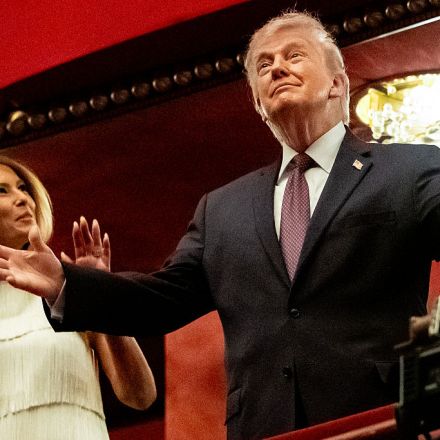
As US troops flock to danger, Donald Trump seeks ways to disentangle himself from the war on Iran. “We are on track to complete all of America’s military objectives shortly, very shortly,” he said in a 19-minute address at the start of the month. “It’s very important that we keep this conflict in perspective.” What’s increasingly clear is that, despite its tactical successes, Operation Epic Fury is turning into a strategic quagmire and a political miscalculation. The President’s approval rating has sunk to -18 percent, the lowest in his second term. Among independents, Trump is on -45 percent, the worst recorded score of any second-term president. That is the perspective concerning the White House.


epic fury
special envoy

Who’s the most special envoy?

On the final weekend of her tenure as Homeland Security Secretary, Kristi Noem was in South America meeting the President of Guyana. Photos posted by the US Embassy in Guyana show Noem’s “senior advisor” Corey Lewandowski sitting alongside her. It would, of course, be “tabloid garbage” to repeat rumors of an affair between the two, to use Noem’s phrase when questioned (both Noem and Lewandowski have vehemently denied the affair, although she didn’t explicitly deny “sexual relations” when under oath in Congress). Noem’s South American jaunt seemed to straddle the role she was leaving and the one she’s just started. She was officially in Guyana on DHS business but has a new posting as Donald Trump’s “Special Envoy for the Shield of the Americas.

How the Face died on the line

The Face, launched in London in 1980 by Nick Logan, was one of my first portals into subcultures that were far from my reach growing up in suburban Atlanta. The magazine introduced me to the photography of Corinne Day, Juergen Teller and David Sims. The original iteration stopped publishing in 2004 and then restarted, under new leadership, in 2019. The new version had some high points, especially an Olivia Rodrigo cover photographed by Jim Goldberg. Still, it could never capture the true spirit of the original and ownership unceremoniously pulled the plug last month. I knew the business was for sale, for a very affordable price, but they couldn’t find a buyer. I don’t blame it on the editor or contributors; I blame it on the times.

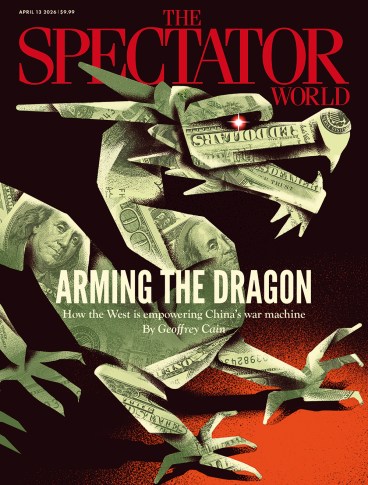
How the West is empowering China’s war machine

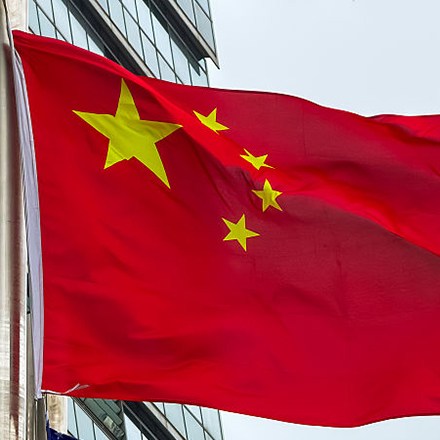
The West’s technology brains and universities are arming China. A few of them are potentially breaking the law to do it, but most of them don’t need to. The front door has been open for years, and nobody in London or Washington has thought to close it. According to a federal indictment unsealed in Manhattan last month, on December 18, 2025, in a warehouse somewhere in Southeast Asia, a team of men used a hair dryer to peel serial-number labels off genuine server boxes and press them onto fakes. The real servers, loaded with some of America’s most restricted artificial intelligence hardware, are alleged to have long since been shipped to China. What remained, according to the indictment, were dummies – non-working replicas repackaged to look untouched.

The US currency is under attack like never before

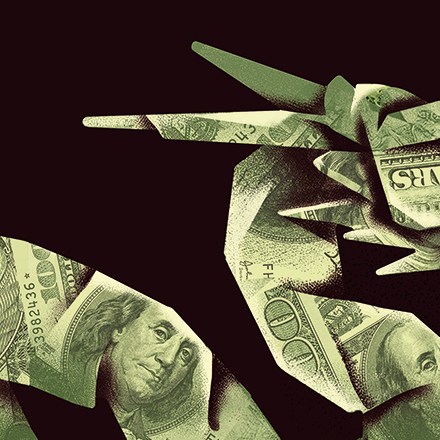
It was, on the surface, a fairly routine proposal. Officials from the BRICS nations, made up of Brazil, Russia, India, China and South Africa, have decided to discuss, at a summit in New Delhi later this year, how to deepen trade and collaboration. No one was paying very much attention when the decision was made. And yet, according to a report in the well-informed newspaper Berliner Zeitung, a resolution was quietly suggested that might turn the global monetary system upside down. It was the start of what might be termed the “plot against the dollar.” America’s currency is likely to face its most serious challenge of the post-World War Two era. BRICS Pay may not sound very exciting.

Should America be Venice or Sparta?

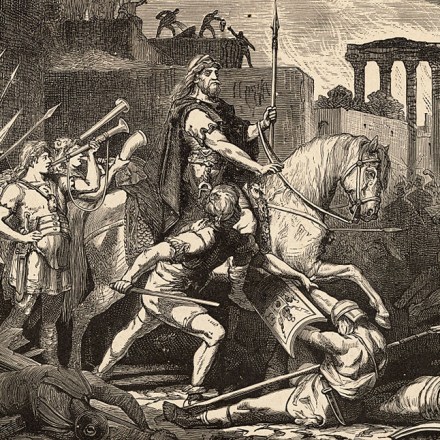
Americans never tire of asking themselves whether their country is turning into Rome. A Latin motto on the Great Seal of the United States proclaims a novus ordo seclorum – a “new order of ages.” But in the poem from which that phrase is adapted, Virgil’s fourth eclogue, the words mean a quite exact replay of past events: there will be, for example, another voyage of the Argo and another Trojan War. Our new order might likewise repeat the history of Rome. One philosopher who gave a great deal of thought to new orders and Roman history as a template was Niccolò Machiavelli, particularly in his Discourses on the First Ten Books of Titus Livy.

Life on Palm Beach Island is not what it appears

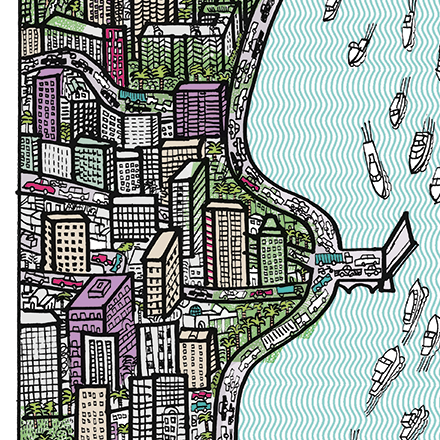
When the world thinks of Palm Beach – and it does more and more because Donald Trump has his home and his club there – the world tends to think of a sybaritic sunshiny town of palm trees, sandy beaches, rich old people, easy living, bland blondes, Range Rovers, Porsches, Bentleys and Bugattis as far as the eye can see. This is not wrong but, as ever in real life, there is a little bit more to PB than that. The underlying truth is that there are two Palm Beaches, not one, and their interaction is what drives a lot of activity here.

The age of the aircraft carrier is over

Ever since World War Two, America’s aircraft carrier fleets have served as imposing instruments of imperial power, roaming the oceans to cow recalcitrant nations into obedience. Favored by the Trump administration for this purpose, current experience indicates their day is done thanks to the proliferation of anti-ship missiles and the increasing ubiquity of drones. In America’s last Middle Eastern war but two, against the Yemeni Houthis in 2025, the carrier USS Harry S.Truman, complete with its attendant escorts, was driven into retreat, leaving antagonists in control of the Red Sea. On one occasion, the carrier’s desperate maneuver to avoid a Houthi drone caused an $80 million Hornet jet fighter to slide off the deck and topple into the sea.

Ignore the propaganda war

Prediction: by the time you read this, the joint US-Israeli operation in Iran will be all but over. In fact, it had mostly ended by the start of April. The Kool-Aid-dispensing press has been telling us since the conflict began that Iran was winning. They wanted it so badly to be true. Being adept at magical thinking, they also believe that what they wanted to be the case would suddenly, hey presto, become the case. A cover story in the Economist declared “Advantage Iran.” “A month of bombing Iran,” that once-sober publication announced, “has achieved nothing... For now, at least, the advantage lies with the Islamic Republic.” Not to be outdone, the Financial Times weighed in with “Iran could emerge from the war stronger and more dangerous.” Right. Iran’s navy? Sunk.

propaganda war trump iran
war powers

The outrageous cynicism of the Democrats on Iran

Given my longstanding disgust with America’s lawlessly interventionist and self-destructive foreign policy, I should be outraged by Donald Trump’s cavalier remarks justifying – and weirdly minimizing – his surprise attack against Iran in collaboration with Israel. After all, a president stupid enough to mock the new Supreme Leader as “damaged” and only “alive in some form” – while simultaneously urging sitting-duck oil tanker captains to “show some guts” by running the Iranian blockade of the Strait of Hormuz – is someone who logically should be rebuked in the firmest possible terms. But this wildly unstable solipsist is very different from other politicians.

Why China has the edge in mining

Donald Trump wants to bring back mining and mineral processing to the US – and he needs to do this if he’s to continue fighting wars. “You cannot claim to have a military strategy without a clear idea of your supply chains,” says economic journalist Wolfgang Münchau. “The specific advantage that both Russia and China have over the West is not simply their wealth of metals and minerals – it’s the fact that they can also process them. China’s expertise in processing its raw material is unparalleled.” Trump has exhorted America’s traditional allies to take responsibility for their own mineral supplies as well as their own defense, and to ditch economically ruinous energy policies. But will it work?

mining

The arrogance of the tech-skeptics

If you’ve been paying attention to social media lately, then you already know the score: smartphones are corrupting our children, we need legal intervention immediately. Roughly half of US states have enacted some form of age-gating for social media or pornographic content. Australia banned under-16s from social media platforms outright, France and Indonesia followed suit and the United Kingdom is now asking people for their papers to read moderately offensive blog posts. You don’t need me to rehash this. The phones have nuked the interior lives of Gen Z, Gen A and the hitherto unborn Generations B and C. Every opinion lands somewhere between “protect the children” and “this is Reefer Madness for iPads.

The peptides market is exploding – but are they safe?

Two weeks before the 2024 presidential election, Robert F. Kennedy Jr. tweeted that “the FDA’s war on public health is about to end.” He then listed a host of treatments, all of which he claimed had been “aggressively suppressed” by a corrupt Big Pharma system. Two Ps – psychedelics and peptides – featured on that list of treatments, one more familiar than the other. You could be forgiven for thinking that peptides are a recent creation but they’re not. They’ve been around for a long time, but they’ve gained huge attention due to Wegovy and Ozempic.

peptides
republicans Steve Hilton

Steve Hilton on running to be California governor: ‘I don’t want this state that I love to become the country I left’

“I don’t want this state that I love to become the country I left,” Steve Hilton tells the lunch meeting of South­ern California Republican Women. Knives and forks rattle on porcelain as the perfectly coiffured ladies down cutlery to clap. Remarkably, Hilton, director of strategy under former British prime minister David Cameron, has topped virtually every poll for governor of California since he launched his campaign in April last year. Hilton has leant into the West Coast aesthetic and spirit. Once the rebel of Downing Street in T-shirts and stockinged feet, today he sports a tech-bro beard, more bracelets and beads on his wrists than Prince Harry, and has the top three buttons of his white shirt undone. British by birth, he has renounced his citizenship and become an American.

How bad could the energy price crisis get in Britain?

The energy price surge caused by war in the Middle East has sent shockwaves through Westminster. It has pushed up inflation and the cost of borrowing, causing panic in the cabinet and the recognition that government intervention could be needed on a vast scale to support the cost of living. The UK Prime Minister told a private audience: "The assumption that the growth of the developed countries can proceed steadily on the basis of cheap energy has been shattered almost overnight." He further observed: "The problem is not simply one of inflation. It is the whole structure of the economy." In the Treasury there is something approaching a siege mentality. The Chancellor has "to spend [her] time firefighting.

energy crisis
prince william

Does it matter if Prince William believes in God?

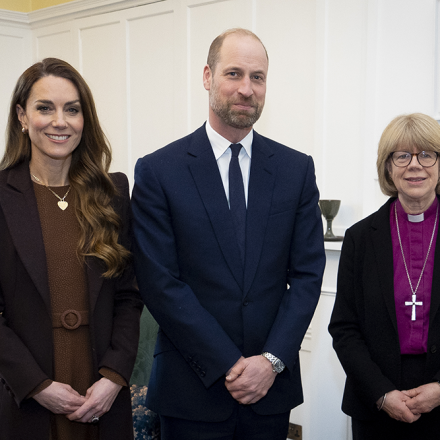
The Prince of Wales seeks to assure us that, as a friend puts into his mouth, “I might not be at church every day, but I believe in it.” That formulation does not necessarily mean he believes in God or the doctrines of the Church of England. All it means is that he believes in the efficacy of the C of E and will dutifully fulfill his future role as its Supreme Governor. Actually, that is all we need to know. His great Tudor predecessor said she did not want to “make windows into men’s souls”; even kings are only men. The important thing, from a constitutional as opposed to a spiritual point of view, is that he acts the part with good grace, which he surely will. Whether he does so by divine grace poured into his heart is a question above all our pay grades.

How the UK’s Green party abandoned its environmental roots

In the summer of 1972, Lesley Hill walked into a pub in rural Warwickshire. She had something for her husband Tony Whittaker. It was a copy of Playboy magazine. In that issue, there was an interview with the biologist Paul R. Ehrlich, who died last month aged 93. In it, he repeated the thesis of his 1968 book The Population Bomb, where he wrote that “in the 1970s hundreds of millions of people will starve to death.” There were simply too many of us. Worldwide famine was imminent. Lesley and Tony were terrified. Along with a local businessman, Michael Benfield, and his future wife, Freda Sanders, they talked about it over pints at the Bridge Inn, becoming known as a “Gang of Four.” Over several months, they roped in 39 others, and set up the People party in 1973.

israel

The real reason the left hates Israel

“Listen to what the man on the left of the camera has to say about Israel, the man who is addressed as Nick,” a radical Corbynista friend suggested to me the other day in a social media message designed to change my mind about the Middle East. It’s part of a sustained campaign on his part which dates back at least ten years and is usually conducted with good grace, if never accord. So I listened to what this chap Nick had to say, with growing hilarity. Not because of what he said – which was what you might expect from a rank anti-Semite, but because of who he was. For it was none other than Nick Griffin, the former leader of the British National party. Mr.

The UAE and Oman could be the big winners from the Iran war

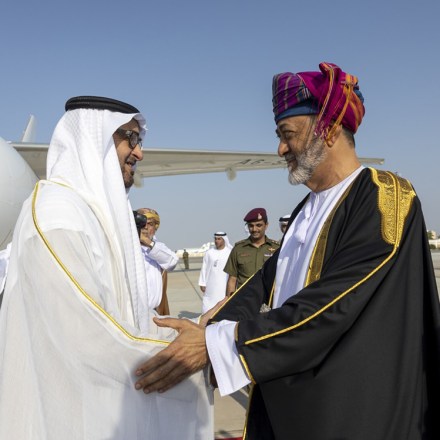
Sixty years ago, I first gazed out on the Strait of Hormuz from the Musandam peninsula of Oman. I was there as private secretary to my godfather, Selwyn Lloyd, who had been Britain’s foreign secretary during the Suez Crisis. The previous evening our host, Sultan Said bin Taimur, the ruler of Oman for nearly 40 years, commented gloomily: “When two fish are fighting in these waters, the British are behind it.” I estimate that I must have made at least 250 visits to the Gulf States in the intervening six decades.

oman
fascism

Can the chaps in chaps smash fascism?

I have spent a small portion of my time lately wondering what I would do if I thought communists were about to take over Britain. At the more civil end of things, I could see myself going on an anti-communist protest, though I would shrink away if I noticed that my fellow marchers were flying swastikas. I don’t exactly know what I would do next. Perhaps I would hope for another election soon, and do what I could to unite other anti-communists. One thing I am fairly sure I would not do would be to dance. In fact, were this country facing the prospect of Stalinism coming at us full force, the last thing I would do would be to get a DJ, book a stage in Trafalgar Square, hire some go-go dancers and rave it up.

How Pope Leo XIV is quietly reshaping the Vatican

On the afternoon of Easter Sunday last year, Pope Francis was driven through St. Peter’s Square in an open-topped Popemobile. A few weeks earlier he had nearly died from pneumonia, so pilgrims were thrilled to watch him blessing babies. They told journalists that it was a miracle to see the 88-year-old Argentinian in such good shape. At 9:45 the next morning, the Vatican announced that Francis had just died from a stroke. And so began the preparations for a conclave that elected the second pope from the Americas. Cardinal Robert Prevost – “Bob” to his friends – was a Chicago-born dual citizen of the United States and Peru. Until 2023 he’d been bishop of the Peruvian diocese of Chiclayo.

pope leo xiv
trojan horse

The Trumpian appeal of a Trojan horse

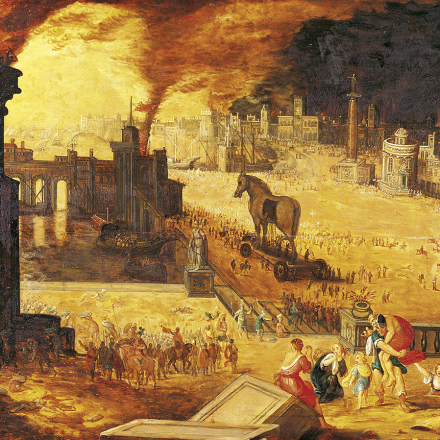
Given the tonnage of missiles launched at Iran, it seems remarkable how relatively few Iranians have been killed. But the Americans have no interest in wasting multimillion dollar ordnance on pain-in-the-ass innocent bystanders. However, Donald Trump is now considering a land invasion. That would have been unwise, as the ancients knew. Knowing all about the problems of land assaults against defended cities, the ancients often preferred to lay siege. That could be a wearisome business and did not necessarily guarantee success. Troy was besieged for ten years, but it took the trick of the wooden horse to take it. So when the Persian king Darius (c.

Do you have the patience to own an EV?

There’s a distinctive glow of virtue that emanates from people recharging their electric cars in public places. I call it the Light of the Charge Brigade. In the run-up to Easter, I spent two hours observing the phenomenon at Fleet Services on the M3. It was mostly men doing the charging. They’ve cracked the EV way of life, and are very pleased with themselves. A sparklingly fulfilled man called Paul was driving from Colchester to Seaton in Devon in his Skoda Enyaq with a carload of friends. He’d planned this stop for a first charge and Pret elevenses. Later he was planning to stop at Montacute House in Somerset for a late lunch and a second charge on one of the National Trust’s chargers.