

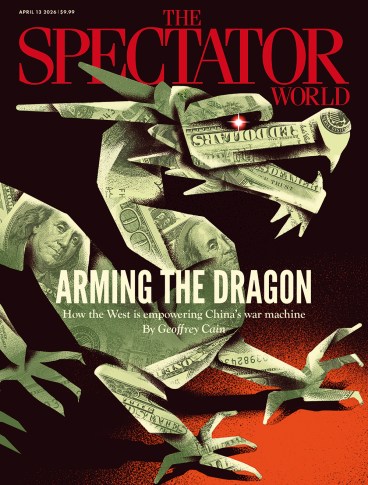
It was, on the surface, a fairly routine proposal. Officials from the BRICS nations, made up of Brazil, Russia, India, China and South Africa, have decided to discuss, at a summit in New Delhi later this year, how to deepen trade and collaboration. No one was paying very much attention when the decision was made. And yet, according to a report in the well-informed newspaper Berliner Zeitung, a resolution was quietly suggested that might turn the global monetary system upside down. It was the start of what might be termed the “plot against the dollar.” America’s currency is likely to face its most serious challenge of the post-World War Two era.
BRICS Pay may not sound very exciting. In essence, it is a new type of financial mechanism that will allow some of the largest economies in the world to trade with each other without involving the American dollar anywhere along the way: not so much a single currency, but a single payment platform. After the New Delhi meeting, it will be up and running very soon. “The BRICS states do not even necessarily need to have a shared trade currency to chip away at King Dollar’s domain,” Joe Sullivan, a former economic advisor to the Trump administration previously warned. “If the BRICS demanded that you pay each member in its own national currency in order to trade with any of them, the dollar’s role in the world economy would go down.”
There is little question the American currency has reached the stage where it is weak enough to be vulnerable
It is not hard to understand why the dollar is under threat. Most of us are familiar with the long-term trends weakening its position. In a report last year, JPMorgan argued that the American currency was facing long-term structural decline. The US has been shrinking as a share of global GDP, not because its economy has stagnated but for the simple reason that economies such as China and India have grown far more quickly.
America’s share of the global bond market, a key financial asset, has steadily declined, and so has the percentage of commodity trade priced in dollars. “Fundamentally, de-dollarization could shift the balance of power among countries, and this could, in turn, reshape the global economy and markets,” the report said.
There is little question that the American currency has reached the stage where it is weak enough to be vulnerable. There are two reasons, however, why 2026 is proving to be the perfect year to launch the “plot.” First, last year’s “Liberation Day” saw President Trump tear up the rules-based trading system that had been in place for the past 50 years. You can argue about the rights and wrongs of the tariffs. The important point is this: Liberation Day was specifically designed to bring money and manufacturing jobs back to the United States, and that meant for the rest of the world there was far less incentive to remain locked into the dollar system. Next, the military adventurism in Venezuela and more dramatically in Iran, as well as the casual abandonment of traditional alliances, means loyalty to Washington has declined.
The result? As this year unfolds, it is proving far easier to recruit allies for the overthrow of the dollar than it would have been at any point in the past. Many Asian countries find themselves squeezed between the dollar and energy prices. As the world has become more unstable, investors are fleeing toward the relative safety of US equities, driving up the value of the dollar.
Meanwhile, three-quarters of the oil that passes through the Strait of Hormuz is consumed by the Asian markets. That means that as Asian countries scramble to find energy from other sources, they are paying for the war twice over: first with increased energy prices, then with an inflated dollar. It isn’t just energy that this inflated dollar is affecting. Around 90 percent of the global trade in goods is conducted in US dollars. All the more reason to use local currencies instead.
In the background is the increasingly important figure of Pan Gongsheng, who unusually combines the roles of both governor of the People’s Bank of China and Communist party committee secretary to the bank, giving him complete authority over the country’s monetary policy. In a speech at the Lujiazui Forum last year, he made it clear that his objective was to “weaken excessive dependence on a single sovereign currency and its negative effects.” It was not hard to work out what that meant. In public, Chinese officials argue for multiple global currencies. In practice, they mean just one – with, as they might put it in Beijing, “Chinese characteristics.”
As the plot gathers pace, BRICS Pay will be only one part of what is, in effect, a multipronged assault on the American currency. Sam Lyman, former advisor to Treasury Secretary Scott Bessent and now head of policy at the Bitcoin Research Institute, argued in the Washington Post last month, that the most overlooked development in crypto this year is the dramatic makeover of the digital yuan designed to “supercharge [its] adoption.” In effect, digital versions of the Chinese currency will pay interest, whereas “stablecoins,” the American equivalent, are still barred from doing so by Congress. An interest-bearing digital wallet is, of course, far more attractive to global trading companies and investors than one that pays you nothing.
Whatever replaces the dollar may not even be a paper currency, printed by an all-powerful central bank. It could well be a decentralized financial instrument, part crypto, part traditional money, all of it stored and transacted online. Whether it is the digital yuan, or the BRICS payment token, it will be controlled from Beijing, with allies in Moscow, São Paulo and New Delhi, and not from the Federal Reserve in Washington.
Does the United States still want to defend the dollar? President Trump talks of the Chinese-led alternatives as an assault on the power and prestige of the American economy. And it’s true that the dollar helped cement the US as a global leader. It subsidized the American economy, in what former French president Valéry Giscard d’Estaing once memorably described as the dollar’s “exorbitant privilege.” And, perhaps most importantly, it allowed Washington to control the SWIFT payment system through which money moves around the world. While the dollar has been dominant, Washington has had the power to cut whole countries out of the global trading system at the flick of a switch.
But to many of the more sophisticated thinkers within MAGA, the dollar’s dominant global role was as much a curse as a blessing. To operate a global reserve currency, the US had to run persistent deficits, which were essential to supply the rest of the world with dollars. Allowing free and open access to the American market meant whole industries were gutted by cheaper imports, and the US became dangerously reliant on other countries for vital goods.
The MAGA movement will collaborate with its demise, viewing it as the only way to bring back manufacturing jobs
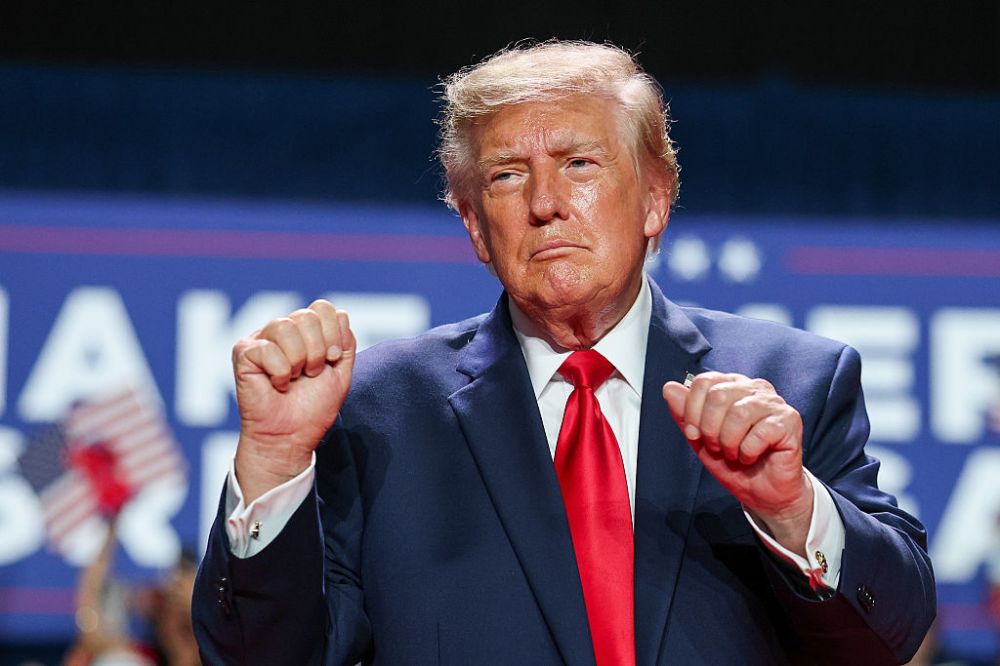
The twist to the “plot against the dollar” may be this. The MAGA movement will collaborate with its demise, viewing it as the only way to bring manufacturing jobs back to the American heartland and restore the dignity of the blue-collar workers who are the movement’s core base. There have been persistent rumors of a “Mar-a-Lago Accord,” a grand bargain along the lines of the Bretton Woods system that established postwar dollar dominance, except this deal would devalue the American currency dramatically and share financial power with a rising China.
Likewise, the endless attacks on the independence of the Federal Reserve make a lot more sense if you assume they are part of a plan to dethrone the dollar. The world is happy to own a currency controlled by a strictly independent Fed. But one controlled by Trump’s White House? Not so much.
An unlikely alliance has emerged between MAGA isolationists and the Chinese leadership about the possibility of creating a new financial system. Here is how the plot may well play out. The BRICS Pay system, if and when it is, formally launched, could turn into a real challenger to the dollar-based SWIFT system. At the same time, the digital yuan may be made fully convertible, with deposits offering a generous rate of interest, backed by the trading power of the world’s second-largest economy.
In a fit of pique over the abandonment of NATO, the European Central Bank could well align itself with the emerging alternatives to the dollar, perhaps even going as far as synchronizing its planned “digital euro” with the “digital yuan.” Meanwhile, the new Fed Chair Kevin Warsh, a very political Trump appointee who has urged reforms of the central bank, will be seen as much more aligned with the White House, making the dollar a far more political currency. If the war with Iran goes badly, and the AI and space-tech boom on Wall Street crashes at the same time, the dollar may well collapse. That is a very different prospect from a controlled devaluation.
While the scenario I’ve just described is theoretical, it is beyond doubt that the plot against the dollar is gathering momentum. If it succeeds, we will all be living in a very different world than the one we are used to.





Comments