Features

Features

How Trump loses friends and alienates people

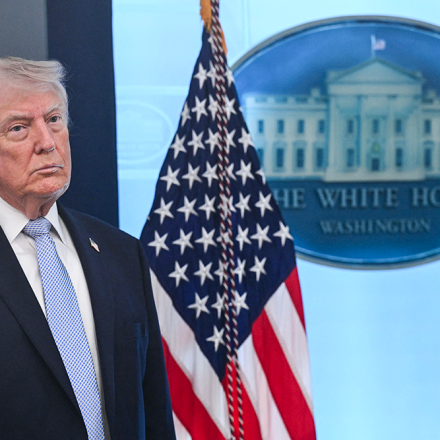
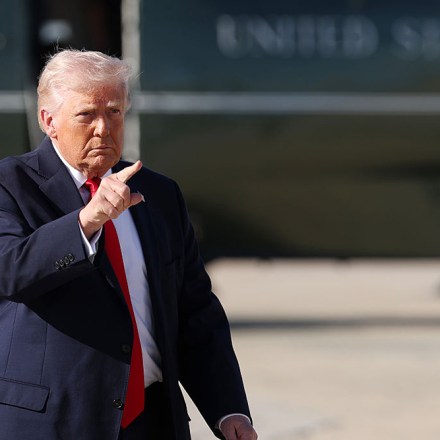
It is a long haul until the midterm elections in November. Many threats and deadlines will have been issued to Iran in that time, many cycles of optimism and pessimism will have been completed. The war may be over, or Donald Trump may be bogged down in an intractable conflict which he privately wishes he had never started. Regardless, his administration must start preparing for what looks to be an increasing certainty: that the Republicans will suffer a heavy electoral reversal. That was looking likely even before Iran and its effect on oil prices. The President’s tariff wars have protected some, but the overall effect on blue- collar jobs has been negative. Moreover, at 3.3 percent, consumer inflation is back at the sort of levels which helped stop Kamala Harris from winning.
trump
melania trump

Melania’s mysterious messaging

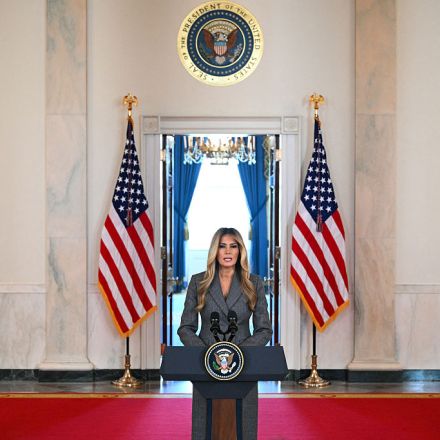
On April 9, Melania Trump held a lone press conference. She showed up in a charcoal suit, delivered a speech and turned to exit, runway style, without pausing. Melania doesn’t take questions from the press. The facts, according to Melania: Jeffrey Epstein had not introduced her to Donald Trump. She met her husband, “by chance, at a New York City party, in 1998.” She and her husband were acquainted with Ghislaine Maxwell and Epstein, but this was “common in New York City and Palm Beach.” She had engaged Maxwell in polite “casual correspondence” over email. That was the extent of the relationship. “I am not Epstein’s victim,” she said somberly. White House staff were perplexed. Why had the presser been called?

Can I read Trump’s mind?

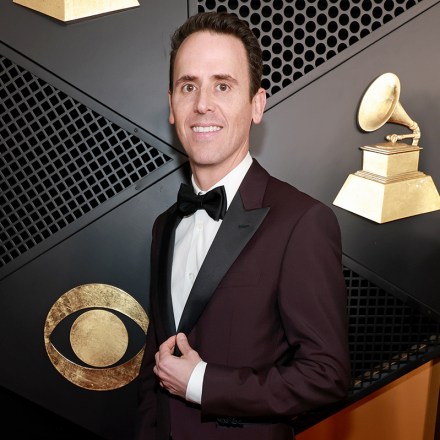
Making time to prepare to host the White House Correspondents’ Dinner has not been easy. Presently I’m flying back to New York, where I live, on a red-eye after a show in Las Vegas. My wife and five kids, all under the age of ten, are at home waiting for me. On average, I have one media appearance every day and a half between now and then. I’m not asking you to cry for me. All of this momentum and publicity is terrific. And my preparation for the big night on April 25 is always simmering below the surface. It feels as if reading minds for the last 30 years has been training for this moment. My goal is to have Donald Trump take part – and to save the best for last. If I could read only one mind in this world, it would be that of the most powerful person in the world.

oz pearlman
trump pope damian thompson

What’s really behind Trump’s clash with the Pope?

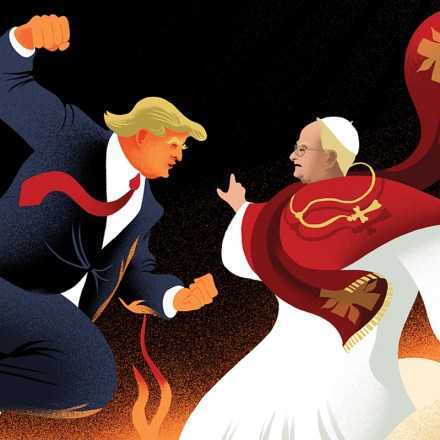
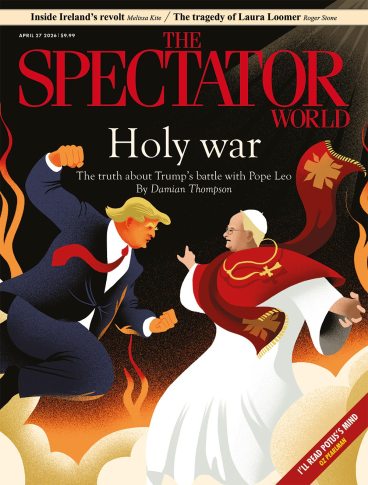
Donald Trump’s latest clash with the Catholic Church stunned even the most hardened veterans of culture-war X. According to the President of the United States, the Chicago-born Pope Leo XIV, the conspicuously holy spiritual leader of 1.3 billion people, is “WEAK on crime and terrible on foreign policy.” He also claimed that, “If I wasn’t in the White House, Leo wouldn’t be in the Vatican.” For commentators accustomed to the fog of modern diplomatic platitudes, such trash talk was the equivalent of a Holy Roman Emperor hurling insults at a medieval pontiff.

A change has come over Trump

Geostrategists used to fret over the “Eastern Question” or the Maginot Line or the Missile Gap. Today there is no doubt that the overriding geostrategic question of our day is whether the President of the United States is playing with a full deck. With the US-Israeli war on Iran failing, and depleting much of both countries’ non-nuclear defenses, with the Strait of Hormuz closed and western economies spiraling toward depression, Donald Trump greeted the world on Easter morning with a message to Iran’s leaders to “Open the Fuckin’ Strait, you crazy bastards,” then threatened the next day to wipe out Iranian civilization. He then denounced the Pope for having imparted Catholic teachings on just and unjust war.

decline britain british

Populism curve: what is the supply side of Britain and Europe’s decline?

In his new book Why Populists Are Winning: and How to Beat Them, British MP Liam Byrne argues that it’s time to go after the “supply side” of populism – time, that is, to curb freedom of the press and the right of individuals to spend money on causes they believe in. For a decade, you see, the European and British establishments have focused on quashing the demand side of populism. They have employed police, prison, censorship and shame to stop people from voicing anti-establishment opinions, demanding populist policies or voting for populist parties. They have formed preposterously broad coalitions to exclude populist parties from power.

The tragedy of Laura Loomer

I first met Laura Loomer in the New York office of Project Veritas. She was blonde then, feisty, smart and ambitious. She was also fearless. Because of her outspoken views regarding the dangers of radical Islam – views that I largely share – her career as an investigative journalist and advocate was severely hampered. She became possibly the most censored woman on the planet; forbidden from placing her warnings about Sharia law and radical Islam on Twitter, Facebook, Instagram and YouTube. Even Uber banned her. In 2020, Loomer decided to make a valiant race for Congress against Democrat incumbent Lois Frankel in an overwhelmingly blue Florida district, which happened to include Mar-a-Lago, Donald Trump’s club and winter residence.

Laura Loomer
lincoln

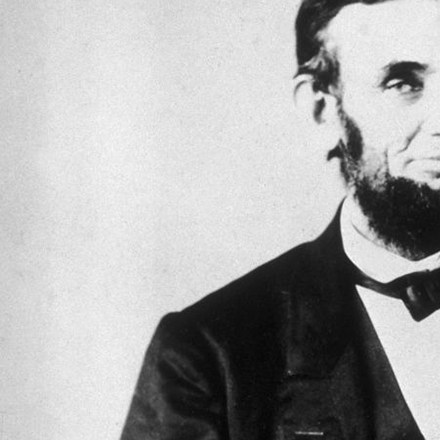
What would Lincoln do?

If Americans are feeling gloomy as the nation’s 250th birthday approaches, they might look back to what Abraham Lincoln thought about the condition of the country in 1838 to get some perspective on present discontents. That was the year a young Lincoln, then just a state senator, delivered a speech at the Young Men’s Lyceum in Springfield, Illinois, on “the perpetuation of our institutions.” Lincoln perceived trouble ahead, but not exactly of the sort that would lead to the Civil War. He was already concerned about the lawlessness arising from racial strife, and there’s a hint of his future insistence upon the truth of the Declaration of Independence’s assertion that “all men are created equal.

The politicization of everything

“A number of observers of the political, moral and spiritual life in recent years have taken up the famous theme of the decline of the West,” the French journalist Luc Ferry wrote in Le Figaro at the end of January. “They recall that civilizations are mortal, like human beings, and that our own, far gone in decadence, is dying. Nevertheless, I fail to see how one can include the United States in this pessimistic reading of history. Not only does it remain the most powerful economic and military power in the world… politically speaking, whatever one thinks of [Donald] Trump, of his antics and his perverse narcissism, it is difficult to deny that he has given new life to the idea that politics can change the world, that action taken by a leader can have an impact on the real world.

Iran negotiations

Sorry, but America still holds all the cards

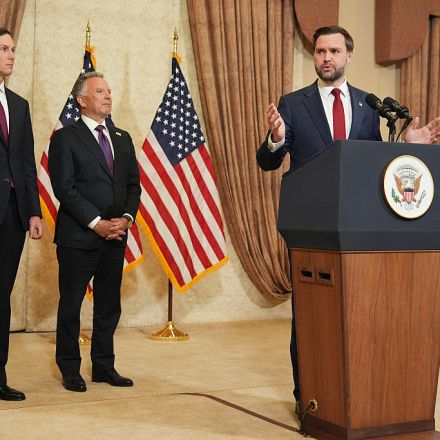
“Negotiations.” Are you heartened or dismayed by that word? Those who remember or who have read up on the seemingly interminable Paris Peace Talks designed to bring an end to the Vietnam War have reason to be dubious. A negotiation, if it is to be successful, requires that both sides be candid and in earnest. The Vietnamese were not candid participants. They stalled. They prevaricated. They acted out. It seems that the Iranians are hoping to reprise that melodrama. They will be profoundly disappointed. On the second weekend in April, Vice President J.D. Vance, Steve Witkoff and Jared Kushner met some 70 Iranian representatives in Islamabad to hammer out a peace deal.

If Trump hates the Wall Street Journal, why is its editorial board dictating Iran policy?

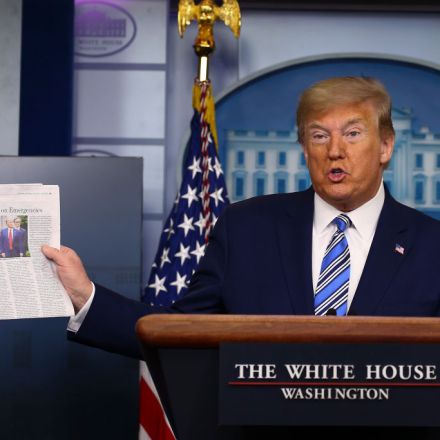
For the better part of a decade, Donald Trump has been an avid, if irascible, reader of the Wall Street Journal – particularly the columns overseen by its long-time editor Paul Gigot. Because the Journal is among the few American conservative outlets willing to criticize Trump – on everything from tariffs to temperament – he has developed a habit of denouncing it in public while devouring it in private. The Journal, Trump recently declared on Truth Social, is "one of the worst and most inaccurate editorial boards in the world." The ritual extends to annotated hard copies – margins filled with indignant scrawl – before the offending pages are FedExed back to News Corp headquarters in Midtown Manhattan.

wall street journal
technology

Fighting technology is futile

A 20-year-old from Spring, Texas, named Daniel Alejandro Moreno-Gama has been charged with attempted murder after he was accused of throwing a Molotov cocktail at the gate of Sam Altman’s San Francisco home on April 10. He then allegedly walked toward OpenAI’s Mission Bay headquarters and told employees he intended to burn the building down as well. He was reportedly carrying a manifesto – a “three-part series,” according to Fox News – that included a list of other AI executives and investors and their home addresses and documents discussing potential risks that AI poses to humanity, with a section titled: “Some more words on the matter of our impending extinction.

Europe has squandered its energy security

“Europe is desperate for Energy, and yet the United Kingdom refuses to open North Sea Oil, one of the greatest fields in the World.” Donald Trump said this month on Truth Social. It is, to use the President’s phrase, “Tragic!!!” But the necessity of oil hasn’t always been recognized. Back in 2008, while running for the White House, Barack Obama declared that one of the major challenges facing the US is “what we will do about our addiction to foreign oil.” His solution was to switch America to renewables. In that address, known as the “New Energy For America” speech, Obama said, “We simply cannot pretend, as Senator McCain does, that we can drill our way out of this problem.

energy
fuel ireland

‘People are at breaking point’: on the road with the Irish fuel protesters

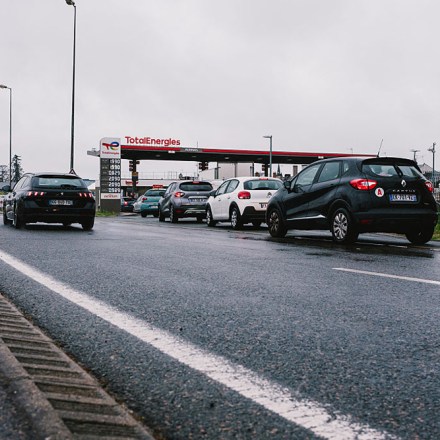
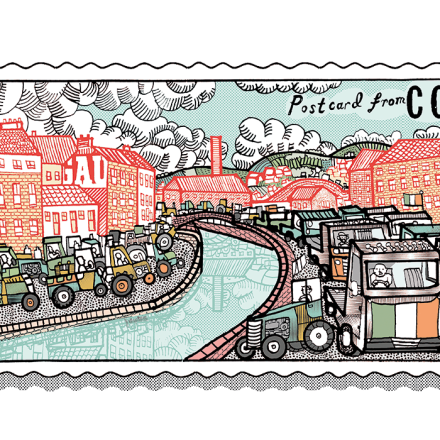
A fuel protester stood on top of a tractor waving a tricolor. In Ireland, everything is about nationhood and the price of oil is being contested here like a new war of independence. I got into the middle of a scrum of farmers and haulers blockading Whitegate oil refinery, a kamikaze sort of protest, for it has been stopping tankers getting in and out to supply the country, severely limiting supplies. Here on the windswept coast of Cork, traditionally dubbed the rebel county, working men have been sending out the message that they have nothing left to lose. The oil crisis sent this lot over the edge arguably because they were already on the verge of a collective nervous breakdown over fuel costs, higher than in Britain partly due to EU carbon taxes.

Space travel, ancient Greek style

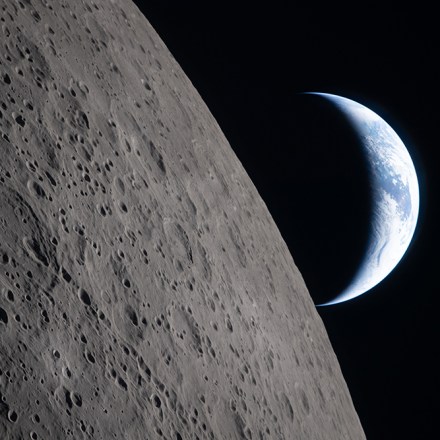
Apollo, Artemis, and Orion have not been named at random. The first two are brother and sister, and all three are known in myth as hunters – which is what the astronauts are. Ancient Greeks would have been very envious of them. The satirist Lucian (c. AD 125-180) had great fun with space travel. In his True History, he describes how he sets off with his companions to sail the Atlantic when suddenly a typhoon whirls them up to the Moon, but after many adventures he is able to return and describe what he saw. There are no women, but men act as wives. They produce children in the calf of the leg. The children are born dead but brought to life by breathing in the wind. Men then become husbands. Their noses run with honey and when they exercise, they sweat milk.

civilization

The only ‘civilization’ Trump will destroy is his own

If, as Donald Trump had threatened, “a whole civilization” had died earlier this month, the whole civilization concerned would have been that of the United States, not of Iran. If an American president had deliberately ordered the death of a civilization – whether or not such a thing is achievable – America’s claim to world leadership would have collapsed. Like, I suspect, many, however, I did not go to bed that night thinking that Trump would carry out his threat. I remember my parents telling me that, during the Cuban missile crisis, people truly believed there might be nuclear conflagration at any moment. It did not feel like that this time. It felt as if Trump had said something frightening and horrible to claim mastery over whatever was going to happen next.

Can Liz Truss and CPAC Make England Great Again?

“We have an elite who have been in power for at least the last 40 years, who fundamentally don’t like western civilization and they wanna destroy it,” said Liz Truss, who was prime minister for 49 days in 2022, as she spoke to a half-full room at the Conservative Political Action Conference in Texas. It was her third such speech. The Liz Truss who addresses American audiences bears little resemblance to the awkward, growth-obsessed economics nerd who somehow ascended the greasy pole of British politics, only to slide back down at staggering speed. She’s changed her vocabulary – and her talking points. The few attendees of her panel, snappily titled “Europestan: Can Europe Survive?” could hear Truss lambasting “grooming gangs” and “transgender ideology.

liz truss matt schlapp
fighting spirit

What happened to Britain’s fighting spirit?

When war is in the air, young men traditionally sign up – and they traditionally sign up, disproportionately, from the northeast of England, where I grew up. The country must be prepared for war, says Air Chief Marshal Sir Richard Knighton, head of our armed forces. But what use is all this puffed-up talk of a battle-ready Britain if we have no soldiers? In the northeast, the supply of soldiers has slowed not just to a trickle but to a drip. Sunderland, for instance, home to nearly 11,000 veterans, sent just ten men into the army in 2025. A reporter called Fred Sculthorp went to Sunderland for Dispatch magazine last month, to work out what had happened to the northeast’s fighting spirit, but all Fred found was apathy: why sign up when you can sign on?

Gentleman’s Relish is no more

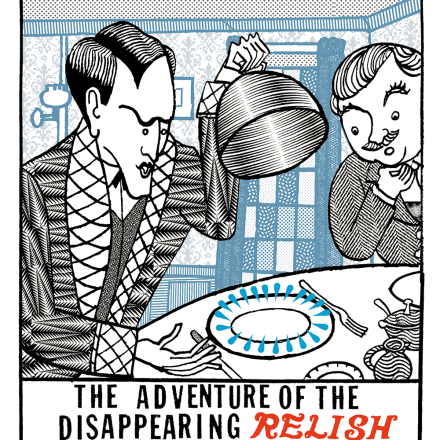
It is the early hours of the morning and an email drops into my inbox. Lacking any kind of willpower, I open it. Now I’m wide awake. Because this isn’t the usual PR slop that starts my days. It’s a tip-off. A big one. A reader has discovered something about a company and they are urging me – me! – to investigate. Adrenaline surges. This must be what it felt like to be Woodward. Or Bernstein. Only my informant is pointing me in a slightly different direction. Their intel is on Gentleman’s Relish: the incredibly niche spread is disappearing from our shelves. It has been available in the House of Lords dining rooms – but for how much longer? Online supermarkets and delis are showing it as out of stock. What is going on?

gentleman's relish

Trump’s goals in Iran have always been clear

The bombing of the Revolutionary government in Iran is drawing comparisons with the war in Iraq. But the comparisons are with the wrong war. In 1981 there was an attack on Iraq which much more closely resembles what Donald Trump is trying to achieve in Iran. The story goes back to 1976, when the government of Jacques Chirac in France sold a nuclear reactor to the Iraqis – a deal for which the French have always managed to avoid much criticism. The French charged the Iraqi government twice the going rate. But as one of the Iraqi nuclear team later recalled: "We were happy to pay. After all, who else was going to sell us a nuclear reactor?" Who indeed.

What we can learn from the Southport killer

It was a matter of some disappointment to me that Kanye West was barred entry to this country as a person not conducive to the public good. Millions of people have arrived here in the past 20 years and, unlike Kanye, have no intention of leaving. I am not sure what proportion of them are “conducive to the public good.” As a kind offascistic Little Englander, I would hazard a guess at about 8 percent, so quite why we singled out Kanye I am not sure. Of course, he courted a little controversy with his exciting song “Heil Hitler.” No truth, beauty or insight has ever been revealed in a rap song Kanye also divested himself of some anti-Semitic observations via technology’s equivalent of rap music, Twitter.

trump britain royals

Why Donald Trump won’t embarrass the royals

Elizabeth II was never particularly enthusiastic about birthdays. They were a good excuse for a parade or an honors list, but not a patch on a major wedding anniversary, let alone a jubilee. Those were a celebration of true dedication, not of mere longevity. Even so, were she still with us, the late Queen would have acknowledged that her centenary on April 21 is a big deal. It would also have created a delightful conundrum for the Buckingham Palace anniversaries office, the department that sends out 100th-birthday congratulations from the sovereign. At the start of her reign, she was sending 385 of those each year across all her realms (by telegram). By the end, it was over 16,000 (by card).

Treasure Britain’s last railway dining car while you still can

The 17:48 from Paddington does not, on first sight, seem exceptional. Overhard seats, overbright lights and a scramble for the ticket barriers: none of these are special. The modern Hitachi trains are solid but dull. Only Isambard Kingdom Brunel’s great arching iron roof adds splendor to the scene. But pause by coach L on the daily London to Carmarthen express and you might notice a small miracle. This train is one of the very last in Britain to carry a proper dining car. To its immense credit, GWR, the route’s operator, cooks and serves decent meals on six services a day: three at lunchtime and three in the evening, on its lines from London to Wales and the West Country.

railway car