Books & Arts

Books and Arts

Power couple

By now we know that there are creeps and abusers in pretty much any industry that exists today. In the world of podcasts, the question appears to be: are we really going to create an investigatory series detailing the horrors lurking within every single one? Yes — of course — seems like the resounding answer. New York magazine has launched a new podcast, Cover Story: Power Trip, and its first season is devoted to rooting out the predators and boundary-crossers of one extremely minor occupational field: the psychedelic therapeutic community.

power
keaton

Buster’s land stand

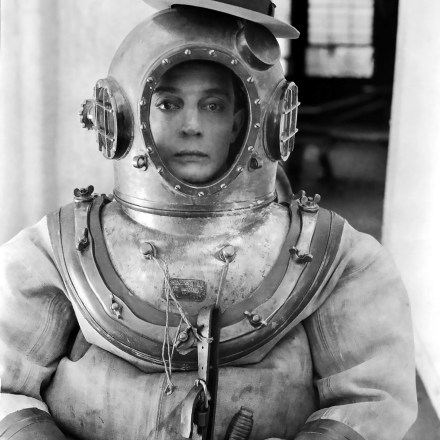
When Shakespeare wrote that “some men are born great, some achieve greatness and some have greatness thrust upon them,” the Bard could not have been thinking of Buster Keaton, who was born nearly three centuries after his death. Yet the idea expressed in that famous line from Twelfth Night — that some men guide their fate while others are controlled by it — carries a curious resonance for fans of the legendary silent performer known for his notably impassive, even indifferent comic persona in masterpieces including The Navigator (1924) and The General (1926). If ever there was a man on whom life, if not greatness, was thrust, it was the one they called the “Great Stone Face.

Troubles in paradise

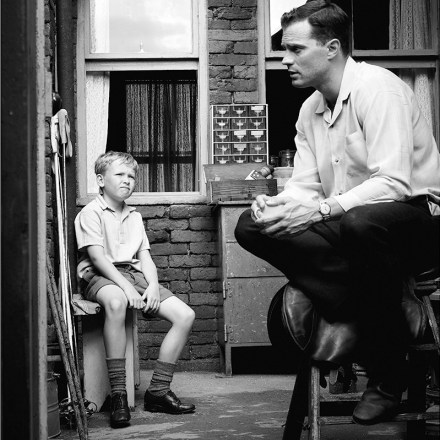
As Van Morrison’s lovely, Oscar-nominated “Down to Joy” plays over the opening credits of Belfast, I immediately accepted that I was being primed for the tears that would surely be flowing in an hour and a half. It’s obvious from the outset that Belfast, Kenneth Branagh’s touching Troubles-set coming-of-age story, is pure Oscar-bait, a film engineered to produce both weepy breakdowns and awards. The ingredients are all there. It documents a historical sectarian conflict, one pitting Protestants against Catholics. A beautiful young family, struggling financially, must navigate the chaos that has descended upon them.

Belfast
Jackson

Michael Jackson on Broadway

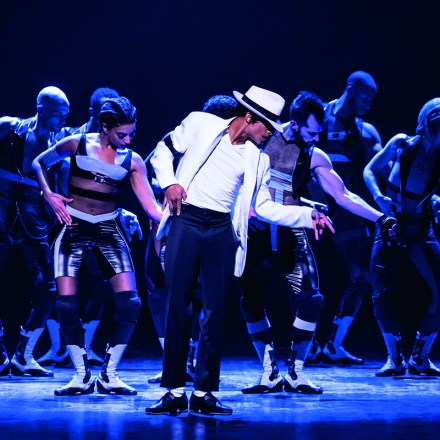
Michael Jackson has a claim to being the most famous man in history. He is certainly the most widely seen and heard. His career straddled five decades and the heydays of radio and television. His Thriller is the best-selling album of all time. He went from playing nightclubs and The Ed Sullivan Show with the Jackson 5 to solo tours that each attracted more than four million fans. For musical celebrity, there is no comparison. The Beatles? MJ owned them, literally: he bought their entire catalogue in 1985. Elvis Presley? Lisa Marie was the King of Rock and Roll’s only daughter, but it took marrying the King of Pop to make her a star.

Messenger service

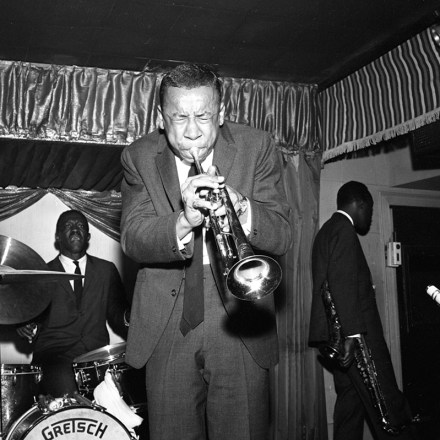
When Art Blakey’s Jazz Messengers visited Japan for a two-week tour in 1961, they were among the first Western groups to tour the country. It didn’t take much for the locals to get the message. The legendary drummer’s band contained what might be his strongest lineup ever — Lee Morgan on trumpet, Wayne Shorter on tenor saxophone, Bobby Timmons on piano and Jymie Merritt on bass — and they were greeted by elated fans upon landing at Haneda Airport on New Year’s Day. “It was like a florist’s shop,” Blakey recalled. “They wanted me to make a speech but I couldn’t. I just cried.” For the band members, this maiden voyage was a deeply moving experience. Back home, they had been relegated to playing, more often than not, in smoky jazz clubs.

messengers
Holbein

Holbein at the Morgan

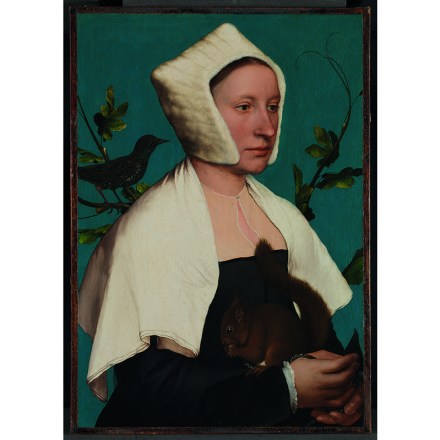
There’s a moment in portraiture when people started having a mind of their own. All of a sudden you see it in the faces: the eyes, the brow, the lip. We are no longer looking at a figure for all time — or even a sitter in a moment in time — but at something more like “me time.” The focus is not on outward appearances but inward looking. These people are lost in thought. That’s just where Hans Holbein the Younger, the great portraitist of the early sixteenth century, found them. The German artist, born into a family of painters around 1497, could conjure the smallest details at his fingertips. He quickly became the most sought-after portraitist in Europe and, by 1536, the court painter of Henry VIII (at a time when Henry himself was courting).

Dirty realists

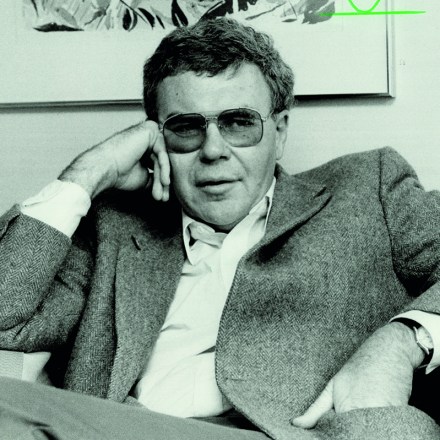
I recently finished yet another predictable novel about Brooklyn neurotics and needed a gritty palate cleanser. Raymond Carver’s Where I’m Calling From: Selected Stories seemed ideal. Carver, a master of the short-story form, has long been one of my go-to writers, but, in recent years, he has increasingly lost literary relevance. Twenty years ago, Carver’s terse, minimalistic style was all the rage. Like Hemingway and Bukowski, Carver birthed a sea of mediocre imitators onto the American literary scene. In most US short-story collections published in the Eighties or Nineties, Carver’s stylistic and thematic influence is evident from the first page.

realists
astrid

Beautiful and damned

Natalie Standiford’s latest novel, Astrid Sees All, captures the bohemian world of New York in the late 1970s and early 1980s in acutely elegant prose. It charts the fortunes of a young suburban girl, Phoebe Hayes, in elegiac but unsentimental fashion. Phoebe longs to live in the “golden world,” as she sees it, of parties and socialites, where John-John Kennedy rubs monied shoulders with the Shah of Iran’s niece, and cocktails, champagne and cocaine flow undimmed until morning. There are hints of Gilbert Adair’s Parisian youths in The Dreamers and Jonathan Dee’s novel about the effects of great generational wealth, The Privileges.

A private life

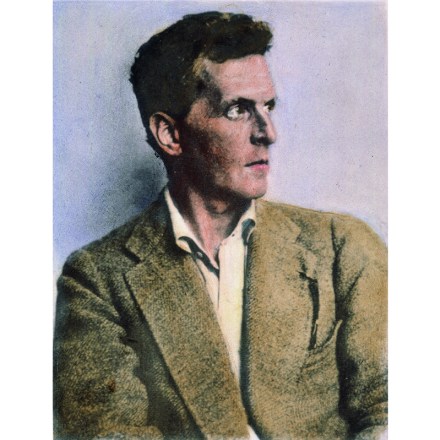
When Ludwig Wittgenstein died in 1951, he had only published one book — the Tractatus Logico-Philosophicus, which was first translated into English in 1922 (with an introduction by Wittgenstein’s former professor and mentor Bertrand Russell, to which Wittgenstein strongly objected). Philosophical Investigations, which Wittgenstein was working on at the time of his death, was published in 1953. His wartime notebooks, which he kept between 1914 and 1916, appeared in 1961. These are important. The Tractatus is famously dense, being composed of a series of statements on the relationship between words and objects and the nature of knowledge. The notebooks provide a clearer sense of the problem Wittgenstein was trying to solve and the progression of his thought.

wittgenstein
psychopath

Femmes fatales in fiction and life

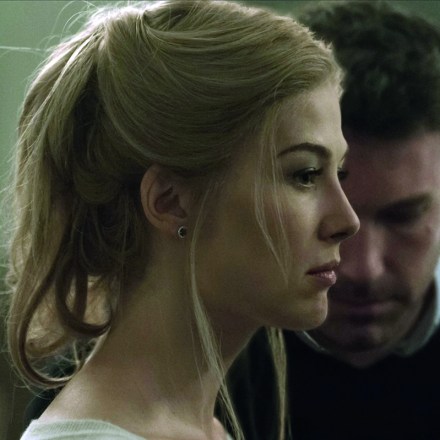
In her memoir written from a prison in New York, Dorothy Daniels gives readers a whistle-stop tour of “flashy female psychopaths” who have existed throughout history. Daniels is a food critic and a cannibal, a woman who exhibits an acute awareness of her own commercial value as a true-crime story. Before being caught by police, she considered the most humiliating moment in her life to be when she was fired from the masthead of a popular food-and-drink magazine: an experience, she bemoans, that belongs to “ordinary people.” Dorothy Daniels is, of course, fictional.

Diversifying democracy

In 1790, George Washington wrote that “the establishment of our new Government seemed to be the last great experiment, for promoting human happiness, by reasonable compact, in civil Society.” Today, Yascha Mounk has reassessed Washington’s words. He proposes in his new book The Great Experiment that many Western nations are now conducting their own experiments. Never have so many nations tried to establish such diverse democracies, regimes that grant citizens of so many colors and creeds the same freedoms, opportunities and responsibilities. Mounk, a professor at Johns Hopkins University and the founder of the Substack publication Persuasion, is both hopeful and pragmatic about the experiment’s outcomes.

mounk
reporters

Fit to print

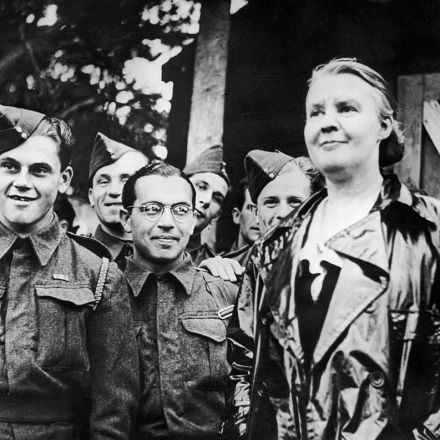
In January 1936, Harold Nicolson, the British politician and author, reviewed Inside Europe, by the Chicago-born journalist John Gunther. He praised the “American type of wandering or perambulatory foreign correspondent” such as Vincent Sheean, H.R. Knickerbocker (known as Knick), the Mowrer brothers, John Gunther and (the only woman) Dorothy Thompson, as “one of those improvements to modern life that the British would do well to imitate.” According to Nicolson, the virtue of the book, which famously described Adolf Hitler as a “blob of ectoplasm,” was not merely that it was exciting but “so personal that it may seem dramatic and at the same time educative.

Waugh in Hollywood

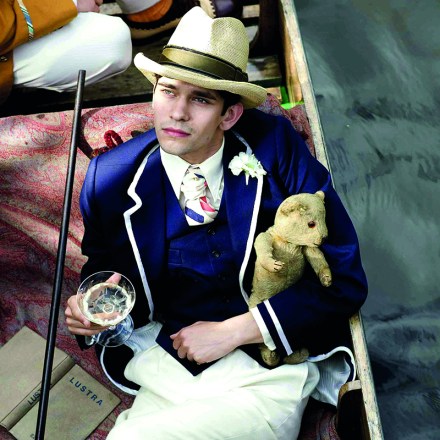
The English author and curmudgeon Evelyn Waugh (1903-66) is today best known for his 1945 novel Brideshead Revisited. A luxuriant evocation of the beauties of pre-World War Two Oxford, coupled with a cautionary narrative about the destructive power of Catholic guilt, it has remained a constant favorite with everyone from college students to literature scholars. It was memorably filmed for British television in 1981, and it launched the careers of Jeremy Irons and Anthony Andrews as, respectively, the novel’s narrator Charles Ryder and the flamboyant aesthete Sebastian Flyte.

waugh