Books & Arts

Books and Arts

Beach for America

I don’t know how I first came across Harmony Korine’s Gummo (1997), but in this cult film about the foibles and joys of small-town life, I found a director who understood the cinematic merits of American seediness. Gummo, which features amateur actors in debauched scenes, hosts a collection of freaks unsurpassed in modern cinema, including skinhead brothers, a boy dressed in a bunny suit (he goes by “Bunny Boy”), and a gay dwarf. Though mostly repulsive, Gummo has a transgressive charm that makes it impossible to turn away. Like Korine’s Mister Lonely (2007) and Trash Humpers (2009), Gummo is less about plot and theme than feeling and sensibility. It is an aesthetic experience that stylizes grime to capture the essence of characters one hopes not to encounter in real life.

spring breakers
masterpiece around

Around and around the world

Kudos to Masterpiece’s new eight-part series Around the World in 80 Days, if only for nudging me to read Jules Verne’s original tale of an eccentric Englishman who sets out from London in 1872 on a strict deadline to girdle the globe, as well as to revisit Michael Todd’s Oscar-winning 1956 movie version. Bad translations and Disney movies long consigned much of Verne’s prodigious output to the realm of juvenile entertainment, in the popular mind anyway. Serious critics tell us that we should think again — that in a novel like Around the World in Eighty Days (1873) there is indeed a lot going on. The character of Phileas Fogg has layers beneath his serene reserve, as his passage around the world begins to reveal.

Midcult madness

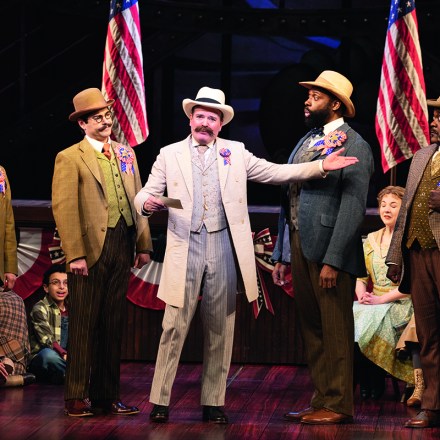
On the same Broadway block as MJ: The Musical is the tale of another song-and-dance man hailing from Gary, Indiana: Harold Hill, doctor of music, huckster of band equipment and Meredith Willson’s titular Music Man (1957). Well, that’s not quite the case: Professor Hill is a lying crook, and his Hoosier backstory is a fabricated ruse. He claims to be a graduate of the Gary Conservatory of Music, class of ’05, but the town of Gary was only incorporated in 1906. Played by Hugh Jackman, this smooth criminal sails into River City, Iowa, promising the Ewarts and Eulalies of the town he’ll make disciplined bandspeople out of their darling Winthrops and Amarylisses.

music
Mingus

Charles Mingus at 100

"All the Things You Are” is an essential jazz standard, but in 1960 the bassist Charles Mingus gave it an update: “All the Things You Could Be by Now If Sigmund Freud’s Wife Was Your Mother.” It doesn’t take a psychoanalyst to peek under the hood of this composition. Like many Mingus tunes, the loose adaptation is fairly bipolar, picking up and dropping off in fits and starts, alternating between vacuum-tight swinging sections and meandering, tempo-less squabbles between members of the four-piece band. Mingus isn’t for the faint of heart, but on the centenary of his birth it’s worth confronting his life’s work, which surely places him among America’s most important composers.

Jewel aid

In the late 1890s, the workshop of Maison Cartier adorned its Belle Époque clients in “garland-style” jewelry fashioned from white diamonds in platinum settings shaped like curled ribbons and bows. Soon, however, a more streamlined style began to emerge. In 1904, the workshop produced a small, rhomb-shaped brooch, decorated with smaller rhombs in diamonds and rubies. By the 1920s, Cartier was regularly producing polychromatic jewelry in a linear, abstract style made up of interlocking or tessellated triangles, squares, lozenges and other geometric shapes that had rarely been seen in Western jewelry. The craftsmen also combined brightly colored stones such as turquoise, coral and jade, and they experimented with enamel. What prompted this dramatic change?

cartier
picasso

Blues for Pablo

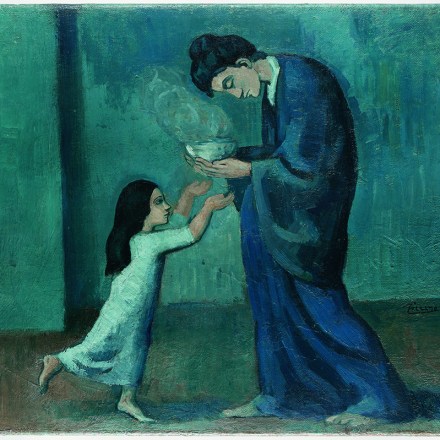
What is there left to say about Picasso? This question, posed by a colleague apropos of Picasso: Painting the Blue Period, an exhibition on display at the Phillips Collection in Washington, DC, is inevitable. There are few cultural figures whose life and accomplishments have been as exhaustively accounted for as the man born — take a breath! — Pablo Diego José Francisco de Paula Juan Nepomuceno María de los Remedios Cipriano de la Santísima Trinidad Ruiz y Picasso. Innumerable exhibitions, books, scholarly tracts and films have been devoted to this relentlessly protean artist. Even after his death almost fifty years ago — Picasso died in 1973 at the age of ninety-one — he looms large in the public consciousness.

Standing with J.K. Rowling

When Roland Barthes wrote his 1967 essay “The Death of the Author,” he probably didn’t intend that, fifty-five years later, a major American news outlet would be provocatively suggesting that the world’s bestselling author should be de-personed, de-platformed or de-materialized from history. And yet that is exactly what has happened with the New York Times. They recently ran a series of advertisements on the subway featuring a reader named “Lianna” who is, as much of their subscriber base now are, “breaking the binary,” experiencing “queer love in color” and meditating on “heritage in rich cues.” So far, so predictable. But the ads took a grimmer turn when one suggested that Lianna was “imagining Harry Potter without its creator.

Rowling
rozzo

You had to be there

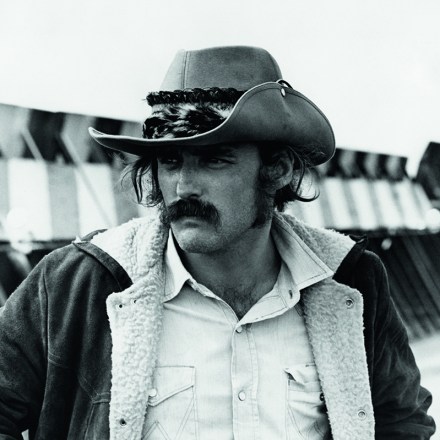
Do you worship Dennis Hopper? Do you get your kicks from sagas dedicated to the lives of the rich and famous? And do you eat up rehashed accounts of the far-out West Coast zeitgeist in the 1960s? If so, Mark Rozzo’s Everybody Thought We Were Crazy is the book you’ve been waiting for. Rozzo starts in medias res: it’s November 1961, and Bel Air is burning. As the firestorm approaches, Hopper and his unlikely wife, blue-blooded poor-little-rich-girl Brooke Hayward, grab her kids and abandon their house — but not before Hopper grabs a Milton Avery painting and throws it in the back of the car.

Paradais City

The Chilean poet and novelist Roberto Bolaño passed away in 2003, but his specter still haunts the literary world. Bolaño, a singular Latin American genius beloved by the literati, left a massive vacuum after his untimely death, and publishers have been trying to fill it ever since. This has been a great boon to Spanish-language authors whose work was plucked from the provincial world of Latin American letters and now reaches a wide readership in translation. The search for Bolaño’s literary heir has also been a blessing for American readers, as brilliant contenders such as Valeria Luiselli and César Aira are now published by major American presses, adding some much-needed spice to year-end reading lists.

paradais
crowley

Faeries and queens

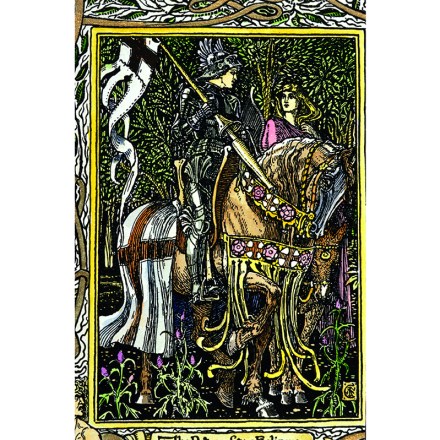
Flint and Mirror, John Crowley’s engrossing and elegant latest book, is set in a sixteenth century where angels and demons watch over human quarrels and sometimes even intervene. History and magic entwine, and yet are opposed. There is the ongoing conflict between Catholicism and Protestantism, as the Catholic Spaniards eye up invading England. The novel is also about the beginnings of modernity. As the reign of Queen Elizabeth I of England comes to an end, we progress gradually toward exploration of the globe and the Enlightenment. Farewell rewards and fairies, indeed. Elizabeth, serpentlike, broods in her English fastness, sending spies both physical and metaphysical throughout the land. Her personal magician, Dr.

The imperfect spy

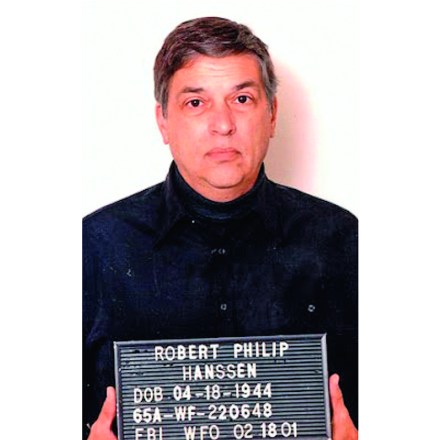
On one level, Lis Wiehl’s enthralling and grimly astonishing A Spy in Plain Sight is simply the story of Robert Hanssen, an FBI agent whose espionage activities were described by the Department of Justice as “possibly the worst intelligence disaster in US history,” a crowded field even at the time of his arrest in February 2001. “Over twenty-two years,” explained the DOJ in a 2002 report, Hanssen had “given the Soviet Union and Russia vast quantities of documents and computer diskettes filled with national security information of incalculable value.” And his betrayals had cost lives.

spy
Oxford

Et in Arcadia ego

"Oxford I do not enjoy,” wrote T.S. Eliot to Conrad Aiken in February 1915. “The food and the climate are execrable, I suffer indigestion, constipation, and colds constantly.” The poet was clearly having one of his bad days. Since arriving at the university the previous October, he had found himself in and out of love with the place, which was hardly surprising, given the timing. Most of the undergraduates at Oxford had either left or were on the verge of leaving to fight for their country, meaning that the lecture and tutorial rooms were almost empty, the sports fields green through lack of use, and the centuries-old traditions stalling like motor cars on the long stretch of the High.