Anne Sebba

Tim Franks goes in search of what it means to be Jewish

From our UK edition

It’s hard to classify this thought-provoking book – part memoir, part philosophical exploration, but mostly a deeply researched family history. And what a history that is. Tim Franks, born in 1968, has been a BBC reporter for almost two decades, and now presents Newshour on the World Service. So he knows how to tell stories about other people. But the events here concern himself, and many of them are heartbreaking, as he searches for an answer to the question of what comprises identity and to what extent we are products of our ancestors.

Anne Sebba: The Women’s Orchestra of Auschwitz

From our UK edition

37 min listen

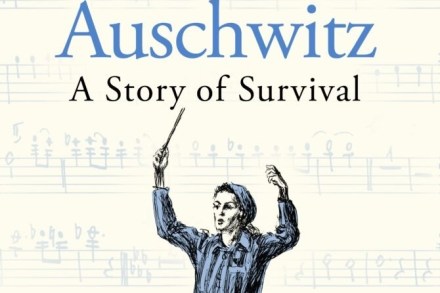
My guest on this week’s podcast is the historian Anne Sebba. In her new book The Women’s Orchestra of Auschwitz: A Story of Survival, Anne tells the story of how a ragtag group of women musicians formed in the shadow of Auschwitz’s crematoria. She tells me about the moral trade-offs, the friendships and enmities that formed, and what it meant to try to create music in a situation of unrelenting horror.

The Einstein family atrocity

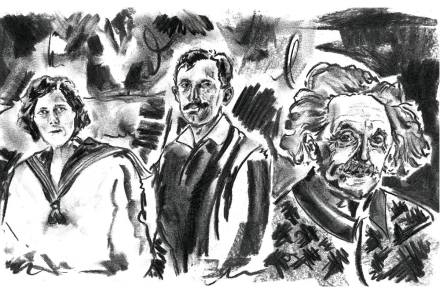
What’s in a name? Well, if it’s Einstein, quite a lot. For Roberto Einstein, it was to prove a devastating connection, even though he had lived in Italy all his adult life, was married to an Italian Christian woman, Nina, with whom he had two children who regularly attended church, and was father to two motherless nieces who were brought up Catholic. In 1944, the increasingly paranoid German occupation decided that Roberto’s whole family was Jewish and inextricably linked to the world-famous Nobel prizewinning scientist Albert Einstein, now in America and high on the Nazi death list. There were connections, of course. Roberto and Albert were first cousins — their fathers were brothers — and were both committed atheists.

Einstein

A diverting but unsurprising new history of the Astor clan

Mention “Astor” to most people and you immediately conjure up tales of fabulous wealth, the sort of Gilded Age beauty and excess expressed to perfection in the paintings of John Singer Sargent. The family name became synonymous at times with luxury and good taste, at others with greed, power and extreme snobbishness. The founder of the dynasty, John Jacob Astor, was a German immigrant and one-time fur trader who came to America in 1783 after the Revolutionary War. His descendants swiftly capitalized on his substantial achievements, creating a Manhattan property empire of unrivaled wealth. There was also plenty of Astor philanthropy and involvement in political and cultural life along the way but then, in the early twenty-first century, came a fall from grace as dramatic as the rise.

astor

The struggle of the female musician

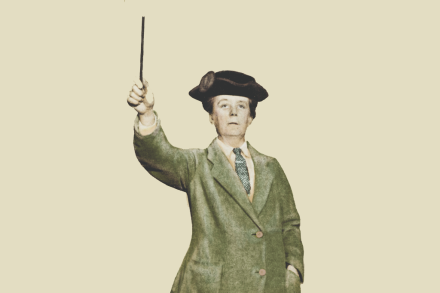
In July 2022, hundreds of elegant opera-goers gathered on the lawns of Glyndebourne Manor in Sussex to picnic in the interval of a rarely performed early twentieth century work, The Wreckers, by the suffragette composer Dame Ethel Smyth. This strikingly powerful piece of music, which tells the story of Cornish villagers who lure ships onto rocks in order to plunder them, was the first opera by a female composer to be staged at the prestigious British festival and was extremely well-received. The Times of London praised its “wild waves of passion.” Yet The Wreckers has had a difficult history.

ethel smyth women musicians

The prodigal daughter

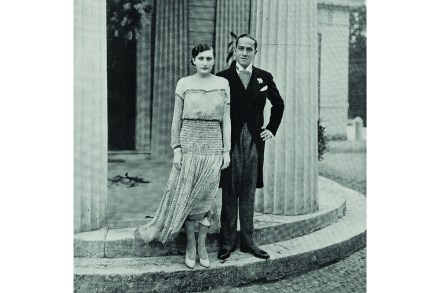
In April 1930, the nineteen-year-old Edda Mussolini married Count Galeazzo Ciano, aged twenty-seven, after a brief courtship in which love appears to have played little part. Her father, Il Duce, wanted the magnificent occasion to be not merely the wedding of the century but a grand, almost royal, demonstration of fascist might and a celebration of fecundity. Edda, his beloved firstborn, was to stand for everything that was best about fascist womanhood, while the groom was to carve out the path of “the new Italian man.” These were the glory years, and thousands of schoolchildren sent poems and cards with angels in advance of the occasion, which the Papal Nuncio attended with a present from the Pope.

mussolini

Fit to print

In January 1936, Harold Nicolson, the British politician and author, reviewed Inside Europe, by the Chicago-born journalist John Gunther. He praised the “American type of wandering or perambulatory foreign correspondent” such as Vincent Sheean, H.R. Knickerbocker (known as Knick), the Mowrer brothers, John Gunther and (the only woman) Dorothy Thompson, as “one of those improvements to modern life that the British would do well to imitate.” According to Nicolson, the virtue of the book, which famously described Adolf Hitler as a “blob of ectoplasm,” was not merely that it was exciting but “so personal that it may seem dramatic and at the same time educative.

reporters

Poor little rich girls

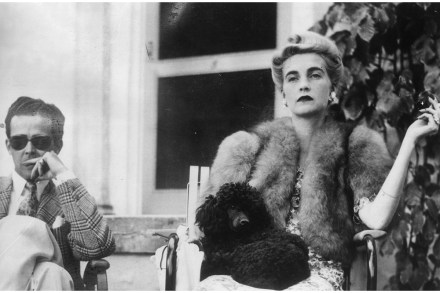
But why did she marry him? That is the question so often asked of heiresses who have, it would appear, the chance to marry anyone on whom their fancy alights yet so often make bad choices. And it’s the question reverberating through this funny, insightful and extremely modern look at an age-old problem by the British author Laura Thompson. “Why, when one had the power of near-limitless choice, would one choose so badly?” she asks. Taking this as her challenge, she examines dozens of (mostly ghastly) marriages over the last four centuries before concluding that it was a rare heiress who triumphed over her ordained fate as a victim, but it was indeed possible.

heiresses

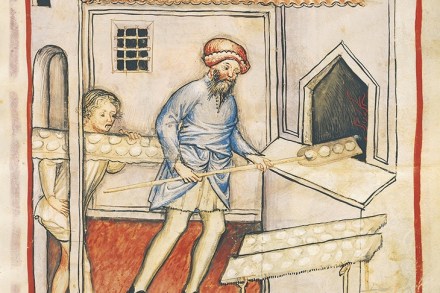
We should never take our daily bread for granted

From our UK edition

In the seventh and final chapter of this small but lingeringly powerful book, the author reveals his motivation for writing it. His father, he explains, a Russian-born Yugoslav soldier, had been a prisoner of war of the Germans, part of a group consigned to do forced labour felling trees during the bitterly cold winter of 1942-43. One evening, freezing, starving and looking barely human, the group was stopped on the road back to camp by a stranger, a Protestant pastor who invited them into his house and, risking reprisals, nonetheless gave them a chance to warm up and eat some bread with a glass of wine.

Hiding from the Gestapo in plain sight in Berlin

From our UK edition

Of the many bleak moments that have lodged in my mind since reading this extraordinary book the most unshakeable is the image of the once dignified Otto Neumann, walking to his death in torrential rain, with black shoe polish running down his face and into his eyes. Thus was his fate sealed as the silver hair revealed beneath ensured he was deemed too old to be selected for work. He was despatched instead to the gas chambers of Auschwitz. But if this downpour, in a hideously crazy world, can be considered bad luck — after all, Otto and his wife Ella had by then managed against the odds to survive in the hell that was Terezin for two years — Hans, their young son then in hiding, was to have moments of astonishing good luck, which ensured his survival.

A life in pieces

From our UK edition

When the poet George Szirtes returned as an adult to Budapest, the city of his birth which he had left as a child with his family in 1956, he experienced what became an abiding fantasy. He imagined his mother going back to the family flat but, instead of sitting down in a chair, she carried on walking through the wall until she emerged as a plaster statue: At that moment I realise… that Budapest is absolutely crammed with statues that were once people, people who had simply walked through the walls and become stylised allegorical figures, that this was their fate, hers, and mine too, come to that. This exquisitely told memoir is crammed with similarly evocative and occasionally deeply unsettling images.

The man who kept re-inventing himself

From our UK edition

When Romain Gary, a courageous and much decorated pilot in the RAF’s Free French squadron, was presented to the Queen Mother shortly after the second world war and asked about his background he apparently chose to remain silent. ‘Pour ne pas compliquer les choses,’ was his own version of the one-sided exchange. Gary, born Roman Kacew to Jewish parents probably in Vilna in 1914 and educated in Nice where he was taken as a teenager by his ambitious actress mother, was constantly re-inventing himself.

Appointment in Sarajevo

From our UK edition

In July 2001, a few days after Slobodan Milosevic was flown to the War Crimes Tribunal in The Hague, Janine di Giovanni went to Sarajevo to see how it felt for those who had suffered so brutally from his rule. But she found no one celebrating. Some of the ‘big fish’ were getting caught, but the ones who really did it — ‘the executioners’ as people call them — are still living peacefully, walking the streets. They are the men who raped and killed and burned and now sit in cafés in Foca and Srebrenica, confident that The Hague will never find them. In fact, there isn’t a lot of celebrating in this deeply disturbing book.

Go straight to Heaven

From our UK edition

Tourists in downtown Calcutta (or Kolkata, as we all must now learn to say) cannot fail to be struck by a 50-foot mosaic of the city's most famous immigrant, Mother Teresa. The Skopje-born nun is smiling benignly on the snarled-up traffic chaos that belches and honks beneath her. To one side of this giant piece of wall-art is an advertisement proclaiming, 'Reserved for Calcutta's Best Brands'. Mother Teresa is Calcutta's best brand. Later this month, when, in record time, the Pope bestows on her the Vatican super seal of approval and declares her blessed, she will be well on her way to becoming a saint. Hers will probably become the fastest sainthood since the Roman Catholic Church set rules controlling saint-making in the 13th century. Why the haste?

Kissing and telling with gusto

From our UK edition

Harriette Wilson’s Memoirsintroduced by Lesley BlanchPhoenix, £9.99, pp. 471, ISBN 1842126326 What do a modern New York psychoanalyst and a Regency London courtesan have in common? Both offer escape, relaxation and individual attention; both are expensive. ‘In place of the alcove there is the analyst’s office. But basically the functions of both analyst and courtesan have the same principle,’ explains Lesley Blanch in her expansive introduction to the memoirs of the most famous of English courtesans, Harriette Wilson. For some 15 years Harriette Wilson was all the rage in London political society. Men were desperate for her favours, just for a night if they could not be her long-term protector.