Spectator Life

Spectator Life

An intelligent mix of culture, style, travel, food and property, as well as where to go and what to see.

Anyone for tennis – on film?

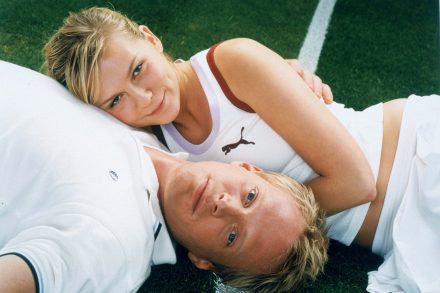
With Wimbledon fortnight upon us, what better time to explore tennis on the silver screen? Even more fortuitous is that Aidan Turner’s raunchy Amazon Prime series Fifteen Love will debut this summer, in which the Poldark star plays a tennis coach with a chequered past. Turner also features as moustachioed TV presenter Declan O'Hara (shades of Des Lynam as was) in Disney+’s upcoming adaptation of Jilly Cooper’s Rivals, a show apparently so steamy it needed two intimacy coaches. https://www.youtube.com/watch?v=MykuvVwtXtQ As an aspirational, largely middle-class game, tennis when depicted in the movies is largely free of the pile-ons, punch-ups and bad language of films about football, rugby and other contact sports. But, not as you’ll find out, wholly so...
How to enjoy Glastonbury from your sofa

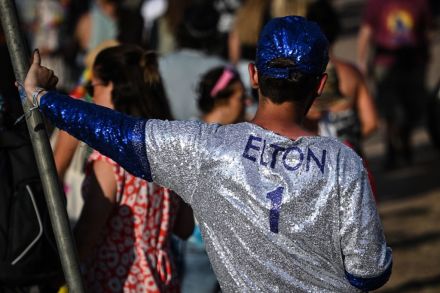
More than 200,000 people have schlepped down the ley lines for another year of ‘Glasto’. It’s tempting to deride these people: they’ll stink, they’re anchorless hedonists, they’re blue-haired hippies. However, they’ve got tickets to Glastonbury and I haven’t, so they win.  Actually going to the festival, however, is a minority experience. More of us will be watching it on TV. And whether you dig the Glastonbury vibe or not, there’s plenty of good music for all across this weekend.  The most important thing to remember, though, is to watch as little of the coverage as possible. It’s fluff. For three whole days, everything is ‘fantastic’, everyone will ‘bring it’ and ‘vibes’ will always be ‘elite’ for the gawping BBC presenters.

Midsummer movies: what to watch on the longest day

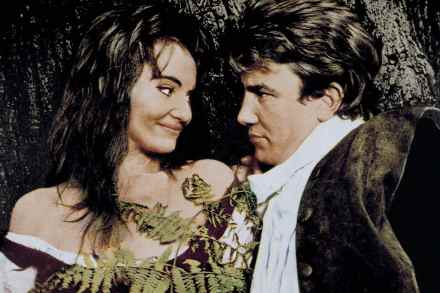
The summer solstice (which falls today) has been a time of celebration and religious rituals since the dawn of mankind. Some associate the event with neo-druidic gatherings at Stonehenge and the like, others with ghastly human sacrifices to placate the Old Gods – while many see the solstice as simply a time to celebrate the longest day of the year with (relatively) innocent folkloric revels. But if you'd rather stay home and watch a film to mark the occasion, here are 15 worth your time. Midsommar (2019) – Netflix, Amazon Rent/Buy Ari Aster’s (Hereditary and upcoming Beau is Afraid) folk horror picture is very much in the vein of The Wicker Man (1973) – but with additional lashings of graphic violence and foreboding.

Glenda Jackson: a life in ten films

The actress and politician Glenda Jackson died last week at the age of 87. Her acting career moved effortlessly between stage, TV, and motion pictures, where Jackson proved a commanding presence in each. In 1992 she took a lengthy break from the acting world to become a Labour MP, exchanging the likes of co-stars George Segal, James Garner, and Jeff Goldblum for colleagues Dennis Skinner, Roy Hattersley, and John Prescott. Returning to stage, TV, radio, and film in 2015, Jackson had lost none of her thespian chops, continuing to rack up awards.

The art of the insult in movies

As Rishi Sunak and Boris Johnson trade insults, here’s a look at some of the best – and most wounding – barbs in film. Full Metal Jacket (1987) Amazon Rent/Buy https://www.youtube.com/watch?v=tHxf17yJsKs Gunnery Sergeant Hartman, the master of full-on, spittle-flecked abuse, eventually gets his comeuppance for belittling conscripted recruits in Stanley Kubrick’s Vietnam war classic. A prime example of Hartman’s cruelty is when he addresses Vincent D’Onofrio’s hapless Pyle: ‘Were you born a fat, slimy, scumbag puke piece o’ shit, Private Pyle, or did you have to work on it?’ R. Lee Ermey, who played Hartman, had previously been a US Marine drill instructor in Vietnam and – with Kubrick’s enthusiastic urging – ad-libbed much of his dialogue in the film.

‘I’m sorry, Dave’: AI in the movies

Artificial intelligence (AI) has rarely been out of the headlines over recent months, creating foreboding that computers will soon be an existential threat to humanity. Movies have long anticipated this, beginning almost a century ago with Fritz Lang’s dystopian classic Metropolis (1927). Seven years earlier, Czech writer Karel Čapek’s stage play R.U.R. – Rossumovi Univerzální Roboti (Rossum's Universal Robots) introduced the world to the concept of conscious artificial beings. Here’s a look at artificial intelligence in ten movies: The Forbin Project (1970) https://www.youtube.com/watch?v=kyOEwiQhzMI Joseph Sargent’s (The Taking of Pelham One Two Three) picture is something of a hidden gem, and could be – as they say – ‘eerily prescient’.

Ten movies to watch as the Mirror Group phone hacking trial continues

With its inbuilt suspense, twists and turns – not to mention its many opportunities for scenery-chewing – the courtroom drama has long been a staple of cinema. Although plots tend to concentrate on capital cases, there are a fair few where reputational damage, corporate malfeasance, freedom of speech, education, religion, sexuality, race, military justice, politics and discrimination drive the proceedings. Here are some of my favourites: Inherit the Wind (1960) I am more interested in the ‘Rock of Ages’ than I am in the age of rocks. Frederic March as Creationist Matthew Harrison Brady https://www.youtube.com/watch?

Schofield, Willoughby and the question of blame

Holly Willoughby returned to the This Morning sofa yesterday with a brief scripted statement on the fall of her long-time co-presenter Phillip Schofield:   I imagine that you might have been feeling a lot like I have – shaken, troubled, let down, worried for the wellbeing of people on all sides of what’s been going on, and full of questions, you, me and all of us at This Morning gave our love and support to someone who was not telling the truth, who acted in a way that they themselves felt that they had to resign from ITV, and step down from a career that they loved.

Everyone needs to calm down about The Little Mermaid

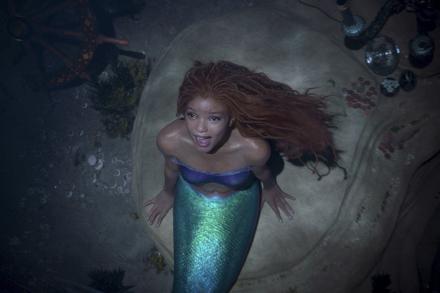
‘I do not think we do our children any favours by pretending that slavery didn’t exist,’ wrote Royal Academy of Dramatic Art chair Marcus Ryder, in a blog about the newly remade Disney adaptation of Hans Christian Andersen’s fairytale The Little Mermaid. ‘Setting the fantastical story in this time and place is literally the equivalent of setting a love story between Jew and Gentile in 1940 Germany and ignoring the Jewish holocaust,’ he wrote.’ Not to be outdone, the singer Paloma Faith wrote on Instagram after she’d been to watch the remake that, ‘As a mother of girls, I don’t want my kids to think it’s OK to give up your entire voice and your powers to love a man’.

Why The Little Mermaid is bad news for cinema

It is disappointing to learn that, after critics and cynical audiences everywhere had sharpened their fish knives in the expectation of the new live-action Little Mermaid film being a catastrophic disaster, early reviews have suggested that it is… fine. It attracted a great deal of attention, and some criticism, for the casting of the black singer-actress Halle Bailey in the lead role of Ariel, on the grounds that sea-dwelling mermaids must, after all, be white-skinned redheads, as she was in the seminal 1989 animated film. Yet Bailey’s performance has been universally acclaimed, with her delivery of 'Part of Your World' being singled out for particular praise. The reason why so many are disappointed that we do not have a Cats­­-level disaster on our hands is twofold.

Killers of the Flower Moon could be Scorsese’s best film yet

There are a few things in this world that you can truly count on: death, taxes and Taylor Swift’s love life attracting headlines. To their number can be added the certain knowledge that, when Martin Scorsese collaborates with either of his two muses, Robert De Niro and Leonardo DiCaprio, the results are somewhere between fascinating (Gangs of New York; New York, New York) and stone-cold cinema classics (Goodfellas; The Wolf of Wall Street). Yet apart from a droll promotional film for a Macau casino (The Audition), the three men had never worked together. This has, finally, changed, as the trio unite for what looks like another Scorsese crime classic in the form of the three-and-a-half-hour epic Killers of the Flower Moon.

The reinvention of Jude Law

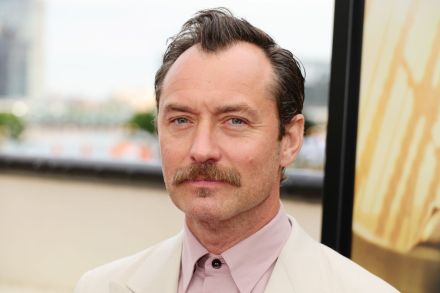
The late director Anthony Minghella made three films with actor Jude Law: The Talented Mr Ripley, Cold Mountain and Breaking and Entering. They would undoubtedly have made more if Minghella hadn’t died at the cruelly young age of 54 in 2008. He referred to the actor as ‘my muse’, but had a more perceptive comment about him too. ‘Jude is a beautiful boy with the mind of a man. A true character actor struggling to get out of a beautiful body.’ For years, Law seemed to struggle with the weight of his good looks, taking on mediocre roles that talent agencies and producers had shoehorned him into. Now, at the age of 50, he has embraced middle age and the greater opportunities for versatility it offers.

Movies to get you in the Eurovision mood

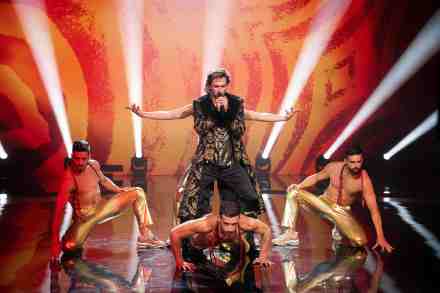
We might never have taken the Eurovision Song Contest terribly seriously in the UK – but with British Ted Neeley lookalike Sam Ryder winning second place last year and the staging of this year’s event in Liverpool, some are singing to a different tune. This year’s UK entry comes from Mae Muller – ‘I Wrote a Song’ is a serviceable enough generic toe-tapper, but no ‘Puppet on a String’ (Sandie Shaw, 1967 winner) if you ask me. Or even ‘Ooh Aah… Just a Little Bit', Gina G’s 1996 banger that claimed eighth place in the contest. Ahead of tomorrow night’s final, here are ten movies to get you in the mood for Eurovision 2023 – films where the plucky underdog (almost always) triumphs.

Cannes 2023: 10 films to watch out for

This year’s Cannes Film Festival promises to be interesting viewing, with a record number of female directors in contention (a stark contrast to the 2023 Academy Awards) and a greater than usual representation of old-guard auteurs (including Martin Scorsese, Wim Wenders, Ken Loach and Finnish maverick Aki Kaurismäki). Fans will no doubt be enthused by the return of Jonathan Glazer (Sexy Beast) with his first picture since 2013’s acclaimed Under the Skin. I can’t say Glazer’s choice of material - Martin Amis’s 2014 concentration camp novel Zone of Interest – particularly grabs me, but the director’s work is always worth checking out.

Crowning moments: coronations in the movies

Before Westminster Abbey opens its doors on Saturday, what better way to get in the spirit than to explore the storied history of coronations in the movies? The sheer spectacle of a monarch’s formal coronation has an inherently cinematic aspect – and it's one that motion pictures have long exploited. Here are ten films to savour before the event: The Lord of the Rings: the Return of the King (2003) – NOW, Amazon Rent/Buy https://www.youtube.com/watch?v=r5X-hFf6Bwo Impressive as King Charles III’s coronation is sure to be, it’s unlikely to match the crowning of Aragorn (Viggo Mortensen) as King Elessar in the final instalment of Peter Jackson’s Lord of the Rings trilogy.

What makes a proper Dracula film?

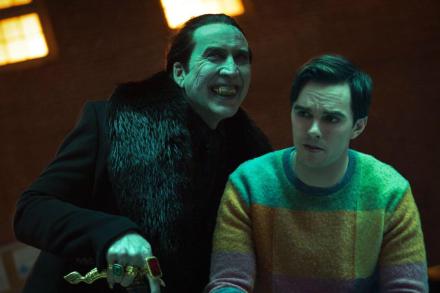
If Dracula is about anything, he’s about sex. Renfield, in theatres now, is the latest revamp of the Transylvanian bloodsucker mythos, and it is not about sex. In fact, it is a thoroughly sexless movie which might be why, despite some gusto performances and gloriously icky make-up effects, Renfield is a flaccid, directionless affair.  There is an early red flag that signals where the movie is going. Nicholas Hoult as the titular minion and Nicolas Cage, playing fiction’s most feared set of fangs, are laying low in an abandoned hospital in New Orleans, having fled there after a nasty run-in with some vampire hunters in the old country. Famished for fresh blood, Dracula demands that Renfield bring him ‘a busload of cheerleaders’. ‘Female cheerleaders?

The BBC’s Blue Lights is a near-perfect cop drama

‘Remember your training Grace, get the rifle.’ We’re only moments into the opening episode of the superb new police procedural Blue Lights when we are reminded this is a very different cop show. In Northern Ireland, where it is set, policing the semi-skimmed peace still carries the additional risk of being ambushed by terrorists. Being tooled up, even for a traffic stop, can be a matter of life and death.   Any of us who have worn a uniform while wet behind the ears can empathise with the struggle of these three new officers Grace and Stevie, her mentor – and possibly more as the series develops – are two central characters in a six-part BBC drama that manages to humanise the lives of the men and women in the Police Service of Northern Ireland without mawkishness.

Does Shakespeare tell us how Succession will end?

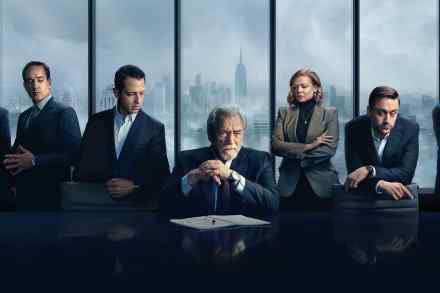
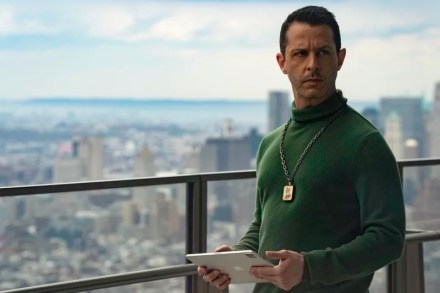
The award-winning Succession is many things. Now in its fourth series, it has been compared with a Renaissance painting, a Greek tragedy, a Jane Austen novel, and a psychoanalytical allegory of trauma responses (Kendall – fight; Connor – flight; Shiv – fawn; Roman – freeze). Ultimately, however, it is a Shakespearean series. The writers may have swapped the battlefield for the boardroom and armies for anxious shareholders, but the show’s character studies and themes – power, family, politics, betrayal, revenge – are Shakespearean in their complexity and circularity. Only instead of soliloquies, we have a lot more raised eyebrows, death-stares and ‘uh-huhs'. There’s even a playwright called Willa.

The case for remaking great films

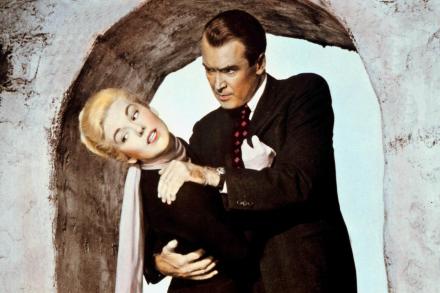
Afew weeks ago, news broke that Paramount was planning to embark on a remake of Alfred Hitchcock’s Vertigo with a starring role for Robert Downey Jr. You are forgiven if your reaction is one of deep scepticism. What can possibly be gained by remaking a film widely regarded as the apex of the art form? What director today can step into the shoes of the Master of Suspense? And who would ever mistake the star of Iron Man for Jimmy Stewart?  Gut reactions of this sort remind us of the scorn with which remakes in general are usually – sometimes unfairly – met. After all, remakes are considered by all fair observers to be inherently synthetic and unoriginal, right?

The dark side of Ted Lasso

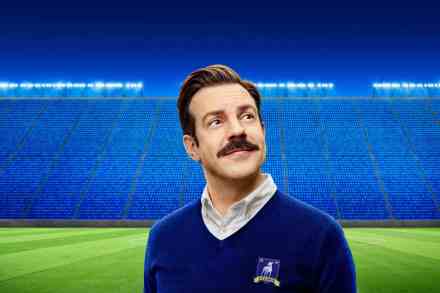
You’ll know where you are with Ted Lasso – the third season of which has just started on Apple TV – as soon as you hear the Marcus Mumford co-written theme song. It peddles a sort of sub-Coldplay uplift, with a lot of big, meaningless anthemic 'yeah's in the chorus. Bright, accessible, catchy and instantly forgettable, you still enjoy hearing it every time you watch a new episode. And that’s the show in microcosm: cheery, amusing and utterly inconsequential. Yet somehow the Jason Sudeikis vehicle has become not only Apple TV’s biggest hit to date, but the most Emmy-nominated comedy in recent years.

The perverse and addictive appeal of Netflix’s You

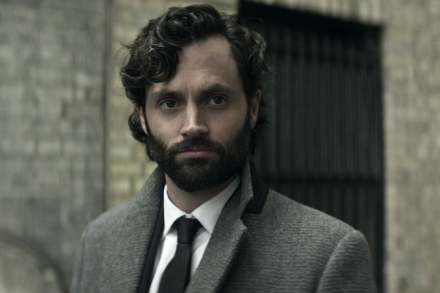
In our risk-averse, deeply fearful age, the idea of one of the most popular shows on any streaming service being a black comedy about a serial killer who has an unfortunate penchant for murdering the women he falls in love with might be something of a tough sell. But the bloody exploits of Joe Goldberg, a bookstore worker-turned-university-professor, who has so far terrorised the denizens of New York, California and London, have run to four immensely popular seasons on Netflix, with a likely fifth and final instalment in the next year or two. Not bad for a series that – intentionally or otherwise – treads a fine line between hilarity and horror, its essential ridiculousness jostling against its near-nightmarish central conceit.

Succession and the rise of ‘eat the rich’ entertainment

Farces, satires and straight slapstick comedies about extremely wealthy people have made popular entertainment for centuries. In film, the most notable example is Jean Renoir’s The Rules of the Game (1939), in which a group of upper-middle-class French people gather at swanky events, culminating in an affair that ends in a mistaken identity shotgun death, one that will be reported to the police as 'nothing more than an unfortunate accident'. HBO’s Succession, which returns to Sky Atlantic with a fourth season on Monday, has followed an even wealthier group of people, even more self-absorbed, distorted and cut off from the outside world than Renoir’s overzealous swingers and servants whistling past the future graveyards of Vichy.

Plot twist: the 10 most surprising Best Picture Oscar winners

The received wisdom that the Oscar for Best Picture always goes to mainstream, generally inoffensive ‘quality’ pictures is only partially true. There have been multiple exceptions to this – and increasingly so over recent years, with an influx of younger Academy voters and a desire to be seen as more progressive than in the past. Who knows what it might mean for this year’s Best Picture nominees – which are All Quiet on the Western Front, Avatar: The Way of Water, The Banshees of Inisherin, Elvis, Everything Everywhere All at Once, The Fabelmans, Tár, Top Gun: Maverick, Triangle of Sadness and Women Talking.

The legacy of Chaim Topol

In 1969, for my seventh birthday, I was taken – dragged, probably – ‘up west’ to the theatre to see a musical. As I recall, it didn’t fill me with joy to be going, but it turned out to be fantastic. The songs, the acting, the dancing: it was great fun. Then we went for pasta in Soho, which was also a special event in those days. More importantly, though, I think it was the first time I became truly aware of a vital part of my identity: that I was here because decades earlier my great-grandfather had arrived on these shores, driven out of his native Russia by a pogrom, the ethnic cleansing of Jews across that vast country.

Bored of the Rings: the Tolkien industry has gone far enough

In 1969, Henry Beard and Douglas Kenney, future founders of National Lampoon, published a satirical takedown of J.R.R. Tolkien’s Lord of the Rings, entitled Bored of the Rings. It holds up remarkably well today as a closely observed parody of Tolkien’s more windy stylistic tics. One critic, David Bratman, remarked: 'Those parodists wrought better than they knew. I think it is highly significant how close Tolkien came to inadvertently writing the parody version of his own novel – and how completely, in the end, he managed to avoid it.

What to watch on Netflix (while we can still share passwords)

If you share a Netflix account with a friend, relative, colleague, in-law, neighbour or ex whose password you happened to crack, your viewing days may be numbered. The streaming service is planning to fight back against password-sharing – by charging an extra fee to subscribers who let friends and family from other households use their account. In a post this month, Netflix emphasised that ‘a Netflix account is intended for one household’, adding: ‘We’ve always made it easy for people who live together to share their Netflix account with features like profiles and multiple streams. While these have been hugely popular, they’ve also created confusion about when and how you can share Netflix.

The dangerous myth-making in the Banshees of Inisherin

I never made it to the end of Martin McDonagh’s The Banshees of Inisherin, which won four Baftas on Sunday and has been tipped for further success at the Oscars next month. Inisherin is a fictional place that apparently translates as 'Island Ireland'. I know it’s probably churlish of me, but, being Irish, I was turned off by the film’s maudlin sentimentality mixed with self-obsession, self-harm, child abuse, wanton violence, dead pets and suicidal ideation. It bothered me that the film trotted out as many Oirish stereotypes as were in Gone With the Wind, released in 1939. Let me list some of the most obvious of these at the outset.

Why hasn’t the Scream franchise been killed off?

In December 1996, audiences lining up to see a teen horror picture starring Drew Barrymore, from the director of A Nightmare on Elm Street, got the shock of their lives. Not only was Barrymore, the best-known actor in the film, murdered in the first 15 minutes, but the opening set-piece was arguably the most shocking moment in movies since Janet Leigh had met a grisly end in the shower in Psycho. As Barrymore is stalked, first by telephone and then in person, by a sinister masked killer, the tension and horror build to virtually unbearable levels before its horrific climax. The rest of the film lived up to its opening, but for sheer, never-to-be-forgotten chutzpah, the beginning of Scream is indelible.

The tragedy of Fawlty Towers

The secret of any great sitcom is the delicate balance of sit and com. Mess the 'sit' bit up and you lose the 'com'. Del Boy without Nelson Mandela House is as unthinkable as Alan Partridge without his 'grief hole' (aka the Linton Travel Tavern), which is why both of these characters eventually came unstuck. Sending the Grace Brothers' employees on holiday to Costa Plonka in the 1977 Are You Being Served? feature-length comedy fell flat because, devoid of petty department store politics, the characters had no reason to exist – thus audiences felt cheated.  Remove tightly written characters from their uncomfortable surroundings and viewers stop caring.