Spectator Life

Spectator Life

An intelligent mix of culture, style, travel, food and property, as well as where to go and what to see.

The Great British Getaway: unusual staycations for the summer

Bookings for summer staycations have boomed since Boris Johnson said that domestic holidays would be possible from as early as April 12. There has been no mention yet of when overseas travel restrictions may be lifted, so it is looking like a very British summer. But a staycation doesn’t have to mean sitting in a dreary caravan park. Make your summer holiday a memorable one by booking one of these unique breaks: Port Lympne Safari Park, Kent Guests at Port Lympne will often wake up to a tiger rubbing its face against their window or a giraffe resting its nose on their balcony. The safari park offers a number of accommodation types, including glamping tents, wigwams, shepherd's huts and coming soon, Giraffe Hall (pictured above).

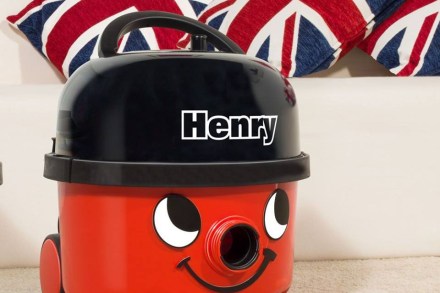
Why the British love Henry Hoover

What's so endearing about Henry? It's been the question on everybody's lips since he spectacularly photobombed the unveiling of the new Downing Street press room. The friendly faced vacuum cleaner still manages to compete with the likes of Dyson forty years after he was first created. Made in Chard, Somerset, with his bowler hat shaped ‘cap’ and smiley face, Henry is arguably one of the last remaining bastions of British eccentricity.   Henry is that rare thing in British culture - a domestic appliance that transcends class. As Grayson Perry pointed out in his excellent series All in the Best Possible Taste, the British have a propensity to imbue ordinary household objects with all sorts of thinly veiled social codes.

What does science say about souls?

Until the mid 19th Century, most of us believed that we had a soul. It was what separated us from the animals. This belief could be modified to accommodate slavery, Malthusian economics and to allow dogs into Heaven, but the principle was pretty stable. A hundred years later, thanks largely to Darwin, and innovations such as quantum mechanics and Auschwitz, such a view seemed childlike, romantic, or in the case of the Clergy, downright dogged. The 'soul' became just another invention of the under-informed, over-excited primitive imagination, like faeries, Valhalla and insidious whispering serpents. We have Science now.

Is the Oxford AstraZeneca vaccine safe? A doctor’s view

One of the few positives to have come out of the Covid-19 pandemic has been the remarkable speed at which vaccines have been developed and rolled out in months, rather than the many years that was the previous norm. Their effectiveness is being increasingly proved as more people are vaccinated, and they appear to be extremely well tolerated in terms of side effects.  In the UK at least, vaccine hesitancy does not appear to be as great a problem as was initially feared and no new potential side effects have been reported that were not already known about from the vaccine trial data.

Where to order your post-Brexit fish

It’s Lent, and you know what that means? Fish, that’s what. Once, the point of the whole fast and abstinence thing was to eschew meat, which meant eating fish instead. Indeed, the fish-fasting association was so important for the fishing industry that when the Reformation came, much Catholic practice was jettisoned, but not the obligation to eat fish in Lent. Now, there’s a further rationale, two in fact. Brexit, plus Covid, a double whammy for the industry. Post Brexit, there are endless impediments to exporting to the EU, formerly an enthusiastic taker of British fish and shellfish, unless suppliers are lucky enough to be part of a bigger consortium which handles the paperwork and even if you do the whole process is more expensive.

The problem with Facebook’s ‘Supreme Court’

He might now be one of the most powerful men in global media, but I find whenever I see a photograph of Nick Clegg, Orwell’s quote about everyone getting the face they deserve by 50 comes to mind. Now 54, the remnants of the boyish idealist are still just about there, but the eyes to me are ledgers of too much unhappy compromise – deadened, I always assume, by the principles he felt forced by David Cameron to sacrifice for personal advancement, and by the amazing decision to see out the remaining years of a career spent failing upwards as Mark Zuckerberg’s lavishly remunerated PR lickspittle. For a decade and more, Clegg positioned himself as the good guy of British politics – radiating sixth form actor star power at every opportunity.

What to drink on St Patrick’s Day

St Patrick’s Day is coming. Which means people all over the world will be repeating that thing they’ve heard about the pints being better in Dublin, claiming that they’ve read Portrait of the Artist, and championing Irish family connections through some obscure branch of the family tree. When it comes to refreshments on the day you could do a lot worse than a few cans of stout or cider. Bushmills Black Bush (£22; Waitrose) and ginger ale - 1:2 ratio, lots of ice, wedge of lime - is one of the all-time great highballs and would also do the job nicely. However, the old classics are by no means the only choices for Patrick’s day merriment. Whiplash Cream on Chrome DIPA, 8% (£5.

The misunderstood motto of Rishi Sunak’s old school

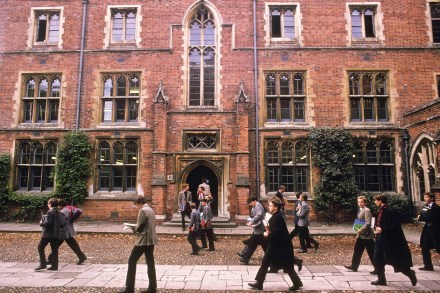
The first thing that Dr Tim Hands, headmaster of Winchester College, would like to clear up is his school’s world-famous motto, ‘Manners maketh man’. Whenever a Wykehamist makes the papers, this ancient phrase is wheeled out, referring to his (in)decent manners. But this isn’t quite right, says Hands. Two pieces of stained glass — one formerly in Bradford Peverell church near Dorchester, and another in the Warden’s Lodgings at New College Oxford (founded by Winchester’s founder Bishop William of Wykeham) — read ‘Manner maketh man’. This, says Hands, is the origin for the school’s motto. ‘“Manner” means what you are and what you do — not how you fold your handkerchief.

In praise of bad mothers

It’s Mother’s Day and, once again, I muse on how little some friends really know one. I never expect anything in a friendship that I can’t return – hence I do not look for loyalty or kindness – but the only area in which I am ceaselessly short-changed is in the business of being seen as one truly is. Michel Polac may have opined that ‘To be loved is to accept to be mistaken for who you are not’, but I like someone who sees me clearly. You can slander my reputation and I won’t turn a hair (I’ll probably put you on the payroll), but if you dare insinuate at this time of year that I must be feeling mis because of my dismal record on that front, I will immediately dismiss you as a sentimental half-wit with the perception of a pit-pony.

Why there’s never been a worse time to move to the country

It began with a sourdough starter. Then we dabbled with home delivery cocktails. This time round, I watched The Dig and bought a Fair Isle tank top and a blouse with a big collar to wear for Zoom calls. Then, when my husband’s company announced they’d be hiring remotely, we embraced the biggest lockdown cliché of them all: moving to the country. Mentally, we checked out of London and started rubbing our hands in expectation of what we could get in exchange for our terraced house in Zone 2. Outdoor space, a couple more bedrooms - the trade-off many Londoners have come to expect in exchange for enduring the years of a ruinous mortgage and the Northern Line during rush hour. Alas, the reality was as disappointing as the must-watch of Lockdown 1.0, Normal People.

The trouble with mindfulness

Mindfulness makes you smug. And not just mindfulness; a whole raft of alternative spiritual practices such as chakra cleansing and past life regressions feed a sense of superiority over normal mortals. That’s the finding of research from Radboud University in Nijmegen in the Netherlands involving some 3,700 people. The leader of the research, Professor Roos Vonk, first engaged in this field of study when she found that a boyfriend who went on a quasi-Buddhist spiritual retreat for clinical psychology students came back with ‘an enlightened, elevated look in his eyes’ and became really tiresome. In particular, she wanted to test whether the ideals of a Tibetan Buddhist meditation master, Chogyam Trungpa, who taught renunciation of self, actually worked out in practice.

Jordan Peterson and the cult of tidiness

The world is obsessed with clutter. Today, untidiness is seen as a moral failure and messy people are cast as incontinent reprobates lacking in all self-discipline. In his new book, Beyond Order: 12 More Rules for Life, Jordan Peterson tells readers that cleaning up their homes and offices is nothing less than a ‘moral obligation’. Brits seem to agree. Princess Anne was recently criticised and urged to declutter after viewers glimpsed her living room at Gatcombe Park, whilst Channel 5 is planning a new TV show in which Nick Knowles helps messy homeowners tidy up. With the end of lockdown in sight, UK charity shops are expecting a huge boom in donations as Britons rush to declutter.

Beyond Bond: the timeless appeal of the spy novel

There is something intrinsic to the British novel-writing tradition of a good espionage story. From its beginnings in the early twentieth century with Rudyard Kipling and Erskine Childers through to the thoroughly contemporary likes of Mick Herron and Charles Cumming, there is apparently no shortage of gripping, witty and brilliantly executed spy tales, all of which continue to fascinate us with their combination of cloak-and-dagger mystery, larger-than-life protagonists and antagonists and twist-laden storylines. Everyone, of course, thinks of James Bond when it comes to spy stories, and it would be churlish to omit his adventures from a selection like this. But there are many more distinctly unglamorous spooks and joes whose tales are worth a read.

On this day: which county’s water is especially suited to Earl Grey tea?

Every weekend Spectator Life brings you doses of topical trivia – facts, figures and anecdotes inspired by the current week’s dates in history … 13 March Earl Grey (born 1764). The Prime Minister gave his name to the tea. It was specially blended for him by a Chinese mandarin to suit the water in Northumberland, where the Grey family seat Howick Hall is located. The tea contains bergamot, to take account of the water’s high lime content. 14 March International Pi Day. The date was chosen because in American format (3/14) it matches pi’s first three digits. To remember the first seven digits (3.141592), count the letters in each word of ‘how I wish I could calculate pi’.

In defence of Kew Gardens’ ‘woke’ signs

Forget statues: the latest victims of the colonialism culture war are racist plants. Ah yes, those menacing snowdrops with their overly white petals and dangerous daffodils. As Mr Steerpike reports, Kew Gardens has entered the fray with a promise to 'decolonise' its collections. Presumably the next step is for its sister site in Sussex to be renamed Wokehurst Place. The Royal Botanic Gardens' director Richard Deverell has said that 'We’re looking at our collections and how we bring new narratives'; while his organisation's recently-published 'manifesto for change' promises that by 2030, 'we will move quickly to 'de-colonise' our collections, re-examining them to acknowledge and address any exploitative or racist legacies, and develop new narratives around them'.

The curious censorship of Chloé Zhao’s Nomadland

Fortunes shift quickly in Chinese cyberspace. On March 1, Chloé Zhao, the Beijing-born film director, was the ‘pride of China’, according to the Chinese Communist Party’s The Global Times. Zhao had just won the best director Golden Globe for her film Nomadland, becoming the first Asian woman in history to win the award, and only the second woman full stop. As news of her victory emerged, Chinese social media was awash with congratulatory messages for the 38-year old director.

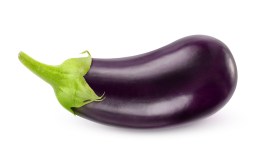
The viral appeal of the aubergine

It seems at first an unlikely ingredient for global domination - particularly if, like me, you first encountered it as an unappetising squidge at the centre of a badly-made seventies moussaka. While the actual aubergine - the palpable purple signature ingredient from said retro Greek bake - remains a relatively minor player in the western larder at least, its visual representation, the aubergine in emoji form, has broken out of the virtual veg box.

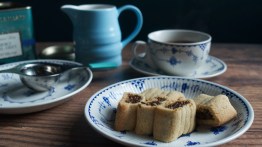
Fig rolls: this classic biscuit is better home-made

I don’t often find myself longing for the industrial rigours of a factory when I’m baking in my kitchen at home. But as I patted the squiggle of fig paste with wet hands, corralling it into a rough sausage shape I thought ruefully of Charles Roser of Philadelphia and his patent for a fig roll machine. In the late nineteenth century, poor digestion was thought to be the cause of a number of wider ailments and, as with breakfast cereal, biscuits were seen as an aid to digestion – and figs, of course, were a particularly digestion-friendly fruit. Brought over from Britain to America, the fig roll tended to be made by hand in small batches.

I never considered sending my daughter to boarding school – until the pandemic hit

Last summer, we joined the sharp-elbowed ‘exodus’ that saw demand for places at independent schools increase by up to 30 per cent. We were guilty, according to the Observer, of creating ‘an even larger divide between affluent and disadvantaged pupils’. Not to be out (middle) classed, we went one better, enrolling our 15-year-old daughter as a boarder. Home for the holidays, she so animatedly regaled us with her experiences that we might have smugly congratulated ourselves on our selfless financial sacrifice were it not for one qualification: ‘But I’d rather be here, with you.’ We’d never countenanced boarding.

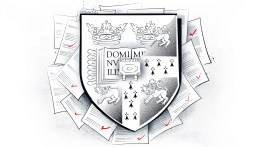
The Oxbridge files: which schools get the most offers?

Oxford and Cambridge have released figures showing how many offers they gave to pupils from various schools last year. We have combined the figures in this table below. It shows how well state grammars and sixth-form colleges now compete with Britain’s finest independent schools. Over the years, both universities have roughly doubled the proportion of pupils from state schools: it now stands at 60 per cent, up from 50 per cent in 2000. This is reflective of which schools get the best A-level results. Of the 100 schools below, 48 are independent, 23 are grammar, 19 are sixth-form colleges, 7 are comprehensives or academies and 3 are further education colleges.

What my misspent youth taught me about handling ‘problem’ children

I’m teaching a boy named Drayton. He’s from a typical Coventry family. I should know. I went to school in ‘Cov’. It seems like only the day before yesterday I was hopping the fence with Drayton’s older brother to go to KFC. But that was ten years ago. These days, Drayton orders an Uber Eats to be delivered through the palisade bars of the steel fence. And I’m the one in authority who is supposed to be reining him in. ‘Easy, Bossman. What we doing today?’ is how he addresses me as he enters my classroom. ‘Now, now, Drayton. It’s Sir, to you,’ I say. ‘Yeah, dat’s calm, innit.’ Which means that’s OK with him. He asks me for a pen, then a pencil and finally a ruler as he does his work.

What did Spectator writers really get up to at school?

Rod Liddle If you leave a Bunsen burner on for about ten minutes, then quickly put the rubber pipe over a water tap and turn it on full, you get a small explosion and a scalding stream of water to be directed at a boy called Harris. Similarly, if you attach crocodile clips to Harris’s jacket and then wire it up to a power source, it makes him jump about a lot. I loved physics lessons. Jeremy Clarke Snow in the playground. The tall caped figure of the headmaster appeared on a short outside staircase — a rare balcony appearance of a benign, reclusive demigod. One long-distance snowball among the flying hundreds, arcing higher than the rest, travelling through the air in slow time, apparently laser guided, is fixed in the memory of all who saw it.

Six rules for picking the wokest school

One of the great advantages private schools offer is an ability to change with the times. While some hold on to traditional notions, many are adapting nimbly to the new woke world — expunging their problematic historical figures and educating pupils in the new equivalent of U and Non-U. But how do parents ensure their little treasures aren’t triggered and are always confined to the safest of spaces? Here, then, is our guide to the wokest schools. Rule one: lots of schools were woke decades ago At my alma mater, Westminster, the history curriculum was pretty much decolonialised in the 1970s by left-wing teachers.

Mixed blessing: do single-sex schools have a future?

If you were starting with a blank screen to design an education system today, it seems unlikely that you would think of creating single-sex schools, any more than you would single-sex professions or single-sex restaurants. Education for life is something we do together, like working or eating. Their existence is explained by the fact that when the first were established, most girls didn’t go to school. William of Wykeham founded Winchester in 1382 for ‘poore scholars’ who would be boys — that was obvious. Dean John Colet founded St Paul’s School in 1509, taking advice from Erasmus of Rotterdam and putting the management of the 153 scholars ‘from all nacions and all countres indifferently’ into the hands of the Mercers’ Company.

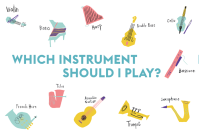
Which instrument should I play?

Thinking about taking up a musical instrument, but unsure where to start? Whether you have amazing musical abilities or not one iota, try our handy quiz to find out what’s right for you, from tissue paper and comb to saxophone.

The school trip that gave me my first act of rebellion

What I remember in most vivid detail about my school trips are the coach journeys. This may be testimony to the fact that the schools I went to never took me anywhere glamorous, not because they didn’t have the money (our parents were paying enough) but because it wasn’t really thought decent or necessary to take children somewhere exciting in those days. At St Joseph’s Convent, our most exotic outing was to Birmingham for a recorder festival, aged about six. Picture a coach-load of little girls in maroon blazers, maroon felt hats, maroon A-line skirts and beige gloves — yes gloves. We went everywhere in beige gloves. Maroon felt hats in winter, straw boaters in summer. But always beige gloves. We were young ladies. We did things properly.

Remote lessons have been an education for teachers like me

I had a Post-it note beside my laptop during the online lessons I taught during lockdown. It simply said ‘shut up’. I have spent 20 years teaching maths in urban comprehensives, reflecting and refining my methods and trying to train others. I thought I was doing a pretty decent job, but the pandemic and the necessity of teaching remotely has made me rethink the whole process. Early on in May I realised I had to work out, from scratch, what I actually wanted my students to become and how, in the world of screen-mediated learning, I could help them achieve this. What do I want my students to become? I want them to become autonomous problem-solvers, courageous in the face of the Unknown Problem.

School portraits: a snapshot of four notable schools

St Edward’s School, Oxford St Edward’s School has featured in these pages before, because of its North Wall performing arts centre which attracts (in ‘normal’ times) more than 20,000 public visitors a year to its exhibitions and performances. St Edward’s sets great store by being part of Oxford as a whole. ‘Beyond Teddies’ is the school’s community outreach programme, encompassing a community farm on school grounds where young people with learning disabilities and autism explore basic outdoor skills, marshalling the Oxford Half Marathon and visiting local care homes. Academically, the co-ed boarding and day school also thinks outside the box, with its pioneering ‘Pathways and Perspectives’ courses.