Spectator Life

Spectator Life

An intelligent mix of culture, style, travel, food and property, as well as where to go and what to see.

How I became a middle-aged gym bunny

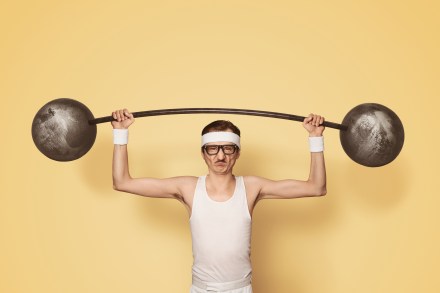
Perhaps my new-found interest is the result of decades of conditioning by the media When I was a schoolboy, you'd have been unlikely to find the words ‘sporting prowess’ and ‘Philip Womack’ uttered in the same breath. Bar a brief moment aged 13, when, being lankier than my peers, I could win sprints without too much effort, I was always much happier loafing about with my copy of J.K. Huysman’s decadent novel, A Rebours, than I was getting stuck into scrums on the freezing rugby pitches. Always picked last, I would hover by the lines, oblivious to the cries of ‘Catch!’ or whatever else came hurling my way.  My lack of interest in games was certainly not hereditary.
The troubling rise of Japan’s ‘baby hatches’

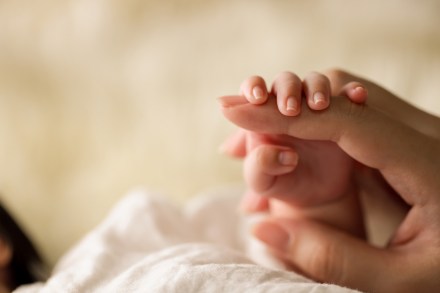
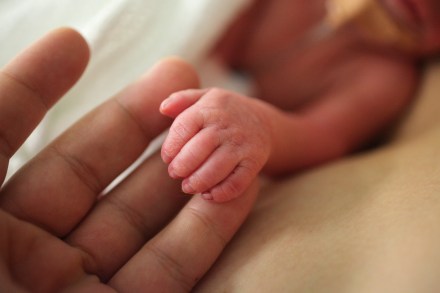
The San-ikukai hospital in Tokyo’s Sumida ward is much like any other in the Japanese capital, save for one special feature. It has had, since March of last year, a small room on the first floor with a cradle (and nothing else), where mothers can anonymously deposit their babies, never to see them again. The hospital accepts babies up to four weeks old. They are then cared for until foster families or infant homes can be found. In July, the hospital announced it had just received its twentieth baby, most of whom had been left within 24 hours of birth. The scheme is the first in the capital but not the first in Japan.

‘Clean Cocaine’ isn’t worth it

Cocaine has a tendency to get Fleet Street all aflutter. So it's probably no surprise that the Daily Mail had a splash earlier this summer with a feature about a legal energy supplement compared – at least in the headline – to ‘clean cocaine’.  What on earth is this product, I wondered. It turns out that the reality is slightly less dramatic than the tabloids might suggest: Wildkraut – also known as Energy Sniff – is a powdered supplement from Austria which combines the dosage of caffeine you might otherwise get from a Red Bull with some esoteric alpine herbs. The one thing that it does have in common with cocaine is that it is intended to be snorted.

The joy of aphrodisiacs

Men and women have put more effort into finding aphrodisiacs than alchemists ever put into changing lead into gold. Metals at least hold still; other people's sexual success has the bewitching fluidity of quicksilver. One of the oldest medical texts, the Ebers papyrus, recommended wrapping a wilting penis in henbane and animal brains, in beans and sawdust of pine and willow, in onion and goose fat and pig’s dung. Elsewhere in the ancient world, as in the Babylonian code of Hammurabi, doctors like myself were punished if we failed to treat a condition after claiming it was fixable - by having our hands cut off, for example. This concentrated our minds wonderfully.

Therapy speak is turning us into sissies

As one who’s always been keen on putting their hand up and admitting to their faults (a perverse form of boasting, I suspect) I was always suspicious of the medicalisation of character flaws which apparently render us helpless in the clammy hands of Fortuna. It was bad enough when friends who’d generally always seemed highly capable jumped on the ADHD bus in later life, suddenly flinching at loud noises when they’d spent a good deal of their lives dancing to ear-splitting techno. But it was another sort of annoying when ex-friends who were merely awful people started blaming all their past ghastliness first on ADHD and then – still not feeling special enough – on autism, a serious condition which affects a tiny amount of people.

Did girls win the gender reveal wars?

I am currently six months pregnant with my second child, and it feels like a rather strange time to be so. Partly because these unexpectedly long spells of warm weather have rendered me umbilically tethered to a fan at all times, which has done terrible things to my electricity bills. Partly because every morning I seem to wake up to a new maternity scandal and must navigate between newsfeeds in which women trauma-dump their horrendous birth stories or hypnobirthing experts chanting that my ‘body was made to do this’. Partly because since I was last pregnant, only two years ago, we have now had three Prime Ministers.

The perfect sycophancy of an AI running coach

If there’s one thing more boring than people telling you about their dreams, it’s people telling you about their exercise. And if there’s one thing more boring than people telling you about their exercise, it’s people telling you about how they use AI. With that in mind, here’s how I’ve been using ChatGPT as my running coach. Stick with me.  Most runners now use an app called Runna, which creates personalised runs for you, according to your target race date, time you have to train, and what not. One friend who has recently started running – ‘I could barely drag my lardy arse around 5k at 6:00/km’ – managed to run a 55-minute 10K after just two months using it.

Longevity is not the meaning of life

So you want to live forever? Excellent. You’ve come to the right place. Here at Gilgamesh-Makropulos Limited, we know a thing or two about immortality. First, we need to track your metrics: biological age versus chronological age, average number of erections per night, metabolic health, maximal oxygen consumption, heart rate variability, stool volume and colour and salivary flow rate. Sound good? My assistant will fetch the paperwork.  This might seem like the beginning of a potboiler sci-fi rip-off. But it’s actually closer to our reality than Bernard Williams would have liked. While we still haven’t achieved immortality, the cult of ‘longevity’ has become something of a gold rush in recent years.

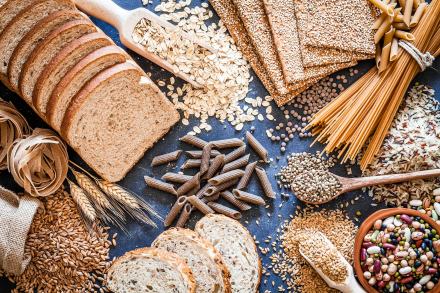
Why brown food isn’t always best

This past week has shown that, when discussing the colour of eggshells, we need to walk on them. Sainsbury’s has announced that it is phasing out brown eggs in favour of white because the latter have a 12.7 per cent lower carbon footprint. As suspiciously precise as that figure is, it caused some commentators to rant that net zero madness is just a cover for cost-cutting. White hens lay white eggs and eat less feed, which in turn reduces emissions, so what's everyone getting scrambled up over?  However, buried in the original press release is a throwaway admission that Britain only switched to brown eggs in the 1970s because they were ‘perceived as more natural’. Even Queen Elizabeth ‘favour[ed] brown eggs, believing that they taste better’.

Why have we forgotten about Covid?

Deep in the honeycombed limestone caves of Slovenia, Croatia, and Friulian Italy, there is a fantastical creature called ‘the olm’, also known as ‘the baby dragon’. It was once an ordinary salamander, which probably fell down into the karstic caverns - where it has evolved into an eerie pink creature that lives for a century, eats once a decade, possesses eyes without sight, lives permanently in a larval condition – called ‘neoteny’ by zoologists – and has been recorded sitting in the exact same place for seven years, without moving.  Why do I mention the olm? Because, as I travel the world, I’m increasingly wondering if we humans, Homo sapiens - have turned into a peculiar higher primate version of the olm.

Why I take frog poison

You picture the rainforest, naturally. A clearing at first light, a shaman with thousand-yard eyes, the canopy screeching overhead. What you do not picture is a fourth-floor flat on an east London estate, a woman wafting sage around your head and the slow realisation that you have just handed over £150 to be – quite literally – poisoned. This is kambo. And at the lowest ebb of my late thirties, becalmed in a miasma of self-loathing and suffering from PTSD following a moped accident in Thailand, I had decided it was precisely what I needed. Made from the dried skin secretions of a giant monkey frog, it is also, as of last month, suspected of having killed its first Briton.

I’ve found the perfect pregnancy diet

The world is full of people fierce in the belief that they know the right diet to make your children glow with superior health. Few are shy about saying so. Fortunately, I’m here to help. I happen to know exactly what should go into your mouth, and into theirs, and, although you haven’t asked, I’m happy to tell you. My confidence comes from the psychology department at Durham University, which has just published the results of a long-running experiment on getting children to eat their greens. Our broadsheets have summarised their findings with due reverence: ‘getting children to eat their vegetables starts in the womb’ (to quote the Guardian). ‘The secret to giving toddlers a taste for greens may start in pregnancy,’ agreed the Telegraph.

Why new mothers need the lost art of ‘nidgeting’

Before the birth of my first child, I had never been around a new baby. I had also never seen a woman in labour, so I wasn’t remotely prepared for my own. My first came close to an emergency caesarean because, after six hours of pushing, I still had not gotten my daughter out. When she was finally born, weighing over nine pounds, I felt overwhelming gratitude for the women who had stayed by my side through it. I will always remember one particular midwife with short-cropped grey hair and a barking voice, who coached me through the contractions like an unrelenting PE teacher. Without her, I don’t know if I could have done it. In her commanding presence I was part of a team and we had won a great victory together.

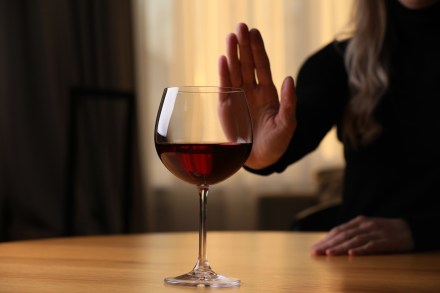
I gave up drinking… but don’t call me teetotal

I hate teetotallers. The pitying looks they give you with their cold, unclouded eyes. Those patronising, bored smiles they smile, as though they are indulgently listening to the table-talk of children. Their uncouth early departures from the dinner table and tactless talk of early starts. Teetotallers are as bad as people who insist on whipping out their phones to film fellow guests when they’re dancing. They’re buzz-killing squares who should learn to live a little.   And yet … I have, despite my worse judgment, recently mounted the wagon. In my heart, I remain a devoted drinker. In my mind, I continue to see myself as the Falstaffian life of the party.

Your hormones aren’t linked to the stars

For most women, the time between your first and last period is defined by things other than the phases of the menstrual cycle. Or at least it used to be. But much has changed in the ontology of modern womanhood from the halcyon era of the 1990s, when women were positively encouraged to get out there and get on with it rather than sit around mooning about how rotten they feel. But here we are. Periods, like so much else that was formerly humdrum, have burst hideously on to the scene; sapping, among other things, a woman’s valuable Right to Ignore. Instead of being seen as a mild inconvenience of only the vaguest interest, menstruation has ascended the feminine ranks to become life-defining, soul-shaping and universe-channelling.

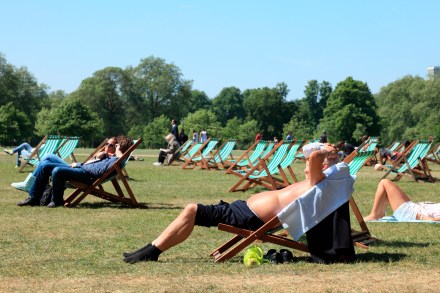
The madness of British sunbathing

‘Mad dogs and Englishmen go out in the midday sun.’ The phrase’s origin is somewhat disputed, but it was made famous by Noël Coward’s song of the same name, supposedly written on the drive between Hanoi and Saigon in the early 1930s. Coward was English himself, and the song is a humorous act of national self-flagellation; an explicit dig at a peculiarity deeply embedded in the British culture: our collective inability to behave sensibly in the sun.  Spring, by almost anybody’s measure, is upon us. May provides two Bank Holidays and the first reliable warmth of the year. Like clockwork, the country takes leave of its senses.

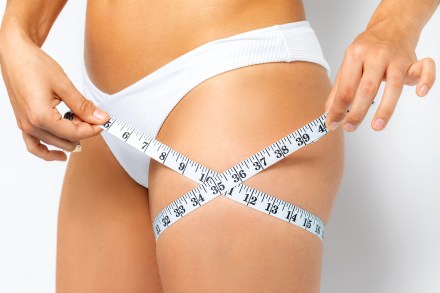
Diets haven’t gone away

Four years ago the NHS told us that over half the female population was trying to lose weight so it's hardly surprising that many millions are injecting themselves with fat jabs.  But I refuse to pander to the notion that us women all need to be a size 10 so I shan't be going anywhere near the jabs or dieting.  If I feel like a piece of toast with blueberry jam, the odd crisp and a nibble of chocolate I am not going to feel fat or guilty about eating any of it.  Who says we have to be so thin anyway?

No, we don’t all need therapy

Only the most heartless fantasist would deny the life-saving role that therapy plays in helping people manage mental illness. Some people, of course, find it enjoyable or helpful for their own reasons and fair play to them. ‘You do you, babe,’ as they say.   But in the round, there is more wrong than right with the edifice. What else is one to conclude after Meghan ‘Sussex’ née Markle, one of the luckiest and most spoiled women in the world, posted on Instagram last week that that the ‘hardest seven years’ of her life – those that followed her becoming a duchess, having two healthy children and trading a royal residence for a $29 million mansion in California – had come to an end?

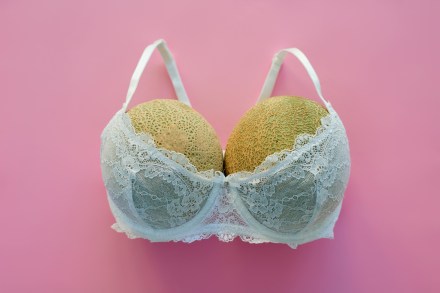
Do women really need breast reductions?

When I became wheelchair-bound at the end of 2024, the biggest change I had to deal with was not being able to walk any more on my lovely long legs. But, as I surveyed my poor ruined body in the cold light of 2025, I was dismayed to see that there were a multitude of minor indignities which had vandalised my youthful looks since my spine went under the knife.  My lovely, glossy, dyed dark hair was now thin and greying. My teeth were mostly missing. My bingo wings could have flown me to the Moon. My lovely legs were like an old man’s. My bum had disappeared. My lovely vulva was vandalised with an unspeakably common plastic catheter. My stomach was crenellated from rapid weight loss.

I won’t blame myself for my son’s autism

I’m a writer, and I’m raising my son knowing that he might never understand what I do for a living.  He’s just turned four. Last year, he was diagnosed with autism. I knew that the NHS was overwhelmed with referrals, so I was expecting a long process. Instead, all it took was a single hospital visit with a pediatrician. She had no doubts.   Autism is not a life-threatening illness like congenital heart diseases, and it’s not a debilitating mental disorder like schizophrenia. But, depending on where a child falls on the spectrum, it can require lifelong care. It’s not what I would have chosen for my son. It’s not what any parent would choose.

Meet the humans training robots at the ‘arm farm’

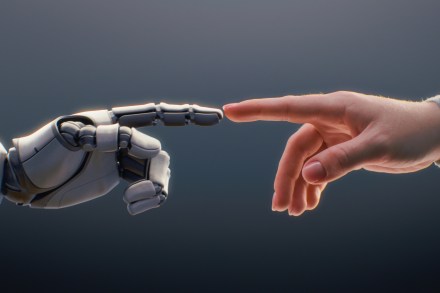
AI is set to take over all cognitive tasks in the next few years. Your hard-won career as a paralegal, data analyst, radiologist, coder or novelist is about to be hacked out from under you. So far, so apocalyptic. But what about the jobs that are primarily embodied? Sous-chef, rehabilitation nurse, plumber, dog-trainer? These are expected to lag behind, awaiting the next generation of robots. But there is an important further question. Who will train these robots? Answer: you will.  This is the concept of the arm farm. On an arm farm, practitioners of the aforementioned jobs - chefs, nurses, plumbers etc. - wear Go-pro helmets, pressure-sensitive gloves, even full motion-capture rigs, and do the jobs that the robots will ultimately usurp.

Why exercise music stops you from throwing in the towel

Over the past few months, I’ve been training for the London Marathon, so most weekends I’ve been out running more than 20 miles at a stretch. I carry the usual bits to make these long slogs vaguely civilised – energy gels, a water bottle, a couple of fruit pastilles. They help, of course. But there’s one thing I absolutely cannot do without: music.  Non-runners sometimes ask if I ever feel like giving up and trudging home. And honestly, the only times that’s happened is when my AirPods have died and the music – my invisible pacer, my emotional support DJ – has suddenly vanished mid-run.  This makes sense, according to Victoria Williamson, a researcher and lecturer in music psychology and the author of You Are the Music.

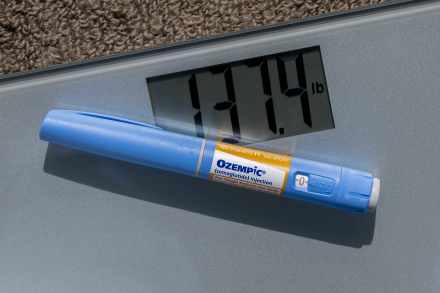
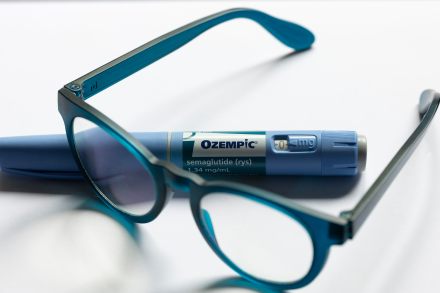
Will Ozempic trigger a big fat divorce boom?

One of the funniest - and in my opinion, falsest - things women have long said is ‘I’m doing it for myself - not for men’ about improving the way they look. Men have rarely said the same about women, which reflects that men have never been principally valued for their looks, historically, as they generally earned far more money than women. Women had to look as pretty as possible in order for a man to pick them and support them financially, thus my brilliant line ‘Men are judged as the sum of their parts; women are judged as some of their parts.

Ozempic has ruined Easter

It’s a funny thing, being a feminist surrounded by women on weight-loss drugs. As someone who recognises the health risks of being clinically obese, I’ve never been a fat liberationist – but pretty much all of us used to be against prescribed beauty standards. In practice this meant we would critique the harmful impacts of the ‘size zero’ or ‘heroin chic’ trends rather than obsess over having gained a few pounds over Christmas. Yet, with the rise of weight-loss jabs, skinniness has become a norm rather than a feminist discussion. And twee ideas about ‘being good’ or ‘cheating’ have been replaced by – well – feeling too nauseous to cheat at all.  Which is why Easter is a fascinating holiday in this era of weight-loss jabs.

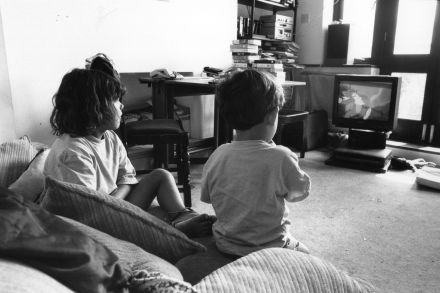
Not all children’s screens have the same effect

When you have children, it’s incumbent upon you to develop a variety of new skills – paramount amongst which is the ability to ignore unsolicited advice. From the moment you share a grainy black ultrasound with the world, it rolls in. Birth, breastfeeding, sleep, diet, teething, clothing, tantrums... everyone’s got ideas about how to do it right. If your choices diverge from their wisdom, you immediately become tenants of different camps. The only sensible approach is to put your hands over your ears and go ‘La la la la’ until your children are emotionally well-regulated, financially independent adults with a 2.1 from a Russell Group university.

A cigar is never just a cigar

‘Oi mister! Will you buy us summit in the shop? I got the money.’ ‘Here we go,’ I think, ‘another grotty 15-year-old making the usual request for a bottle of Dmitri Vodka or 20 Benson & Hedges. Reluctantly, remembering my rebellious teens, I agree. Surprisingly, he hands over £80. ‘Can you get me a Montecristo Linea 1935 Leyenda cigar?’ he asks. ‘Or, if they ain’t got that, a Davidoff Escurio Gran Toro. You can keep the change, mister.’ This event, of course, has never actually happened. But it seems to be within the government’s fervid imagination that it has. The Tobacco and Vapes Bill, which cleared the House of Commons last year and passed in the House of Lords this month, will make it illegal for anyone born after 1 January 2009 to buy tobacco products.

Yes, women still want to have children

Nearly one in three British women are now predicted to have no children, compared to around one in 20 in 1970. The assumption is that this is because young women have simply lost interest in becoming parents. But on the contrary, nine out of ten say they hope to become mothers one day, and the desire for a home and a family to call their own remains stubbornly persistent.  Striking new analysis by the Centre for Social Justice published this month found that more than three million women aged 16 to 45 may miss out on having the family they hoped for – 600,000 more than if fertility patterns matched their grandparents’ generation.  Make no mistake, this is one of the forgotten tragedies of our time.

The sinister future of AI toys

There is a moment in a recent University of Cambridge study into Artificial Intelligence in children’s toys that unintentionally recreates one of the most disturbing scenes in film history. The report, AI in the Early Years, published earlier this month, involved observing 14 children aged three to five as they played with a conversational AI soft toy called Gabbo, a device that looks like a Nintendo Game Boy that has been embalmed in pastel fur.  During one interaction recorded in the study, a five-year-old tells its stuffed companion: ‘I love you.’ Where Kubrick gave us ‘I’m sorry, Dave. I’m afraid I can’t do that.

The rise of grey market peptides

Would you inject yourself with an unapproved drug you could only buy off a sketchy website? Most people instinctively would say no. Yet, throw in a debilitating chronic condition or a crippling insecurity, and the promise of miraculous effects, and the question becomes a lot harder. Such is the quandary faced by those considering taking peptides, the hottest health trend in Silicon Valley, but a trend soon to leach into the mainstream.   Peptides – mainly produced in China – are short chains of amino acids that carry out a range of biological processes, from modulating hormones to repairing tissue damage. You know one of them already – GLP–1 (Glucagon-like peptide-1), marketed as Ozempic or Mounjaro.