Spectator Life

Spectator Life

An intelligent mix of culture, style, travel, food and property, as well as where to go and what to see.

Is Industry the Brideshead Revisited of our times?  

At first glance, there are few similarities between Brideshead Revisited, Evelyn Waugh’s classic 1945 novel – later adapted into an equally classic ITV series – of prelapsarian bliss in Oxford and Industry, the BBC’s adrenaline-fuelled show that exposes the dark iniquity at the heart of the financial industry. The one is a languid examination of (discreetly portrayed) same-sex love and Catholic guilt, and the other is a profane, sexually charged and palpitation-inducing dive into hedonistic self-indulgence. Brideshead is plover’s eggs and Meursault; Industry class A drugs and group sex. They would seem as distinct from one another as chalk and (Comté) cheese.
Auctions speak louder than words

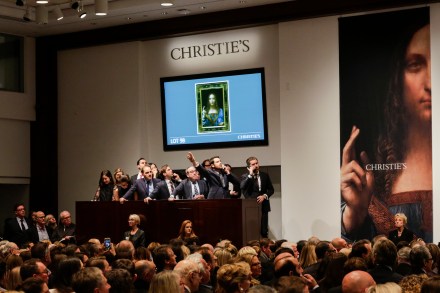
Can’t get an appointment with your GP? Nowhere to sit in surgeries crammed with the ill and infirm? Spare a thought for your local auctioneer who is also dealing with the effects of a long winter of discontent. The cost-of-living plague, from which almost nobody is immune, has prompted people to rummage around in their cupboards for treasure and to wonder whether they really want to continue to insure that Raeburn or Lawrence at vast expense. Throw in the epidemic of rocketing gold and silver prices, and you’ll struggle to get an appointment with an auctioneer, busy as he is weighing Georgian candlesticks and making house visits to inspect the family portraits.

The gentrification of British crime novels

Eighty years ago this month, in February 1946, the left-wing Tribune magazine published George Orwell’s essay ‘The Decline of the English Murder’ in which the writer identified a certain class of crime as most appealing to the tabloid-reading British public – and contrasted the ‘cosiness’ of this type of early 20th-century domestic murder with the brutal sadism of killings committed in Britain during the second world war.  Two years previously, in 1944, while war still raged, in another essay entitled ‘Raffles and Miss Blandish’, Orwell specifically contrasted the ‘hard-boiled’ school of crime fiction with the gentlemanly Raffles stories of E.W. Hornung, featuring a well-mannered upper-crust jewel thief.

We don’t need to see radio DJs’ faces

In a week in which embarrassing and damaging revelations about past misdemeanours are very much in vogue, let me reveal one of my own. When I was seven years old, I wrote in to Jim’ll Fix It. My request was to play a giant Wurlitzer organ, preferably the one in the Blackpool Empress Ballroom. To my retrospective relief, Savile didn’t respond to my letter. But I did purchase a second-hand, two-tier Hammond organ when I was at university, which I played as part of an acid jazz group. No tapes of our band’s songs or gigs survive I am delighted to state. I was reminded of my rather strange and atavistic early love of organs last week when I read of the death of Nigel Ogden, the presenter of the long-running Radio 2 show The Organist Entertains.

Why Gen Z are singing the praises of community choirs

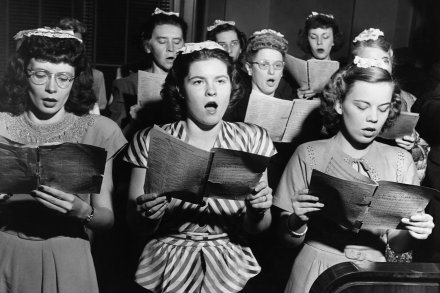
‘Screenagers’, ‘lonely’, ‘boring’ – all words used to describe Gen Z. Born between 1997 and 2012, we are the first generation to grow up with omnipresent technology and are often maligned as phone addicts and loners. But things are changing. Now the first tech-native generation is actively seeking out the most analogue hobby of all: community choir.  Community choirs have boomed across the UK following the pandemic, and the country’s youngest adults are clamouring to get in. Some Voices, a non-audition choir in London which started as six friends singing in 2010, has grown to more than 1,200 members since 2020. Many of these newer members are Gen Z, searching for a connection which is more reliable than the wifi.

I’ve fallen back in love with Kemi Badenoch

Two years ago, I wrote an essay here called ‘In praise of Kemi Badenoch’. To say it was admiring is like saying that Abelard quite fancied Heloise. She sent me a nice message on X; I went mildly berserk one evening when drunk and sent her a poem I’d had ChatGPT write, basically saying that she was going to save the world. Our communication understandably dwindled after that, as she probably came to believe I was a crazy person. To be fair, I also became increasingly taken with Reform; the re-nationalisation plan in particular grabbed me. I wrote about my turncoat ways in the i Paper: ‘When I and millions of other former Labour voters choose Reform at the next general election, it’s not because we’re rabid right-wingers.

The solace of spring

By the calendar it is winter, but the days are longer and the birds are singing. Snowdrops are scattered around the front door, and crocuses have already broken through on my lawn. Mostly they are slim and pale, but when the sun has shone they have opened their purple cups to its warmth. Virginia Woolf compared the yellow anther within to a lit match.  In defiance of the calendar, spring shows its face. Hellebores droop with dappled flowers. Kneeling in damp earth to trim back their old leaves reveals their profusion. Catkins are on the trees, magnolia buds are splitting with promise, the scent of the daphne cuts the cold air, and the blade-like leaves of spring bulbs, ‘the green fuse that drives the flower’, push up along the grass bank beside the road.

The streaming model is broken

‘Do you want to stream something?’ my girlfriend asked me. It was 5 p.m. on a Saturday and I’d had a horrendous week. I’d caught one of those mutant viruses that you learn about in nursery rhymes or at the London Dungeon. The cough was the worst part. It was the sort of cough that evacuates a Tube carriage. It was the sort of cough you hear in a western before the protagonist says: ‘Old Billy Boy got consumption. There ain’t a darn thing we can do ’bout it. Doc says he got weeks. Poor bastard. He ain’t never gon’ make it to Montana.’ In short, I was feeling out of sorts. And as such, I was ready for some mind-numbing television. ‘We can watch something,’ I said. ‘What do you fancy?

Do the British appreciate Ralph Fiennes enough?

If you had been fortunate enough to see the first night of Tchaikovsky’s opera Eugene Onegin at the Opéra National de Paris last week, then it might have been with a slight jolt of surprise that you saw a familiar face take to the stage as the cast took their bows.  Ralph Fiennes, the award-winning actor, was not appearing in the opera – although he took on the role of Onegin in a 1999 film that his sister Martha directed – but instead he made his operatic directorial debut with the production. The reviews so far have been mixed rather than laudatory.

Have we reached peak ‘curation’?

Are we all curators now? From the hotel chef offering an artfully curated cheeseboard to the fashion world’s curated capsule collections, the sound curators (DJs) and the luxury tour operators flogging seamlessly curated travel experiences – and don’t forget the curated (actually, algorithm-generated) lists from Substack – nowhere is safe from the scourge of the contemporary curator. The actor Idris Elba sees himself less as a conventional musician, ‘more of a curator of music’. In 2023, he curated the Nigerian musician Fela Kuti’s Box Set 6, in case you’re not up to speed on your Afrobeat vibes. The American rapper and songwriter Kanye West identifies as an ‘inventor or maybe curator’, possibly not clocking they’re quite different things.

Inside the world of Wes Anderson

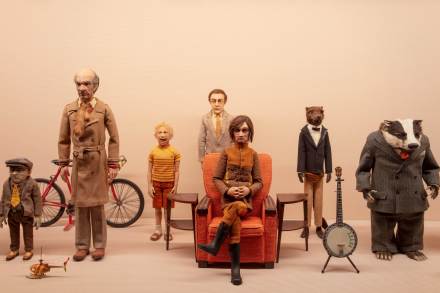
If you make your way to the Design Museum, which occupies the horned modernist structure that was once home to the Commonwealth Institute in Kensington, you are in for a surprise. And not just because it’s one of those buildings that is far more inspiring on the inside than its rather Stalinist exterior would have you imagine. No, the biggest surprise is that our national temple to design has decided to dedicate its ground floor to Wes Anderson, the American filmmaker (‘auteur’ is the word film types like to whisper) behind such idiosyncratic gems as The Royal Tenenbaums (2001) or, probably his biggest hit, The Grand Budapest Hotel (2014), which starred Ralph Fiennes, Adrian Brody, Saoirse Ronan and Willem Dafoe, among many others.

Heard the one about the MP who thought he was a comedian?

There are so many ways to mangle brilliance. If you’re a present or former member of Take That, you’ll know what I mean when it comes to taking the sweet essence of the Bee Gees and turning their hits into something as bland and devoid of colour as an Ikea Billy bookcase. And if you’re James Cleverly, you may have learnt last week that members of parliament using comedy catchphrases invariably turns the gag from gold into something that floats at the top of a storm drain.  Referring to Housing Secretary Steve Reed, Cleverly asked in the Commons: ‘What was it about the Labour party’s collapse in the opinion polls that first attracted him to the cancellation of local elections?

What happened to the National Portrait Gallery?

When did you last visit the National Portrait Gallery? If, like me, you haven’t darkened its doors since it reopened following a £43 million makeover and expansion in 2023, stand by for a shock. Instead of being just a selection of the famous faces featuring in our island story – the politicians, poets, scientists and showbiz giants who did their bit to make Britain great – the NPG’s collection is being deliberately diluted to provide a portrait of ‘ordinary people’ who make up the tattered fabric of the nation today. I made my first visit to the gallery since it reopened this week.

Five things to do in Crowborough

For the first time in almost a century, when Arthur Conan Doyle was buried in a Turkish carpet in his garden, my hometown of Crowborough is in the news.  For those fortunate never to have been, Crowborough is a small place in the Weald of about 20,000 souls. The cadet training camp, where my school pals and I endured a week of army exercises and tinned rations, has been turned into a migrant hostel for more than 500 asylum seekers, sparking a furious reaction from the local residents. I have much sympathy with them – but also for the young men who have been sent to live there.  Kim Bailey, leader of the protest group Crowborough Shield, calls the decision to house migrants in the town ‘disgusting’ and a ‘disgrace’. ‘There is nothing to do in Crowborough,’ she adds.

Robbie Williams and the allure of homoerotic pop

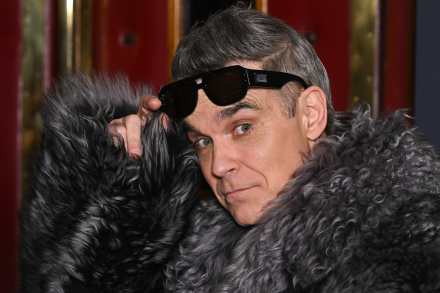
When I heard that Robbie Williams had written a song called ‘Morrissey', I didn’t know whether to be delighted or irate. It’s no secret that I idolise Moz, and the idea of a somewhat seedy showman attempting glory by association made my hackles rise somewhat.  But on the other hand, Williams has co-written several songs which have caused my toes to tap over the years and has a history of acting gay when it suits him. (Indeed, Take That’s appeal might be crudely summed up as four lads who looked like rent boys and their concerned social worker, Gary Barlow.) Then there was the ‘Shame’ video of 2010 by Robbie and Gary, in which the two principals start by exchanging copious meaningful glances in a shopping mall.

How to solve the birth rate crisis: lower standards

There comes a moment, a few weeks after you give birth, when your baby outgrows their Lilliputian clothes and you’re obliged to replace ‘newborn’ with ‘0-3 months’. At which point, usually while still absolutely steaming with hormones, you find yourself sitting on their bedroom floor, staring at these teeny garments, trying to decide if you’re going to keep them (have another baby) or give them to the charity shop (start leaving leaflets about vasectomy around the house).  Historically, this was a major decision for you, but one which had almost no relevance to anyone else.

Take Back Power is no Robin Hood movement 

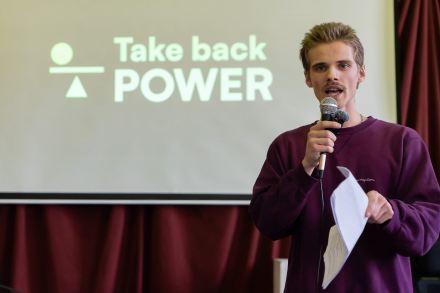
The biggest rebel in my year at school (a pretty raggedy state comprehensive near Chester) was a guy called Paul. He had very long hair, wore a trench coat and was regularly told to ‘have a bath’ by the more boorish elements of the playground. Paul railed against the system in the way that only teenagers who have experienced nothing of life but have read at least half of The Catcher in the Rye and The Outsider can. The more militaristic tranche of our teachers also hated him for the permanent odour of weed that followed him around and the crude drawing of Che Guevara on his rucksack. He was one of my best friends. Paul cut his hair and stopped reading Noam Chomsky in his mid-twenties.

Should trains have child-free carriages?

Amid the distractions of Donald Trump and Davos, France’s state-owned railway operator decided last week was the opportune time to slip out some news. Welcome to ‘Optimum’, the new and exclusive area of the train where kids are not welcome. Business people and misopedists travelling to and from Paris on the weekday high-speed TGV services will no longer have to tolerate the under-12s. The operator, SNCF, justified its ban on children by stating it would enhance the travelling experience of those who cherish ‘exclusive comfort in a fully dedicated first-class carriage, with seating arrangements designed to preserve your privacy, for a calm journey, ideal for working or relaxing’.

Was Hunter S. Thompson murdered?

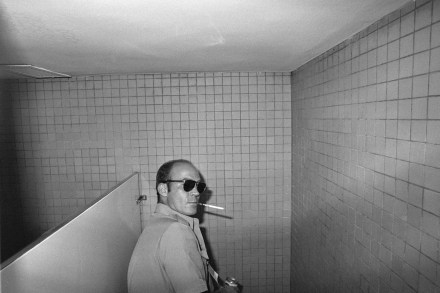
Gonzo journalist Hunter S. Thompson is best known for his 1972 narcotics-fuelled fantasia Fear and Loathing in Las Vegas. In some ways, his is a story of life imitating art. Thompson lived large, once saying: ‘I hate to advocate drugs, alcohol, violence, or insanity to anyone, but they’ve always worked for me.’ He killed himself in 2005, at the age of 67, fearing that health problems would ruin what was left of his life. His funeral was a grand, set-piece affair, costing $3 million and paid for by Johnny Depp with the swag from his Pirates of the Caribbean movies; it ended with Thompson’s remains being shot out of a cannon to Bob Dylan’s ‘Mr Tambourine Man’. He went as he lived, in a blaze of glory. Except members of Thompson’s family are now telling a different story.

In praise of Elizabeth Taylor (no, not that one)

On 15 November 1975, Elizabeth Taylor died. No, not that Elizabeth Taylor – she had many more years, and many more husbands, to get through. I mean Elizabeth Taylor the author, whose 12 novels and four volumes of short stories so piercingly and hilariously chronicle the quietly desperate lives of middle-class women in and around the sleepy towns and villages of the Thames Valley in the middle part of the last century. Kingsley Amis thought her ‘one of the best English novelists born in this century’. Anita Brookner considered her ‘the Jane Austen of the 1950s and 60s’. Despite such accolades, Taylor never quite achieved the status she deserved. She was never a bestseller; she never won a prize. In fact, a faintly patronising air bedevilled her throughout her writing life.

The joy of the jukebox

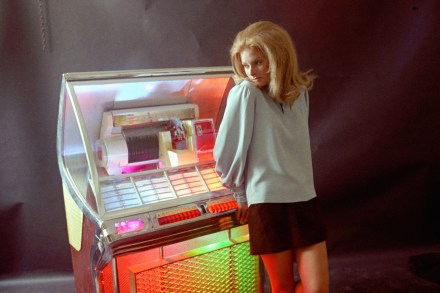
One of the peachiest moments in a life of unrepentant tavern-dwelling was my introduction to P.J. Clarke’s on Third Avenue. Here was a bar from central casting – Billy Wilder mocked it up, after a fashion, in The Lost Weekend – and the dollop of cream on this peach was the jukebox. P.J. Clarke’s was described to me by one regular as ‘a midtown saloon for the tasselled-loafer set’. It remains the glory of Manhattan, which will never run short of places to hang one’s hat. And its jukebox had plenty of hits, but not the obvious ones. Americans love their jukeys. One of the most generous belonged to Sterch’s, in Oak Park, Chicago, where a couple of bucks bought a dozen plays. Chicago is a famous music town, so you didn’t struggle to find something decent.

In defence of Robbie Williams

I write this piece while listening to an album that I suspect will be widely regarded as one of the best of the year. That it is by Robbie Williams may come as a surprise to many. After all, Williams has often been mocked as a cruise ship entertainer who got lucky, a Butlins redcoat who has somehow become Britain’s most successful solo pop star. If his new album, Britpop, goes to number one in the charts – and he deliberately delayed its release from last autumn so that it could avoid being trampled by Taylor Swift’s The Life of a Showgirl – it will be his sixteenth chart-topper, thereby setting a record that even the Beatles were unable to equal.

Does it really matter if Grok undresses us all?

I’ve been fat and I’ve been thin; I’ve been pretty and I’ve been plain – ugly, even. Throughout this, my self-esteem has stayed generally constant, as if you’re going to base it on something as ephemeral as physical beauty, you’re going to run out of road very quickly indeed. This objective attitude to my own appearance reminds me of a funny story from the infant days of the internet. Imagine my surprise one morning to receive a message from an unknown recipient informing me that they had film of me masturbating to online pornography which they would make available to a wider audience should I fail to pay a ransom. (Don’t judge – I was young-ish and frisky and it was all so new – I soon grew out of it.

Britain’s fatal good manners

One of the guilty pleasures of the patriotic British travel writer is encountering yet another country, city or island that we invaded, occupied, colonised or just menaced into submission with a couple of gunboats. For example, did you know we casually took out Uruguay back in the day? It’s true – we demolished the walls of Montevideo in 1807, during the Battle of the River Plate, as I discovered on my first visit there last year. I’ve had the same experience all over. The Maldives. Kefalonia. The Colombian coast (we were so punchy and piratical half the Colombian nobility decamped 200 km inland). Also, Menorca, the Faroes, Haiti, Iceland, Bolivia (our economic colonisation is the reason women in La Paz wear bowler hats).

The great rail ticket swindle

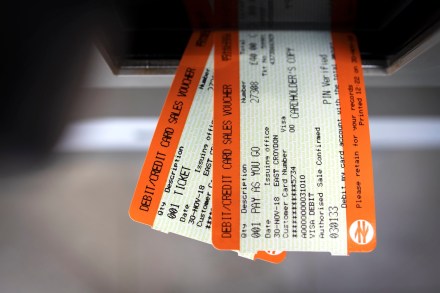
Normally rail ticket prices are raised in line with the Retail Prices Index (RPI) plus 3 per cent. This January, unusually, they didn’t increase. But that is not how it will feel if you fancy a short break in Edinburgh. In that case, you may well find yourself paying double what you used to pay. Say, on the spur of the moment, you fancy a short trip to the Scottish capital from London this weekend, but you are not quite sure which train you can leave on and when you want to come back. In the past, you could have bought a Supersaver Return, which allowed you to take any off-peak train there and back.

Long live the joint bank account!

My husband and I share a bank account, and I don’t care who knows it. This detail lumps us in with many Boomer couples who have typically shacked up together financially – for better or worse, richer or poorer – for the duration of their married life. As (geriatric) millennials, our joint bank account therefore renders us something of an anachronism, but we’re used to this by now. We are outdated and unfashionable in our approach to many things, including (but not limited to) childcare, housework and car management.

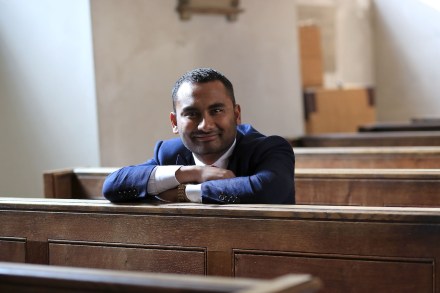
Amol Rajan never quite suited the Today programme

The fairground attendant has stepped off the carousel. Amol Rajan, with all his honours on, is standing down from Radio 4’s Today programme, the breakfast show that sends us out into the world feeling a little bit braver, to set up his own company. What took him so long? Many listeners may think he established that business many moons ago, for Rajan Enterprises (Me Me Me) is not exactly a secret in metropolitan media world. In the past two decades the Cambridge-educated south Londoner has plucked some of the juiciest plums in the journalists’ orchard. Editor of the Independent, BBC media editor, and for the past five years a Today host. Presenting University Challenge on BBC2 is a mere bagatelle to pay a few bills.

Why I’m keeping my Christmas decorations up until February

It feels like the 57th day of January. Last week the coldest temperature of the winter so far (-12.5°C) was recorded about 20 miles west of my house. And according to every newspaper and social media feed I have scanned since new year, I should be purging my body of toxins by eating ‘plant-based meals’, abstaining from alcohol or otherwise giving up any semblance of comfort and joy. But there is another way. This may be ‘the worst time of the year… the very dead of winter’, as T.S. Eliot described the season in ‘Journey of the Magi’, but we are still in Christmastide – right up until 2 February, or Candlemas.   Twelfth Night used to be about fun and misrule, incorporating elements of the Romans’ midwinter festival Saturnalia.

Why was this stranger in my friend’s house?

I was walking my dog when a WhatsApp message and photo came through from Simon, an old school friend of more than 50 years. His kids had sent him a picture of a man who had turned up unexpectedly at the family home. The accompanying message said simply: ‘Your friend Andrew from Epsom College is here?’ Simon, who was out shopping, didn’t recognise him. Did I? No, I replied, but he looks familiar. But then again he was white, rotund and greying and thus a 99 per cent DNA match for one of our social circle: i.e. a well-fed 60-something with a 20-something handicap. The more I studied the photo the more worried I got. For Simon and his family. Who on earth was this mysterious visitor standing in the middle of his kitchen? What did he want?