Spectator Life

Spectator Life

An intelligent mix of culture, style, travel, food and property, as well as where to go and what to see.

What happens when coronations go awry

Despite weeks of preparation and rehearsal, coronations don’t always go according to plan. Indeed, a botched coronation or one plagued by misfortune can be taken by the superstitious as a poor augury for coming reigns – sometimes justifiably. Case in point: the celebrations of Tsar Nicholas II and Alexandra Feodorovna in Moscow’s Dormition Cathedral on 14 May 1896. While the hours-long ceremony for the last Tsar and Tsarina went off without a hitch, the following national holiday and public feast in Khodynka Field led to a stampede where at least 1,300 died and 1,300 more were left with serious injuries. The cause?

In praise of minor royals

On a scaffold hung with black cloth, on a freezing January day in 1649, the instinct for sumptuousness died in these islands. It was killed alongside Charles I, kingly excess and belief in divine right and, with intermittent exceptions, has never recovered. And so when, time and again since September, we’ve heard about our new King’s plans for downsizing the monarchy, the bulk of the population has calmly nodded its assent. Trim, slim, streamline, skimp. Time to dispense with peripheral royal family members! Farewell to the jostling chorus line of the Buckingham Palace balcony of yesteryear, all oversized hats, Ruritanian frippery and excitable small children! Away with the hangers-on!

The best coronations in literature

‘In her big, white dress the Queen looks like a balloon that’s about to float up to the roof of Westminster Abbey and bob about up there amongst the gilded arches and roof bosses. To prevent this happening people keep weighing her down with cloaks and robes, orbs and spectres, until she’s so heavy that bishops and archbishops have to help propel her around.’ This is the coronation of Elizabeth II in 1953 as described by one-year-old Ruby Lennox in Kate Atkinson’s Behind the Scenes at the Museum. These observations might seem preternaturally advanced from a narrator not yet old enough to walk and talk, but that is consistent for this witty novel. It opens with Ruby being fully aware of her own conception: ‘I exist!

Why millennial men are turning to the Book of Common Prayer

The Book of Common Prayer is enjoying a revival in the Church of England, despite the best efforts of some modernists to mothball it. Over the past two years, more and more churchgoers have asked me about a return to Thomas Cranmer’s exquisite language, essentially unaltered since 1662, for church services and private devotions. Other vicars tell me they have had a similar increase in interest.   It helps that the Book of Common Prayer has had a fair bit of attention recently. The late Queen Elizabeth’s insistence on the use of Prayer Book texts in her funeral rites meant that in September more people witnessed the beauty of this liturgical treasure than watched Neil Armstrong’s first steps on the Moon.

What happened to Jonathan Aitken’s young meteors?

I am not bragging when I say that 56 years ago I was a young meteor. No: it is official. In 1967, Jonathan Aitken, then a young journalist on the Evening Standard (his uncle, Lord Beaverbrook, owned it at the time) wrote a book about the upcoming young movers and shakers in London – the stars of the Sixties (to mix celestial bodies). The Young Meteors it was called, and I was one of them.  At that time, I was 27 years old and the fashion editor of the Sunday Times and Aitken put me in as one of the three powerful influencers in that world. (The others were Marit Allen of Vogue and Georgina Howell of the Observer – both dead now, sadly.

Thank you Jerry Springer, pioneer of reality TV

Those of us who worship at the altar of reality television have Jerry Springer to thank (or to blame).  Springer was an early pioneer of reality TV. His show was the beginning of the end of television as the world once knew it. You didn’t need to be talented or interesting or rich or even beautiful to garner attention. He brought a new kind of intrigue and voyeurism on to our screens – he showed people to people as entertainment.  He made ordinary humanity extraordinary: shouting, screaming, even, on occasion, violence featured on his show Despite beginning his career in politics, working for Bobby Kennedy before becoming the mayor of Cincinnati, Springer was best known for the self-titled Jerry Springer Show which ran for 27 years.

My blue tick humiliation

I was one of the first people to take up Elon Musk’s offer to purchase a blue tick, the Twitter equivalent of VIP status. Not because I didn’t have a complimentary one – I did, believe it or not – but because if you sign up to Twitter Blue it means you can post videos on the site that are longer than a couple of minutes. Poor Elon Musk then had to do a reverse ferret, announcing he’d be restoring the merit badges to a select few I had noticed that my friend Konstantin Kisin had put up a speech he’d made at the Oxford Union and it was getting lots of views. I spoke in the same debate and gave what I thought was a much better speech, so wanted to put mine on Twitter, hoping it would prove even more popular.

Inside America’s Satanist movement

The largest gathering of Satanists in history is taking place in Boston this weekend. It’s not open to the public. Or, to be more precise, no longer open to the public. That’s because all the tickets have been sold. They’ve downgraded the supernatural in favour of aggressive secularism, with an emphasis on trans issues The second annual SatanCon is being organised by The Satanic Temple or ‘TST’, the world’s biggest Satanic sect, at the Marriott Hotel in Copley Square. That’s the same Marriott chain founded by a devout Mormon family who, back in the 1960s, only agreed to serve alcohol to guests after securing permission from the president of the Church of Latter Day Saints.

Could you become a spy?

Why spy? Why do people become spies, what are their motives, their justifications, and how do they perceive what they are doing? Could any of us do it? Are we all potential spies? Short answer: yes. Long answer: depends on circumstances. The Sunday Times ran a story about Abdi (a pseudonym), who was recruited in the wake of 9/11 by MI5 to spy on UK-based terrorists. He was subsequently sent by MI6 to penetrate training camps in Waziristan, despite both agencies allegedly being aware that he was mentally unstable. When he returned to the UK he killed his own child, claiming that this was a psychotic episode resulting from the stress of spying. The jury did not believe he was unable to control himself and convicted him of murder.

There’s nothing wrong with leaving a sick partner

Danielle Epstein’s story is a sad one; last year she was in the process of buying a house with her boyfriend when he was diagnosed with a brain tumour, underwent a serious operation and had to learn to walk again. He wasn’t the only one who walked; Miss Epstein did also, and not just down the road where she could keep an eye on him, but all the way to sunny Thailand. She said in her defence: 'I felt like the most awful person, leaving somebody because they have cancer, but it was damaging my mental health and it wasn't helping him… I couldn't sleep or eat, I was having panic attacks and was on so much medication to sort myself out I just couldn't function.

How useful is a Twitter blue tick?

Alex Salmond was one of the first to fall victim to Twitter’s blue tick cull. An account with the same name as his began sending out disparaging tweets about his sub-optimal bowel movements. The account was tweeting shortly after Elon Musk removed 400,000 ‘legacy verified’ blue ticks, little badges that sit next to a user's name, which were originally designed to stop impersonation. Musk’s removal of the verified ticks – previously given to celebs, politicians and journalists to prove they are who they said they are – makes way for a free market approach to verification. Any tweeter can now pay £9.60 a month for the blue tick (provided their email address has been verified).

AI and the end of immigration

There are many things to be learnt from visiting an airport. A trip to Stansted Airport, for instance, will teach you that Stansted is a really dim place to locate an airport. Meanwhile, JFK in New York City will inform you that America is becoming seriously pricey for European tourists. But a recent trip to Bangkok airport taught me something more profound. There I was, supping some pleasant Singapore Laksa, and I saw this thing hove into view. It was an autonomous robot cleaner, busily keeping all the shiny floors of Suvarnabhumi airport in pristine condition.

How I found friendship through online Scrabble

The internet, as we all know, is a place for rage and hate. It’s a free-fire zone in which even something as apparently innocuous as Facebook – original use-case: posting family snaps for your gran – ends up incubating armed insurrection and spreading 5G conspiracy theories. But what if there was some corner of it untouched by death threats, disinformation and the baleful influence of Vladimir Putin’s troll farms? What if there was still some corner of the world wide web which lived up to its original promise of connecting people who would not otherwise be connected, and what if once connected they were nothing but agreeable to each other? Be of good cheer. That corner exists. Not everyone is arguing with Owen Jones and India Willoughby.

Pay and dismay: the nightmare of ‘smart’ parking apps

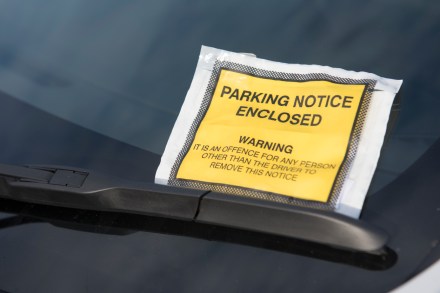
In Notes from a Small Island, Bill Bryson bemoaned the ‘wilfully unhelpful’ ticket machines in car parks: ‘You go hunting for some distant pay-and-display machine, which doesn’t make change or accept any coin introduced since 1976, and wait on an old guy who likes to read all the instructions before committing himself and then tries to insert his money through the ticket slot. The remarkable thing is that everything about this process is intentionally – mark this, intentionally – designed to flood your life with unhappiness.’ While these apps are an annoyance for me, they’re positively prohibitive for those without smartphones Almost three decades later, you’d be lucky to find a parking meter at all.

Why are beds flat?

Last month in a Swiss hotel, I came across an idea so beautifully simple that I felt it would be immoral of me not to share it. The bed in our room, rather than having one king-sized duvet, was covered by two double-size duvets overlapping in the middle. Eureka! Given that the Swiss are world leaders in conflict-avoidance, it seems likely the idea originated there, although I have since learned the practice is also common in Scandinavia. Back in Blighty, when one person in a double bed rolls towards the edge, they take three feet of duvet with them, leaving their partner out in the cold. This typically leads to retaliation and often escalation. The Scandi-Swiss system, by contrast, creates a buffer, a DMZ of surplus duvet, which means that bedding fights are no longer a zero-sum game.

Self-obsession is killing music

Though I’m not the most avid fan of her oeuvre, I was cheered recently to see that Ellie Goulding wanted her new album to be less personal: ‘It was such a relief and really refreshing to not be sitting in the studio going through all the things that happened to me and affected me… it’s the least personal album, but I think it’s the best album because I got to just explore other things about myself. I just really, really enjoy writing; really enjoy being a singer.’ What a refreshing take on the creative process, which in modern times can often seem like a cross between a bulletin from the therapist’s couch and a ceaselessly-picked sore. Millennials can’t seem to get enough of spilling the tea, and that goes especially for their most successful singers.

The cult of Aesop

Do you think the luxury soap-maker Aesop would have been valued at £2 billion pre-pandemic? I don’t. Sure, the botanical Aussie cosmetics brand, famously seen in the prettiest restaurants and lining the bathrooms of the fashionable, has been valuable for some time, but ‘hands, face, space’ propelled its growing stardom into a multi-billion pound lather. Today, having one of the cult bottles on the basin is as ubiquitous a status symbol as driving a 4×4 around Chipping Norton.  L’Oréal announced this month that it has signed an agreement with Natura &Co, the brand’s owners, to acquire Aesop in a deal worth $2.5 billion USD (around £2 billion).

The secrets of London by postcode: E (East)

How Walford in EastEnders got its name, why Isaac Newton visited bars in disguise and what happened when the IRA parked on a double yellow line. Our tour of London’s postcode areas has reached its penultimate stop – who fancies an E? In the run-up to the 1997 general election, John Major visited the Mirror Group offices in Canary Wharf. One of the rooms he entered, high up in 1 Canada Square, was that of Kelvin MacKenzie, erstwhile editor of the Sun but by then boss of L!ve TV. Looking out of the window, the Prime Minister commented: ‘Incredible view you’ve got from here, Kelvin.’ ‘Yes,’ replied MacKenzie. ‘On a clear day, you can almost see a Tory voter.

The myth of atheist America

The American comedian Bill Maher is an intelligent man with a good sense of humour. When he's right, he tends to be very right. However, when he's wrong, he tends to be so wrong it leaves a person scratching their head in disbelief. He has a tendency to sometimes misrepresent the facts. This is true when it comes to weed. For the uninitiated, Maher loves weed. I mean, he really loves weed. He is forever talking about it (see here, here and here), arguing, repeatedly and unapologetically, that it's a largely harmless drug. As I have shown elsewhere, it’s not. It robs many people of motivation and happiness. Nothing good comes from smoking weed on a regular basis.  Maher has a reputation for being a truth teller, a voice of reason.

In praise of Prunella Scales

As I’ve got on in years I’ve been fairly successful in eliminating vices – most of the debauchery of my teens and twenties is a distant, hazy memory. But as I reached my fifties I found I had fallen into the grip of a compulsion that was as powerful and unshakeable as any drug. My name is John and I am addicted to Great Canal Journeys with Prunella Scales and Timothy West.  During my condition’s worst ravages I found myself staying up half the night binge-watching this endearing elderly couple navigating their way around the historic waterways of Britain at 2mph. The pottering about, the occasional prang while entering and exiting locks, the odd glass of wine in the afternoon ­­– it was the most addictive TV I’d seen since The Wire.

How common is your garden?

As spring (finally) arrives, it’s time to turn our attention back to what’s outside the back door. Helpfully, garden designer Isabel Bannerman (Highgrove, Houghton Hall, Arundel Castle) has written a memoir, Husbandry, in which she declares there is no such thing as ‘U and non-U’ in gardening. She then undermines her argument by immediately setting out her shibboleths: variegated leaves, curvy paths, statues, fountains, tidiness. Anything, in effect, that is ‘suburban’ (bedding plants) or reminiscent of municipal planting schemes (ibid. those big, blowsy King Alfred daffodils you’ll see blaring from roundabouts at this time of year).

In defence of Melania Trump

Where is Melania? This was the question on many people's lips after the former First Lady was absent from the after-party at the Mar-a-Lago estate on Tuesday night following her husband’s quick trip to New York City. Trolls took to social media to ridicule Mrs Trump for 'not standing by her man' during his indictment; some even cracked jokes that she was moving on to pastures new with freshly single Rupert Murdoch. Wherever she was, I hope she was happy. In fact, I hope she was positively beaming while horizontal at a spa getting a deep-tissue massage with martinis flowing and charging it all to her husband’s credit card.

Help! I’m trapped in a 15-minute city

It’s a nasty moment when you receive a letter informing you that a fortnight ago, at a specific number of minutes past an hour, your car was photographed turning into a side road which, at the time, you had no idea you weren’t allowed to turn into.   You vaguely recall the junction. There was no ‘No entry’ sign: just a torrent of words (‘except’, ‘through’, ‘motor vehicles’, ‘access’) that you didn’t have time to read. That outing will now be forever sullied in your memory by the £65 fine. Protesting ‘but the sat-nav told me to do it!’ is as ineffectual, legally speaking, as Adam bleating to God that ‘the woman gave me fruit from the tree and I did eat’. The punishment is still enforced.

Rock’n’romance is dead

The alchemy wrought by a young man’s ability to gyrate and croon at the same time is notorious, turning shy mama’s boys from Presley to Rotten into love/hate machines. Something magical happens when someone – however unsightly – sings a song well, allowing him access to a quantity and quality of women undreamt of when he was just walking and talking like a normie. Two words: ‘Mick’ and ‘Hucknall’. The romantic image of the modern musician as tasty but troubled troubadour roving from town to town on his lonesome (except for his bandmates, backing singers, roadies, drug dealer and manager, of course) and taking sensual solace where he may is a powerful one, long propagated by he-sluts who would be intimate with a jack-in-the-box if it looked at them the right way.

The improbable genius of John Venn

There aren’t many mathematicians who can claim to have bowled out Australia’s number one batsman. But then John Venn, who died 100 years ago today, was no ordinary scholar. Born in Hull and brought up in Highgate, he was also an Anglican priest – the ninth consecutive one in his family – with a magnificent Victorian beard. He won gardening prizes for his roses and white carrots. He was a keen advocate of women’s rights. And as the founding father of Venn diagrams, still the world’s most beloved tool for representing set-relationships, he can probably boast greater name-recognition than any other modern mathematician.  John Venn [Alamy] Next time you’re in Cambridge, pop into Gonville and Caius College, where Venn was a Fellow and President.

How to take an iconic mugshot

So you’re going to be arrested imminently: how do you prepare? I’ve dwelled on this question often since my arrest at 16, the ugliest age you can be. You draw on thick eyeliner and have even thicker acne, which you think you can cover with even thicker layers of makeup and a back-combed barnet. The outcome was the world’s worst mugshot. My first pointer therefore: if you’re about to be arrested, brush your hair.  Luckily for Donald Trump, when he’s arrested and brought before a judge on Tuesday, he won’t be handcuffed. Chic, right? The Secret Service and court authorities have ‘mitigated’ that issue, apparently. His hair is also pretty good for a 76-six-year-old when it’s not being blown about in the wind.

Gentlemen’s clubs for all!

Is it a stage of life thing? Recently I’ve got a hankering to join a gentlemen’s club. It might be the creeping realisation that having put it off for so long – drifting in and out of London’s clubs over the years as a guest thinking ‘This is rather nice…’ – as I near 50, it’s a case of now or never. So here’s a question – have you been to a club recently? Have you settled into the tightly stuffed, wing-backed armchair at the Athenaeum, White’s, Buck’s, Boodle’s or the Carlton? Have you dined at the Garrick surrounded by the some of the finest things to drip off the paintbrushes of Zoffany, Millais, Hogarth and numerous others?

Why do conservative men love Lana Del Rey?

The chanteuse is back. Did You Know That There’s a Tunnel Under Ocean Blvd, Lana Del Rey’s ninth album, arrived ten days ago. It’s a lush, dreamy voyage through said tunnel, one best listened to on vinyl, but not one that doesn’t pose questions about life, love and how Del Rey found said tunnel. Del Rey herself also causes people, specifically men, to ask questions, and not just about life, love and tunnels. One of those questions, put forth by a young heretic, was not so existential, but instead a plea for understanding, specifically about the 37-year-old's appeal. It read: 'It is once again time for me to ask that heterosexual conservative men please explain lana del ray to me.' https://twitter.com/SpencerKlavan/status/1639330375452295168?

What Prince Harry gets wrong about therapy

Prince Harry’s endorsement of therapy will likely turn some of us off ever seeking it out. Insisting that therapy has changed him for the better, he is urging his family to partake so that they too can ‘speak his language’ of simultaneously loaded and empty terms – such as ‘authenticity’. ‘If I didn’t know myself, how could members of my family know the real me?’ he said. This non-sequitur subverts the conventional wisdom that sometimes others can know you better than you know yourself. Yet tiring as all the Prince’s interventions are, a peremptory dismissal of psychoanalytic practice would be a mistake. In fact, psychoanalysts would probably refuse to accept the Prince is speaking their language anyway.