Spectator Life

Spectator Life

An intelligent mix of culture, style, travel, food and property, as well as where to go and what to see.

Flavour of the month: August – rich dogs, secret marriages and the shortest war in history

Our monthly trivia round-up started with July, named after Julius Caesar – now we reach the segment of the year named after the emperor Augustus. It’s the month with the shortest war in history, the theft of the Mona Lisa, and the execution of William Wallace. You won’t believe what happened to his left leg… The Anglo-Zanzibar war takes place. It is commonly cited as the shortest war in history, lasting a mere 38 minutes 2 August 1932 – Birth of Peter O’Toole. The actor often wore two watches. Asked why, he replied that ‘life is too short to risk wasting precious seconds glancing at the wrong wrist’. 3 August 1919 – Birth of Helen Viola Jackson. She would live until December 2020, making her the last surviving widow of an American Civil War veteran.

Martin Amis and the hunters’ lunch

Dordogne, France Down here in southwest France, the ripple effect of the war in Ukraine has become oddly visible. Normally the fields around our house are planted with sunflowers and maize – but not this year. Wheat and barley stretch to the horizon. As you drive around, the roadside fields all bear witness to the marked change. The faltering supply of grain from Ukraine has made French farmers wake up. Grains are the new cash crops and for this summer, at least, the Dordogne will look subtly different. The great summer rite of passage here is the répas des chasseurs – the hunters’ lunch The awful news of the death of Martin Amis in May prompted a rush of memories for me. Extraordinarily, I first met him when I was 17, in Paris, in 1969.

Sinéad O’Connor deserved better than the music industry

It started with That Song on the World Service in the early hours, the one I’ve always loathed; for me it symbolises the start of the state we’re in now whereby perfectly good toe-tappers are routinely strung out in slo-mo by interpreters for whom misery passes as creativity. OK, the Prince original wasn’t exactly a laugh a minute, but it wasn’t anywhere near as dragged out as the Sinéad O’Connor cover. So when I heard that the singer had died at the age of 56, my first thought was, selfishly ‘Oh no – they’ll be playing That Song all day!

My Sinéad O’Connor story

It must have been late 1993. She was at the height of her fame and I was in the earliest days of my journalism career. I was working for a small press agency in Clerkenwell whose stock in trade was day work for newspapers: court cases, press conferences and particularly door knocks and door steps. As a rookie, I did an awful lot of these. With my cover story now established, I went back to bed on that sofa Away from work I was in my twenties in London and had quite the party lifestyle – clubbing every weekend. The club of choice was Subterranea in Ladbroke Grove and I’d go most Saturday nights. But on this occasion, I was the rota reporter on the following Sunday, due in at 9 a.m., so when midnight came around I made moves to go home to bed.

Who needs Hollywood actors anyway?

For the past week Hollywood’s film and television actors have been on strike, plunging Los Angeles’s most famous industry into chaos. Performers joined screenwriters (who have been striking since May) on the picket line after talks broke down in what has become the first simultaneous strike in more than 60 years. The strikes have attracted plenty of headlines, not least when the cast of Oppenheimer walked out of its UK premiere last week. But do we really care if studios have to shelve Fast and Furious 15, or if the latest superhero movie fails to take flight – or indeed if the entire cocaine-encrusted edifice crumbles into the Pacific Ocean?

Can topical comedy survive?

Seen any good stand-up recently? It’s a loaded question, but if you have, there’s every chance you didn’t view it via terrestrial TV. You might instead have laughed at some brash American on Netflix, or a deeply un-PC comic on YouTube – or more likely still, a comedian sitting in the palm of your hand. Over the past 12 months in particular, stand-up clips have been going down a storm on platforms such as TikTok and Instagram. The kind of clips which do well online have come as a surprise to some of the industry’s traditional gatekeepers. In a shock twist, it seems audiences still find stuff about the differences between men and women pretty funny (and we’re talking behavioural differences here, rather than biological or semantic ones).

The politics of sun loungers

The poolside was deserted when we passed on our way to breakfast. This time, I thought, as we ate at the still-quiet restaurant buffet, we’d triumph. Yet arriving back at the pool after eating, all the sun loungers closest to it had already been claimed – by owners who were nowhere to be seen. Reserving loungers might have been against the hotel’s policy, but removing the towels and beach bags that their claimants had placed on top of them felt like an act of aggression. Instead I sulked silently from my bed near the bins as, an hour later, the family of four who’d taken the plum spot I’d had my eye on for my own family finally sauntered over, ready to spend some time in their premium seats.

I’m a middle-aged male Swiftie (and I don’t care who knows it)

I recently underwent a surgical procedure that according to the surgeon who performed it would cause either no discomfort at all or result in 'exceptional pain' for at least two weeks. No way to tell until I was on the operating table, apparently. She said this matter-of-factly, as if discussing bus routes, just as I was about to receive a general anaesthetic. As soon as I came to, I learned it was the latter. In the following days, bedbound and near-delirious with pain and medication, I listened to hour after hour of Taylor Swift. I didn't want to hear anything else. I found her music, with its vast emotional depth and stunning lyrical dexterity, terrifically soothing.

Light bulb moment: the flaw in the petrol car ban

This week, writing in the Daily Mail, Matt Ridley produced a devastating takedown of the government’s 2030 ban on the sale of new conventionally powered cars. He plans to pre-empt the ban himself by buying a brand-new petrol car in 2029. Innovation happens gradually and delivers its benefits unevenly – therefore it is stupid to impose it on everyone all at once  I thought he was right about almost everything, except perhaps that final prediction. He’s right to be sceptical about the environmental benefits of electric cars – especially in countries such as China (and, to a lesser extent, Germany) where electricity is largely generated from the filthier forms of coal.

Confessions of a tanorexic

In an interesting piece for Air Mail, Linda Wells writes of ‘The secret lives of tanorexics’, asking: ‘What drives these bronze obsessives – and why won’t they ever learn?’ She questions her sun-baked friends about why they are so intent on doing a thing which they are warned will ruin their complexions and make it more likely that they get cancer – and doesn’t get a satisfactory answer from any of them. Reading it, I realised that I too am a tanorexic. It kind of creeps up on you over the years, like any other bad habit: one minute you’re having a harmless half-hour in a sun-trap pub garden in Hove and the next your hair’s falling out in Crete, as happened to me when I failed to wear a sun hat in July some years back.

The English have always loved gossip

Our national conversation is overwhelmed by tittle-tattle, rumour and gossip. Last week, a salacious email listing George Osborne’s alleged improprieties was circulated among the Westminster bubble. Inevitably, it was then circulated to everybody else, too. Meanwhile, the internet is aflutter with rumours about the identity of a BBC journalist who’s alleged to have paid a teenager tens of thousands of pounds for sordid pictures – and this isn’t even the first sex scandal involving a broadcaster this year.  Foreign visitors were amazed at this insatiable desire to ridicule the private follies and foibles of high society Some might think our modern obsession with grubby tales shows a lack of seriousness. But a love of gossip is nothing new among the English.

Why modern life doesn’t make us happy

The greatest delusion ever sold to us by modern advertising is not that we need to buy water in bottles or that rocks make good pets. It’s the delusion that we should expect to be happy all the time. This idea certainly would have been news to our ancient ancestors. Over millions of years, they became the dominant hominid on the planet because their brains evolved to be survival machines, not happiness generators. The first peals of laughter around those early campfires were not because everyone was having a good time; laughter evolved as a social bonding signal to communicate to the rest of the tribe: ‘Phew, we’re safe now. Looks like we’ve seen off that saber-toothed tiger.

Starting a Threads account feels like adultery

As I hit the pillow, up popped a notification: ‘Threads’, Meta’s new offering, is available to download. My heart thumped – I’ve been excited about this launch since I first heard of it. As a frustrated influencer, and somebody who couldn’t care less what Mark Zuckerberg or Elon Musk are doing to each other, I don’t care about the politics. I just thought Threads could be just right for me. And social media is all about me, me, me, obviously.  It’s easy to take a photograph of myself. I do it a lot. But Twitter is a different kind of vanity – for people who aren’t necessarily obsessed with images. That’s why I’ve always felt tentative about it. Threads will be better, I say to myself, as the app downloads.  Is this what having a child is like?

How to avoid paying parking tickets

My year of motoring tourism didn’t begin auspiciously. Early on the morning of New Year’s Eve, in downtown Dieppe, I looked out of the window of our rented apartment with its magnificent view of the Église Saint-Jacques, painted by the likes of Pissarro and Sickert, and noticed that our car had disappeared.  What followed over the next three hours was a journey of discovery – of the government offices and gendarmeries of the historic maritime town (on foot, in the rain), by which process I was eventually informed that my car was now residing in a secure pound on an industrial estate some five kilometres out of town.  I tried to get a taxi there. Eventually I found a rank by the harbour with three cabs, but they were driverless. I rang the number on one of them.

Leave Captain Tom’s daughter alone

Two years after his death, the army veteran and patron saint of the NHS, Captain Tom, is in the headlines again. Hannah Ingram-Moore, his daughter, has come under fire for allegedly using the Captain Tom Foundation's name to build a spa and swimming pool complex at her house.  The story of Captain Tom captured the jumbled imagination of the British public during the pandemic. In April 2020 at the height of the coronavirus fright and lockdown, Captain Tom decided to walk 100 laps of his garden to raise £1,000 for the NHS in honour of his 100th birthday. In under a month, he raised £39 million.  In a time of depressing, repetitive news cycles, Captain Tom was instantly catapulted to the status of national treasure.

Now I’m 64: my tips for a happy old age

On my 20th birthday, I locked myself in the bathroom of my bungalow in­­ Billericay and cried. Having achieved my dream – becoming a published writer – at the tender age of 17, I thought it was all downhill from there. Yes, some of this had to do with marrying the first man I had sex with; the idea that I was only ever meant to do the deed with him alone appalled me beyond words. But there was also a general feeling that my value was in some way intrinsically bound up with my extreme youth. Fast-forward to the day I turned 60, when I woke up in an Art Deco flat with the sea at the bottom of the street, married to a man (third time lucky) who could still make me laugh after a quarter of a century.

Why tech bros love fighting

Ladies and gentlemen, this is the maaaiiin event of the eeevening. In the red corner, fighting out of Boca Chica, Texas, Eeeeelon ‘the Execuuutioner’ MUUUSK! And his opponent, in the blue corner, fighting out of Palo Alto, California, Maaaark ‘The Madman’ ZUCKERBEEERG!  Sadly, we might never get the fight between Elon Musk of Twitter and Mark Zuckerberg of Facebook. Musk has said that he would be ‘up for a cage fight’ with Zuckerberg. Zuckerberg then responded simply: ‘Send me location.’ The internet erupted. UFC legend Georges St-Pierre offered to train Musk while UFC heavyweight champion Jon Jones announced that he would be ‘Team Zuck’. Bookmakers started taking bets.

Confessions of a mid-life rollercoaster addict

My heart is racing, my breath ragged and my stomach threatening to send back the burger I ate for lunch. But as the safety harness I’m wearing is released and I lower my shaking legs to the ground there’s only one question on my mind: when can I experience it again? My name is Antonia and I am a 44-year-old rollercoaster addict. I am hooked on rides that command queues of over an hour yet are over in seconds; that hurl me upside down, haemorrhage my bank balance and have spurious science-fiction names. In less than two years I have been to England’s twin temples of hair-raising attractions – Alton Towers in Staffordshire and Thorpe Park in Surrey – six times, battering my senses until I drive home in a stunned but satisfied stupor.

Flavour of the month: July – cycling, chocolate and an Isle of Wight invasion

In a new monthly series, Spectator Life will be bringing you facts, stories and items of general wonderment associated with the month ahead. Welcome to July – where we learn what ‘Twix’ is short for, why England’s World Cup-winning footballers painted white stripes on to their boots and how many times Charles and Diana met before their wedding… 1 July 1903: The first ever Tour de France gets under way. If you think the race has had its controversies in recent times, you should have seen it in the early years. Competitors sometimes had themselves towed along by cars, or simply got into the car for a lift. Others took the train.

Is the glucose monitoring craze really so healthy?

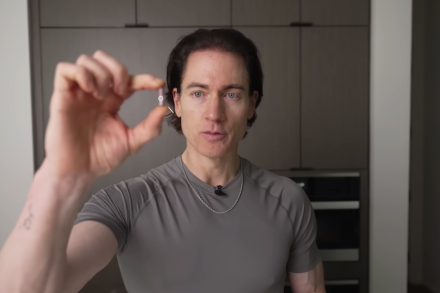
At £300 a go, the Zoe is a reassuringly expensive accessory. It has a recognisable logo and even had a 200,000-strong waiting list at one point. That wouldn’t be so unusual if Zoe was a must-have handbag or jewellery, but it is  a continuous glucose monitor that you stick to your arm. Some charities ask non-diabetics to donate their wearables to be reused by people who actually need them Continuous glucose monitors have been available to diabetics for a few years, but now non-diabetics without any particular reason to worry about their pancreas are also getting in on the act. Like the fear of gluten a few years ago, glucose levels have gone from something only those with a diagnosed medical condition ever think about to a widespread obsession.

The ‘noise cameras’ silencing the supercar show-offs

As a motorcyclist, I’m used to hearing complaints about loud exhausts. Plenty of bikers revel in the roar of their motor – after all, a powerful engine is one of the main appeals of motorbiking. But for anyone living near a busy road, the sound of revving can be thoroughly stressful. Most people who spend time in towns or cities will have jumped at the distinctive noise of a tailpipe backfire, a couple of short explosive bursts that can sound like gunshots, or the drone of a clearly illegal exhaust note. The idea that someone has modified their car or motorbike to give the rest of us a fright is downright infuriating. One suspects that it is mostly a young male thing: adolescent drivers shouting ‘look at me!’ in the most juvenile way.

Glastonbury has become the new Last Night of the Proms

Time was when the pinnacle of the summer’s musical experiences – certainly from a UK television perspective – was the Last Night of the Proms. Preceded by weeks of more staid performances of classical music which most people did not tune in to, the conclusion of the Proms season, which dates back to 1895, was a collective cultural experience. Watched by those at home, as well as the audience of the Royal Albert Hall, it was and remains an effervescent outpouring of costume, flag-waving and patriotic singing – more an example of massed karaoke than a traditional virtuoso performance, particularly during the annual rendition of Sir Henry Wood’s Fantasia of British Sea Songs.

The invasion of the wheelie bins

Once I thought nothing could make residential Britain look uglier than pebble-dashing, PVC windows and satellite dishes. I was wrong. As if the country had not been brutally homogenised enough by the fact that every high street has the same shops, now every residential road is reduced to being an identical backdrop for a very persistent invader: the wheelie bin. Lined up like Daleks, they are breeding in my North London neighbourhood, blocking front gardens and pavements. Outside houses split into flats, where each has its own set, there are actual crowds of these 4.5ft graceless plastic buckets, which come in multiple colours for different sorts of rubbish. When wheelie bins first started infiltrating our streets just over a decade ago, we valiantly tried to fight back.

How to see world-class opera for £11

I’ve always been happy to splash out on attending all sorts of events – £80 on tickets for run-of-the-mill Premiership football matches; £120 for the ghastly experience of watching rugby in Twickenham’s concrete jungle; £60 to attend a concert by ancient rockers who’ve seen better days. As an English teacher, I’m also an avid theatre-goer – despite the fact that the last time I went to the theatre, to see a woke version of Henry V full of gratuitous swearing and cheap jibes at Brexit, it cost £55 for a restricted view.   But I’d always avoided opera, put off by its somewhat elitist image. And I’m not the only one – a survey for Classic FM revealed that many of us have never considered going, dismissing it as ‘too posh’ or too expensive.

Is Scottish reeling the route to romance?

‘Remember to flirt outrageously.’ This essential piece of advice is imparted courtesy of Country and Town House magazine for its readers curious about Scottish reeling. The reel, a social folk dance, dates back to 16th-century Scotland and has remained popular for all this time, notwithstanding a brief hiatus in the 17th century when the Scots Covenanters assumed the stance (rightfully, some might say) that such amusement leads to mischief leads to sin. Less curious about the dancing than the flirtation, I joined some friends for the final, sweaty session of the season at London Reels.

There’s nothing rock and roll about Glastonbury

In 1970, Glastonbury was a humble new festival for ‘free thinking people’. Entry cost £1 and you were given free milk for the duration. Today Glastonbury attracts more than a quarter of a million people from all over the world. Tickets cost £335, reassuringly expensive enough to keep the riff-raff out. You’re more likely to pitch your tent next to a corporate lawyer than anyone devoted to the counter-culture. Glasto is the culture now — and in 2023 the culture is the exorbitant cost-of-living. A pint of beer at the festival costs £7; half a pint of Coca Cola is £3.  Most events at Left Field could easily be staged at the Tory party conference later this year Glastonbury is still primarily about music, thank goodness.

Is this the end of the road for Meghan?

Has there ever been a more brutally effective piece of social satire than the South Park episode that mocked Harry and Meghan?  Since it aired in mid-February, the Duchess of Sussex, previously a seemingly ubiquitous and unstoppable cultural phenomenon, has effectively withdrawn from public life. She’s made just one formal appearance – at an awards show, which ended in the farce of disputed paparazzi car chase claims – and has given precisely no interviews.  The couple's media empire also seems to be imploding. Spotify has axed their $20 million (£15.6 million) podcast deal, with senior exec Bill Simmons ungallantly labelling the pair ‘fucking grifters’.

Drivers beware: the rise of the vigilante cyclist

Do you ever break the law when driving? According to surveys, quite a few of us do – three in five drivers admit regularly speeding. And if that's you, then be careful: Mike van Erp is out to get you. You may already know Mike. He’s the media-savvy cyclist (better known as Cycling Mikey) who has become a minor celebrity for his dashcam videos of rule-breaking drivers in London. Now his niche hobby is catching on. ‘There were almost 15,000 reports last year that led to the police taking action’ ‘I don’t think I’m even in the top ten cyclists reporting bad drivers in London,’ Cycling Mikey tells me over the phone. ‘There were almost 15,000 reports last year that led to the police taking action. And I only submitted 383 reports in total.

Why I’m with Boris Johnson on Ozempic

Seeing Boris Johnson’s byline in the Daily Mail, I felt a flare of the affection which made me break free from my blue-collar tribalism and vote Tory for the first time in 2019. I remember thinking that the experience was rather like losing one’s virginity; worrying about it for months, then secretly planning it, then taking the plunge and thinking the morning after – ‘Gosh, that was nothing to be scared of – I might even do it again!’ I’ve been quite the reprobate myself during my long, louche life, and I’ve certainly lied and adulterated, so of course I can’t condemn anything that I’ve done too, as that would make me a filthy hypocrite. What I can’t forgive in a politician is sanctimoniousness – and he had none.