World

Machado deserves the Nobel

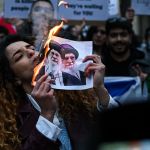
I was fourteen when I clambered onto a boulder along Caracas’s Francisco Fajardo highway – what people called Piedra de la Libertad, the Liberty Rock – and spoke out about a government that had just ignored a referendum. “Tyranny” was more than a buzzword. To my astonishment, a woman I didn’t yet know – María Corina – helped me climb it. With her megaphone, I spoke of unifying, as a sea of flags from rival parties fluttered before me.Many dismissed her then. A woman who once called Chávez a “thief” to his face – too brash, too ideological, too direct for the choreography of Venezuelan politics. The old hands said she could never reach the people; she lacked the soothing tones, the feigned humility, the convenient ambiguity that defined our politicians.

Maria Corina Machado

Britain’s MAGA moment is coming

Summer is fun. Winter is serious. Autumn in London feels almost Boolean – the light, the air, the mood, seemed to turn on an equinox dime. The political situation, I heard, had grown even stranger since my last sojourn. “Cool Britannia” is dead. Nothing today is more dated than centrism. And yet the inexorable rules of the unwritten constitution mean no election until 2029. And the great barbarian, Nigel Farage, his weapons a grin and a beer, lies in wait as his numbers rise. Like J.D. Vance and Donald Trump, in an age of immediate media, Farage’s great weapon is that he is human. The same in public and private. Who is Kemi Badenoch in private, or Keir Starmer? Are they even anatomically correct? Someone must know. We never will.

Farage
Canada

Canada’s assisted suicide laws are out of control

Death, somehow, seems like the wrong word. So Canada’s euthanasia doctors have adopted other terms for what they offer: each lethal injection is called a “provision.” Stefanie Green, a Vancouver Island doctor who used to work in maternity services, prefers “delivery.” Canada has sleepwalked into a moral maze with no exit, where euthanasia becomes a solution for social problems Since Canada’s parliament introduced euthanasia in 2016, a new vocabulary has arisen. Those with a terminal illness, whose death is “reasonably foreseeable” are “Track 1”; those who have no such diagnosis but qualify through “grievous and irremediable” conditions are “Track 2.

Ukraine

Would taking back lost territories make Ukraine whole again?

For many of Ukraine’s supporters, Donald Trump’s recent declaration that Ukraine “is in a position to fight and WIN all of Ukraine back in its original form” came as a welcome – and unexpected – turnaround in US policy. “Ukraine would be able to take back their Country in its original form and, who knows, maybe even go further than that!” wrote Trump in a Truth Social post in late September. “Putin and Russia are in BIG Economic trouble, and this is the time for Ukraine to act.” But would taking back the lost territories of the Donbas, Zaporizhzhia, Kherson and Crimea make Ukraine whole again – or could a reconquest instead condemn Ukraine to perpetual civil war against itself and prolong the conflict with Russia indefinitely?

Introducing Japan’s own Iron Lady

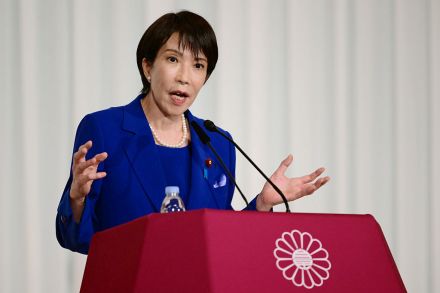
Japan is still in many ways a traditionalist – not to say a sexist – society. But the times they are a changing, and the ruling Liberal Democratic Party (LDP) have just chosen Sanae Takaichi as its leader, which means that she will become the country’s first ever female Prime Minister, and it’s most stridently right-wing one. Takaichi, 64, revels in the nickname the "Iron Lady" and is a hardline patriotic right-winger who is an avowed admirer of the original Iron Lady - Britain’s Conservative Prime Minister Margaret Thatcher, who Takaichi has cited as her role model.

Takaichi
Netanyahu

Did Bibi miscalculate?

In her new memoirs, 107 Days, Kamala Harris recounts that in July 2024 she had an important meeting about Israel and the Gaza Strip. Harris, who was running for the presidency, hoped to show that she could pressure Israeli prime minister Benjamin Netanyahu into reaching a ceasefire with Hamas. “Netanyahu’s hooded gaze and disengaged demeanors,” she writes, “made it clear to me that he was running out the clock." His only goal was a temporary ceasefire and to undermine the Biden administration. “He wanted Trump in the seat opposite him,” Harris recalls. “Not Joe, not me. Netanyahu wanted the guy who would acquiesce to his every extreme proposal for the future of Gaza’s inhabitants and add his own plan for a land grab by his developer cronies.

The celebrity guide to selective outrage

In the West, outrage has become performance art. It’s not about real causes, but about carefully branded ones that play well in pastel Instagram carousels. Climate change? Of course. A vague plea for “justice”? Naturally. A curated “Free Palestine” hashtag? Absolutely. But when it comes to standing with their peers in the Middle East – singers, actors, writers who are literally jailed or executed for their art – the voices vanish. This isn’t about Israel. The point is larger: why do so many Western artists reserve their outrage for one convenient villain while ignoring regimes that jail, torture and kill their peers? Syria’s Christians and Druze are being ethnically cleansed. Yemen is enduring a famine.

Billie Eilish

What Trump really wants from Venezuela

When the headlines scream “narco-wars” and pundits wag their fingers about “fentanyl,” it is tempting to reduce Donald Trump’s Venezuela policy to one issue: drugs. A convenient shorthand – but also a red herring. Read closely and a very different logic emerges.  Drugs matter, and the effort is to some degree about exactly that. Yet so does immigration. Venezuela’s hydrocarbons also matter – and they matter even more in a world where OPEC has been deliberately constraining supply to keep oil prices high.   Deploying narcotics as a public justification is smart politics.

Donald Trump

Trump has boxed in Netanyahu and Hamas

Hamas did not wait long to accede to Donald Trump’s 20-point Gaza peace plan – or at least accept it with conditions. It didn’t really have a choice. The same can be said for Israeli prime minister Benjamin Netanyahu who was forced to accept a deal that he never wanted in the first place. Give credit where it’s due: Trump boxed in both Netanyahu and Hamas. For Trump, the pending agreement is a big accomplishment. It may not win him a Nobel but the aim is noble. With his usual flair for the dramatic, Trump responded to Hamas’ offer to release the remaining hostages by declaring, “I believe they are ready for a lasting PEACE.” He stated that “the bombing of Gaza must stop immediately.

Grow a pair, Euro cry-bullies

After a weekend of bloodlust at Bethpage, the European team pulled off a stunning victory to take home the Ryder Cup. So why are they so sore about it?Golf is known as a gentleman’s game, with countless unwritten rules of etiquette. The Ryder Cup is a rare exception, where the 12 best golfers from Europe and America duke it out not for money, but for glory, and rowdy fans bring their national pride to bear. The American fury picked up as the Europeans sprinted ahead on Saturday, leading to an overall air of chaos. Forget the “golf clap” – heckling, shouting and four-letter cursing became the standard behavior as European players walked past the grandstands or lined up their shots.

Ryder Cup

American sports fans are an embarrassment

Transatlantic tensions and heckling boiled over at the Ryder Cup Saturday, with multiple fans reportedly escorted off the property at Bethpage Black Golf Course. On the international stage, Americans are known for often being loud, brash and utterly uncouth. The attitude is a product of the country’s endearing patriotism and unfettered confidence. The Ryder Cup is a case in point of this. The limits of unruly behavior from American fans have known no bounds since the start of the tournament in Long Island. Chants of “U-S-A” quickly shifted to straight-up jeers at European players, notably the duo of Rory McIlory and Shane Lowry, both of whom snapped back in reaction. McIlroy was approaching his shot on the 16th green when several members of the crowd began shouting.

No, Trump has not changed course on Ukraine

President Trump has once again played the global foreign-policy commentariat for fools. They have taken a startling statement from Trump’s Truth social-media account on Tuesday as a sign of a new policy – or at least a new attitude – toward the Russia-Ukraine war. Yet what Trump actually wrote says nothing of the sort.  If Trump really were newly committing himself to Ukraine, why would say, as he’s so often said before, “I wish both countries well”? One country has invaded the other; wishing one of them well means wishing defeat on the other. Wishing them both well indicates indifference.

Trump Ukraine

Trump admonishes the United Nations

Was there a plot against President Trump at the United Nations? Upon his arrival, the escalator apparently stopped working. Next his teleprompter failed. Small wonder that Trump was in less than a concessive mood as he delivered his speech denouncing the UN itself as a colossal failure. The result was the kind of talk he would give to a political rally – except it was to an unreceptive, if not hostile, audience. Throughout, Trump made it clear that his estimation of his abilities is very different from his view of the UN. “I’m really good at this stuff,” he declared. “I’ve been right about everything.” As for everyone else: “Your countries are going to hell.

Donald Trump

Trump returns to backwater Britain

President Trump returns to Britain this week for his second state visit, to a country which is much changed yet depressingly still the same. On his first, six years ago, Britain had yet to complete its departure from the EU, Elizabeth II was still on the throne and the Conservatives still in power – with three Prime Ministers to go before their eventual ejection from office. He will no doubt receive a warm and dignified welcome from King Charles, whatever is going through the monarch’s head – the impeccable neutrality of the British throne has survived the change of reign. Yet the President will find a country that is anything but transformed by Brexit or by its change of government.

Donald Trump

Bolsonaro’s conviction reveals a divided Brazil

Brazil’s former right-wing president Jair Bolsanaro has been sentenced to 27 years in jail after being found guilty by the Supreme Court in Brasilia of plotting a coup and attempting the assassination of his leftist successor, the current President Luiz "Lula" da Silva. The five-person court panel trying the case delivered a verdict, with four judges voting guilty and one voting to acquit. The casting guilty vote was returned by a female judge, Carmen Lucia. Donald Trump, who regards Bolsanaro as a personal friend as well as an ideological ally, has described the trial as a "witch hunt" and a "political assassination." He has imposed 50 percent tariff charges on Brazil in response, and has threatened to increase the sanctions if Bolsanaro goes to jail.

Bolsonaro

When will we learn the truth about Saudi involvement in 9/11?

Will Saudi Arabia ever be held to account for the 9/11 terror attacks? For decades, the Kingdom has successfully parried lawsuits in the United States accusing it of providing logistical and financial support to a network of Islamic extremists who launched a global terror campaign, culminating in the September 11 attacks on the Pentagon and the World Trade Center. Those attacks occurred 24 years ago and since then survivors and victims of the 9/11 hijackings have had to counter not only vigorous Saudi denials mounted by their well-funded American legal team but also repeated attempts by the US government to thwart the lawsuits. But there are signs the pendulum has begun to swing the other way. On August 28, US District Judge George B.

9/11 saudi

Inside Trump’s war on the cartels

To deal with big problems, the second presidency of Donald Trump adopts a three-step approach. First, the declaration of authority: in this case, the designation announced in February of multiple Mexican and South American cartels as international terror organizations, opening up new avenues for legal, intelligence and potential military responses. Next, eye-popping kinetic action: this came with SOUTHCOM’s deployment in August of eight warships to the Caribbean and Pacific Oceans, including three Aegis guided-missile destroyers parked off the coast of Venezuela along with a landing dock, amphibious assault ships and a fast-attack nuclear submarine.

cartels

What is Charles Kushner doing in Paris?

When Charles Kushner took up his appointment as American ambassador to France this summer, his first official visit was to the Shoah Memorial in Paris. As a child of Holocaust survivors, he tweeted, “fighting anti-Semitism will be at the heart of my mission.” So it has proved. Last month, Kushner published a letter in the Wall Street Journal in which he accused Emmanuel Macron of insufficient action in the face of soaring anti-Semitism in the Republic. The ambassador was summoned for a dressing down. He didn’t attend as he was on vacation Kushner also castigated the French President for his imminent recognition of Palestinian statehood.

Kushner

The West can’t afford to shun Russian oil

Donald Trump is a radical foreign-policy innovator. Over the past few decades, the US has tried a range of non-military means to nudge, squeeze and occasionally strangle its adversaries. These range from travel bans and banking restrictions, to export controls and trade limitations. But never has the US – or indeed anyone – tried to use import tariffs as a species of economic sanction. Trump has threatened Vladimir Putin with introducing “secondary sanctions” against countries that import Russian oil – a threat intended to strike at the heart of Russia’s war economy. And on August 4, Trump appeared, for the first time, to make good on that threat.

oil

How powerful is the China-Russia alliance?

This summer’s big security summit in Tianjin, followed by the military parade in Beijing on September 3, has been widely interpreted as a sign of a new global realignment. At a time of growing friction within the US alliances in East Asia and Europe, President Xi Jinping of China, President Vladimir Putin of Russia and about 20 leaders mostly from Central Asia have not just reaffirmed their nations’ close ties. They sought to strengthen the emerging multipolar system, which they see as a rejection of the US-dominated global order. This idea is hardly new.

China