Clarissa Hard

Clarissa Hard is an academic and writer based in Oxford

The problem with ‘diversifying’ English literature

From our UK edition

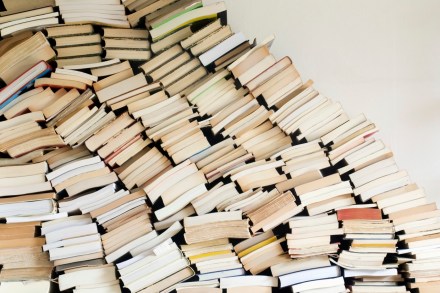
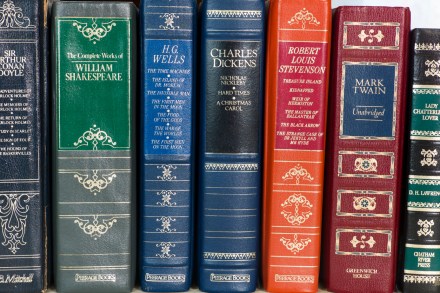
Lit in Colour, a campaign launched by Penguin and the Runnymede Trust to diversify English literature, has recently released its five-year progress report. ‘Diversity’ for this campaign doesn’t mean diversity of thought, style, genre, poetic form or historical period, however. It refers to promoting writers on the basis of their BAME (Black, Asian, and Minority Ethnic) credentials while insisting that English Literature – cumulatively one of the most staggering achievements in Western civilisation – is too white for the modern classroom. Is it the job of the curriculum to play catch-up with demographic shifts? Is it the role of literary education to ‘reflect’ the present day, or synthesise history?

Western feminists should be standing up for Iran’s women

As Iranians revolt against the brutal Islamic theocracy that has throttled their civilisation since 1979, striking images of young Persian women have been circulating online. They are lighting cigarettes by burning photographs of Ayatollah Khamenei. With their insouciant attitude, tumbles of curls, kohl-lined eyes and lolling fags, they could be on the cover of an Arcade Fire album. Originally a symbol of protest among the Iranian diaspora, the trend has now caught on in Iran. These women have reignited the same spirit that sparked widespread protests across the country in September 2022, when Mahsa Amini died in custody following her arrest for disobeying the country's modesty laws.

The trouble with Khan’s New Year’s fireworks

From our UK edition

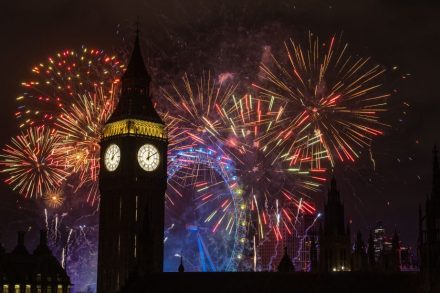
Despite the pyrotechnic glories of London’s New Year fireworks, 2026 started off with a whimper rather than a bang. The display, organised by Sadiq Khan and the Greater London Authority, was painfully predictable, trotting out the usual tired clichés about England as a global melting pot and diversity as the jewel in the nation’s crown. The fireworks engaged head-on with the Year of the Flag, responding to ongoing debates about national identity The fireworks engaged head-on with the Year of the Flag, responding to ongoing debates about national identity. A chummy voiceover explored ‘what England means’, while the display showed national flags from around the globe coming together to form a Union Jack.

How terrorism changed Christmas

From our UK edition

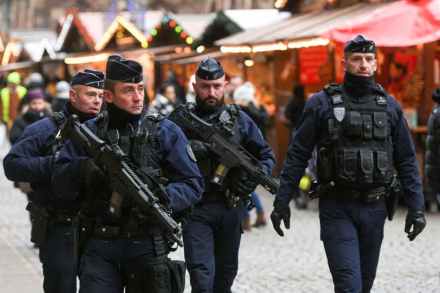
Christmas is traditionally a time of joy, merriment and peace on Earth. Not so in the little town of Erbach, Germany, this year, where depraved individuals destroyed a living nativity scene, tortured two donkeys, vandalised and looted the Christmas market, and proceeded to smash up and defecate in a nearby Protestant church. Tidings of comfort indeed.  No luck in central Brussels, either, where the head of a baby Jesus was removed and stolen from a nativity scene. Another Jesus met a similar fate in Amiens, France. The plexiglass was smashed, the infant’s head knocked off, and other nativity figures damaged.

christmas markets europe

It’s time to legalise pepper spray

From our UK edition

When faced with mortal peril, the average member of the British public might prefer to defend themselves with something more robust than a bottle of whiskey. Last Saturday, passengers on board a train found themselves in this dire predicament. The ‘frail / Travelling coincidence’ – as Philip Larkin described the same journey through Doncaster to King’s Cross – took a terrifying turn when a knifeman went on a stabbing spree and injured 11 people. No wonder this nightmarish attack has revived discussions about personal safety Witness Olly Foster recalled that a group of passengers fled until they reached the end of the carriage. Trapped, they stared down the aisle and prayed the assailant wouldn’t pursue them.

Should this teacher really have been struck off?

From our UK edition

Alex Lloyd, a former teacher and head of sixth form in Bournemouth, has been drummed out of the profession for making remarks that many would find intemperate, even insulting, but few would seriously call career-ending.  In 2022, Lloyd led a PSHE lesson on so-called ‘honour’ killings. When two pupils giggled during his lesson, he shouted that honour-based abuse, including FGM, was ‘a serious matter’ that affected their culture specifically. According to a report by the Teaching Regulation Agency (TRA) in October 2025, Lloyd was visibly annoyed, insisting ‘this was real’ and ‘happening mainly because of [their] culture’.

Britain’s unofficial blasphemy laws have been decades in the making

From our UK edition

Defenders of free expression can breathe a collective sigh of relief. Hamit Coskun – the man who burnt a Quran outside the Turkish Consulate in London in February and was found guilty of a ‘religiously aggravated public order offence’ – had his conviction overturned at Southwark Crown Court on Friday. People are still scared to blaspheme against Islam. We already live under unofficial blasphemy laws enforced by fear Coskun exercised his freedom of conscience and felt the iron fist of the law. His original trial even bordered on victim-blaming. The fact that he was attacked on the street by a Muslim man wielding a knife was effectively used against him, with the judge adducing this as proof that Coskun had engaged in ‘disorderly behaviour’.