Politics

Read about the latest political news, views and analysis

Truss chooses price controls to tackle energy bills

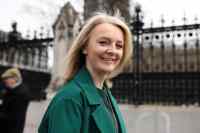
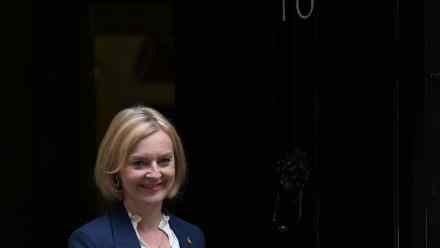
When Liz Truss spoke from the steps of Downing Street on Monday, she declared proudly that she ‘campaigned as a conservative’ and would ‘govern as a conservative’. It was a dig at her leadership rival Rishi Sunak, who she beat by 15 percentage points, and who she accused throughout the campaign of having lost his way over tax hikes during his time in the Treasury. He insisted this was the path to fiscal responsibility; she insisted it was the path to recession. Yet Truss’s first policy announcement of her premiership – and quite possibly one of the biggest announcements she’ll make as Prime Minister – is not one you can call ‘conservative’.
Buckle up! The Liz Truss era is here

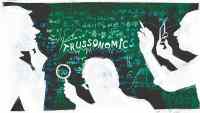
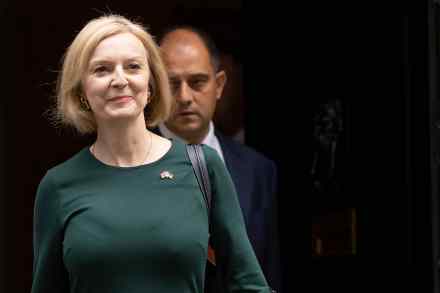
Liz Truss and Kwasi Kwarteng arrive in Downing Street having been on a long political journey together. Both elected in 2010, they have co-written books setting out their shared economic agenda; they have co-founded party groups during their time in parliament; and now they will govern together. The future direction of the country, and the Tories’ electoral prospects, depend on the success of this new Downing Street partnership. Their strategy is one of big economic gambles from day one. Chief among these is the big energy package, potentially costing over £100 billion, designed to ‘freeze’ energy prices for households and businesses.

Liz Truss can’t ignore the issue of NHS reform

It’s hard to think of any Prime Minister who has entered office surrounded by such low expectations. Liz Truss was backed by just over half of Conservative party members and secured barely an eighth of MPs in the first ballot. Her critics dismiss her as a lightweight, wholly unsuited to tackling the problems now facing the country. The presumption is not just for trouble, but calamity: the fastest drop in living standards in living memory, followed by prolonged recession and worse. So if Truss manages to send inflation into reverse and makes a noticeable cut to taxes by Easter, it will be seen as quite an achievement. She has also been helped by Rishi Sunak’s somewhat wild exaggeration of the risk her tax cuts posed to the public finances.

In defence of Iain Macwhirter

Those of us on the right often sense a form of racism in the protests by some of those on the left who are suspicious of the racial diversity in the Tory front bench. Kemi Badenoch has often spoken about how black politicians who differ from the Labour narrative are accused of somehow betraying their race. Priti Patel has spoken about how much she hates the label 'BME' which lumps together all ethnic minorities as if they have more in common with each other than whites (she banned her officials from using it). James Cleverly, the Foreign Secretary, has said he has been told to 'go home' and referred to by a common racial slur: a 'coconut'. Brown on the outside, white on the inside.

Russia’s Ben Stiller ban is a sign of Putin’s desperation

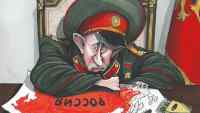
What do Ben Stiller, Sean Penn, the chairman of the BBC, Piers Morgan, and, er, me, have in common? The answer is that we’ve all been banned from Russia. For some of us, that’s a blow. For others, an irrelevance. But for all of us, it’s a strange accolade: somehow Vladimir Putin’s Kremlin thinks we’re significant, dangerous or hostile enough to need to be kept out at all costs. What level of insecurity does it take to worry that the screen Zoolander and Harvey Milk, respectively, represent a threat to the stability and integrity of the Russian Federation?

Truss’s appointments are ruffling Tory feathers

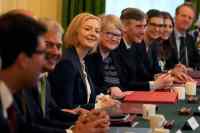
Liz Truss has started to appoint supporters of her leadership campaign rivals to ministerial positions, answering the demand (mostly from said supporters of her leadership campaign rivals) to ‘reach out’ across the party to bring the Conservatives back together. There are Rishi Sunak backers in the latest slew of jobs – Robert Jenrick returns to government as health minister, Jeremy Quin goes to the Home Office, Mark Spencer to Defra and Victoria Prentis goes to DWP – along with two who had previously backed Kemi Badenoch (Rachel Maclean goes to Justice and Julia Lopez goes to DCMS).

Have Labour underestimated Truss?

12 min listen

It's Liz Truss's first full day as prime minister and, backed by a fully assembled cabinet, she has conducted her first Prime Minister's Questions with Labour leader Keir Starmer. Who came out on top?  Cindy Yu speaks to James Forsyth and Katy Balls.  Produced by Cindy Yu and Oscar Edmondson.

Is long Covid all in the mind?

What's the link between long Covid and mental health? A study just published in the Journal of the American Medical Association suggests it's a significant one. The paper looked at more than 3,000 people who tested positive for Covid in the US. Of those who went on to develop ‘long Covid’, it found many of them already experienced mental distress before catching the virus. The study looked at 3,193 people – mostly women – who reported Covid symptoms continuing four weeks after first falling ill. They found that those reporting long Covid were more likely to have already experienced a range of symptoms including ‘depression, anxiety, worry about Covid, loneliness and stress’ before they tested positive. The risk increased between 1.3 and 1.5 fold.

Liz Truss’s first PMQs felt like a dress rehearsal

That felt like a dress rehearsal. Liz Truss sailed through her first PMQs which will probably be her easiest. It may turn out to have been her best. When she arrived, the House burst into ecstasies of joy as if she’d just found the cure for malaria, solved the Jack the Ripper case and liberated Hong Kong. The questions lobbed at her were as soft as pizza dough, and each was prefixed with a note of congratulation and welcome. The mood was warm enough even to thaw the frost that covers Theresa May. Suspending her sulk for a moment she made an ironic observation. ‘Why does she think it is that all three female prime ministers have been Conservative?’ Her ‘mind-the-gap’ style is not easy to warm to.

Liz Truss revealed her weakness at PMQs

In her first Prime Minister’s Questions, Liz Truss said that before she was anything else she was ‘on the side of people who work hard and do the right thing’. In response, Keir Starmer showed that Labour’s first task was to make clear that she was nothing of the sort. And I suspect he will have the easier time of it. For a Prime Minister to portray herself as the faithful friend of Big Oil is – how to put this politely? – a ‘brave strategy’ at the best of times. It looks terrible when fuel prices and the national debt are in a race to see which can inflate the fastest. As I wrote on these pages a few days ago, Labour will regroup after losing the sitting target of Boris Johnson.

Liz Truss should increase Universal Credit

Liz Truss’s plans for a two-year energy bill freeze, estimated to cost £100 billion, underscore three points. One, the incoming Prime Minister expects the energy crisis to be with us for more than one winter. Two, she grasps how lethal it will be to the Tories’ hopes of re-election if the Treasury doesn’t intervene in a big way. Three, she is prepared to run up government debt even further in order to mitigate a crisis that threatens people’s quality of life. This third point is the crucial one. When a neo-Thatcherite like Truss concedes the merits of transformative interventions funded by borrowing, it opens up a broader conversation.

Why Liz Truss’s political journey matters

As is now well known, Liz Truss has travelled politically. Her parents are left-wing, and there is a photograph of her as a child posing with them and their CND banner in Paisley. She herself was active in the Liberal Democrats. Professor Truss is reportedly upset that his daughter became a Conservative. I can identify with this story a little since both my parents were/are (my mother is still alive) ardent Liberals and I fear my own move to the right – though never really a party-political thing – upset them. Parents tend to be more upset by children moving to their right than to their left. This is because non-conservative politics is pseudo-religious. It sees political allegiance as a test of virtue and political programmes as means of salvation.

Liz Truss’s well-scripted first PMQs

Liz Truss’s first Prime Minister’s Questions was well-scripted, both for the new Tory leader and Keir Starmer. They had come along planning to talk about the cost of living crisis: Truss so that she could reassure the public (and her own party) that ‘immediate action to help people with their bills’ was on the way, and Starmer to probe her on how she was going to pay for it. The exchanges worked for both of them this time around. The exchanges worked for both of them this time around Because Truss is going for an energy price freeze – proposed by Labour – Starmer had to move his attack from ‘what are you going to do’ to ‘how are you going to do it’.

Tory ministers shouldn’t fall for these purity tests

Liz Truss’s ministers had not even got their feet beneath the cabinet table before they were treated to a barrage of objections to their appointments. Talk about playing the man rather than the ball. No sooner had Jacob Rees-Mogg been appointed business secretary than Caroline Lucas was declaring him unfit for the position because he has previously expressed sceptical views on climate change. She didn’t even wait to learn that Rees-Mogg will not, in contrast to his predecessor Kwasi Kwarteng, also hold the climate brief, which has gone to Graham Stuart.

Who cares about Liz Truss’s ‘diverse’ cabinet?

‘Great offices of state set to contain no white men’ was the way one national newspaper reported the formation of the first Truss cabinet. In addition to Liz Truss, the positions of Chancellor, Foreign Secretary and Home Secretary would respectively be held by Kwasi Kwarteng, James Cleverly and Suella Braverman. Of course, all this was presented as something incredibly new and exciting: real progress at work. In fact it isn’t remotely new. As Chancellor, Kwarteng follows those two famous white men Rishi Sunak and Nadhim Zahawi. As Home Secretary, Braverman succeeds Priti Patel and Sajid Javid. And now that Truss is Prime Minister she is the first woman to relieve us from male-dominated rule for a full three years.

Truss is in a stronger position than Thatcher – for now

People used to understand that they were ageing when they noticed police officers in their neighbourhood looking unfeasibly young. Given that nobody ever sees a police officer on foot patrol these days, a new benchmark for startling youthfulness needs to be identified. After Liz Truss unveiled her top ministerial team yesterday perhaps ex-cabinet members could serve the purpose. Because Dominic Raab (48), George Eustice (50), Grant Shapps (53) and Priti Patel (50) have just joined the bulging ranks of former cabinet ministers to have moved from young thrusters to backbench elders with, in one or two cases, no discernible period of achievement in between. At least nobody can say that the line-up chosen by Truss is 'male, pale and stale'.

Putin’s gas war endgame

What is the Kremlin’s gas war endgame? Based on the various statements from Gazprom, the foreign ministry, and Dmitry Peskov, Vladimir Putin’s spokesperson, it’d be reasonable to conclude that it is getting western sanctions lifted. The message coming through is that the so-called technical issues that Nord Stream 1 is suffering from would be fixable, if not for the collective west’s ongoing economic embargo of Russia. If this is what Putin actually wants, it would suggest that sanctions are having a large enough impact on Russia for them to use their major source of leverage. Russia has now substantially reduced its pipeline exports to Europe.