Politics

Read about the latest political news, views and analysis

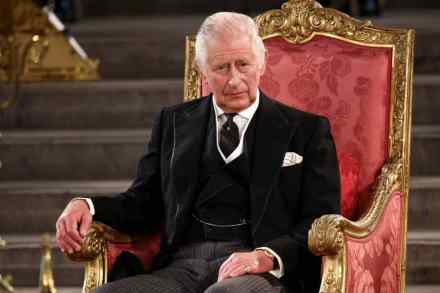
King Charles III addresses parliament

16 min listen

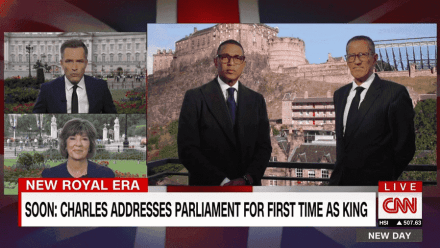
This morning, surrounded by the lead, oak and stone of Westminster Hall, King Charles III addressed parliament. Lindsay Hoyle, speaker of the Commons, introduced him, and said that he knew the new King would 'bear those responsibilities which fall to you'. King Charles said that he was resolved to follow his mother's 'selfless duty'.  Katy Balls speaks to Fraser Nelson and James Forsyth about what comes next.  Produced by Max Jeffery.
North Korea’s nuclear sabre-rattling isn’t frightening

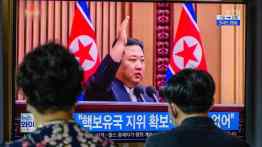
North Korea would like you to know that it has nuclear weapons. It has put rather a lot of effort in recent weeks into making you aware. And if you haven’t thought much about North Korea’s nuclear programme in the last few days, it means its propaganda effort has failed. Here is what North Korea’s leaders want you to know. On September 9, North Korean media announced that the country has officially declared itself a nuclear weapons state. In a speech to the rubber-stamp Supreme People’s Assembly, Kim Jong-Un declared that this made his country’s nuclear programme ‘irreversible’, and declared that they would never give up their weapons even in the face of a hundred years of sanctions.

Why are some French mayors refusing to honour the Queen?

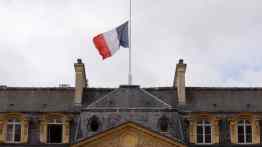
Why, asked a French mayor at the weekend, has he been ordered to fly his town’s flag at half-mast for the Queen until the day of her funeral? In expressing his indignation at Macron's presidential decree, Patrick Proisy, the mayor of Faches-Thumesnil, a suburb of Lille, pointed out that Mikhail Gorbachev was accorded no such honour when he died. Yet he was a recipient of the Nobel Peace Prize, an instrumental figure in tearing down the Iron Curtain that had divided Europe for half a century. The refusal of Proisy, of the left-wing La France Insoumise, to comply with the order to lower his town’s flag as a mark of respect for the Queen has caused headlines in France. It has also created a backlash on social media.

Police should leave anti-monarchist protesters alone

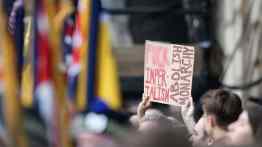
No one should ever be arrested for what they think or say. It is remarkable – and depressing – that this still needs to be said in the 21st century. But it seems it does. Over the weekend we witnessed an alarming, almost medieval act of censorship. A woman was dragged away by cops for holding up a sign that said ‘Abolish the monarchy’. It was an intolerable assault on freedom of speech. The woman in question was standing outside St Giles’ Cathedral in Edinburgh, which was awaiting the arrival of the Queen’s coffin. Mournful crowds had gathered. But this woman wasn’t in the mood for mourning. She was in the mood for politics. Her sign, in full, said: ‘Fuck imperialism. Abolish the monarchy.’ Remind me what century this is?

Britain is teetering on the edge of recession

One of Liz Truss’s suggestions on the leadership campaign trail was that her economic agenda could avoid recession. But one of the (many) gambles attached to these comments was what had already happened to the economy before she entered No. 10. This morning we got some more insight about how the economy fared over the summer, as the Office for National Statistics revealed that GDP grew by 0.2 per cent in July: a small uptick, following a 0.6 per cent contraction in June. The small, but still positive, growth was mostly a result of a boost to services industries, which fell by 0.5 per cent in June, with the largest contributing sectors including computer programming, consultancy and telecommunications.

How the Queen helped to fix Germany

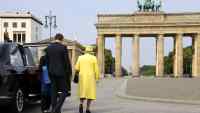
The Brandenburg Gate has often reflected the state of the German nation. Throughout the centuries, Berlin’s iconic landmark has been a symbol of victory, defeat, unity, division and restoration. It has even reflected Germany’s energy crisis, no longer lit in order to save electricity. But on Friday night it shone brightly once more: in red, white and blue as Germany mourns the death of Queen Elizabeth II. This is much more than a gesture of condolence. ‘Expressing our sympathy and our mourning by lighting the symbol of our city and our country in the colours of the Union Jack to honour Queen Elizabeth II fully represents the sentiments of people in Berlin,’ said mayor Franziska Giffey.

I’ve become a war addict

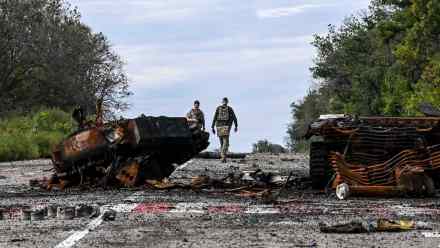
It is an almost unquestioned orthodoxy that war is hell, and that every needless death in a needless war diminishes our common stock of humanity. It’s curious, though, how we're able to hold that conviction alongside a positively visceral excitement at watching the Ukrainian counter-offensive carve its way through the Kharkiv Oblast. Some 3,000 square kilometres have been recaptured: Ukrainian troops are moving through their own land at such a clip that they’ve made more progress in three days than the massed might of the Russian invaders have since April. I’ve been eating it up. Haven’t you? The images of abandoned armour, the fuel dumps, the sullen faces of Russian commanders rounded up as prisoners of war.

Parly staffers demand to see the Queen

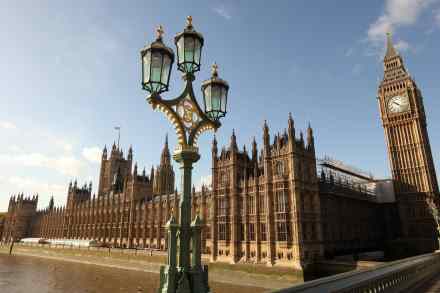
As Her Majesty the Queen embarks on her final journey south, many in Westminster are preparing to attend the Lying-in-State for the monarch. This will take place in Westminster Hall, the oldest part of the Palace of Westminster, at the heart of British government. The Queen will lie in state here for four full days before her funeral on Monday 19 September, allowing members of the public to file past and pay their respects. The last member of the Royal Family to lie in state in the hall was the Queen Mother in 2002, when more than 200,000 people queued to view her coffin, all of whom had to wait hours in line to pay their last respects.

Ukraine defeats Russia in Kharkiv

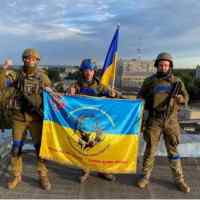
What began as a probing attack by Ukrainian mechanised forces towards the occupied town of Balakliia on 7 September has, with astonishing swiftness, turned into one of the most emphatic military victories in modern history. Having found a weak point in the Russian lines at Balakliia, Ukrainian forces swiftly advanced overnight to the town of Volokhiv Yar, and continued driving towards Sevchenkove during the morning of the 8th. Russian forces in the region were hurriedly sent to Sevchenkove to stall what was rapidly becoming a clear danger to a significant section of the frontlines around Chkalovske.

Sunday shows round-up: Australia to keep the monarchy (for now)

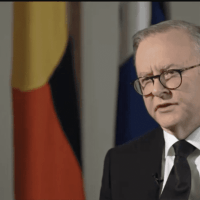
Anthony Albanese – No republic during my first term Tributes to Her Majesty Queen Elizabeth II have continued to pour in from across the world. On the morning that her coffin begins the journey from Balmoral to Edinburgh, so that she may lie in state at St. Giles’ Cathedral, Sky News’ Cordelia Lynch sat down with the Australian Prime Minister Anthony Albanese. Albanese is known to be strongly in favour of turning Australia into a republic, but he confirmed that now was not the time for such questions: https://www.youtube.com/watch?v=KGsKSRfOizY Gordon Brown – The Queen knew more about the country than I did On her new flagship BBC show, Laura Kuenssberg asked three former Prime Ministers for their recollections of the Queen from their time in office.

This could be a turning point in the war

There is extraordinary news from Ukraine this weekend. An offensive in Kharkiv region, bordering Russia on the northwest, has stunned Russia – which had been moving troops south to defend against Ukraine’s Kherson offensive. Kharkiv region has been left only lightly defended by Russia: Moscow had assumed that Ukraine didn’t have the military strength to open a second offensive, to fight in the north as well as the south. Surprised by Ukraine’s attack, Russia’s weakened defences folded quickly and Ukraine has now liberated more ground in a few days than the Russians had taken since April. The strategically-important city of Izium is now freed from Russian control.

How William can win over the Welsh

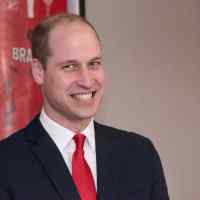
‘The demands on a Prince of Wales have altered,’ 20-year-old Charles said at his Caernarfon investiture in 1969, with some trepidation. ‘But I am determined to serve and to try as best I can to live up to those demands, whatever they might be in the rather uncertain future.’ Half a century later that future is certain: William has become the new Prince of Wales. The demands of the role are far greater than when Charles spoke in North Wales some 50 years ago. And every modern Prince of Wales faces a dilemma: how to deal with the Crown’s complicated relationship with the Welsh. Charles established a high bar over half a century.

France loved the Queen

The tribute paid by France to Her Majesty Queen Elizabeth II has been heartfelt, fulsome and moving. French media across the board have paid generous homage, as though to one of their finest, to Britain’s longest serving monarch – surpassed in world history only by Louis XIV acceding as a babe-in-arms. This vicarious Panthéonisation was admirably encapsulated by Emmanuel Macron, the 10th French president the British sovereign had known. In a moving video in English posted on Twitter on Friday, foregrounded against the Union Jack, he poignantly encapsulated the feelings of his people and their ‘emptiness’ at the British monarch’s death: ‘To you she was your Queen; to us she was the Queen’.

Queen Elizabeth II: coronation, reign and succession

12 min listen

Freddy Gray, The Spectator's deputy editor, is joined by our former editor Charles Moore, and our political editor James Forsyth, to discuss the Queen's death. What was her coronation like? Should unionists be concerned? How important was the Queen's faith to her? What do we miss about the Queen?

Melanie McDonagh, Katy Balls and Nigel Richardson

15 min listen

This week on Spectator Out Loud: after the sad passing of our longest reigning monarch, the great Queen Elizabeth II, Melanie McDonagh reads her poignant piece on how Britain, as a nation, will be lesser without her (01:09). Then, turning to politics, Katy Balls gives us an update on how Liz Truss is shaking up Number 10 (05:18) before Nigel Richardson, author of the new book The Accidental Detectorist, tells us about his new hobby, metal detecting (10:55).

The end of the Elizabethan age

The Queen’s fragile smile in the official photograph released as she waited to appoint Liz Truss as her 15th Prime Minister carries even more meaning now. Her Majesty clearly knew there would be no 16th and after a turbulent summer it must have come as a relief to know that the country was about to move from a caretaker premier to a full-time one. Her audience with Ms Truss would prove to be the last significant act of a monumental reign lasting 70 years. And it meant that in her final days she could look back on the improbable promise she gave her future subjects on the occasion of her 21st birthday in 1947 and know she had fulfilled it in every respect.

When the Queen worked her magic on the BBC

The Queen and Prince Philip had written their names in the visitors’ book at a country house where I was a weekend guest; my hostess, a member of a family with a long and storied lineage, had been an intimate of the Royal Family for decades. But at dinner, I nearly choked on my Beef Wellington when the grand lady turned to me and said she thought the monarchy might not – and perhaps should not – continue after Elizabeth II. This was no criticism of the monarch herself, naturally, but ‘these days, one finds the institution of a hereditary monarchy increasingly hard to defend’. If the aristos don’t believe in the hereditary principle, I thought, perhaps it really is an idea whose time has passed. The monarch herself never displayed any such havering.

The Archbishop of Canterbury has risen to the occasion

Archbishop Justin Welby has done a good job of relating the Queen’s virtues to her Christian faith. This is no easy task. The writers of the New Testament would have been very surprised by the notion that a monarch could be an exemplary Christian. And any sensible Christian leader is mindful that monarchs should be praised with care, lest religion seem cravenly reverent of tradition and worldly grandeur. She was a model of practical virtue In her life, he said in his official statement, ‘we saw what it means to receive the gift of life we have been given by God and – through patient, humble, selfless service – share it as a gift to others.’ This rightly puts the emphasis on her positive outlook – something most of us struggle to have.