Politics

Read about the latest political news, views and analysis

The art of losing an election

There’s a new default conversation for Tory MPs at any Westminster drinks party: is this 1992 or 1997? Is the party doomed or not? In 1992 John Major became the only prime minister to have been 20 points behind in the polls and then gone on to win two years later. But in 1997, with the Tories mired in accusations of sleaze, Major lost by such a landslide that his party was out of power for three terms. There are some Tory MPs who argue that a narrow victory would be worse than giving Labour a small majority At last week’s cabinet away day, William Hague was brought in as the evening entertainment to make the case for optimism. The current situation, said Hague, more closely echoed the electoral landscape of 1990, when Major went on to turn the party’s fortunes around.
What’s moved the Doomsday Clock the most?

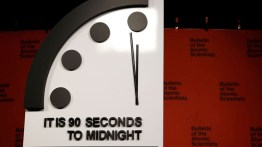
The final countdown The Bulletin of Atomic Scientists moved its ‘Doomsday Clock’ from 100 seconds to midnight to 90 seconds to midnight – the closest it has ever been to our apparent annihilation. How close was it during other periods of history? Cuban missile crisis, 1962 The standoff between the US and the Soviet Union brought the world to the brink, yet it was apparently a time of optimism compared with today – a few months later the clock was moved back from 7 to 12 minutes. Chernobyl, 1986 The world’s worst nuclear accident didn’t register on the clock: the hands were not moved for two more years, and then back from 3 minutes to 6 minutes.

Sunak and Starmer need to change the record at PMQs

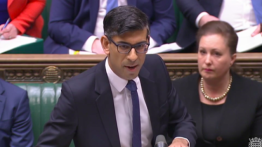
Rishi Sunak was clearly not on a fasting day of his diet when he stood up at Prime Minister's Questions this afternoon. He seemed to have consumed all the Weetabix in SW1, with more energy behind his attacks on Keir Starmer than he's had for weeks. This didn't mean the session veered away from its standard theme of two men fighting over who is the weaker, like dads at a barbecue vying over their DIY failures while burning the chicken.  Each week's weak-off has the same lines. Sunak's are that Starmer sat next to Jeremy Corbyn for 'four long years, not challenging him' and that he can't stand up to his union bosses. Meanwhile Starmer regularly accuses Sunak of not standing up to his own predecessors and cabinet colleagues who are mired in sleaze and bullying allegations.

Israel row embroils Labour, again

Labour are all too keen to present themselves as a completely new party these days. So Keir Starmer must be pretty annoyed at one of his more hard-of-thinking MPs for reminding voters that there are plenty of Corbynistas still sat on the Opposition benches. At Prime Ministers' Questions today, Kim Johnson – one of a handful of 'Corbyn's kids' selected under his leadership – used her 30 seconds in the spotlight to launch an attack on the 'fascist Israeli government' and its 'apartheid' policies. Surprisingly, Sunak did not use his reply to condemn this intemperate use of language. But plenty of others watching now have, noting that Johnson's language comes less than a week after Holocaust Memorial Day and caused barely a flinch on the Labour benches.

Nadine Dorries and the rise of the ‘presentician’ 

‘Politics is show business for ugly people,’ said Paul Begala, famously. Westminster today, however, is more akin to a finishing school for aspiring media personalities. We live now in a new age of ‘presenticians’ – in which more and more political figures present their own news shows.  Turn on your TV and you could well be confronted by one of a dozen current or former MPs who are now anchors or regular pundits. On GB News, there’s the husband-and-wife duo of Esther McVey and Philip Davies, and Lee Anderson MP just replaced his fellow Tory Dehenna Davison as the network’s resident ‘Red Waller’. Jacob Rees-Mogg has also joined the self-styled ‘People’s Channel’.

Wes Streeting’s Middle England offensive

To Kensington, where the masters of Fleet Street now ply their trade. Just a mile away from Northcliffe House – home of the Mail newspaper empire – the hard-working hacks who staff those papers gathered last night at the Royal Geographical Society. They were there to toast the man who started it all – Alfred Harmsworth, better known as Lord Northcliffe, founder of the Daily Mail. Lord Rothermere, the descendant and modern-day equivalent of that great press baron, laid on a lavish drinks reception to mark the publication of Andrew Roberts’ book The Chief – a weighty tome on Northcliffe’s life. But while the assembled big wigs, flunkeys and satraps were there to remember the past, conversation soon turned to questions of the future.

Why should under-productive civil servants get a pay rise?

We all know about the teachers and train drivers, but apparently there are 100,000 civil servants in 124 government departments and quangos also on strike today – if anyone has noticed. It includes members of the PCS union employed at the DWP, National Highways, the Food Standards Agency and, er, the Risk Management Authority, Trade Remedies Authority, Council for the RFSAs and, of course, Bord na Gaidhlig. It is only thanks to their striking that many people will ever have heard of them.

What is Labour’s position on transwomen in prisons?

The fallout from Scotland’s trans prison debacle continues, raising some awkward questions for Westminster politicians. Many are scrambling to insist that – despite keeping very quiet on the trans issue for years – they were, in fact, never convinced that gender identity should trump biological fact and that women’s rights are paramount.  Even if they didn’t say so during the years when female campaigners saying the same were being hounded and abused. Lots of the politicians who have recently discovered their long-held but previously unexpressed commitment to women’s safety are from the Labour party. Steve Reed, the Labour shadow Justice Secretary, gave a good example on Good Morning Britain this morning, declaring clearly: 'Women's prisons are for biological women.

Could Boris Johnson run for president? ‘I don’t rule it out’

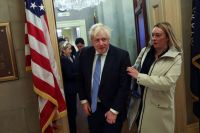
The 2024 race for the White House is on. Donald Trump is in, Nikki Haley is getting ready, Joe Biden is preparing to fend off intra-party foes – and now, Steerpike has learned of another possible entrant: former British Prime Minister Boris Johnson. One of Steerpike’s Spectator colleagues in America caught up with the ex-PM at the Capitol Hill Club in Washington, DC. When asked if he wanted to move from 10 Downing Street to 1600 Pennsylvania Avenue, Johnson told the Cockburn gossip column: ‘I don’t rule it out.’ Johnson, who is visiting the US to push for additional aid to Ukraine, did not specify whether he would run as a Republican or Democrat.

Guy Verhofstadt is a good advert for Brexit

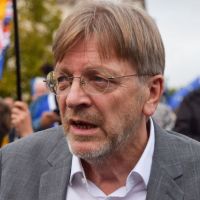
During the run-up to the referendum, some ardent Remainers attempted to brand the EU as a Great European Peace Project. Chuka Umunna, the former Labour MP turned investment banker, pushed this line in a radio debate I took part in with him. I made the usual pro-Leave point about Nato being the key international body guaranteeing peace in Europe, but conceded that Germany and France having a joint political project to focus on may have made a useful additional contribution. This enabled the additional point to be aired that the idea they would start a war against each other should the UK leave the EU was preposterous. Being a generally reasonable fellow, Umunna conceded as much and the debate moved on to other areas.

Has Nicola Sturgeon learnt her lesson from the case of Isla Bryson?

The appalling debacle of the double rapist, Isla Bryson, being locked up in a women’s prison in Scotland, albeit in segregation, gave me pause for thought. As the former governor of Cornton Vale, the prison Bryson was incarcerated in, what would I have done if I was still in the job?  ‘Over my dead body,’ was the response I gave when another trans-identified male inmate sought to be moved to Cornton Vale, back in 2016, when I was in charge. I was outraged: this was an individual who, over his years of offending, had committed multiple acts of serious violence, including to prison and health care staff. From prison, he stalked a 13 year-old girl and intimidated a female member of staff so completely she left her job.

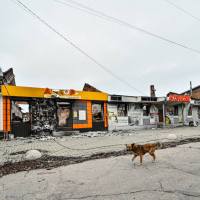
In Orikhiv, war has a rhythm

On the road to the frontline Andrii, 36, managed to coax the tired old British ambulance up to 80mph.  The tarmac ahead was scarred with the impact of artillery shells and some of the holes were big enough to pitch us off the road, but he navigated around them skillfully. Suddenly, far in front of us and high above, we saw the contrails of an airplane: an innocuous sight in a peaceful country. Here it almost certainly meant an incoming Russian strike. Andrii and his helper, Oleksandr, 29, donned their body armour. And then from our left a new contrail appeared: a Ukrainian missile. The first contrail made a sudden and tight 180 degree turn, revealing that it was a Russian fighter jet. The pilot must have suddenly become aware of the incoming missile.

The French have rejected Macron’s love for the EU

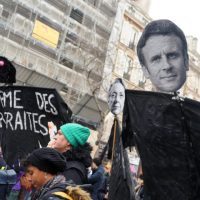
Another 1.2 million people took to the streets in France yesterday to protest against Emmanuel Macron’s plan to push back the age of retirement from 62 to 64. His prime minister, Elisabeth Borne, insisted at the weekend that his pension reforms are non-negotiable. We’ll see about that, was the response of the people, who for the second time in a fortnight demonstrated en masse.   But they are protesting about much more than just the pension reform. This is the culmination of six years of ras-le-bol (despair), the word one hears most frequently from the demonstrators. I have seen it countless times scrawled on placards, banners and on the yellow vests worn by those on the street.

Will the strikes prove terminal for Britain’s railways?

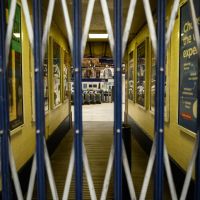
Today is being dubbed 'Walkout Wednesday': thousands of schools are shut as teachers go on strike – and civil servants and lecturers are also on the picket line. Railway staff continue their strike today too and there is little sign of the strike deadlock being broken. We’re losing more working days to industrial action than at any point since the 1980s. A large chunk of industrial action is made up by rail strikes, and the government fears ‘a generation’ of passengers will be put off train travel for good. Might the strikes prove terminal for Britain's railways? The RMT, which is responsible for the latest walkout, is at the forefront of the action. The union is still holding out on a pay offer worth 5 per cent, then 4 per cent over the next two years.

The fish rots from the head in Sturgeon’s Scotland

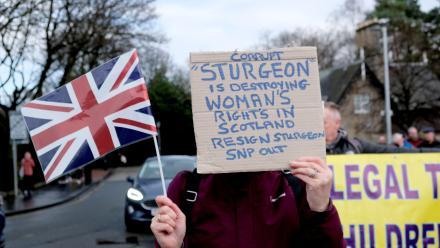
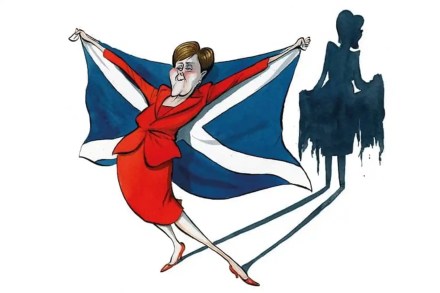
Nicola Sturgeon is going nowhere. Some of her more excitable critics reckon the complete implosion of her policy on transgender prisoners could finish off her premiership. Not least since it comes just as she was planning a fightback against the UK government’s decision to block her Gender Recognition Reform (GRR) Bill. The SNP leader has been subjected to cringe-making TV interviews about whether she thinks rapists are women if they say so and awkward questions at Holyrood about placing male sex offenders in women’s prisons. She has been forced to U-turn repeatedly and has rushed out new regulations on transgender prisoners at odds with the self-identification principle at the heart of her GRR Bill.

Putin can’t keep Russians in the dark forever about the Ukraine death toll

Nearly 188,000 Russian soldiers have been killed or injured since the start of Vladimir Putin’s invasion of Ukraine eleven months ago, according to the latest estimate by US intelligence. This devastating toll amounts to an average of over 500 Russian dead or wounded soldiers for each of the 341 days Russia has been at war with Ukraine. Russia is also believed to have lost as many as two thirds of its tanks on the battlefield in the past eleven months. Perhaps unsurprisingly, the Kremlin has yet to acknowledge these figures that were confirmed in a UK cabinet meeting this morning, even to deny them. The last time the Russian Ministry of Defence acknowledged any army casualties at all was on 21 September.

Three years on, is Brexit worth celebrating?

Today, if you feel so inclined to celebrate it, is Brexit Day: the date on which, three years ago, Britain formally left the EU – although the transitional arrangements kept us effectively within the bloc for a further 11 months. But does anyone feel like celebrating? Only really in the Lincolnshire Wash, going by an opinion poll commissioned by the website unHerd. That is the only part of the country, it seems, where most residents still think that Britain was right to bid adieu to its European neighbours. Nationally, 45 per cent of people think Brexit is going worse than expected, according to polling by Ipsos Mori. This figure is a rise from 28 per cent in June 2021. As expected, 66 per cent of Remain voters think it’s been a flop.

Are Tory MPs resigned to defeat?

A telling moment in today’s urgent question on the IMF’s economic outlook came when Angela Eagle pointed out the dearth of Tories who’d turned up to hear the Treasury defend its performance. She said: Despite the minister’s bluster, the benches opposite are empty. They haven’t come in in large numbers to defend the government’s economic, er, results, have they? Eagle argued that this was because the IMF had offered a ‘devastating forecast’ which ‘laid bare the economic incompetence’. But there’s another reason why the government benches were so quiet. It’s that the Conservative party machinery simply isn’t working very well.