Politics

Read about the latest political news, views and analysis

Why Australia can’t forgive Novak Djokovic

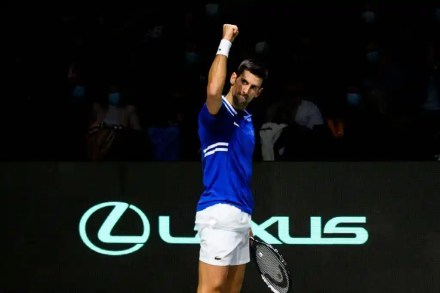
So, Novak Djokovic has won the Australian Open tennis tournament – again. Djokovic was never seriously challenged at any stage, beating Stefanos Tsitsipas in straight sets in the final. In winning his 22nd Grand Slam title, drawing level with Spanish maestro Rafael Nadal, Djokovic also had his revenge on Australia – and Australians. Australia is, of course, the country that deported him for being unvaccinated in 2022. As recently as last month, polls indicated that just one in three Australians wanted Djokovic to come back this year. This clearly motivated the Serbian star: he wanted to prove his detractors wrong and, in his eyes, he did.
Can Sunak’s crisis plan save the NHS?

Rishi Sunak's problems aren't confined to his party. The NHS is in trouble and one of the Prime Minister's five new year pledges was to get its record waiting list – 7.2 million in NHS England alone – down, ensuring patients get faster access to care. The problem with this promise is that the waiting list is expected to grow even bigger this year. What number it ultimately reaches depends on how many people turn up at an NHS hospital, having held back doing so during the pandemic years. With this variable out of the government’s control (and indeed, we want these people to come forward and seek treatment), it has to focus on capacity within the health service – to make sure patients can be processed and treated at a faster pace.

Who thought the Prince Andrew sex bath picture was a good idea?

How big does a bath need to be for 'sex frolicking' to be a possibility? That’s not, if you’d asked anyone six months ago, the question on which the reputational future of the monarchy might be in part held to depend – and yet here we are. A bizarre photograph has been released by the brother of Ghislaine Maxwell in an attempt to discredit Virgina Roberts Guiffre's claims of abuse. The photograph made the front page of the Daily Telegraph, no less. It showed two people, described in the accompanying story as 'acquaintances' of Ghislaine Maxwell, sitting facing each-other, fully clothed, in the bathtub of Maxwell’s old home.

Cycle wars: why 20mph is plenty for motorists

I live in Hammersmith, in west London, which is an area where people seem particularly fond of just running out into the street without looking – which is their prerogative because they are people not machines. 20mph is plenty fast enough and 30mph does feel too fast. And, to be honest, if you could go around somewhere like London, or Manchester, or Birmingham, at a constant 20mph, you'd be absolutely delighted. I do a lot of cycling around London and we can become over obsessed with things like rules, street furniture, signage, traffic lights and so on. They've been doing this with a bike lane near me; it's not particularly well thought out, because you have a two-way road running alongside a two-way bicycle lane, with lots of junctions off it.

Six questions for Sunak over Zahawi’s firing

Rishi Sunak intended the firing of Nadhim Zahawi to draw a line under the affair. Yet there are already questions being asked in Tory circles about whether the report rushed out this morning exaggerated the case against him. In his resignation letter, Mr S notices that Zahawi makes no confession of guilt. It suggests that Zahawi could yet comment on its findings. So, why the silence over its contents? Perhaps Zahawi thinks he did notify the right people in the right way at the right time – and cannot see how this constitutes what the PM calls a 'very serious breach' of the ministerial code. Perhaps things are precisely as the report by Laurie Magnus, the PM's independent adviser on ministers’ interests, says. Why the silence over its contents?

Do we really have the full story about the Zahawi affair?

Why was Nadhim Zahawi fired? Today’s report by Laurie Magnus, the PM’s adviser on ministerial interests, says it’s a question of honesty and disclosure. HMRC started talking to Zahawi about his tax affairs in April 2021 but this became a formal investigation shortly after he became Chancellor on 5 July last year. By this time, he had been knocked out of the Tory leadership race. He had agreed to pay a penalty and the matter was closed. But he’s accused of keeping this hidden and has, it seems, been fired for the secrecy. The Magnus report goes into detail about the offense. A minister facing an HMRC investigation would have been expected 'to inform their permanent secretary and seek advice', it says (paragraph 9) and then 'update their declaration of interests form'.

Next Tory chairman: runners and riders

One man's loss is another man's gain and few know that maxim better than Conservative MPs. Members of the parliamentary party have already quietly begun discussing who will replace Nadhim Zahawi as their Tory chairman. And while no appointment is expected today, some names are already doing the rounds as to which MP is likely to get an overdue promotion or a recall from the wilderness. Below is a list of Steerpike's runners and riders, from old warriors and young pretenders to the dispossessed and the never-possessed... Greg Hands – A Sunak ally well-liked among London Tories. Has served four of the last five Prime Ministers and is never afraid to take the fight to Sadiq Khan's Labour.

Sunday shows round-up: Zahawi’s sacking ‘sad’, says Gove

The dismissal of embattled Conservative party chairman Nadhim Zahawi is dominating the news this morning. Zahawi was sacked after an investigation by the Prime Minister’s ethics adviser Sir Laurie Magnus found that he had breached the Ministerial Code in relation to his tax affairs. Laura Kuenssberg asked the Levelling Up Secretary Michael Gove about the affair – and how it reflected on Rishi Sunak and the government as a whole: https://www.youtube.com/watch?v=2lrAruLHTsY Gove – Developers ‘should pay up’ for building safety: Sophy Ridge interviewed Gove before the big news broke about Zahawi. She asked him about what the government was doing to promote safety in new housing development, more than five years after the Grenfell Tower disaster: https://www.youtube.

Zahawi’s sacking could be Sunak’s ‘John Major moment’

It is a very dangerous time to be a Conservative MP and not just because the party is trailing by 20 points in the opinion polls with a general election looming. The sacking of Tory chairman Nadhim Zahawi after an investigation found he seriously breached the ministerial code means that, soon enough, we will no longer be seeing his gleaming pate and tight suit on the front pages for day after day. Rishi Sunak can – and no doubt will – claim to have handled the affair with principle and professionalism. The PM will insist that due process was applied, rather than the kind of kangaroo court resorted to by some previous premiers.

Why Nadhim Zahawi was sacked

13 min listen

This morning, the Prime Minister Rishi Sunak fired the Conservative party chairman Nadhim Zahawi over the scandal surrounding his tax affairs. This story has been ongoing for a few weeks now – why now? Natasha Feroze speaks to Fraser Nelson and Katy Balls.

Why Nadhim Zahawi was sacked

Nadhim Zahawi has this morning been sacked as Conservative party chairman. The Prime Minister made the decision to remove Zahawi from his government after an investigation by the Prime Minister's independent ethics adviser found he had breached the ministerial code over his tax affairs. On receiving the report earlier today, Sunak decided that Zahawi could not remain in post now 'it is clear that there has been a serious breach of the Ministerial Code': 'As a result,' the PM wrote, 'I have informed you of my decision to remove you from your position in His Majesty’s Government'. The row over Zahawi's tax affairs has been going on for weeks, with Sunak even defending him earlier this month at Prime Minister's Questions, suggesting the matter had been resolved.

Why I sacked Nadhim Zahawi

When I became Prime Minister last year, I pledged that the Government I lead would have integrity, professionalism and accountability at every level. That is why, following new information which came to light in recent days regarding your personal financial arrangements and declarations, I asked Sir Laurie Magnus, the Independent Adviser on Ministers’ Interests, to fully investigate this matter. You agreed and undertook to cooperate fully with the inquiry. Following the completion of the Independent Adviser’s investigation – the findings of which he has shared with us both – it is clear that there has been a serious breach of the Ministerial Code. As a result, I have informed you of my decision to remove you from your position in His Majesty’s Government.

Revealed: The damning probe into Zahawi’s tax affairs that led to his departure

Rishi Sunak has sacked Nadhim Zahawi over his tax affairs and a 'serious breach' of the ministerial code. The PM had asked Laurie Magnus, the independent adviser on ministers’ interests, to probe the Tory chairman. Here is his conclusion which was released this morning and led to Sunak's decision to fire Zahawi: Dear Prime Minister, You have asked me to review the circumstances and facts concerning certain tax affairs of the Rt Hon Nadhim Zahawi, Minister without Portfolio, and that I assess these circumstances in the context of Mr Zahawi’s obligations under the Ministerial Code. This report sets out relevant facts that I have established whilst respecting Mr Zahawi’s right to taxpayer confidentiality.

What the Census reveals about trans people in Britain

'Is the gender you identify with the same as your sex registered at birth?'. Brits were asked that question for the first time in the 2021 Census: 93.5 per cent said 'yes', 0.5 per cent said 'no' and the remaining six per cent did not respond. This means that, of those who answered, 0.58 per cent said their gender identity did not match their natal sex. In a debate where tensions are running high on both sides of the Scots border, this data is sorely needed – and is worth digging into. The gender identity question confirms the rise in trans identities among youth. Among 16-24 year olds, one per cent said their gender identity was different from their sex.

Nadhim Zahawi and the end of honour

Nadhim Zahawi, who has been sacked by Rishi Sunak after days of headlines over his tax affairs, could learn a lot from the example of one of his predecessors as chancellor. Labour chancellor Hugh Dalton entered the House of Commons to deliver his autumn Budget on 10 November 1947. On his way in, he was accosted by a journalist who jocularly asked him what he was about to say. Equally jovially, Dalton confided a couple of sentences on the changes in taxation he would announce within minutes. Before he finished his speech, the tidbits he had disclosed to the nosy hack were in the evening papers and the London stock market was reacting. Dalton’s indiscretion – it was hardly an offence – cost him his front bench career.

What Germany can learn from Japan about the new world order

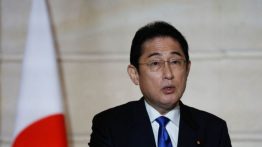
The end of the second world war saw the defeated aggressors Germany and Japan accept moral capitulation and begin new international lives as liberal democratic and largely pacifist states bent on cooperation not coercion. But over the last few years an increasingly unsettled international order has emerged to test the pacifism of the fourth and third largest economic powers. Russia’s aggression against Ukraine has finally cajoled a reluctant Germany out of its semi-neutral stance. As war returned to the European continent, Berlin has bowed to Western pressure to release its Leopard tanks to a martyrised Ukraine. No longer virgo intacta, Berlin has forfeited its 80 year state of innocence.

Fresh questions for Boris over financial advice

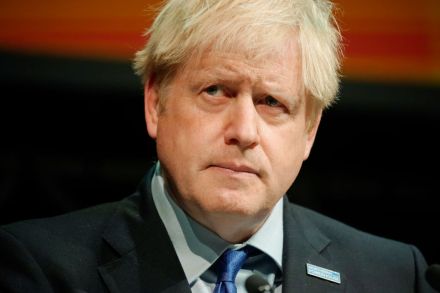
Another week and another Sunday Times story about Boris Johnson's finances. The paper has got hold of a leaked Cabinet Office memo which it says shows that Johnson was told to stop asking Richard Sharp for 'advice' about his 'personal financial matters' days before the latter was announced as the next BBC chairman. The memo, written by Cabinet Secretary Simon Case, was drawn up after Johnson and Sharp sought advice in early December on accepting a loan of up to £800,000 guaranteed by the PM's distant cousin Sam Blyth. According to the Sunday Times, the advice issued by Case stated that: given the imminent announcement of Richard Sharp as the new BBC chair, it is important that you no longer ask his advice about your personal financial matters.

Russia wants to bleed Ukraine dry before its tanks arrive

The decision by Kyiv’s international partners to send Nato-designed main battle tanks to Ukraine is a pivotal moment in the Russo-Ukrainian War. The tanks may be the focus of attention, but they were part of a much larger range of commitments – Ukraine’s partners have now committed to enabling Kyiv to reclaim its territory as quickly as possible. In spite of that, it will take months of hard fighting before Ukraine can make significant gains.  The next few months of fighting are going to be hard Russia is currently at the nadir of its capabilities, fielding poorly trained troops with older and more varied equipment, and with shortages of munitions.

Matthew Parris, Lionel Shriver and Gus Carter

24 min listen

On this week’s episode, Matthew Parris wonders what ‘winning’ in Ukraine really means (00:52), Lionel Shriver says she’s fighting her own war against words (08:43), and Gus Carter wonders whether it’s a good idea to reintroduce Bison into Britain (18:28).