Politics

Read about the latest political news, views and analysis

Watch: Guy Verhofstadt suggests Brexit led to Putin’s war

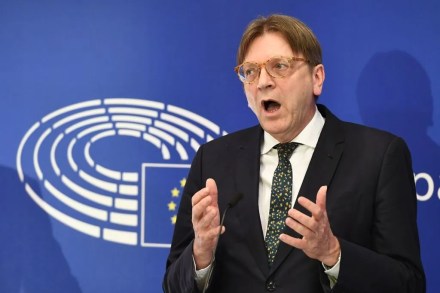
Happy Brexit day! It is three years today that Britain left the EU. And a useful reminder of just why that happened was offered this morning in the form of Guy Verhofstadt, the arch-Eurocrat and lifelong federalist. The former Belgian Prime Minister popped up in LBC to eulogise the supra-national institutions to which he has dedicated his life. While bemoaning us Brits for the audacity of wanting to leave, he even found a way to suggest that Brexit was responsible for Russia's invasion of Ukraine – even though neither nation is a member of the European Union. Verhofstadt told Nick Ferrari that: A united Europe, certainly on defence matters, would make an enormous difference. I think maybe, without Brexit, maybe there was no invasion. I don't know.
Can we trust the IMF’s forecasts?

12 min listen

The IMF report suggests Britain will be the only advanced economy to fall into recession this year – predicting the worst growth figures of any G7 country. Historically, how reliable have these forecasts been? Can we take some of it with a pinch of salt? Also on the podcast, MPs have approved new powers to curb public sector strikes, is this a ray of hope for party cohesion? Natasha Feroze speaks to Kate Andrews and Katy Balls.

Why is BLM blaming Tyre Nichols’ death on ‘white supremacy’?

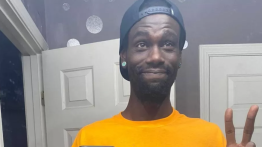
The video of Tyre Nichols' arrest makes for unbearable viewing. The 29-year-old father is dragged out of a car before being set upon by five black policemen. Lawyers for his family said the officers acted like a 'pack of wolves'; after watching the film, it's hard to dispute that description. As the backlash to the incident in Memphis on 10 January intensifies, there are plenty of unanswered question. But it seems that Black Lives Matter is already jumping to conclusions. Any hope that Nichols' horrifying death might spark some unity in the United States has been dashed by the release of a demoralising statement from BLM.

The anti-strike bill shows the Tories can still unite

The House of Commons voted to pass the government’s flagship trade union legislation on 30 January. By 315 to 246 votes, MPs backed enacting minimum service levels for fire, ambulance and rail services for when the sectors decide to take industrial action. It comes ahead of ‘Walkout Wednesday’ – the biggest day of strikes since 2011. It will see hundreds of thousands of workers, including teachers, train and bus drivers, walk out in separate disputes over pay, jobs and conditions. Labour has fiercely attacked the government’s plans, with Angela Rayner repeatedly clashing with Business Secretary Grant Shapps in the House over the so-called ‘Sack nurses Bill.

Is Isis to blame for the Pakistan mosque bombing?

The Islamic State may have been driven out of its capitals in Iraq’s Mosul and Syria’s Raqqa but that doesn't mean it has disappeared. In the Philippines, West Africa, and most obviously in Afghanistan, the terror group is thriving. Isis's tentacles have also spread to Pakistan. Over the weekend, in Peshawar, a terrible bombing took place in a mosque. At least 95 are dead, and hundreds have been injured. It remains unclear who is to blame for this atrocity, but, tragically, it is not the first time a place of worship has been targeted. In March 2022, the Afghan detachment of Isis bombed a Shia Mosque in Peshawar. More than 60 people were killed in that attack and nearly 200 injured.

Watch: Hancock squirms over ‘I’m a Celeb…’ charity donation

It seems that maths isn't Matt Hancock's strong suit. Appearing on Good Morning Britain today, the onetime Paymaster General was asked about the £320,000 fee he received for appearing on ITV's I'm A Celebrity... late last year. Hancock told Susanna Reid and Richard Madeley that he did not appear on the programme 'primarily' for the fee and that he donated a 'decent sum' from it to charity. That sum, of course, was just £10,000 – meaning that Hancock pocketed the remaining £310,000 or some 96 per cent of the amount he earned from his appearance. Here's their awkward exchange: RM: 'If the money wasn't important to you then why did you hold on to most of it?' MH: 'Well I did absolutely give some of the money to charities and they're two brilliant charities...

What does the IMF want from the UK economy?

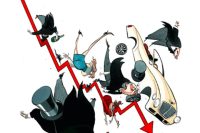
Just what is a UK government supposed to do to keep the IMF happy? This morning it has issued a bulletin predicting that the UK will be the only major economy to shrink in 2023 – by 0.6 per cent – and blaming it on ‘tighter fiscal and monetary policies’. This represents an even-bleaker outlook than the IMF foresaw in October, when it pencilled in growth of just 0.3 per cent. Yet this is the same IMF which last September condemned Kwasi Kwarteng’s mini-Budget for slashing taxes, saying 'given elevated inflation pressure in many countries, including the UK, we do not recommend large and untargeted fiscal packages at this juncture, as it is important that fiscal policy does not work at cross purposes to monetary policy'.

Is the CCP’s desperation behind China’s abrupt reopening?

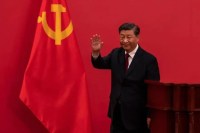
China usually shuts down for the Lunar New Year, but Communist party leaders have marked the arrival of the Year of the Rabbit with a burst of activity worthy of that skittish animal. They have followed their colossal U-turn on zero-Covid with a charm offensive to convince the outside world that China is open for business. In many ways it is as abrupt an about-turn as scrapping Covid controls in the first place. Xi Jinping despatched his trusted vice-premier and economic tsar Liu He to Davos to schmooze with western business leaders. In his speech to the World Economic Forum two weeks ago, he mentioned ‘strengthening international cooperation’ no less than 11 times. He said that the door for foreign investors would ‘open up further’.

Why do some Palestinians celebrate violence against Israel?

Jerusalem, 13 May 1998. Khairi Alkam, a 51-year-old Palestinian labourer, left home early in the morning to pray at al-Aqsa mosque before going to work. As he was walking through the Mea She’arim neighbourhood, a suspected Jewish terrorist stabbed him in the back and left him to bleed to death in the street. He left behind a wife and nine children.  The crime horrified Israelis and Palestinians alike. Ezer Weizman, then president of Israel, visited Alkam’s widow Dalal to pay his respects and described the killing of her husband as ‘a murder by cowards’. Dalal was not eligible for compensation under the Victims of Hostile Actions (Pensions) Law – no perpetrator had been identified and the 1970 legislation was drafted with only Palestinian terrorism in mind.

Is Zahawi getting his own back?

12 min listen

The problem of Nadhim Zahawi may not have gone away as quickly as the Prime Minister might have hoped. Today, allies of the former Tory Chairman have suggested the decision to sack Zahawi has been 'rushed' and 'unfair'. Is there more of this story to come? Natasha Feroze speaks to Fraser Nelson and Katy Balls.

Rees-Mogg rallies the Catholic Tories

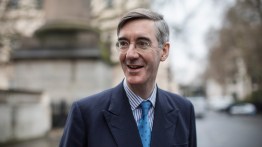
Some Tories are losing faith these days – but there was no sign of it in parliament last week. Jacob Rees-Mogg kicked off the launch of 'Catholics in the Conservative party' on Wednesday night, to a packed room bedecked in Union Jacks and Vatican flags. The likes of former Cabinet ministers Damian Hinds and Sir Iain Duncan Smith gathered to herald the launch of the new group headed by former Canterbury MP Julian Brazier. In a speech that mixed the serious with the humorous, Rees-Mogg explained how: I did not set out in my political career to be somebody who went around talking about religion. I fell into it entirely by accident when I was interviewed by Piers Morgan on a show called GMB.

Watch: Sturgeon ties herself in knots

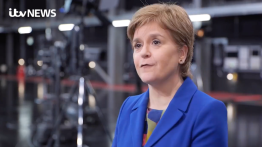
Oh dear. It seems that Nicola Sturgeon seems to have got her progressive causes in a muddle. The First Minister is having a tricky time trying to work out if she's a feminist first or an LGBT ally in light of her government's U-turn on trans prisoners. On Sunday, a 'pause' was placed on the transfer to women's jails of trans inmates with a history of violence, after the Scottish Prison initially sent a double rapist to a women's only-prison. But today when asked if she would apologise, the First Minister refused, saying: 'I don't think there is anything for that.' And in an excruciating interview with ITV's Peter Smith this afternoon, Sturgeon sought to avoid addressing the logical conclusion of her government's commitments on transgender rights.

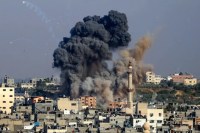
A Third Intifada looms in Israel

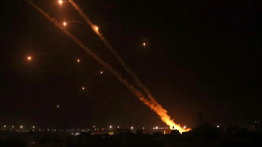
Peace has never seemed further away for Israel, the West Bank and Gaza. Several dreadful incidents recently have made that point sadly obvious. The most vicious was a terrorist attack: a horrific shooting in which seven people were killed and many injured outside a Jerusalem synagogue on Friday. We don’t know the organisational affiliation of the attacker, Khairi Alqam. He could have been Hamas. He could have been Islamic Jihad. None of those organisations claimed this attack. Some observers – on the basis of speculation, or possibly evidence not in the public domain at the moment – believe that he was a member of the Islamic State. What we know for sure is that this was a dreadful crime – one which shocked the world.

Nicola Sturgeon will regret her ‘basket of deplorables’ moment

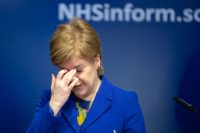
Nicola Sturgeon has for many years been hailed, particularly by commentators south of the border, as the consummate political leader – someone who effortlessly dominates the Scottish political scene. In doing so, it's said, she repeatedly shows up the public-school boys in the Westminster government for the bluffers that they are.  That unearned reputation is starting to slip, now that Sturgeon’s dogged pursuit of radical transgender policies, via her now-blocked gender bill, has blown up in her face. The public outcry over the case of ‘Isla Bryson’ – the male rapist briefly held in a women’s prison – has shown that the SNP has lost the room and the moral plot when it comes to the gender issue.

Can the UK secure its precarious energy supply?

32 min listen

Russia’s invasion of Ukraine exposed the insecurity of the UK’s energy supply. We may not have been reliant on Russian gas like our European neighbours, but that didn’t mean we avoided higher energy bills. The government had to seriously consider how the UK would cope with a blackout. Britain’s experience this winter has prompted a discussion about how we can safeguard our energy supply and avoid another precarious winter. On this podcast, Cindy Yu, The Spectator’s assistant editor, is joined by Laura Sandys, a former Tory MP who also chaired the government’s Energy Data Taskforce; James Murray, an environmental journalist who founded the website BusinessGreen; and Greg Jackson, the founder and CEO of Octopus Energy Group.

Boris battles the Kremlin over Putin threats

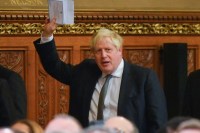
Ding, ding, ding! In the red corner, it's the menacing goons of Moscow's Red Square. And in the blue corner, it's Boris Johnson, the garrulous, gung-ho, onetime Tory premier. Johnson has done an interview for a BBC documentary being released tonight, in which he reveals that Putin threatened to kill him over the UK’s support for Ukraine. The pair spoke ahead of the Russian invasion of Ukraine, during Moscow's build up of troops on Kyiv's eastern front. During a 'jolly' chat between the two of them 'on the blower', the Russian leader warned Boris in his half-menacing, half-joking way that he could easily take him out.

Why Australia can’t forgive Novak Djokovic

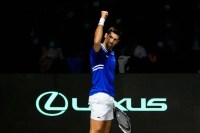
So, Novak Djokovic has won the Australian Open tennis tournament – again. Djokovic was never seriously challenged at any stage, beating Stefanos Tsitsipas in straight sets in the final. In winning his 22nd Grand Slam title, drawing level with Spanish maestro Rafael Nadal, Djokovic also had his revenge on Australia – and Australians. Australia is, of course, the country that deported him for being unvaccinated in 2022. As recently as last month, polls indicated that just one in three Australians wanted Djokovic to come back this year. This clearly motivated the Serbian star: he wanted to prove his detractors wrong and, in his eyes, he did.

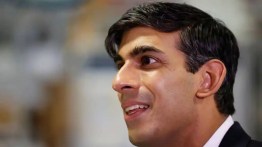
Can Sunak’s crisis plan save the NHS?

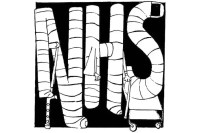
Rishi Sunak's problems aren't confined to his party. The NHS is in trouble and one of the Prime Minister's five new year pledges was to get its record waiting list – 7.2 million in NHS England alone – down, ensuring patients get faster access to care. The problem with this promise is that the waiting list is expected to grow even bigger this year. What number it ultimately reaches depends on how many people turn up at an NHS hospital, having held back doing so during the pandemic years. With this variable out of the government’s control (and indeed, we want these people to come forward and seek treatment), it has to focus on capacity within the health service – to make sure patients can be processed and treated at a faster pace.