Politics

Read about the latest political news, views and analysis

John Prescott was the embodiment of old Labour

The death of Labour’s former Deputy Prime Minister John Prescott at the age of 86 also marks the passing of the old Labour party. Prescott was a bruiser both in the physical and the political sense. He was unashamedly working class, contemptuous of the effete intellectuals who had taken over Labour, and ready to hit out at the party’s enemies with both fists and tongue. Prescott will be most remembered for the moment during the 2001 general election campaign when his left hook connected with the jaw of a 29-year-old protester, Craig Evans, who had thrown an egg at him as Prescott arrived at an election meeting at Rhyl in
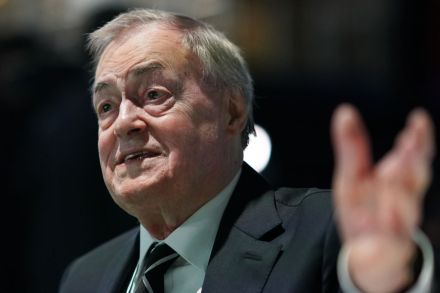

John Prescott: a titan of the Labour movement

John Prescott, Britain’s longest serving Deputy Prime Minister, has died at the age of 86. For 40 years he variously enlivened, enraged and entertained the Commons as the Honourable Member for Hull East. But his demeanour and public image belied a canny political judgement that took him from Merchant Navy seaman to holding some of the highest political offices in the land. From 1994 until 2007, he served as Tony Blair’s deputy, serving as the yang to his leader’s yin. With his capacity for beer and brawls, Prescott sometimes seemed an unlikely moderniser among the metropolitan liberals of the New Labour elite. But he was key to securing the triumph

Britain is addicted to spending beyond its means

Imagine what the government could do with an extra £9.1 billion a month. It could build HS2 in its entirety within the space of a year. Or better still, it could double the defence budget and still have some money left over to build the 40 new hospitals which the Conservatives promised – as well as a few schools, too.  That sum – £9.1 billion – is what the government paid in debt interest in October alone, according to the figures on public finances released by the Office for National Statistics this morning. Overall, it was forced to borrow £17.4 billion over the course of the month – only just

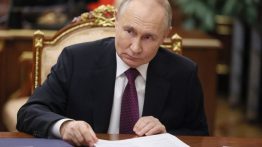
How will Putin respond to Ukraine’s Storm Shadow attack?

The air raid sirens sounded yesterday, the American embassy in Kyiv closed, as did the Italian and Greek. The British and French embassy warned nationals to take care and encouraged staff to work remotely. The Ukrainian air force warned residents of the city to seek shelter from an incoming massive air attack. And then nothing happened. It’s not clear which is more embarrassing. That the Russians seem to have been able to perpetrate a nerve-jangling hoax, not least by circulating messages on social media and messaging apps seeming to come from HUR, Ukrainian military intelligence. These claimed that a ‘particularly massive’ airstrike was on the way involving more than 300

What does the City really think of the Chancellor?

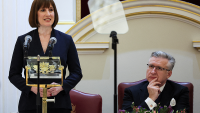
Regular invitations to Mansion House banquets petered out after I asked a shifty-looking waiter for a glass of champagne and he told me he was a deputy governor of the Bank of England. So I can’t report firsthand whether last week’s speech by Chancellor Rachel Reeves was greeted by assembled financiers with napkins on their heads or cries of ‘By George, I think she’s got it!’. What I can say is that – her text having been largely leaked beforehand – she was well upstaged by Governor Andrew Bailey’s unexpected attempt to reopen the Brexit debate; and that she seems to ‘get’ the City a lot better than she understands

Britain’s failing statecraft

I mentioned some weeks ago that one of the great points of interest – not to say enjoyment – in our era will be seeing how Keir Starmer’s government copes with the incoming Donald Trump administration in Washington. It is fair to say that many Labour MPs, not to mention the mayor of London (who spends more time grandstanding abroad than he does addressing violent crime in his own city), have been wildly impolitic. If there are two candidates in the running to lead your most important ally it would seem prudent for a wise man to keep his diplomatic options open. Alas, Westminster does not appear to be flooded

Labour’s Chinese takeaway

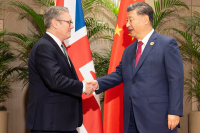
I was thrilled to learn that our government intends to enjoy an ‘open’ relationship with China – one of my favourite countries, as I am sure it is yours. Sir Keir Starmer announced this intention when he bumped into Xi Jinping at the G20 beano in Rio de Janeiro. He also said: ‘We want our relations to be consistent, durable, respectful, as we have agreed, avoid surprises where possible. The UK will be a predictable, consistent, sovereign actor committed to the rule of law.’ Those agreeable adjectives are all Keir’s – I didn’t slip any in, surreptitiously, Not even ‘predictable’, which I assume was there to reinforce the earlier commitment

Wild Wes: Streeting is causing trouble for Starmer

Avote on assisted dying was supposed to be one of the easiest reforms for Keir Starmer’s government. To many, including the Prime Minister himself, a law allowing terminally ill patients to choose to die would be a self-evidently progressive and historically significant change. It would mean Britain could transcend the objections of a religious minority and join Canada, the Netherlands and other countries in a modern, more enlightened era. In the assisted dying debate, the PM appears a mere onlooker, while Streeting is taking the lead Starmer didn’t want to have to order his MPs to vote for assisted dying. The strategy instead was to use a private members’ bill, brought

Do no harm: the progressive case against assisted dying

Next week, parliament will have its first opportunity to vote on assisted dying in almost a decade. This is a matter of conscience; it supersedes party politics and each MP is rightly given the freedom to make up their own mind. I sympathise with many of the views expressed on both sides of this debate, which are put forward in good faith and built from a genuine desire to achieve the best outcomes for patients. While I disagree with my colleagues who have come out in support of this bill, I do not doubt for a second that they do so in accordance with their genuinely held beliefs. I sincerely

Musical chairs at Mar-a-Lago

Welcome to the United States of Disruption. From his ‘Winter White House’ in Mar-a-Lago, Florida, Donald Trump has been busy lobbing hand-grenade cabinet appointments in the direction of Washington and watching on happily as each one blows up in a variety of stunning ways. Explosiveness is the point. ‘Personnel is policy,’ Trump’s transition team like to tell reporters with a wink. What they mean is that the second administration is setting itself up to be even more radical and incendiary than the first. The outsiders are in, the insiders are out, and the old world is driving itself mad trying to figure out what’s going on. It’s a mistake to

Portrait of the week: Rising inflation, electric car targets and a tax on flatulent livestock

Home Thousands of farmers protested in Westminster against inheritance tax on farms. Tesco, Amazon, Greggs and 76 other chains belonging to the British Retail Consortium said that costs introduced by October’s Budget ‘will make job losses inevitable and higher prices a certainty’. The annual rate of inflation rose to 2.3 per cent from 1.7 a month earlier. The British economy grew by 0.1 per cent in the third quarter, but shrank during September; in the second quarter it had grown by 0.5 per cent. Beth, the Queen’s Jack Russell, died. An additional 50,000 pensioners will live in relative poverty next year as a result of cuts to the winter fuel

Jon Sopel’s Twitter U-turn

Dear oh dear. The left-wing Twitter scourge hasn’t gone quite as well as users may have hoped. Following Donald Trump’s victory at the start of the month and the resultant appointment of Twitter CEO Elon Musk as co-leader of the Department of Government Efficiency, a number of ‘right on’ tweeters decided to jump ship to new social media platform Bluesky. Yet it hasn’t gone quite as smoothly as they’d hoped… Prominent Twitter commentators including Owen Jones, James O’Brien and Jess Phillips MP have all declared their intention to start using the alternative Bluesky platform in favour of Musk’s machine. It’s not been quite as easy a transition for some as

Labour’s cuts are going to hurt our armed forces

Defence Secretary John Healey has announced more changes to the armed forces, detailing several capabilities to be cut to achieve savings of £500 million over the next five years. The Royal Navy’s two amphibious assault ships, HMS Bulwark and HMS Albion, will be retired at the end of the year, while HMS Northumberland, a Type 23 frigate, will be decommissioned because her structural damage is ‘uneconomical to repair’. The retirement of the amphibious assault ships has profound implications for the future role of the Royal Marines The Royal Fleet Auxiliary’s two Wave-class fast fleet tankers, RFA Wave Knight and RFA Wave Ruler, will also be retired. They have been in ‘extended readiness’ – that is, maintained but uncrewed and not

Angela Rayner has lost her edge

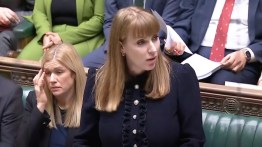
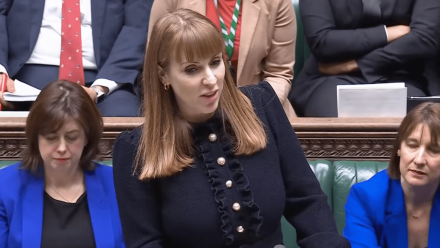
It was deputies’ day at PMQs. Sir Keir Starmer is busy flying around the world yet again. This time he’s trying to charm the unlucky leaders of the G20. Angela Rayner took his place at PMQs opposite Alex Burghart for the Tories. His opener was terse and effective.  ‘What is the government doing to bring down inflation?’  Rayner was prepared. She reminded him that he was the ‘growth minister’ under Liz Truss when inflation soared to 11 per cent. Fair point. Burghart quoted the Office for Budget Responsibility’s forecast that Rachel Reeve’s smash-and-grab budget will lift inflation to three per cent. Rayner drawled out an identical reply and suggested that

Is Rachel Reeves running out of luck?

11 min listen

An unexpected rise in inflation today takes the rate to higher than the Bank of England’s target, and adds to Rachel Reeves’s worries. James Heale talks to Katy Balls and The Spectator’s data editor Michael Simmons about the latest figures, and they also discuss the shadow minister Alex Burghart’s performance at Prime Minister’s Questions. Produced by Cindy Yu.

The EU is heading for fresh financial doom

If it came from Nigel Farage no one would be very surprised. Or from one of the band of German professors who launched the far-right AfD party. But the latest warning of a fresh crisis in the eurozone comes from a far more unexpected source: the European Central Bank (ECB). In its financial stability review published today, the ECB warns that the single currency could soon be plunged into a replay of the trauma of 2011 and 2012. Unfortunately, it is almost certainly right.  The review, published twice a year, is intended to warn the markets of impending risks to the system. Today’s update explores a familiar cocktail of risks,

Jeremy Clarkson’s time has come

It’s a reasonable bet that if Jeremy Clarkson stood for prime minister tomorrow, he’d win by a country mile. Some might even crown him the next sovereign. At the farmers’ protest in Westminster yesterday, Clarkson dominated the coverage, overshadowing even the other luminaries in attendance. Like Trump, Clarkson has name recognition, independence, and a flair for media Several high-profile Conservatives were present, including Kemi Badenoch, Priti Patel, and Robert Jenrick, alongside Nigel Farage in bespoke country-gent attire and Richard Tice from Reform. Yet they were all eclipsed by a shambling, frail figure in a moth-eaten pea coat, faded jeans, and a beanie hat: Jeremy Clarkson. Clarkson, looking every inch as

The truth about ‘workshy’ Britain

Is ‘workshy Britain’ a mirage caused by dodgy statistics? That is what the left-leaning think tank the Resolution Foundation is claiming in a report published this morning. The Office for National Statistics (ONS), it says, has missed 930,000 people who are actually in work. The missing numbers, it asserts, are enough to raise Britain’s employment rate from 75 percent to 76 percent, with a corresponding fall in the combined total of people classified as unemployed or economically inactive. Until the 1990s, the concept on unemployment in Britain was pretty straightforward: it was the total number of people who were claiming unemployment benefit. Since then, however, the unemployment total has instead