Politics

Read about the latest political news, views and analysis

There is no evidence that social media harms children’s mental health

The government is consulting on the merits of banning children under the age of 16 from social media and looks poised to do so. As with many such digital abstinence movements, politicians who advocate for this change are influenced by The Anxious Generation, a book of pop psychology written by Jonathan Haidt, which claims that social media has worsened young people’s mental health. Far from ‘drowning in evidence’, real researchers – not pop psychologists – are scouring a great desert looking for puddles Proponents of such bans tell us there is an overwhelming scientific consensus behind them, usually citing Haidt’s book. Kemi Badenoch, who is trying to push the ban through

Does coffee really lower the risk of dementia?

People who drink coffee and tea are less likely to suffer dementia, according to a large study published this week. The research is from Harvard and appears in the Journal of the American Medical Association (JAMA), one of my profession’s top outlets. There is every reason to presume its conclusion is wrong. A total of 131,821 people were followed over a period of up to 43 years. The number of dementia cases was high, giving the study good statistical power. Every few years a dietary questionnaire asked participants how much tea and coffee they drank: After adjusting for potential confounders … higher caffeinated coffee intake was significantly associated with lower

Tina Brown, Travis Aaroe, Genevieve Gaunt & Deborah Ross

31 min listen

On this week’s Spectator Out Loud: Tina Brown explains her bafflement at how Jeff Bezos destroyed the Washington Post; Travis Aaroe warns against Britain putting its hopes in military man Al Carns MP; Genevieve Gaunt explores survival of the fittest as she reviews books by Justin Garcia and Paul Eastwick; and finally, Deborah Ross declares herself a purist as she reviews Emerald Fennell’s adaptation of Wuthering Heights. Produced and presented by Patrick Gibbons.

Starmer, Mandelson & HMT: why Gordon Brown has never been more relevant

Starmer, Mandelson & HMT: why Gordon Brown has never been more relevant

17 min listen

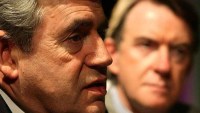
James Macintyre joins James Heale to discuss his new biography of former Prime Minister Gordon Brown: Power With Purpose. While the book has been years in the making, little did James know that it would end up published at the same time that its themes and subjects could never be more relevant. James tells our deputy political editor about the relationship between Brown and Blair, what the Labour leader makes of Keir Starmer’s problems today and his reflections – with hindsight – about bringing the now-disgraced Peter Mandelson back into government in 2008. Produced by Patrick Gibbons.

Will Merz get his 'transatlantic reset' with America in Munich?

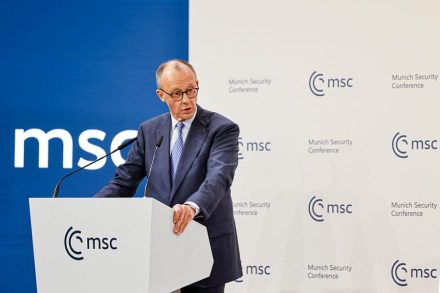
The Munich security conference started with a bang today. Breaking with tradition, German chancellor Friedrich Merz opened the conference with a punchy speech about relations between Europe and America. ‘A rift, a deep chasm, has opened up between Europe and the United States,’ he declared. ‘We need to talk,’ Merz said. ‘This is more urgent than ever.’ Proclaiming that the world had entered an era of ‘big power politics’, he painted a particularly bleak picture of global affairs. ‘The international order, as it was in its heyday, no longer exists,’ he said.  Merz called on the allies of Ukraine to do more to put pressure on Russia to end its

Twelve things we learned this week

When I started out in Westminster in 2001, the parliamentary lobby was a very hierarchical place and the press gallery still had a dining room. We young pups would gather several times a week on the lobby table and listen attentively to the war stories of lobby legends like Phil Webster, Trevor Kavanagh, Michael White, Andy Grice and David Hughes, then the political editors of the Times, Sun, Guardian, Independent and Mail. Some fondly recalled being told off by Margaret Thatcher or watching Labour’s battles with Militant in the early Eighties. The consensus view, however, was that the peak time for political chaos (and by extension political journalism) was the

Palestine Action and the problem with human rights law

The Divisional Court has dramatically upheld a legal challenge to the decision of the then-Home Secretary, Yvette Cooper, to proscribe Palestine Action – despite recognising that it is ‘an organisation concerned with terrorism’ which the Home Secretary has statutory power to proscribe. The judgment is not an abuse of judicial power as such – it does not come out of nowhere – but does vividly highlight real problems with judicial review and human rights law. The government is right to appeal but should also propose further legislation to overhaul the proscription regime. The decision to proscribe Palestine Action was made in June 2025, shortly after three Palestine Action activists broke into RAF Brize

‘Islamism is strangling society like a snake’: an interview with Boualem Sansal

I asked the novelist and dissident Boualem Sansal, recently released from Algerian prison, how he would like to be remembered. He did not hesitate. Not as the French Salman Rushdie – to whom he is often compared – but as the Algerian George Orwell. Orwell was not just a novelist but a prophet, who saw how a peaceful society could morph into a system of oppression. ‘Every day in Algeria,’ Sansal told me, ‘is like Nineteen Eighty-Four.’ Sansal was speaking to me after he had just given a speech in London, at the Policy Exchange think tank – his first public interventions in Britain since leaving prison in Algeria, where he had been jailed after a sham

Is Putin paving the way for a crackdown?

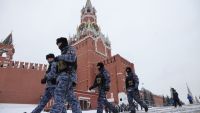
It may sound like a rather arcane development, but a change in the command structure of the Rosgvardiya, Russia’s National Guard, offers some clues about both the state of the country and the Ukraine war – and the Kremlin’s fears for the future. Zolotov has been lobbying for some time for the Rosgvardiya to have its own General Staff. This week, he got it The Rosgvardiya is an internal security force of some 180,000 personnel, ranging from the blue-camouflaged OMON riot police who patrol the streets alongside the regular police, through to the Interior Troops, a virtual parallel army with its own tanks and artillery. (There are also at least

Can Starmer escape his problems in Munich?

Can Starmer escape his problems in Munich?

11 min listen

Keir Starmer has headed to Germany for the Munich Security Conference to meet allies and discuss defence, NATO and the war in Ukraine. He is expected to meet Chancellor Merz and President Macron later, before delivering a speech in the morning. But – after his worst week as Prime Minister – can Starmer use this moment to reset his image as one of a statesman on the world stage, or could his problems follow him to Munich? Lisa Haseldine is attending the conference and joins Tim Shipman and James Heale to discuss. Produced by Patrick Gibbons.

Ed Miliband and Andy Burnham’s Britain doesn’t exist

With Sir Keir Starmer’s premiership in perpetual peril, it seems instructive to pay closer attention to his potential successors. On that, there have been two noteworthy interventions this week. The first from Ed Miliband who told the Today programme: ‘I tell you what angers Keir most about this country, it’s class. It’s the class divide.’ Not to be outdone, Andy Burnham then told a Resolution Foundation think-tank event that the focus of British politics needed to switch to lower earners. They present a Britain where capital exploits cheap labour, resulting in profound and widespread poverty. But that’s not the Britain we’re in Both men seem to want to focus on a country that

Trump’s America isn’t the outlier on greenhouse gases

Irresponsible Trump, responsible China; that is the message BBC climate editor Justin Rowlatt seemed to be sending us by juxtaposing the news that the US president had repealed Barack Obama’s ‘endangerment finding’ and that China’s carbon emissions fell slightly last year. Trump’s critics like to portray him as a rogue figure in a world which is otherwise committed to reaching net zero greenhouse gas emissions. But is there any truth in that? The endangerment finding does not appear to have had any obvious impact on US emissions The endangerment finding was a piece of legalese issued in a 2009 ruling by the US Environmental Protection Agency (EPA). It stated that six greenhouse

Terror tunnels and snipers: Life on Gaza’s yellow line

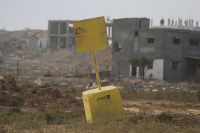
The first thing that struck me as I crossed into central Gaza yesterday was how ordinary the landscape looked. Grassy hills, dark sandy banks, a couple of stray dogs barking at the military jeep which drove me in. Warnings. Leaflets. Shots in the air. The idea is to avoid fatal misunderstandings As the gate opened for us to pass into the still mostly sealed off strip of coastal land we passed the unremarkable concrete blocks and barbed wire which separated Israel from its battlefield. We drove the stretch of road under the hot winter sun, along grassy fields that gave little away. After months of headlines, speeches and diplomatic theatrics,

What Louis Theroux’s Netflix show won't tell you about the ‘Manosphere’

There once was a time when you couldn’t move for some progressive voice complaining in superior tones about the latest ‘moral panic’ bestriding the country, stoked in their imagination by right-wing neurotics fearful that Britain was going to the dogs. Whether it be concerns related to pornography, video nasties, Mary Whitehouse’s latest campaign to clean up television, or Mods and Rockers fighting on the beaches, liberals were forever fond of dismissing such worries as reactionary, risible nonsense. It’s widely assumed that there is a problem with men today. Yet that’s not the underlying issue You don’t hear the phrase ‘moral panic’ much these days. That’s not surprising. You don’t hear

Britain’s managed decline can’t continue

Britain is on course for its weakest decade of growth in a century, according to the latest GDP figures. The headlines will duly register alarm, and politicians will promise fresh strategies, convening panels and relaunching initiatives under reassuring new names. Yet for all the activity very little will change. In a more forgiving era, this might have been survivable. But the international environment is hardening What has taken hold is something more insidious than crisis: a culture of managed decline. The numbers disappoint, the rhetoric adjusts and expectations are lowered once again. Instead of confronting the structural causes of stagnation, the political class calibrates around them. The result is not

Sainsbury’s brave new world of facial recognition cameras

Supermarket customers in Britain are part of a growing experiment in surveillance. After an eight-week trial, Sainsbury’s has made live facial recognition permanent in a big south London store. That shop, the hypermarket in Sydenham, is not far from where I live. I donned a low-brimmed hat and a Covid mask and went to see. Supermarket customers in Britain are part of a growing experiment in surveillance I expected only small notices in the windows to alert customers to the presence of the biometric cameras, and so was pleasantly surprised to find both doors of the main entrance flanked by large stand-alone signs explaining the policy. But it soon emerged

Q&A: Should Britain abolish the monarchy?

27 min listen

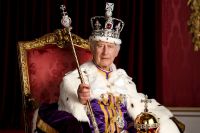
To submit your urgent questions to Michael and Maddie, visit spectator.com/quiteright. In this week’s Q&A, Michael and Maddie ask whether Britain should abolish the monarchy. In the wake of fresh controversy surrounding members of the royal family, they debate whether scrapping the institution would be a long-overdue democratic correction – or a profound strategic mistake. Is the Crown an outdated relic, or one of Britain’s greatest diplomatic assets? Also this week: with Labour MP Dan Norris facing charges, could North East Somerset be heading for a by-election – and might Jacob Rees-Mogg stage a dramatic return to parliament? Would Reform stand aside, or is the right now locked in a