Alex Klaushofer

Alex Klaushofer is an author and journalist. She writes about the changing times on Substack at Ways of Seeing.

Sainsbury’s brave new world of facial recognition cameras

From our UK edition

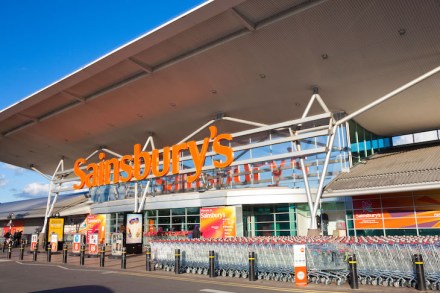
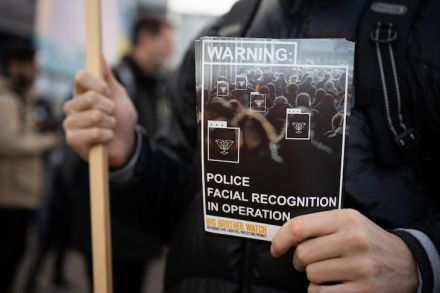
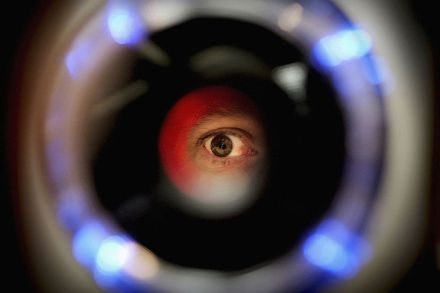
Supermarket customers in Britain are part of a growing experiment in surveillance. After an eight-week trial, Sainsbury's has made live facial recognition permanent in a big south London store. That shop, the hypermarket in Sydenham, is not far from where I live. I donned a low-brimmed hat and a Covid mask and went to see. Supermarket customers in Britain are part of a growing experiment in surveillance I expected only small notices in the windows to alert customers to the presence of the biometric cameras, and so was pleasantly surprised to find both doors of the main entrance flanked by large stand-alone signs explaining the policy.

Britain is becoming a surveillance state, but no one seems to care

From our UK edition

Shabana Mahmood's announcement that facial recognition is to be rolled out across the nation is no vague statement of aspiration. Part of wider policing reforms and backed by the promise of fifty more camera-topped vans, the Home Secretary's announcement signals the government's determination to make mass surveillance part of daily life. Combined with the current consultation on facial recognition, it also confirms that Britain is becoming a surveillance state without any real thought or debate. Mass surveillance isn't compatible with a healthy society The focus of the public consultation on a new legal framework for the use of biometric surveillance technologies by law enforcement agencies is framed in 'when did you start beating your wife?' terms.

Britain’s water crisis is getting worse

From our UK edition

When the taps run dry in Tunbridge Wells you know something has gone very wrong in the heart of Albion. Some 24,000 residents had their water supply cut off for almost a week after South East Water found that water at the local treatment plant was contaminated with chemicals. Schools closed, businesses lost money and, although supplies have resumed, residents have been told to boil water. The fiasco is illustrative of our national water crisis. In my part of south London, the streets literally course with water flowing from burst pipes. As I predicted in a piece for The Spectator eighteen months ago, the situation for Thames Water customers has worsened.

Britain’s free speech crisis could get a whole lot worse

From our UK edition

If you think Britain’s free speech crisis is bad now, if Ofcom gets its way it could get a whole lot worse. The broadcasting regulator-turned-internet-policeman is currently consulting on proposals to beef up the Online Safety Act. The proposals in its blandly-title 'Additional Safety Measures' document could reduce the internet in Britain to a shadow of its varied, vibrant self. Ofcom's proposals are alarming A big chunk of the 309-page consultation concerns livestreaming. In Ofcom's world, livestreams are of particular concern because of the 'risk' posed by humans interacting with each other in real time.

Solar farms are taking over Britain’s countryside

From our UK edition

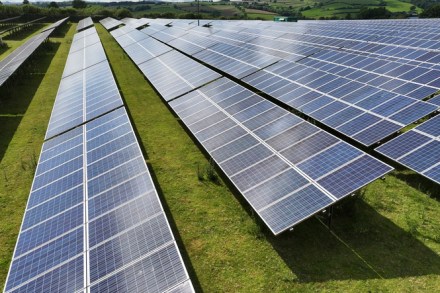
This summer I spent an afternoon, as I do every year, sitting with old friends in their garden a few miles from the Gloucestershire village where we grew up. Their garden adjoins fields, affording a clear view of the Malvern Hills. But this year, the view was different. We watched as trucks crawled across the land three fields ahead, shunting between concrete blocks. Little constructions had appeared between the trees and hedges. I was witnessing the construction of the UK's largest solar farm in a rural residential area. Some 26 fields, comprising 271 acres of farmland near the village of Highleadon are being turned into a photovoltaic power station with ground-mounted solar panels and substations for inverters and batteries.

Is this CS Lewis’ most prescient work?

From our UK edition

It's been 80 years since CS Lewis' remarkably prescient, That Hideous Strength, was published. The final book in a sci-fi trilogy, the novel recounts the battle for the soul of humanity in the heart of England. Even in 1945, George Orwell saw that: 'Plenty of people in our age do entertain the monstrous dreams of power that Mr Lewis attributes to his characters [the NICE scientists], and we are within sight of the time when such dreams will be realisable.' Little did he realise how soon his fears would play out.

Brits don’t want digital ID cards

From our UK edition

The vexed issue of compulsory ID is, once again, on the cards. 'BritCard' is being billed as a 'progressive digital identity for Britain' by Labour Together, the think tank that put forward the scheme earlier this month. The digital ID card has been endorsed by dozens of Labour MPs, and No. 10 is said to be interested in the scheme, which is being touted as a way to crack down on illegal migration, rogue landlords and exploitative work. But concerns about privacy appear to have gone out the window. Tony Blair has been at the digital ID game a long time Perhaps it is no surprise that Keir Starmer's government appears to be warming to a rollout of digital ID cards. Tony Blair has been at the digital ID game a long time.

Tesco’s ‘VAR’-style self-checkout cameras are the final straw

From our UK edition

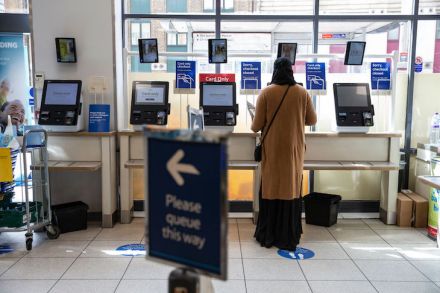
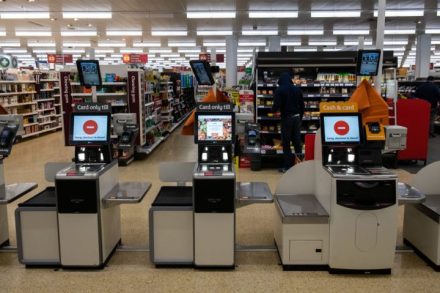
Tesco has followed Sainsbury's lead by installing cameras above self-checkouts to identify when shoppers fail to scan an item properly, using the footage to provide a live-action replay of their misdeed. Predictably, it's not gone down well: a video posted on Instagram involving a can of tuna got more than 3.5 million views. When will the supermarkets learn to stop treating their shoppers like criminals? Tesco's track record with customer data is not encouraging Much of the reaction to Tesco's VAR (Video Assistant Referee) cameras has focused on Britons' humorous responses: 'VAR Decision – Tuna Disallowed,' joked one person. 'Clearly off side,' riffed another. But the growing surveillance in our supermarkets is no laughing matter.

Sainsbury’s self-checkout surveillance has gone too far

From our UK edition

Sainsbury's is stepping up surveillance on its self-checkout tills. It's hard not to laugh out loud. Not only will shoppers in some stores be recorded close-up by a VAR-style camera as they pack their groceries, but should anything appear amiss they may be shown a replay bearing the message: 'Looks like that last item didn’t scan. Please check you scanned it correctly before continuing'. It doesn't get much more Big Brother than that. Britain is rapidly becoming a surveillance society. Banks of cameras are part of the furniture on our streets, and in our supermarkets and shops. Some stores even use facial recognition. As I wrote in The Spectator a year ago, this obsession with surveillance and automation is part of the reason why I no longer shop at Sainsbury's.

Why are MPs turning a blind eye to ‘two-tier’ policing?

From our UK edition

Does Britain have a ‘two-tier’ attitude towards policing? The Home Affairs Committee, made up of 11 Tory, Lib Dem and Labour MPs, is dismissive of the suggestion. 'It was disgraceful to see the police officers who bore the brunt of (the) violence being undermined by baseless claims of ‘two-tier policing’, its report, published earlier this month, says of the police response to the ugly scenes that followed the Southport murders last July. It's a questionable claim – and I've been left wondering why they chose to reference a piece I wrote about two-tier policing for The Spectator in August. Legislation in the pipeline could give the police even more powers 'Police response to the 2024 summer disorder', the 46-page report put out by the committee, reads like an apologia.

Bristol’s low traffic bullies have gone too far

From our UK edition

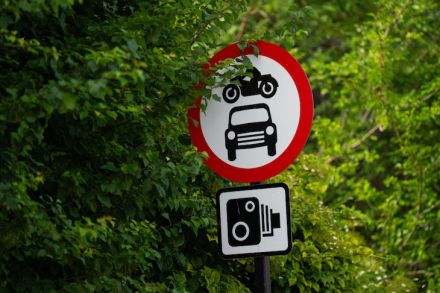
At 3am last Thursday morning, council contractors and police descended on a Bristol neighbourhood to install roadblocks under the cover of darkness. Fadumo Farah was one of the residents who got up that night to see what was going on. She was shocked to see dozens of police officers and security guards with drones. It 'felt like a movie scene,' Farah said. In a last-ditch attempt to prevent the work proceeding, she – and a group of other residents – lay down in the road. The operation was the latest episode in a long-running battle over Bristol's first Low Traffic Neighbourhood (LTN) – known in the local lingo as 'East Bristol Liveable Neighbourhood' – in the areas of St George, Redfield and Barton Hill.

What Lebanon’s energy crisis can teach us in Britain

From our UK edition

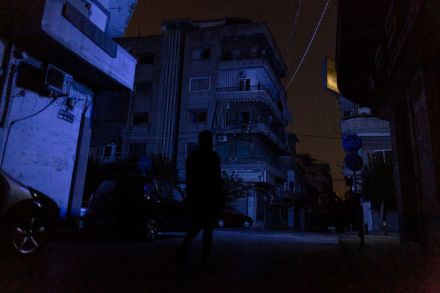
“See that?” my friend pointed to a pylon on the hill opposite the window. “That's the dawla.” The dawla (pronounced “dowleh”) is Arabic for state, and my hostess was telling me about an essential feature of life in contemporary Lebanon: the ability to understand when there is electricity and who is providing it. If the light on the pylon was orange, I would know that power was coming from the national grid. If, like good Net Zero citizens, we eschew gas, it could also mean no heating, hot meals or hot showers It was my first trip to Lebanon for almost fifteen years. In the early 2000s, I went repeatedly to research a book about the country, but this was just a personal visit to my friend and my godson, planned before the latest hostilities with Israel.

The truth about Britain’s transition to ‘clean energy’

From our UK edition

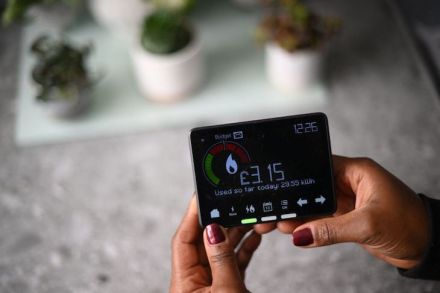
The timing couldn't have been worse. Under leaden November skies, came news of what many have suspected: energy rationing for British households could be officially on the cards. The NESO-Miliband plan for a low-carbon future is going to involve a lot more than just waiting a while for a cup of tea The bearer of these tidings is the National Energy System Operator (NESO), the UK's new energy systems operator which began work last month. NESO's first main act has been to publish a report arguing that 'demand side flexibility' – which appears to be a euphemism for rationing at peak hours – is vital if the country is to make the transition to 'clean energy' by 2030. From the government's point of view, the timing couldn't be better.

The truth about two-tier policing in Britain

From our UK edition

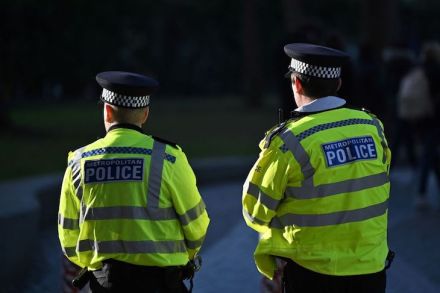
Does Britain have a two-tier policing system? Accusations that some protesters are treated differently to others have emerged in the wake of this week’s riots and the various counter-protests that have taken place. But while the blame is being directed at Sir Keir Starmer – with Elon Musk tweeting about ‘two-tier Keir’ – questions over the police’s handling of protests must not solely be directed at Britain’s current Prime Minister. Since 2020, I’ve harboured an uncomfortable feeling about the way protests are dealt with – and a sense that something is wrong.

The trouble with Thames Water

From our UK edition

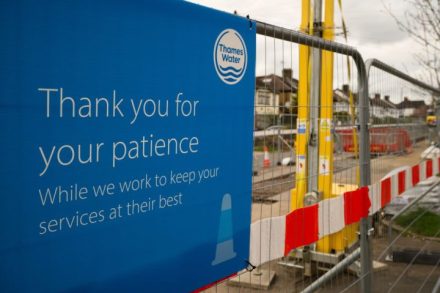
On the day the election was called, I turned on the tap but nothing came out. The sudden stoppage was hardly a surprise: I live in a 'Thames Water hotspot' and can't drive ten minutes in any direction without encountering at least one road closure as the water pipes are dug up. It's got to the point where I mutter, 'ah, Thames Water' every time I hit traffic. More often than not, the plastic barricades and temporary traffic lights duly appear, accompanied by signs bidding me not 'to overtake cyclists' in the narrow portion of road left. With Thames Water likely heading for collapse, government takeover looms Such closures punctuate the London suburbs, from the big operation which caused delays at two junctions for four months, to countless little digs at roadsides.

Sainsbury’s self-checkouts are just the start

From our UK edition

Sainsbury's has long had a special place in my heart. The weekly shop at the Orange Store offered excitement to a child and a comforting familiarity that my adult self has found hard to shake off. But roll on the decades and I'm standing, dismayed, in my local Sainsbury's. The boss of Sainsbury's has claimed that many customers like the company's self-checkouts The supermarket in my London suburb was a friendly place and the air over the checkouts rang with chatter between customers and the long-standing staff. But on this day a curious silence reigned. Half the checkouts had gone and had been replaced by a 'self-checkout' zone. Disconnected from their usual posts, the staff wore rattled expressions.