Politics

Read about the latest political news, views and analysis

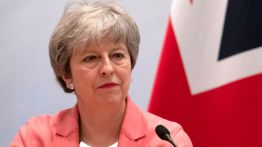
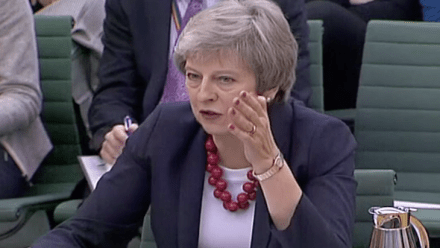
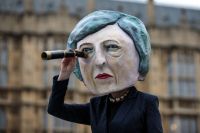
Theresa May can dare to dream that her Brexit deal might pass

Can the Prime Minister dare to dream that her Brexit deal will pass – perhaps as soon as next week? It is striking how Brexiters from the ERG group are lining up to tell me how reasonable they are trying to be. After well over a hundred Tory MPs failed to vote for Yvette Cooper's amendment last night, which simply captured the PM's u-turn pledge to allow MPs to delay Brexit, one senior Tory texted me to insist this was "more cock up than conspiracy". He said: "Bit of a mess. Nobody expected Cooper to move the amendment. Letwin had said they wouldn’t. People had left the chamber. Others thought the position was to abstain as the government didn’t shout yes and didn’t shout no. Whips didn’t chase people until nearly five minutes in to the vote.
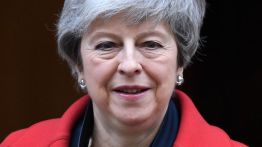
Theresa May: ‘I don’t just do what Olly Robbins tells me to’

On Tuesday night, as I write in the magazine this week, Theresa May met Leave-voting junior ministers. Her aim was to reassure them that she didn’t want an Article 50 extension and if there was one, it would be short. One of those present then asked her what would happen if Olly Robbins came back saying that a short extension was not negotiable. May was visibly irritated by this comment and shot back, ‘I don’t just do what Olly Robbins tells me to.’ She went on to say that a long extension ‘would be seen as a betrayal by the public’. This exchange is, I think, revealing. First, it shows how frustrated these ministers are. The exchange about Robbins wasn’t the only hostile questioning.

Listen: Tom Watson damns Jeremy Corbyn with faint praise

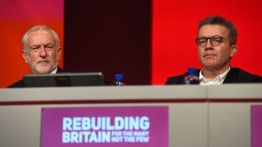
Relations between the deputy leader of the Labour party, Tom Watson, and Jeremy Corbyn have reached something of a nadir in recent weeks. After a group of MPs left the party to form the Independent Group, Watson called on Labour to do more to tackle anti-Semitism within its ranks, and has continued to pile pressure on the leadership over its handling of the issue. Watson was on the airwaves this morning, to speak about the suspension of Chris Williamson and the state of the party more generally. But even for his standards, he struggled to display any enthusiasm about Labour's current leader. Asked by the Today programme presenter Nick Robinson, what should be a simple question for a deputy leader: is Jeremy Corbyn fit to be be Prime Minister?

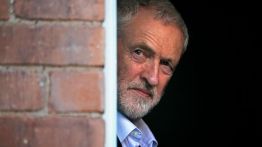
A pincer movement is closing around Jeremy Corbyn

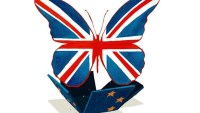
Chaos theory’s assertion that tiny changes can have dramatic effects is being vindicated with a vengeance in Westminster. If not quite as paltry as a butterfly flapping its wing in the Amazonian rain forest, the creation of the Independent Group seemed a small event. Eight Labour and three Tory MPs joined. Eleven in total. Just 11: despite all the provocations of Brexit and Corbyn. Is that it? I thought when the breakaway began, and filed the groupuscule away under “lost causes”. As it has turned out, the small difference has made all the difference. Last night the Labour party removed the whip from Chris Williamson, a supporter of the Maduro tyranny in Venezuela and the Cuban dictatorship.

May’s breaking point

The only certainty in the Brexit process is that there is no certainty. Brexiteers had long sought solace in the fact that, by law, the United Kingdom will leave the European Union on 29 March with or without a deal. But it’s now clear that this is not necessarily the case  —  or even likely. As we have seen this week, Theresa May is not in control of her party any more than Jeremy Corbyn is in control of his. Corbyn has been forced to move towards the idea of another ‘public vote’ on Brexit, though he has no enthusiasm for one, because he fears that if he doesn’t, MPs would leave his party and join the new Independent Group.

No deal? No problem

Britain, we’re led to be believe, is heading for the worst catastrophe in its history. Officialdom is warning that a no-deal Brexit would mean trucks backed up for miles at Dover, chaos at airports, a special poverty fund to cope with the fallout and — horror! — a shortage of Guinness. So apparently the country that saw off Hitler, the Kaiser, Napoleon and the Spanish Armada is now paralysed with fear at the very thought of leaving the EU. Here in Australia, this story just doesn’t fit with the Britain that we know. A disorderly Brexit would mean, at most, a few months of inconvenience. Perhaps some modest transition costs. But these difficulties would quickly pass.

What’s the worst business to be in right now? Sheep farming

What’s the very worst line of business you could be in, if we’re heading for a no-deal Brexit? Not finance, for sure: there’s a noticeable absence of squealing from the City, which has evidently made all the contingency plans it needs to continue making numbers dance on screens and booking the proceeds in convenient domiciles. Car manufacturing, on which I’ve written so much in recent weeks, clearly has its challenges — but the impediments of Brexit are no more than a tiresome sideshow compared to the industry’s wider technological and market issues. Fishing has been a bad career choice ever since we joined the Common Market and probably can’t get much worse.

The Independent Group is already changing politics for the better

Most people at Westminster are betting against the Tiggers. Most people, if forced to guess, would predict that the Independent Group won’t become a new political party that wins scores of seats in the Commons. We can all recite the reasons: no membership, no machine, no leader, no policy platform, the electoral system… But maybe that doesn’t matter. Because there are more ways to change things than winning seats. Just ask Ukip – if you can find it these days. Ukip only ever won one seat in the Commons, and in truth it was Douglas Carswell not the party who delivered it. But Ukip still changed history: without it, David Cameron would very likely have got out of calling the EU referendum.

Government score an own goal on citizens’ rights resignation

This evening the government accepted an amendment to ensure the EU citizens’ rights package in the Withdrawal Agreement still stands if the U.K. leaves without a deal. The amendment tabled by Tory MP Alberto Costa won widespread support in the Commons – an endorsement from the Home Secretary and was eventually taken on by No 10. Despite this, Costa will head home this evening having left his role as a Parliamentary Private Secretary for the Scotland Office. Costa tended his resignation earlier today as PPSs are not supposed to put down amendments. I understand Costa was asked whether he still wanted the amendment to be in his name – he said he did and thereby resigned. On a procedural level this is all above board.

Chris Williamson has been suspended from the Labour Party

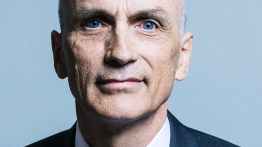
It's been a long time coming, but the Corbynite MP, Chris Williamson, has finally been suspended from Labour following his comments about anti-Semitism in the Party this week. The suspension follows the emergence of a video yesterday which showed Williamson speaking at a Sheffield Momentum event, saying that Labour had been 'too apologetic' for anti-Semitism. That same day, Williamson had come under fire for booking a room in parliament for a film screening about the 'unfair' expulsion of former Labour member Jackie Walker, who had been suspended in 2016 for making alleged anti-Semitic comments on Facebook, and saying that Jews were responsible for the African slave-trade.

Has the Independent Group ‘revolution’ fallen flat already?

Ten days since the start of the Great February Revolution (as historians are unlikely to call it) and the breakaway MPs must be feeling a bit miffed. The rebels, tagged as ‘TIGs’ in the press, are blessed with every advantage a political movement could hope for – apart from a logo, a creed, a headquarters, a constitution and a following. The 11-strong group have become the silent stars of PMQs. Seen but not heard. The Speaker failed again this Wednesday to ask a TIG to speak. Does their reticence signify anything? Perhaps trouble is brewing and the TIG bigwigs are trying to stop the membership from cracking up into dissident units.

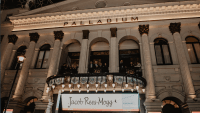
My evening with Jacob Rees-Mogg — live at the London Palladium

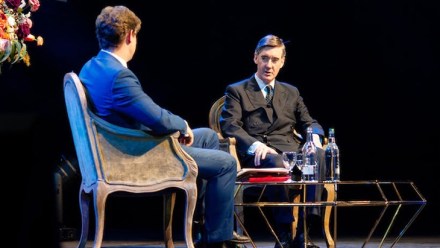
A woman dressed as a nun is standing outside the London Palladium with a placard, warning about ‘an evening with a religious extremist’. She refers to Jacob Rees-Mogg, who sold all 2,300 seats at the venue in a fortnight — a feat that enraged his critics all the more. The nun eventually found a loudspeaker to address Spectator subscribers, who waved cheerfully as they filed in to the theatre. This stage has played host to entertainers like Bruce Forsyth, Marvin Gaye, Tommy Steele and Jimmy Tarbuck — and now, the backbench MP for North East Somerset, offering an evening of political discussion. We live in strange times. He arrives late, fresh from a meeting with the European Research Group of Tory Brexit MPs, where they had to accept their game was up.

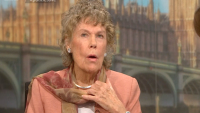
Watch: Kate Hoey’s damning verdict on the Independent Group

Labour's shift towards a second referendum has not gone down well with the party's MP for Vauxhall. So will Kate Hoey be joining the gang of defectors and throwing her lot in with the Independent Group? Don't bet on it. Hoey said she had no plans to sign up with what she called 'that little rump'. Hoey also told the BBC's Politics Live that the TIGers were 'obsessed about staying in the European Union'. Here is her damning verdict on the new party: I made it very clear that I was going to be supporting the referendum, even though I was in a Remain seat. Some of the people who have left the party made very clear statements that they would honour the referendum, I've seen them on television. And yet, they've gone against that.

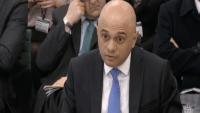
Watch: Sajid Javid gets into a muddle over Brexit

Brexit is confusing for the best of us, but Mr S. would hope that the Home Secretary would at least manage to stay abreast of the latest developments of Britain's withdrawal from the EU. Unfortunately not. Popping up in front of MPs at the Home Affairs Committee, 'The Saj' got in a muddle when asked whether the Government would be backing the Costa amendment on guaranteeing EU citizens rights under no-deal. Here's what happened: Sajid Javid: You asked me what was wrong with that (the Costa) amendment? Stuart McDonald: Yes SJ: Nothing SM: So the Government is supporting it then? SJ: Yes. When was the Government not supporting that? SM: Yesterday SJ: From who (did you hear that)? SM: The Prime Minister SJ: Did you? Well, OK.

A Brexit delay would be bad news for Britain’s economy

It would stop us crashing out. It would give us enough time to negotiate a free-trade deal. It would allow business time to prepare, and for the government to put in place all the extra infrastructure we might need once we are outside the European Union. As the deadline draws closer and closer, the pressure is mounting for a delay to our departure from the EU. At first that was just likely to be a few week or months. But now Brussels is talking about two years. But hold on. That is crazy. Sure, plenty of big businesses will be supporting that, and lots of people will be arguing it is the only way to avert a potential economic catastrophe. They are understandably nervous about leaving without a deal. But in fact, it would be the worst possible outcome for the economy. Why?

Seven things we learnt from an evening with Jacob Rees-Mogg

This evening Jacob Rees-Mogg joined Rod Liddle in being able to say he has sold out the London Palladium for a Spectator event. The arch-Brexiteer appeared before a packed crowd – of over 2,000 – for an in conversation with editor Fraser Nelson. Despite a busy day in the Commons on Brexit and a spot on the stage, the Moggster still found time in the interval to help out on the ice cream stall. Here are seven Rees-Mogg takeaways from the event: 1. Most people who want to delay Brexit want to stop Brexit In reference to the news today that Theresa May will give MPs a chance to vote to delay Brexit, Rees-Mogg said he questioned the motives of the politicians pushing to extend Article 50: 'Most people who want a delay want to stop Brexit.

My suggestions for Justin Welby’s Brexit prayers

Would anyone like to join me in the “Five Days of Prayer” that Archbishop Welby has announced to mark the days that we leave the European Union? (Yes, sure, IF we do. Otherwise I assume there will be five days of rejoicing.) I will be praying on Day One for Welby to be replaced by a less gullible, less virtue signalling, less privileged person. Day Two will be a prayer that the Church of England start dealing with personal morality rather than grandstanding political gestures. Day Three will be the prayers to stop Muslims preaching in CofE churches, until such time as Islamic states allow Christians to proselytise without getting their heads chopped off. Day Four will be a prayer that Welby finally grasps that austerity might be a salient response to a serious economic problem.

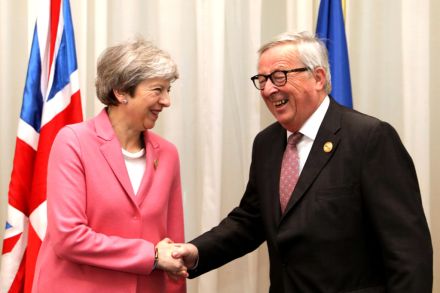
The EU must budge on the backstop if it wants to avoid no deal

The European Union does not want ‘no-deal’. Neither do the majority of people or politicians in the UK. Most of us recognise that to leave without a deal would be potentially damaging to both the UK and the EU, a risk to be avoided. But unless Brexit is stopped altogether the only way to prevent ‘no deal’ is to agree a deal. The date of the UK’s departure may now be delayed, but even a short delay would be controversial enough. And delay will only postpone the choice which, sooner or later, must be made. In one sense a deal is tantalisingly close to being agreed.