Politics

Read about the latest political news, views and analysis

Corbyn wants Brexit to happen, but be badly done

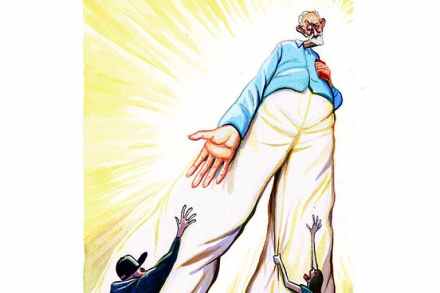
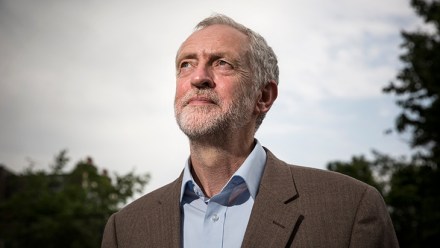
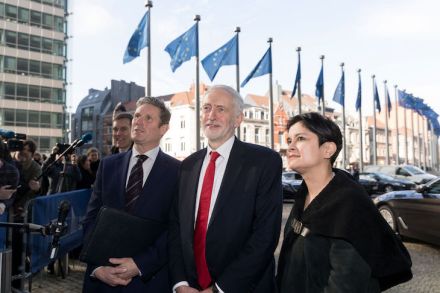
I have praised in print before Mr Corbyn’s magnificently opportunistic handling of the Brexit issue. His aim is to ensure that Brexit happens, but that it is very badly done, and can therefore be attacked as a ‘Tory Brexit’. Who can say he’s failing? His apparent conversion to a second referendum looks to me like a variation on the old theme. Highly qualified support for a ‘People’s Vote’ calms down some possible defectors to the Independent Group without changing the reality much. The unreality of the thing is reflected in Emily Thornberry’s idea that ‘Remain’ could be on the ballot paper. It implies, obviously, that we shall not have left the EU when Mr Corbyn calls the referendum.
Don’t blame the BBC for scrapping free TV licences for over 75s

The BBC is grappling with a dilemma forced upon it by George Osborne when he was chancellor. From 2020 the Corporation will be forced to fund the full £745 million cost of providing a free TV licence to households where one resident is over 75. One of the most significant achievements of the Blair government was its success in tackling pensioner poverty. When Labour took office in 1997 there were more than two and a half million pensioners living in abject poverty. By 2004, the Institute for Fiscal Studies was reporting that for the first time in recorded history, being old was no longer associated with being poor. This transformation was largely due to the introduction of Pension Credit, which brings pensioner income up to an adequate level.

Four cost-saving tips for Liam Fox’s £100,000 podcast

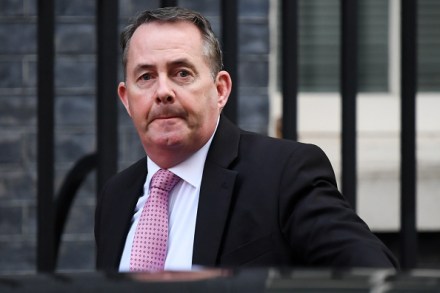
As The Spectator's podcast editor, I'm all for spending more money on podcasts. There are now six million adults in the UK who listen to podcasts, every week. If growth continues on that path, podcast listenership will be on par with total Radio 4 listenership in just another five years. With a trajectory like this, it's no wonder that everyone wants in on the game. Trade secretary Liam Fox is the latest to join the club. But it looks like he's been too enthusiastic. The Department for International Trade podcast series - 'Local to Global' - is funded by the taxpayer and has cost over £100,000 to produce and promote. It has received fewer than 9,000 listens (that's in total, not per episode).

Ministers have been allowed to condemn no deal

One could smell a rat in the fact that so many ministers have recently been allowed publicly to break with government policy and condemn ‘no deal’ flat-out, and even threaten resignation. Three ministers co-wrote an article in Tuesday’s Daily Mail (over the undead body of Paul Dacre) in this sense. They would never have dared to do so unless they had been sure that they would go unpunished by the government. If you follow the sequence of how a variety of ministers emerged on this subject, you will see orchestration. Mrs May’s spin doctor, Robbie Gibb, ex-BBC, briefs programmes like Newsnight all the time: the official line was to say how ‘troubling’ the behaviour of the ministers was.

Which Tory MPs don’t call themselves Conservative online?

Are Tory MPs actually proud to be Tories? Following recent defections from the party and the ever-present backdrop of Brexit in-fighting, it's a question being heard more and more around Westminster. There are mutterings of parties within parties and the Independent Group has said it expects another wave of defections, highlighting just how low Conservative morale has become. In a bid to track how Conservatives feel about their own party at the moment, Mr S has been through the Twitter accounts of every Tory MP to see who is still showing their Conservative credentials online and who is shrouding their social media allegiance in ambiguity. Interestingly, out of the 263 Conservative MPs on Twitter, only 143 have any mention of their party at all.

‘Brexit shows democracy doesn’t work’: An interview with Titania McGrath

Titania McGrath, 24, is a radical intersectionalist vegan activist, feminist slam poet and the author of Woke: a Guide to Social Justice. She won’t meet me in person for security reasons – she fears doxxing – or send me a photograph of her face. Rather, she consents to an interview by email from her gîte in the Buis-les-Baronnies district of France, where she is “working on a new anthology of slam poetry which will end the patriarchy” in the nude. This is from her poem Cultural Appropriation: Plunderbeast of history. My ancestors scream in your hollow wigwam, Ghostrolling in the ectoplasm of your hate. I staunch the flow of simpering tribal sauce, A digital sombrero clings deafblind To a face falsely smeared in a coalish hue.

The myth of the ‘millennial’ Corbyn project

The myth at the heart of the ‘Corbyn project’ is that it is a grassroots movement of enthusiastic young people. This group, so the theory goes, is disgusted by free markets and longs for industries to be nationalised and collectives of workers to seize control of the means of production. Books have even been written about how the ‘young’ have ‘created a new socialism.’ But if this is true, why does a poll today reveal that support for the newly-formed centrist Independent Group predominantly come from young people? Forty-seven per cent of 18-24 year olds approve of the creation of TIG, with just 14 per cent disapproving of it.

What does Putin really make of Britain’s Brexit mess?

When it comes to Brexit, Britain's friends, neighbours, trade partners and even antagonists are generally united in one thing: wondering what on earth is going on. In Russia, there is a particular cocktail of satisfaction and bewilderment. The satisfaction is predictable. From the Kremlin's point of view, the whole Brexit extravaganza is a gift, regardless of the eventual outcome. Putin's strategy is essentially to divide, distract and demoralise the West, so that either we are sufficiently worn down to strike a deal that grants Russia the status he craves – essentially as hegemon of Eurasia and a fixture in any global negotiations – or else we are so fragmented, feuding and fatigued that he has a free rein.

The Spectator Podcast: the pains of Brexit and the joys of gaming

It was Harold Wilson who said that a week is a long time in politics. How true that is for the times we are living in now. This time last week, The Spectator spoke to Gavin Shuker MP, the ringleader of the newly-formed Independent Group, about the plotting that happened behind the scenes and the ambitions of the independent MPs for their new project (you can listen to it here). A few days after recording, Jeremy Corbyn finally - though reluctantly - embraced a second referendum, to prevent more Labour MPs jumping ship. On the same day, Theresa May was forced into a new Brexit position of her own - to allow MPs a vote on extending Article 50. Knowing parliamentary arithmetic as we do, this is essentially a green light to extend Article 50 if the next meaningful vote does not pass.

Letters | 28 February 2019

It’s now or never Sir: I read with great interest Paul Collier’s suggestion (‘Take back control’, 23 February) that Britain should withdraw Article 50 and remain in the EU as a means of obtaining a better exit at some point in the future. This would be a UK humiliated by the inability of parliament to carry out the clear direction of the voters after nearly three years. A UK so abjectly defeated it would hardly be in any position to build alliances. What EU country would want to endanger its reputation by supporting the country which has been taught such a salutary lesson by the European Commission?

Read all about it | 28 February 2019

The announcement this week that Capital, Heart and Smooth radio are cutting back their local news shows might not in itself seem important — they have loyal audiences keen to know what’s happening outside London — but it’s part of a worrying trend. Over the past two decades, important powers have been devolved to regions and local areas, a process that began with Tony Blair’s regional assemblies and picked up with David Cameron’s ‘localism’ agenda. We now have several elected mayors, while local authorities have more responsibility over the NHS. The decisions that affect our lives are more likely to be taken locally than nationally. And yet at the same time the local media that once held local government to account has atrophied.

Portrait of the week | 28 February 2019

Home Theresa May said in the Commons that if MPs voted on 12 March against her draft withdrawal agreement with the EU, they would be able to vote on 13 March on whether to leave the EU on 29 March without a deal and, if that was not supported, could then vote on whether to ask the EU to agree to an extension of negotiations under Article 50. Three cabinet ministers, Greg Clark, Amber Rudd and David Gauke, had earlier said they would defy government policy in order to vote for a delay; they were called ‘kamikaze cabinet ministers’ during a heated cabinet meeting. Mrs May had returned from an EU-Arab League summit at Sharm el-Sheikh, Egypt, where Donald Tusk, the President of the European Council, had said that ‘an extension would be a rational solution’.

Diary – 28 February 2019

The separation between ‘members’ and ‘strangers’ always struck me as being one of the most archaic aspects of the House of Commons. When Natasha Barley, the brilliant director of the Children’s University in Hull, asked me (as the charity’s patron) to arrange a meeting with the Education Secretary, Damian Hinds, I felt obliged to accompany her on my first journey back since retiring as an MP in 2017. Damian graciously agreed to meet us in his Commons office so I led Natasha to the 1 Parliament Street entrance that I’d used for 20 years and showed my ex-MP’s pass to the uniformed officer on duty.

No deal, no problem? I’m not so sure

Tony Abbott claims in The Spectator this week that in the event of a no-deal Brexit the “difficulties would quickly pass”. Perhaps. I should start by saying that I am relatively sanguine about the medium-term economic effects of leaving without an agreement. But I think it is pretty absurd to suggest that “no deal would be no problem”.  The most immediate political issue would be a certain collapse of the current Government. I know that these days they are no strangers to political chaos down under and Aussie prime ministers come and go with frightening speed, but how could you make a success of Brexit with no majority for the governing party at all?

George Eustice resigns – will more Leave-voting ministers follow?

When the week began, there was speculation that a group of ministers would resign over Theresa May's Brexit stance. The Prime Minister had been warned that up to 22 members of government could quit unless she promised the chance for MPs to extend Article 50 if no deal looks likely. In the end, May blinked and paved the way for such a vote if her deal is rejected in two weeks' time. However, that decision has led to a government resignation that few were expecting. This afternoon George Eustice resigned as Defra minister over May's promise to allow MPs a vote on delaying Brexit if her deal is rejected.

The Daily Mail’s Brexit volte face has left a hole in British politics

Generally, journalists shouldn’t talk shop about the press in mixed company. But an exception should be made, I reckon, for the Daily Mail, which has had for so long a unique place in national life as a political player in its own right. It gave a voice to a tribe: the socially conservative and it was, most obviously, the house journal and campaigning expression of Brexit: the full-fat version. All that changed when Geordie Greig, an urbane, likeable and intelligent Etonian, replaced Paul Dacre last year as editor, but it’s only now that the changes are really working through. This week, the Mail’s former parliamentary sketch writer, Quentin Letts surfaced in the Times, having left the Mail of his own volition, possibly not wholly enchanted by its volte face on Brexit.

David Lammy’s strange spat with Comic Relief

David Lammy has taken a break from talking about Brexit – to take a pop at Comic Relief. In a strange turn of events, the Labour MP, investigative journalist Stacey Dooley, and Comic Relief have become embroiled in an online spat this morning. The row began when Lammy complained about a film Dooley was making with Comic Relief in Uganda, which Lammy suggested perpetuated stereotypes of Africa, arguing 'The world does not need any more white saviours.' Dooley duly responded that if Lammy was so worried about a white woman raising awareness, perhaps he could go over there instead. https://twitter.com/StaceyDooley/status/1100825979981889536 A fair point you might think.

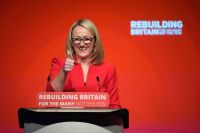
Rebecca Long-Bailey: the new shadow Brexit secretary?

Ever since deputy leader Tom Watson called for a shakeup of the Labour frontbench last week, in response to the departure of several MPs to the Independent Group, rumours have flown around Westminister that Jeremy Corbyn may be preparing for a reshuffle. But could it already have begun? Mr Steerpike spotted in a Labour press release last night that the Corbyn devotee Rebecca Long-Bailey, who is currently the shadow business secretary, seems to have been given a promotion.