Politics

Read about the latest political news, views and analysis

There’s nothing new about the Labour breakaway group

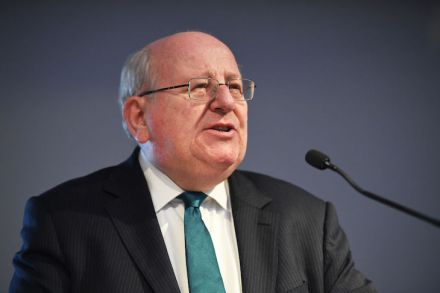
I once came up against Mike Gapes in a fraternal game of five-a-side football played at the Elephant and Castle leisure centre in south London in about 1985. Mike is one of the Labour MPs to have announced their resignation from the Labour party this week, in order to sit as members of the imaginatively named Independent Group. Back then he was something relatively senior in Labour’s Walworth Road HQ, I can’t recall exactly what. The match was between Walworth Road and the researchers and speech writers, of whom I was one, who worked for Neil Kinnock’s shadow cabinet, in the House of Commons. We viewed our Walworth Road comrades with enormous distrust, bordering on outright dislike, on account of their leftism, especially Mike.
Where will the Independent Groupies end up?

Where will these nice Independent Groupies end up? If the SDP example applies, they will wander through the political wilderness, some of them coming to rest in existing parties. All the following were in the SDP. Greg Clark is a Tory cabinet minister. Danny Finkelstein is a Tory peer, excellent journalist and wordsmith to David Cameron. Andrew Cooper, the political strategist, is the Conservative Baron Cooper of Windrush. Adair Turner is a crossbencher peer with a quiverful of business and pro-bono positions. Sir Vince Cable is the leader of the Liberal Democrats. They are all likeable, friendly, able and successful men. Yet all of them have a ‘non-tribal’, EU-centred approach which ultimately makes them honourably ineligible for the struggle of British politics.

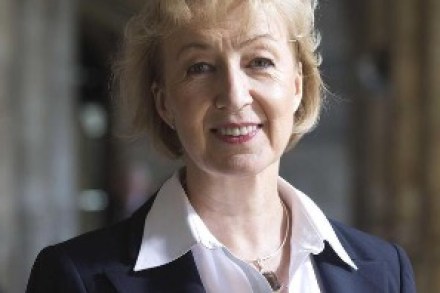
The Andrea Leadsom Edition

28 min listen

Katy Balls talks to Leader of the House of Commons, Andrea Leadsom, about her childhood ambitions to prevent nuclear war, giving birth the night before a selection meeting, and going head to head with John Bercow in the Commons.

Cabinet ministers look to May for Theresa May’s exit date

Theresa May is currently busy trying to work out a way to get her Brexit deal through Parliament. Should the Prime Minister succeed in the coming weeks, No. 10 will then move to the daunting task of somehow getting all the accompanying legislation through. Both of these tasks are regarded as incredibly difficult yet even if May does succeed on both counts, she will receive little in the way of peace as a reward. Talk in government has already turned to May's exit date. Although the Prime Minister is technically immune from challenge for a year after winning a December confidence vote, ministers believe she will go before the year is out. In some quarters, members of government are eyeing up as swift an exit for the Prime Minister as the end of May.

In normal times, the government would be boasting of falling unemployment

At any other time, news that Honda intends to close its Swindon plant in two years’ time with the loss of 3,500 jobs would have been seen for what it is: a tragedy for those affected, their families and businesses it supports. But the story was used by both sides in the Brexit wars to prove their point. Certain Remainers saw it as proof of what leaving the EU will bring, while some Leavers were almost callous in the way they shrugged off the closure. When news like this is being exaggerated for effect, it’s hard to form a clear view of what’s going on. But through the fog, a pattern is discernible. The car-making industry is in great difficulties worldwide, as Ross Clark argued in our cover piece a fortnight ago.

Ian Austin’s refusal to join the Independent Group shows the party is Continuity Remain

Ian Austin has become the ninth MP to quit Labour, blaming the party's culture of anti-Semitism. He tells the Express and Star: ‘The Labour Party has been my life, so this has been the hardest decision I have ever had to take, but I have to be honest and the truth is that I have become ashamed of the Labour Party under Jeremy Corbyn.’ He continues: ‘I am appalled at the offence and distress Jeremy Corbyn and the Labour Party have caused to Jewish people. It is terrible that a culture of extremism, anti-Semitism and intolerance is driving out good MPs and decent people who have committed their life to mainstream politics. The hard truth is that the party is tougher on the people complaining about anti-Semitism than it is on the anti-Semites.

Ian Austin quits Labour – but doesn’t join the Independent Group

Here we go again. This morning another Labour MP has announced they are quitting Jeremy Corbyn's party over its handling of anti-Semitism allegations. Ian Austin – the MP for Dudley North – has told his local paper that he has grown tired of the 'culture of extremism, anti-Semitism and intolerance' in today's Labour party: 'I think Jeremy Corbyn has completely changed what was a mainstream party into a completely different party with very different values. I always tell them the truth and I could never ask local people to make Jeremy Corbyn prime minister.' Austin's resignation comes after eight Labour MPs and three Conservatives this week quit their respective parties to join the newly formed Independent Group.

Circling around Brexit

It is becoming clearer by the day that Mrs May was right not to consult her colleagues, let alone the Brexit-loathing parliament, on what the withdrawal agreement from the EU should look like. Had she done so, negotiations would never have begun. She must now show similar resolve in bringing matters to ahead. The Romans can show her the way. In 241 bc Rome finally defeated Carthage (in North Africa) in a long drawn-out fight for control of Sicily. In 237 bc Hannibal’s family conquered southern Spain with its silver mines, agricultural wealth and manpower and put themselves in a position to take on Rome again, if necessary. Rome was well aware of this, and when in 219 bc Hannibal sacked Rome’s allied Spanish town of Saguntum, Rome sent an embassy to test the waters.

Diary – 21 February 2019

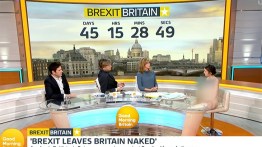
A choppy week sitting in for Piers Morgan again on Good Morning Britain. One nude studio guest, a sprinkling of prevaricating politicians and an interview with the delightfully direct Dolly Parton. That’s breakfast telly for you. And I love Dolly. Who doesn’t? I’ve met her a few times and she’s as sharp as a tack. Once, mid-interview, she stretched out her legs and considered her shoes. I laughed. ‘You’ve got really tiny feet, haven’t you, Dolly?’ She nodded, adjusting her embonpoint with both hands. ‘Nothing grows in the shade, honey.’ I remember my first interview with a naked person. (You don’t forget that kind of thing.

The Spectator’s Notes | 21 February 2019

The BBC reported on Tuesday that the proposed closure of Honda’s plant at Swindon was largely caused by the prospect of a no-deal Brexit. The collapse of ‘just-in-time’ procedures would do for the factory, it said. That’s odd, I thought as I listened: why would you close a whole factory because of something that might very well not happen? Why not wait five more weeks and find out whether or not it will? Sure enough, a few hours later, Honda’s vice-president for Europe said that ‘It’s not a Brexit-related issue for us, it [the decision to close] is being made on … global-related changes.

For the Dutch, Brexit is a mistake – and a big opportunity

An advert in the Netherlands features a hairy beast warning about the looming departure of Britain from the EU. Move over Project Fear, this is Project Fur: a campaign aimed at urging businesses to brace themselves for a no-deal Brexit. So what do the Dutch make of the big blue Brexit monster? While the British media has been busy laughing at photos of the muppet-like creature straddling a desk as the Dutch foreign minister watches on, the truth is that this campaign has actually passed many people by. This is a shame: there are good reasons for Dutch folk to worry about the impact of an acrimonious Brexit. Such an outcome would be in no-one's interests.

The nine ministers who could quit if May doesn’t rule out no deal

On my show last night, the Home Secretary Sajid Javid captured why nine of his ministerial colleagues have told the Prime Minister they may have to resign next week (though he won't be joining them). Javid said that a no-deal Brexit would be damaging for the UK, that he didn't want it, that the risk of it had increased but that there was no way to stop it. Well four cabinet ministers and five junior ministers agree on everything but that last point. In two separate meetings with the PM on Monday, they told her that either she has to agree to ask the EU to delay Brexit, if it looks impossible to get a deal through parliament by Brexit day on 29 March, or they'll resign to vote for the Cooper-Letwin amendment next week that would force her to ask for a delay in those circumstances.

Stephen Kinnock: who is Derek Hatton?

Derek Hatton's journey from Militant councillor to not-quite Labour member has been something of a rollercoaster in recent days. After being banned for 32 years for being part of the Militant tendency, it was revealed that Hatton had been readmitted to the party on Monday. Two days later, Labour said that he had been suspended once again - pending an investigation into a tweet he sent in 2012. One person who clearly hasn't been following the twists and turns of Hatton's story though is the Labour MP for Aberavon, Stephen Kinnock. In an interview on Newsnight last night, Kinnock was asked by Kirsty Wark what he thought about Hatton's readmittance, and subsequent removal from the party. But the MP, somewhat bizarrely, responded that: 'My initial reaction was Derek who? I mean who is he?

The offer Chuka Umunna made to the prime minister

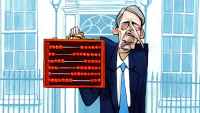
I learned two fascinating things about the Labour and Tory refuseniks in The Independent Group from my guests on the Peston show last night (at 11.05 on ITV) - though quite how much of it made it on to the show I am not sure, because we had a hard stop at the end of a jam-packed episode. First Gavin Shuker told me that he and Chuka Umunna and other MPs still in the Labour Party made an offer to the PM after she lost the meaningful Brexit vote in January that they would support her in office for at least a year and vote for her Brexit deal if she pledged to put that deal to the people in a referendum. Apparently the de facto deputy PM David Lidington and the chancellor Philip Hammond seemed warmer to this idea than the PM.

Modi’s operandi

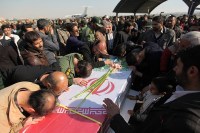
 Islamabad Six months into Imran Khan’s premiership and the new Pakistan prime minister has been plunged into his first major foreign crisis. Last week, a suicide bomber attacked Indian soldiers in Kashmir, killing more than 40 paramilitary troops. Simultaneously, another suicide attack massacred 27 members of Iran’s Revolutionary Guard near the Pakistani border of Iran’s troubled Sistan and Baluchestan Province. Khan has spent the early months of his premiership attempting to strengthen links with neighbours. He stretched out the hand of friendship to India. He opened the Kartarpur corridor to allow the visa-free passage of Sikh pilgrims. He has warmed up Pakistan’s old alliance with Iran, while working hard to flatter her bitter enemy Saudi Arabia.

Splitting headache

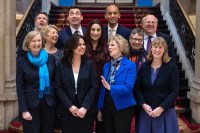
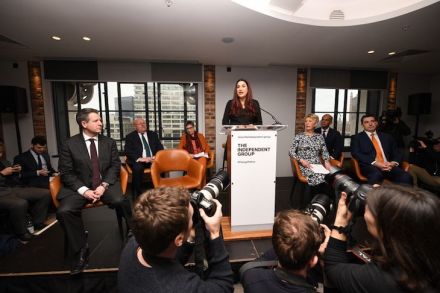
The first thing to note about the ‘South Bank seven’ is that they are nothing like the four former Labour cabinet ministers who split the party in 1981, forming the SDP. The Gang of Four were national figures who between them had held every major office of state, bar the top job. Most of the MPs who announced from a swish venue on the South Bank that they were quitting Labour to set up a new outfit have little to no public profile. They’re more likely to be an answer on Pointless than stopped in the street for a photo. While the most well-known member, Chuka Umunna, has high ambitions (his colleagues joke that he sees himself as the UK’s answer to Emmanuel Macron), his most senior role to date was as Ed Miliband’s shadow business secretary.

The change we need?

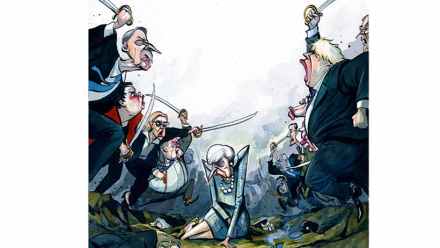
In September 2016, the Labour party reached a turning point but then failed to turn. The re-election of Jeremy Corbyn as leader with an increased majority, despite the opposition of two thirds of his own MPs, seemed to make a split inevitable. But it wasn’t until this week that Labour MPs found the nerve to leave the party and begin to form a new one: the Independent Group. Chuka Umunna, Luciana Berger, Chris Leslie, Mike Gapes, Angela Smith, Gavin Shuker and Ann Coffey all quit citing various aspects of Corbyn’s leadership as their reason for going. Then on Tuesday night, Joan Ryan followed suit. On Wednesday morning, three Tory MPs — Anna Soubry, Sarah Wollaston and Heidi Allen — joined them.

The UK car industry is reversing back to the 1970s

When I wrote a fortnight ago, in the context of Nissan’s decision not to build its new X-Trail model at Sunderland, that ‘British carmaking as a whole is on course to shrink back to the 1970s’, I was expecting the next bulletin of doom from US-owned Ford, whose bosses — I’d heard from an insider — were ‘hair-on-fire apoplectic’ at the government’s failure to provide Brexit clarity. Subsequent indications that Ford may shift some production out of the UK were taken by industry watchers as a mild warning of serious cutbacks to come — but meanwhile, news of Honda’s factory closure at Swindon knocked everything else off the headlines.