Politics

Read about the latest political news, views and analysis

EU officials and Brexiteers share a similar concern over Brexit

Rumours continue to circulate that if a long extension were to be granted by the European Union, it could be flexible. This would mean that Britain could officially depart from the bloc earlier than the agreed-upon exit date if a deal were secured between the UK and the EU27. I’m unsure what about the past two-and-a-half years could make someone think that MPs will pull together and unite around a deal before crunch time. I remain deeply sceptical that a long extension could ever encourage a shorter exit process – evidenced by not one, but two requests for an Article 50 extension in the past six weeks.
The myth of the Great British Brexit trade policy

It makes almost no sense for the Brexit debacle to have come down to the issue of an 'independent British trade policy'. Trade was not a central issue at the referendum and remains wildly misunderstood by public and politicians alike. But we are where we are. If we end up crashing out by accident, or the May government tears itself apart, it will be on the pretext that significant numbers of Tory MPs want that independent trade policy and cannot stomach the restrictions that a customs union would put on Britain’s freedom over trade. It’s hard to know where to start with trying to dismantle the trade illusion, so long is the shadow it casts over almost the entire Brexit debate.

The EU seems to have ruled out a long Brexit delay

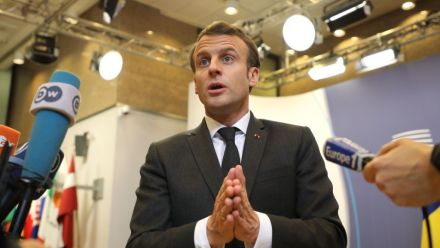
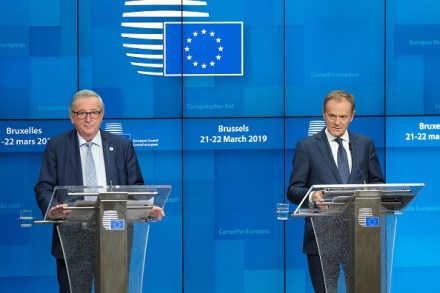
As I mentioned last night, EU President Donald Tusk’s suggestion of a Brexit delay of a year or so seems to have been torn up - notably by France’s president Emmanuel Macron. I was told by those involved in preparations for the emergency Brexit summit on Wednesday that the most likely outcome of the special summit is another kicking of the Brexit can down the road, but only till shortly after the elections for the European Parliament at the end of May. The big problem with a long delay, for France and its President in particular, was that it would give the UK too much power – in their view – to vandalise the EU till its leaders were cowed into tearing up the Northern Ireland backstop (hated by Tory Brexiters and the DUP).

Watch: Tory MP dares Theresa May to sack him

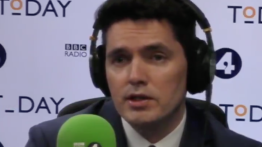
Theresa May has suffered a record number of ministerial resignations since the day she walked into Number 10, but if she was hoping the worst was over, it appears that collective responsibility may still crumble away altogether. This morning it was Huw Merriman, the PPS of Philip Hammond, who threw down the gauntlet, when he dared the Prime Minister to sack him for speaking at a People's Vote rally. On Radio 4 this morning, the MP explained his frustration that he had been given a free vote on, and supported, a People's Vote in parliament during the indicative vote process, but if he spoke in support of the issue he would be breaking collective responsibility.

The Tories’ bid to police the internet is a big mistake

Today, a Government in dire need of a good news story has mooted legislation resulting in the very opposite. The Conservative manifesto from 2017 said: 'Some people say that it is not for government to regulate when it comes to technology and the internet. We disagree.' Now the Tories are delivering on their promise. But their attempt to police the internet should worry us all. The 'Online Harms' white paper calls for an independent watchdog to write a 'code of practice' for tech companies. Under the plans, tech firms will be held accountable for what their users post and share, and penalised if they fail to take down offending content swiftly – a move that presents a serious threat to innovation, competition and free speech.

Corbyn says May still isn’t compromising on her Brexit red lines

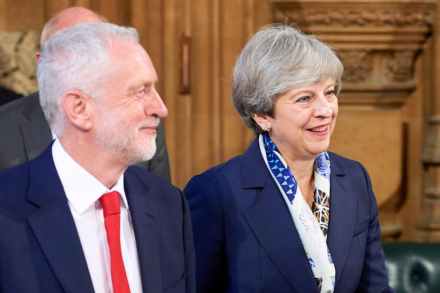
Jeremy Corbyn has insisted that Theresa May hasn't yet moved on her Brexit red lines in talks with the Labour Party. In a broadcast clip this evening, the Labour leader said: 'Well, the meetings are very long. A great deal of detail is gone into by both parties. We have people who have been on this case for several years so they're all very accustomed to it all. We've gone into it because the government at last acceded to a request I first made last September that we're prepared to talk and put forward our views, but talks have to mean a movement and so far there's been no change in those red lines.' There have been reports that the talks are moving towards an offer of a customs union, which would enrage many Conservative MPs even more.

Britain’s Brexit fate is now in Emmanuel Macron’s hands

Our Brexit fate is in the hands of France's president Macron – which is "not a wholly comfortable state of affairs," in the euphemistic words of a minister. What this minister means is the Prime Minister and her close colleagues are a long way from being convinced Macron will underwrite EU president Donald Tusk's proposal for the UK to be granted a year's delay to Brexit, with a break clause to allow us to leave the EU earlier if all the political and legal niceties can be completed earlier.

Watch: Andrew Bridgen vs Daniel Finkelstein

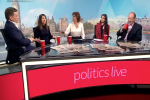
As Theresa May reaffirmed her commitment to strike a softer Brexit deal with Labour over the weekend, and Yvette Cooper's bill attempting to block no-deal Brexit passes through the Lords, leading Brexiteers stepped up their war against Theresa May. This afternoon ERG member Mark Francois, in a strongly worded letter to Graham Brady, called for 'indicative votes' of no confidence in the Prime Minister. Joining him was fellow Eurosceptic Andrew Bridgen, who on Politics Live said 'Theresa May needs to go and go now.' Less impressed with the proclamation though was Times columnist Daniel Finkelstein, who pointed out that after a failed bid to oust May in December, the ERG didn't have the ability to remove her or stop a no-deal Brexit.

Could Theresa May cancel Brexit?

Is the de facto Brexit default now revoking Article 50 this week rather than a no-deal Brexit on 12 April? I ask because the Prime Minister is now explicitly saying the choice is a binary one between some version of her negotiated deal and not leaving at all (that is what she said in her sofa chat yesterday). The point is that she has no power to prevent a no-deal Brexit on 12 April by delaying Brexit; for a delay, she needs the unanimous agreement of the EU's 27 leaders. But she does have the unilateral power to prevent a no deal by cancelling Brexit altogether, by revoking the Article 50 application to leave the EU.

The Brexit headache is just beginning

Pretty much everyone I meet says they want all the Brexit uncertainty to end, one way or another. But that is now impossible: even agreement - which seems remote - on some version of the PM’s deal to take us out of the EU would only be a beginning of a sort, not an end, with so much left to decide on what kind of future relationship we need and deserve with the EU. And if there is no backing from MPs for the Withdrawal Agreement that is the divorce from the EU, then we are into a series of choices whose consequences would be to lead to various forms of national and international fission.

Theresa May hints at a change in direction on Brexit

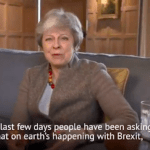
As another crunch Brexit week approaches, Theresa May has used a video message to update the public on ‘what’s happening with Brexit’. With the Sunday papers filled with angry Conservative MPs venting about her decision to enter negotiations with Jeremy Corbyn in a bid to break the Brexit deadlock, the Prime Minister uses the address to try and justify her decision. https://twitter.com/theresa_may/status/1114891046025084931?ref_src=twsrc%5Etfw Adopting a more casual tone that normal, May says that Parliament has rejected her deal three times and ‘as things stand’ there is little reason to expect MPs to back it on a fourth vote.

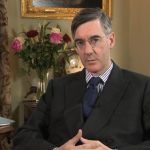
Jacob Rees-Mogg: involving ‘Remainer’ Corbyn in Brexit is ‘a mistake’

Jacob Rees-Mogg - May should be 'held to account' over Brexit Sophy Ridge began the day with an interview with the head of the European Research Group, Jacob Rees-Mogg. Rees-Mogg was critical of Theresa May's handling of Brexit, and despite backing her Withdrawal Act at the third time of asking, he made clear that he was deeply dissatisfied that she had effectively rejected the possibility of a 'no deal' exit: https://twitter.com/RidgeOnSunday/status/1114871437892956160?ref_src=twsrc%5Etfw JRM: The Prime Minister could have taken us out on the 29th of March, but [she] asked for an extension, [she] changed the date by prerogative power... to the 12th of April... She has made active choices to stop us leaving, and she deserves to be held to account for that.

Are both May and Corbyn prepared to risk splitting their parties?

The irony of the stalemate in the cross-party Brexit talks is that Theresa May and Jeremy Corbyn are not that far apart on the issue, as I say in The Sun this morning. They might use different language, but what they want is really quite similar. But while they may not be that far apart, their parties are. A deal would require not one of them, but both of them to be prepared to split their parties. If Theresa May was to soften her deal to try and get Labour support, she would exacerbate the divide within her own party. I am told that in the talks, the government has tried to point out to Labour that the deal does, in the backstop, effectively include a customs union. But Labour has been insistent that the phrase ‘permanent customs union’ must be in any deal.

The reason Remainers are worried about European elections

If the EU grants us a long extension (and let us pray that M. Macron’s malice towards Britain leads him to prevent this), Remainers are worried. They want the extension, but not the European elections, since there is a real chance that ‘the wrong people’ might win. Ken Clarke, I gather, is working out a plan to head off this unpleasant potential outbreak of democracy. He seeks to persuade the EU high-ups to concoct a new rule by which countries which have already triggered Article 50 but have not yet left would not be allowed to take part. They will surely oblige. This article is an extract from Charles Moore's Spectator Notes, available in this week's magazine.

Theresa May should let Britain leave without a deal

One of the many tragedies of Theresa May’s premiership is that, having come up with a coherent policy on how to enact Brexit, she spent her prime ministerial career failing to follow it.  The words she used in her speech at Lancaster House in 2017 seemed clear enough: ‘No deal is better than a bad deal.’ It made sense to repeat this in the last Tory manifesto. She was to seek a free trade deal with the EU, but if that proved impossible, then Britain would be leaving anyway. In the event, the EU has not merely failed to offer a good deal, it has refused to offer any trade deal at all — only a withdrawal agreement that might or might not lead to a trade deal in future but which in the meantime threatens to trap Britain in the customs union indefinitely.

The Victoria Atkins Edition

25 min listen

Victoria Atkins is a former barrister, a Conservative party MP, and a Minister at the Home Office. She talks about her legal career and her work at the Home Office creating legislation to protect women and vulnerable people. Hosted by Katy Balls.

Has a Brexit breakthrough been reached at last?

There has been considerable and widespread cynicism about the talks between the Government and Labour about a compromise that could break the Brexit deadlock. But those close to the negotiations, led today by David Lidington and Keir Starmer, believe there is at last a "plan with a chance," of securing a positive vote from MPs for the PM’s Withdrawal Agreement, without which there can be no managed exit from the EU. It would involve a Government committing to staying in the Customs Union, "dynamic" alignment with EU rules covering workers’ rights and the environment and giving the Commons a vote on whether the whole package would be subject to confirmation in a referendum. "Is all this real?" I asked informed sources. "Yes," they said.

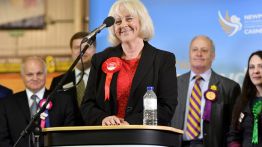
Newport West’s by-election suggests Labour could struggle in a snap election

The result from the Newport West by-election came in late last night and as was generally expected Labour held the seat, albeit with a reduced majority. As had also been expected, turnout was significantly down on the general election. Here is the full result: Candidate (Party) Votes per cent (change on 2017) Ruth Jones (Labour) 9,308 39.6 (-12.7) Matthew Evans (Conservative) 7,357 31.3 (-8.0) Neil Hamilton (UKIP) 2,023 8.6 (+6.1) Jonathan Clark (Plaid Cymru) 1,185 5.0 (+2.5) Ryan Jones (Lib-Dems) 1,088 4.6 (+2.4) Amelia Womack (Greens) 924 3.9 (+2.9) June Davies (Renew) 879 3.7 (+3.7) Richard Suchorzewski (Abolish the Assembly) 205 0.9 (+0.9) Ian McLean (Social Democrat) 202 0.9 (+0.9) Phillip Taylor (Democrats and Veterans) 185 0.8 (+0.

My encounter with Young Labour makes me fear for the party’s future

To understand the decay of the Labour Party since 2015, look no further than its London youth wing. London Young Labour (LYL) is the Momentum-controlled home of the capital’s under-27 Labour members. It is also a sparkling example of the worst kinds of regressive identity politics popping up on campuses across Britain. As a 26-year-old Labour member, albeit of a more moderate persuasion than those now running the show, I decided to go along to LYL’s Annual General Meeting last weekend. People talk of Labour as the party of young people. I hoped that the event might make me grow a newfound respect for a party I am quickly losing confidence in. Unfortunately, I left disappointed.