Politics

Read about the latest political news, views and analysis

The model Tory

A few weeks ago, Johnny Mercer spoke in Westminster on the future of conservatism. At the end, the audience was asked by the host who should be the leader capable of delivering all this and a voice from the back shouted: ‘Johnny!’ It was his wife, Felicity. She’s not alone in her admiration. Throughout parliament, there’s talk of Brexit having been messed up not just by Theresa May but a whole generation of career politicians. So perhaps, it’s argued, the new leader should be from a younger generation, with a very different CV. Someone who can make inexperience into a virtue. This 37-year-old former army captain might not be running for the job — ‘It’s not a position you self select to’ — but he certainly hits the right notes.

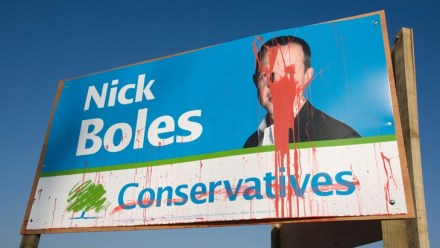
Pitching at the centre will do the Tories no good

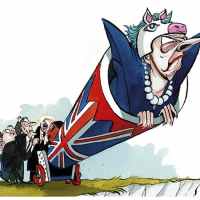
Gosh, it’s depressing watching the natural party of government committing slow-motion suicide. It’s depressing even if you’re not, as I am, an instinctive and more or less lifelong Conservative. What it means is that Britain is on the verge of losing its most effective, tried-and-tested prophylactic against the misery of socialism. Sure, there are lots of other parties competing to perform this function: Ukip; the Brexit party; the SDP; For Britain. But will any of them be able to do enough to avert the dread possibility of a regime led by Jeremy Corbyn? Let me first explain why I know that the Conservatives are doomed.

Have I got talent?

The contestants for the 13th series of Britain’s Got Talent, the variety show which starts on Saturday, certainly showed variety: next to me in the queue underneath the London Palladium are small children, a singer boasting about knowing Robbie Williams’s dad, and a Chelsea Pensioner in full Scarlets. A young researcher tries to put us at ease: ‘Have you come far?’ The Pensioner stares at her. ‘From Chelsea,’ he barks. Britain’s Got Talent is event television, the sort of show audiences still watch live and talk about, on Twitter or even while sitting together at home — it’s like Question Time for ITV on Saturday nights.

Editor’s Notebook

The power of editors is comically overstated. I’m struck by the number of politicians who imagine that there’s a hierarchy: that editors shape the opinions of columnists who, in turn, shape opinions of readers. The truth, I’m afraid, is that the hierarchy works in the other way. People like reading well-argued pieces with which they might disagree. Editors and writers alike serve at the pleasure of those readers. If they find writers boring, unoriginal, repetitive hectoring then they stop buying the publication and choose another. The power belongs to them - and only to them. Good writing seeks to inform, to entertain, to make people think - but not convert anyone to a particular point of view.

Bonne chance, Ireland

Seventy years ago this month, a prime minister led a divided nation towards the exit from what was then one of the world’s most important organisations. On that occasion, Ireland was the country wanting to leave and there was no backstop to hold things up. Despite the pleas of the other member states, the Irish walked out of the Commonwealth. I was reminded of that moment this week as the budding bromance between the Irish Prime Minister Leo Varadkar and France’s President Emmanuel Macron unfolded. Relations have never been better, Mr Varadkar cooed to nods from M. Macron. As well he might. For Varadkar has just returned his nation to the Commonwealth fold — by signing up to the French Commonwealth.

One vote in it as Yvette Cooper’s bill passes

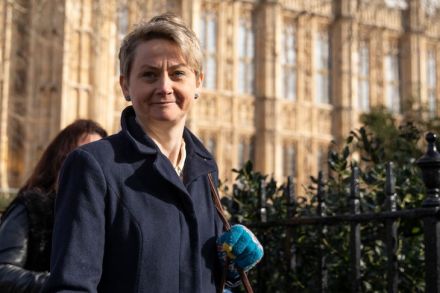
Yvette Cooper’s bill, requiring the Prime Minister to seek an Article 50 extension to avoid no deal, has passed by 1 vote—going through all its Common stages in a single evening.  The passage of this bill at such speed even though Theresa May has said she’ll ask for an extension, is another demonstration of how committed the anti no-deal majority in parliament is. But before these anti no-deal MPs pat themselves on the back, they should realise the limits to their action. Parliament is sovereign, but it isn’t sovereign over the EU27; and it is they who’ll decide whether to grant the UK an extension to the Article 50 process.

Brexit minister quits over May’s soft Brexit plan

Theresa May's decision to seek votes across the House and start Brexit talks with Jeremy Corbyn in a bid to pass her deal has sent ripples through the Conservative party today. Junior minister Nigel Adams this morning resigned over his discomfort with the new plan and now Brexit minister Chris Heaton-Harris has followed suit. In his resignation letter, Heaton-Harris says he has worked hard to put no-deal preparations in place for the event that the UK leaves without a deal. He goes on to say that given that it is now clear the Prime Minister has no intention to leave without a deal, his job is irrelevant: https://twitter.com/chhcalling/status/1113456229232381953 The decision by Heaton-Harris to leave government is a blow to No. 10.

Theresa May and Jeremy Corbyn both want to frustrate Brexit

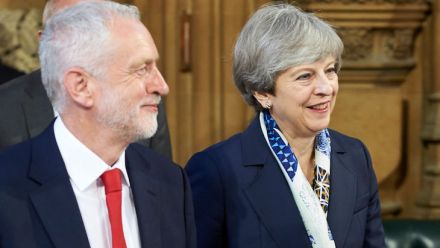
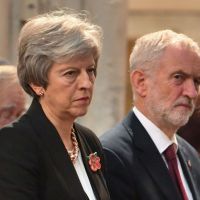
There is a logic in Theresa May’s late move to Labour. It is the same logic by which both parties, at the last general election, put forward very similar policies about Brexit. They need to stay together (while feigning disagreement for party reasons) to frustrate what people voted for. Just as they both said in 2017 that they wanted to leave the customs union, now both are working to stay in it. It is the same logic by which Mr Speaker Bercow has arranged for Sir Oliver Letwin to become prime minister on roughly alternate days. None of the main players really wants Brexit, but none can really say so.

Theresa May’s Brexit compromise won’t work

So, finally, we have a spirit of compromise. Jeremy Corbyn and Theresa May are going to sit down together and hammer out a deal on which both their respective parties can agree. Well, maybe not. There has been plenty of analysis over the past few hours predicting how it could all unwind – with further ministerial resignations and so on. But there is something more fundamentally wrong with what Theresa May has proposed. While searching for compromise might be a reasonable way to proceed on most political issues it simply doesn’t work in the case of Brexit.

What MPs decide about Brexit is becoming irrelevant

Maybe we will go for a Norway-Double Plus. Or A Canada-Minus. Or Common Market 2.0, or a WTO-Light, an EEA-Doubled, or an Enhanced EFTA or even a Singapore Sling or a White Russian. Okay, scratch those last two. I seem to have mixed up a list of options for leaving the European Union with a cocktail menu. But that pair aside – and who knows, maybe late on a Thursday night MPs will vote them through instead – they are all ways that we might eventually leave. Amid all the arguments over our departure, however, one point is easily overlooked. For the economy, after we sailed through the original deadline for getting out, it doesn’t make a lot of difference anymore. Leaving the EU was always going to do some damage to business, even if the impact was exaggerated.

Listen: Jacob Rees-Mogg vs the Today programme

Jacob Rees-Mogg was on the Today programme this morning to discuss Theresa May's latest pitch to work with Jeremy Corbyn on a Brexit compromise. The ERG member was on familiar ground as he railed against this potential softer Brexit and the Remainer MPs who might make it possible, but sounded far less comfortable when, at the end of the interview, he was asked about his decision to retweet a clip made by the Alternative for Germany (AfD) party. Asked by Mishal Husain whether this meant he supported other AfD positions, such as their anti-immigration and anti-Islam policies, Mogg sounded visibly annoyed, and went on the attack, saying: 'Well I think this is typical of the BBC's obsession, and dare I say it the Today programme obsession about this.

May’s Brexit plan could blow up the Conservative party

It is hard to overstate the magnitude of what happened in Cabinet today - because the prime minister and her senior ministers concluded over a record-breaking seven-and-a-half hours that Brexit was too hard for them to deliver on their own and they would now seek to enlist Jeremy Corbyn and Labour in finding a solution. 'There was a very significant shift to a softer Brexit,' said a senior minister. 'There is no turning back'. And there you have captured the magnitude of the risk the PM is taking. First, she is hoping Corbyn will negotiate in good faith - which may well be the triumph of hope over experience since he can legitimately query why she didn't offer proper cross-party negotiations months ago.

Theresa May admits she will have to soften Brexit

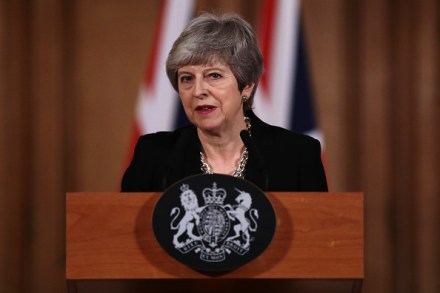
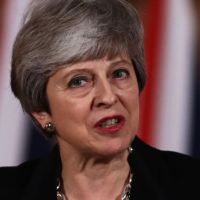
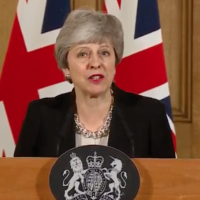
Theresa May’s statement in Downing Street was very different in tone to what she said a fortnight ago. She praised the best efforts of MPs and tried to strike a more conciliatory pose. May said she would request another Article 50 extension but she wanted it to be short so the UK would not have to participate in the European Elections. She invited Jeremy Corbyn in for talks, with the aim of either agreeing a common position on the future relationship or agreeing on a series of propositions to put to MPs with the government being bound by the result. In adopting this approach, May is essentially admitting that she can’t get the votes from her own governing bloc to pass her deal and so will have to soften Brexit. This will cause unhappiness in her own party.

Full text: Theresa May calls on Jeremy Corbyn to break Brexit deadlock

I have just come from chairing seven hours of Cabinet meetings focused on finding a route out of the current impasse – one that will deliver the Brexit the British people voted for, and allow us to move on and begin bringing our divided country back together.  I know there are some who are so fed up with delay and endless arguments that they would like to leave with No Deal next week. I have always been clear that we could make a success of No Deal in the long-term. But leaving with a deal is the best solution. So we will need a further extension of Article 50 – one that is as short as possible and which ends when we pass a deal. And we need to be clear what such an extension is for – to ensure we leave in a timely and orderly way.

Backbench MPs change tack to prevent a no-deal Brexit

After MPs failed to reach a consensus on the kind of Brexit they wanted for a second time on Monday, the parliamentarians led by Oliver Letwin who are seeking to take control of the Brexit process have changed their strategy. Instead of having another series of indicative votes on Wednesday as originally planned, the backbenchers will instead support a bill, put forward by Yvette Cooper and a cross-party group of MPs, which will attempt to force Theresa May to ask the EU for another Article 50 extension beyond the 12 April. The decision is a significant change in tack for the MPs, who seem to have accepted that at present no Brexit option -- even a Customs Union, which garnered the most support during the last set of indicative votes -- can command a majority in the House of Commons.

Three reasons why Theresa May’s Brexit decision is so crucial

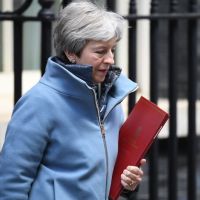
Today’s cabinet meeting could be the most important of Theresa May’s term in office – and possibly of the last 50 odd years. Because the time to prevaricate on Brexit is almost exhausted – with an emergency EU summit having been convened for Wednesday next week to decide if the UK will leave without a negotiated settlement or whether Brexit day will be delayed again, but this time by many months. The PM and her ministers have to choose, and probably now, if Parliament is to have any say on it and if EU leaders are to be briefed adequately ahead of the council.

Last night’s vote takes some of the pressure off Theresa May

The failure of any Brexit option to wield a majority in Monday's indicative votes appears to have eased the pressure on No. 10. Ministers had been expecting five hours of meetings today but the first cabinet has been delayed and there is an expectation that the meeting will not run on so long. One minister points out that there is now less pressure on the government to come up with an immediate decision on whether to pursue a softer Brexit, to attempt a no-deal Brexit or to go to the polls if May's deal fails a fourth time. That's not to say today's meeting will be a walk in the park. I understand the pre-reading material includes background for decisions that need to be taken soon regarding no-deal preparations.