Politics

Read about the latest political news, views and analysis

The fight the government cannot afford to lose

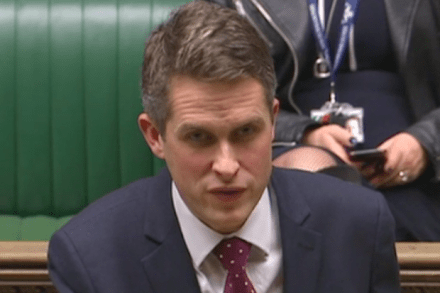
As Boris Johnson attempts to move attention back to his pre-coronavirus election agenda, one of the biggest blockers that remains is the failure to get all pupils back to school. Having revised down a previous ambition to get all primary school children in the classroom before the summer holidays, Education Secretary Gavin Williamson held a press conference on Thursday to explain how – with 'concrete determination' – he would get everyone back in September. Under new government guidelines, groups of children will be separated by their class or year into 'bubbles' thereby minimising contacts between them.
How schools will look after the pandemic

14 min listen

The government has set out its guidelines for how schools will look come September. Attendance will be compulsory, and even Labour is on board. Cindy Yu talks to James Forsyth and Katy Balls about the new world of schooling. Also on the podcast: why the Frost-Barnier meeting broke up a day early and Scotland's lockdown easing.

The coronavirus scandal no one is talking about

For months, mental health charities and Labour politicians have been telling the government truths that were so self-evident to anyone with experience of mental health they shouldn’t need telling. People with learning disabilities and autism faced exceptional risks to health and life from Covid-19. They were likely to die because now, as always, they are the last patients the NHS thinks about when the screws tighten. And so it has proved. I could quote dozens of warnings, but let one stand for them all. On 5 May, Labour’s shadow secretary for social care, Liz Kendall, urged Department of Health and Social Care minister Helen Whately to publish data on deaths reported to the Learning Disabilities Mortality Review Programme.

Will Boris’s Whitehall shake-up really work?

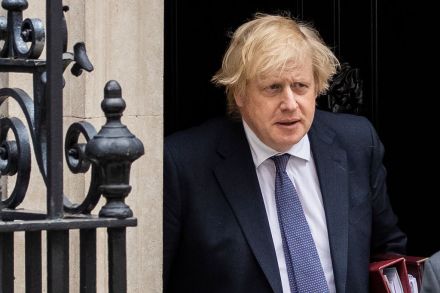
There is a paradox at the heart of Boris Johnson’s political project, I say in the magazine this week. He is frank, brutal even, about the failings of government but he is pinning his hopes on government so solve this country’s economic problems. This means that his future is dependent on his ability to make government work better. The departure of Sir Mark Sedwill as cabinet secretary and national security adviser presages Johnson’s effort to change Whitehall. There will be limits to this revolution: Sedwill’s replacement will be a current or former permanent secretary; the first civil service commissioner Ian Watmore insisted on that.

The Labour left are purging themselves

Ever since Keir Starmer was elected leader in April a phoney peace has prevailed in the Labour party. While it looked inevitable to most outsiders, the ease with which Starmer beat Rebecca Long-Bailey – the continuity Corbynite candidate in all but name – took many on the left by surprise. Their disorientation only increased as Starmer swiftly removed key Corbyn loyalists from the Shadow Cabinet and Labour headquarters while establishing a majority on the party’s governing National Executive Committee. Most have consequently spent the last few months in a dazed shock. Starmer’s surprise sacking of Long-Bailey from his front bench last week has seemingly kicked the left back into life.

Keir Starmer’s quiet revolution

For the first time in 13 years, the public, when polled, think a Labour leader would make the best prime minister. To be fair, Sir Keir Starmer has been helped in this regard by the Conservatives, who haven’t done wonders for their reputation as the party of competence in recent weeks. But the opposition leader has had a decent start. Yes, Starmer is right when he says his party has a ‘mountain to climb’ to win power following Jeremy Corbyn’s historic defeat, but the Tories are on their fourth term and no party has ever won five times in a row. When Iain Duncan Smith was elected leader of the Conservative party, he said he ought to be judged on his first hundred days. The public gets a sense of the opposition leader by this point, he argued.

Mission impossible: Boris’s attempt to rewire the British government

It’s never a good sign when a government relaunches itself. Look what happened at the end of Theresa May’s time in power — there was a relaunch almost every other week, each one with diminishing effect. But although it has been over-hyped, Boris Johnson’s attempt to start again isn’t a mere re-branding exercise. It is not just about rehashing policy proposals but about trying to tackle the dysfunction at the heart of the state. The PM is attempting to do something past leaders have thought to be an impossible job: to rewire the whole system. Johnson has time on his side — four years to get things back on track — and a Commons majority.

Boris doesn’t understand the Union

Boris Johnson’s statement that ‘there is no such thing as a border between England and Scotland’ is born of ignorance and neglect. In a legal sense, there is and always has been a jurisdictional boundary separating the two nations. It is what has made a separate legal system possible and the divergent laws and regulations that come with it. It is why homosexuality was still a criminal offence in Scotland until 1981, 14 years after decriminalisation in England and Wales, and why Gretna Green became an improbable destination for eloping English teenagers.

Andrew Adonis: how Ernest Bevin was Labour’s Churchill

43 min listen

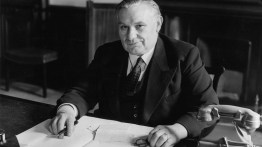
In this week's books podcast I'm joined by Alan Johnson and Andrew Adonis to talk about the latter's new biography of a neglected great of British political history: Ernest Bevin: Labour's Churchill. He was, in Andrew's estimation, the man who did most to save Europe from Stalin. So why has Bevin been so forgotten? In what way was he Churchillian? What would he have made of the current state of the Labour party? And will we ever see his like again?

Should the government go further on Hong Kong?

17 min listen

China's new national security law has been passed in Hong Kong, and from this morning it has been implemented as handfuls of protestors have already been arrested under its new wide-ranging powers. Dominic Raab has pledged to speed up the process to offer British residency for Hong Kong's BNO passport holders and their dependents. Cindy Yu talks to James Forsyth and Katy Balls about whether or not the government should go even further. Also on the podcast: the local lockdown in Leicester and Keir Starmer's new strategy.

Theresa May is right to be angry – the civil service is now at risk

Theresa May is back, and this time she’s angry. Not about Brexit or the Ulster Unionists, but about the politicisation of the civil service. This is not a matter that arouses ire in many people or even many politicians – but it should, because it is the main reason why Britain is governed better than Uzbekistan. In Britain, we take for granted relatively uncorrupt and effective government, based on at least some degree of rational decision-making. Historically, this has been extremely rare, and even today, in many countries, it does not exist. But as economists often point out, it is – along with the rule of law, which is an aspect of uncorrupt government – the most important component in achieving and maintaining a country’s prosperity.

A Huawei U-turn must now be inevitable

The declaration by US authorities that Huawei and fellow Chinese comms firm ZTE are national security threats is likely to have a clear outcome. It will knock the UK government further down the path it already seemed to be travelling: reversing its decision to allow Huawei to play a role in Britain’s 5G communications network.  Boris Johnson’s government surprised many earlier this year by approving Huawei to build what it called ‘non-core’ parts of the network, in spite of US threats to withhold the exchange of intelligence if Huawei was allowed to be involved. He made the decision in spite of warnings from Britain’s own security services.

Is the Lancet becoming too political?

Doctors have always been political. Medical school is often a cradle of social activism, driven by a syllabus underlining health inequalities and the cultural aspects of disease. Some medics inevitably take up politics: Che Guevara, Salvador Allende and Bashar al-Assad are just a few (notorious) examples. But there are plenty of others, and this crossover between medicine and politics highlights how the study of medicine can easily influence ideology. A different challenge posed, however, is when ideology begins to influence medical policy, corrupting medical decisions. This can be particularly problematic in the field of medical publishing. Medicine relies on the integrity of up-to-date published scientific evidence to find the right treatment for a particular disease.

Boris’s ‘New Deal’ is nothing of the sort

The best thing I can say about Boris Johnson is that he’s not a real Tory. The Prime Minister belongs instead to the popular liberal right, though he seems to get less popular by the day. His appeal to right-wing voters is based on his promise to ‘get Brexit done’ and the demented, 30-tweet-thread rage-pain he stirs in the hearts of some progressives. What these supporters have not yet but one day will have to confront is the fact that Boris is not one of them. Not on immigration, not on climate change, not on the culture wars. Anyone who can establish a substantive difference between his response to the riots and that of Sir Keir Starmer, feel free to fire in down in the comments.

In praise of Harriet Harman

One of my proudest moments as a Daily Telegraph leader writer came in 2015 when I managed to persuade my masters that their paper should bestow official praise on Harriet Harman as she stepped down (for a second time) as Labour’s interim leader and made way for Jeremy Corbyn. The resulting editorial (you can read it here) raised a few eyebrows, but the most striking thing about it was the number of people on the right of politics who quietly agreed with it. You don’t have to agree with all, or even any, of Harman’s political positions to acknowledge her formidable resilience. There are mountain ranges with less endurance than the MP for Camberwell and Peckham, who was first elected in 1982 at a by-election that made her one of 20 women in the Commons.

Watch: Labour MP slams her phone on the floor

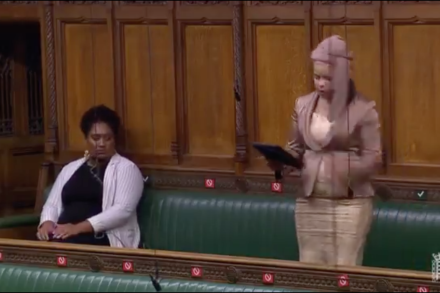
We’ve all been in a situation where our mobile phone starts ringing at the worst possible moment – whether it’s in a meeting, the middle of a play or in the silence of a church. Still, it was rather unfortunate for Labour MP Claudia Webbe that her phone went off right in the middle of a speech she was giving in the House of Commons this afternoon. Even worse, the mobile failed to turn off at the first attempt, leaving Webbe scrambling around in her bag, while attempting to continue. By the time she finally managed to turn the device off, the Labour MP was so aggrieved that she chucked it on the floor. Mr S isn’t sure the insurance will cover that one… Watch here: https://twitter.com/Alain_Tolhurst/status/1277993251220475904?

Boris Johnson wants a sycophantic civil service

This government may not be good for much but it knows how to manipulate language. Attacks on the ‘establishment’ are the cover it uses to smuggle ideologues and 'yes' men into the civil service. We all hate ‘the establishment,’ don’t we? Even when, and especially if, we have never met a permanent secretary. The establishment, by definition, is hidebound and complacent, white, male, Oxbridge and biased. Although the awkward fact remains that you can only join the civil service by passing competitive examinations, that can quickly be dispensed with.

Does Boris’s ‘new deal’ offer anything new?

Today Boris Johnson launched his ‘new deal’ for Britain – billed as an economic recovery plan to follow the Covid recession.  It sounds positively Rooseveltian. It sounds like a new deal. All I can say is that if so, then that is how it is meant to sound and to be, because that is what the times demand – a government that is powerful and determined and that puts its arms around people at a time of crisis. What has changed is the PM’s political positioning, away from the market economy and towards state intervention But were the announcements really a 'new deal’ – or a new anything? The vast majority of the announcements were not new but manifesto promises from the 2019 election.