Politics

Read about the latest political news, views and analysis

Don’t panic about the UK’s high debt

Last week the Prime Minister focused on ‘build, build, build’. For the Chancellor, it was ‘jobs, jobs, jobs’ on Wednesday as he outlined an ambitious and interventionist suite of measures to prevent a rise in unemployment. These measures are estimated by the Treasury to be worth up to £30 billion. The last time the UK had high unemployment was in the early 1980s. The labour market was very different then – it was often described as sclerotic, with high unemployment also the consequence of a necessary restructuring of the economy. Today, however, the labour market is much more flexible and the deep recession and threat to jobs is from an economic shock.

Rishi Sunak is no threat to Boris

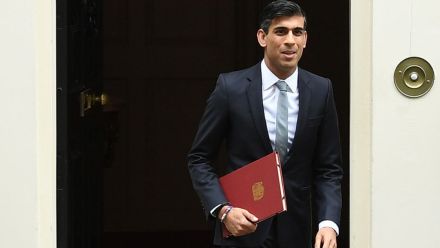
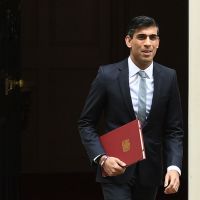
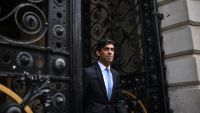
Rishi Sunak made his summer statement this afternoon. The chancellor is never less than immaculately turned out. Skinny blue suit, coiffed hair, silver-grey tie gathered in a discreet knot, a white shirt that glowed like a snow-capped peak at noon. And he oozed board-room competence. One half expected the lights in the Commons to fall and a screen to be unrolled for a Powerpoint presentation. He draws his rhetoric from many sources. In today’s speech we got a hint of Thatcher: ‘I believe in the nobility of work. I believe in the inspiring power of opportunity.’ We heard a reminder of Blair:  ‘I am not dogmatic. I believe in what works.’ There was a faint echo of Churchill:  ‘Hardship lies ahead but no one will be left without hope.

Rishi Sunak’s two big fears for the future

The summer economic statement made clear the government’s two big coming worries. First, the whole emphasis on jobs highlighted how concerned the government is about mass unemployment. If you thought that vacancies were going to bounce-back you wouldn’t be – literally – paying firms to take on 16 to 24-year olds. It isn’t just youth unemployment the government is concerned about either. The £1,000 bonus for firms that bring staff back from furlough is intended to preserve marginal jobs that might otherwise be lost. Even with these measures, unemployment is still likely to spike. The question is whether the government’s approach will stop this from tipping over into mass unemployment.

Can Rishi Sunak’s jobs pledge keep unemployment down?

Everything we heard from the Chancellor today suggests the Treasury is extremely worried about unemployment surging. The measures he's brought in (detailed below) are designed to keep unemployment figures as low as possible. That's why jobs were at the forefront of the Chancellor’s summer statement this afternoon: supporting them, creating them and protecting them. But can Rishi Sunak pull off an economic miracle and deliver on his vow to never 'accept unemployment as an unavoidable outcome'? Among the major announcements today was a Job Retention Bonus – a move along from the furlough scheme – which will grant every employer who brings back a furloughed employee (until January at least) £1,000 for doing so.

Rishi Sunak: my £30bn plan for jobs

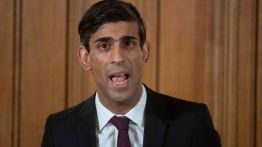
Mr Speaker, I stood here in March saying I knew people were worried. And I know they’re worried still. We have taken decisive action to protect our economy. But people are anxious about losing their job, about unemployment rising. We’re not just going to accept this. People need to know we will do all we can to give everyone the opportunity of good and secure work. People need to know that although hardship lies ahead, no one will be left without hope. So, today, we act, with a Plan for Jobs. Our plan has a clear goal: to protect, support and create jobs. It will give businesses the confidence to retain and hire. To create jobs in every part of our country. To give young people a better start. To give people everywhere the opportunity of a fresh start.

Liam Fox to be UK’s nomination for WTO Director-General

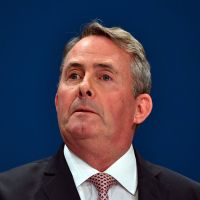
The UK will nominate Liam Fox to be director-general of the World Trade Organisation. I understand that the decision to nominate the former trade secretary, who has been lobbying heavily for the job, was made last night. There were those in Whitehall who were opposed to nominating Fox. They argued that it was too soon after the UK had become an independent member of the WTO to put forward a candidate and that it would be better to concentrate on some more junior positions that the UK would have a better chance of getting. Boris Johnson, however, wasn’t persuaded by these arguments. He wants to use the UK’s G7 presidency next year to push free trade and regards having a British candidate to head the WTO as a good accompaniment to that.

Is social care reform now inevitable?

13 min listen

Boris Johnson has rowed back on comments suggesting that care homes suffered from the pandemic because they did not follow procedure, after a widespread backlash. On the podcast, Cindy Yu talks to James Forsyth and Katy Balls about whether or not social care reform is inevitable, as well as why Andrew Bailey planned to address the Tory 1922 committee and the Magnitsky Act.

Did police really quiz this student over a ‘free Palestine’ badge?

Just over four years ago, the Sunday Times published a remarkable story. At a ‘Students not Suspects’ meeting at Goldsmiths students’ union, a young man called Rahmaan Mohammadi retold his account of being referred to Prevent by his school. He believed that his ‘Free Palestine’ badge had, in part, motivated the referral. The experience had, unsurprisingly, left him shaken: ‘When police come to your house and say, ‘I want to speak to you’, with this massive folder with your name on it, that’s intimidating. It makes you feel alienated.’ But was it actually true? ‘Students not Suspects’, a campaign run by the National Union of Students, undertook a nationwide tour of students’ unions in 2016.

Can Rishi Sunak prevent mass unemployment?

There is only one test for what the Treasury is billing – with all its magnificent talent for hyperbole – an 'update', which is the impact it will have on taming the looming ghoul of mass unemployment. Will Rishi Sunak's stimulus package deter or even reverse decisions to sack people by those businesses that are most squeezed by the social distancing imperative? That are suffering both a reduction in capacity (tables removed from restaurants, for example) and demand? There are millions employed in such industries, from shops, to bars, to theatres.

Unplugging Huawei will be harder than it looks

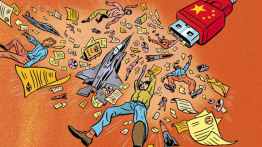
There is nothing some Conservatives like talking about more than Huawei. Each new development in global politics is a new chance to talk about the Chinese telecoms giant and the rollout of 5G. China and the US having a trade row? Huawei. Coronavirus originating in China? Huawei. The day of the week rhymes with Huawei? Perfect. Reports of a new review by the UK's National Cyber-Security Centre (NCSC) on Huawei and security have, then, found a welcome audience among Conservatives looking for an excuse to pull the plug. But even the new NCSC review shows things are more complicated than they first appear: the agency is warning that US sanctions on Huawei might force the UK to use insecure third-party replacement spare parts, making it a security risk.

Rishi Sunak should try something new: silence

A huge increase in job centre advisers; special grants for companies taking on trainees; free cash for anyone insulating their home; cuts to National Insurance; reduction in VAT, and a £500 shopping voucher to re-boot a collapsing High Street. Oh, and an emergency GCRF, or Garden Centre Rescue Fund, to subsidise anyone who helps our heroic horticultural industry by building a new rockery or water feature. Okay, I’ll admit, I made that last one up. But all the others are suggestions that have been put forward for the Chancellor’s mini economic statement tomorrow. But perhaps Rishi Sunak should try something new: silence. In truth, the government has done an extraordinary amount to help people and businesses through this epidemic.

Starmer has exposed Corbyn the coward

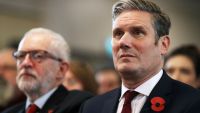
Being a radical feels nice. You get to think you’re a morally superior being in a society full of evil-doers and sell outs. You can reduce the world to easily understandable, fixable problems. You get to reframe everything in life as good versus evil with you as the hero of the story. The only problem? It’s all a mirage. Human societies are complex and fixing them even more so. Affecting actual change requires compromise, both with others and with yourself. More than that, it takes courage – a courage that Keir Starmer is already demonstrating in his leadership of the Labour party. And one which was woefully lacking during Jeremy Corbyn's time at the top.

Is Politics Live facing the axe?

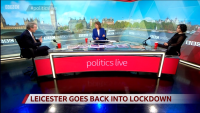
The coronavirus pandemic has posed challenges for organisations right across the country – including the BBC. Although the corporation has said it has had to slim down its current affairs output temporarily as a result of social distancing, they have still managed to put out a series of podcasts for the younger generation – including a recent discussion where guests told white women to avoid becoming 'Karens' (American slang for entitled women, natch) and to 'stop being so loud' – which was later taken down from social media following complaints.But with a sense of normality slowly returning to SW1 as MPs debate and Westminster waterholes reopen, surely the BBC political coverage will soon, too, get up to date? Perhaps not.

Why the government’s arts bailout was so generous

13 min listen

Rishi Sunak has announced a £1.6 billion bailout for the arts industry, which was more generous than many were expecting. On the podcast, Katy Balls talks to Kate Andrews and James Forsyth about why this is. They also discuss Pret's troubles and the coming Huawei u-turn.

Bank of England governor postpones 1922 committee appearance

On Wednesday, Rishi Sunak will deliver an economic impact assessment to the House of Commons in which the Chancellor is expected to announce a number of measures to stimulate the economy. With a £1.5bn package pledged today for the arts industry, the expectation is that Wednesday's event will cement Johnson's government as a comparatively high spend to the Tory governments that came before.  That evening, MPs will have their weekly meeting of the 1922 committee of Tory backbenchers. Only rather than the Chancellor update the parliamentary party and take part in a question and answer session, Coffee House can reveal MPs have been told Bank of England governor Andrew Bailey will be the guest of honour.

Labour’s wealth tax proposal is deeply flawed

Will Labour ever stop pushing for punitive taxation? Not content with gifting the Conservatives an 80 seat majority in December, the supposedly more moderate Labour party under Keir Starmer is already dreaming up ways it can extract large sums from our pockets. Shadow Chancellor Anneliese Dodds floated a ‘wealth tax’ at the weekend, so that the burden of paying for the Covid 19 crisis might fall upon the ‘very best off people’. Except it won’t be the very best-off people who get whacked by a wealth tax, as she should surely know. The highly mobile global super rich wouldn’t hang around for five minutes after a Labour government announced a wealth tax – any more than they did in France when Francoise Hollande introduced the same thing.

Non-fatal strangulation needs to be a more serious offence

Imagine this: you are a victim of domestic violence, and your partner regularly strangles you to the point of unconsciousness. During each attack you think you are about to die. You lose control of your bladder during these attacks, and afterwards find it hard to speak, feeling like you have swallowed broken glass. You suffer from flashbacks and live in fear of the next attack, imagining that this time you will never regain consciousness. Being strangled during a domestic violence attack is as common as it is terrifying. Police routinely fail to recognise its seriousness.