Dr Priyad Ariyaratnam

Dr Priyad Ariyaratnam is a Consultant Thoracic Surgeon in Plymouth.

Why I won’t be joining the consultants on strike

From our UK edition

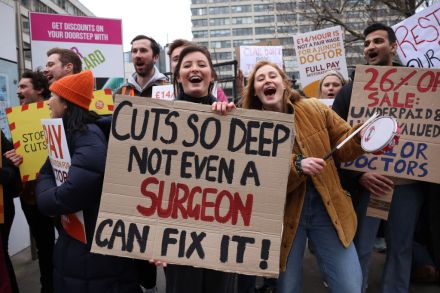
I won’t be joining the consultants who are striking today. Though I fully support the legitimate concerns of my colleagues in the medical and other health professions taking part in industrial action across the NHS, I feel the toll this is taking on patients is unjustifiable.  This is not a decision I take lightly. When I was a junior doctor, I was very active in the original strikes that took place in 2016 opposing the new junior doctor contract.
The coronavirus crackdown sets a dangerous precedent

From our UK edition

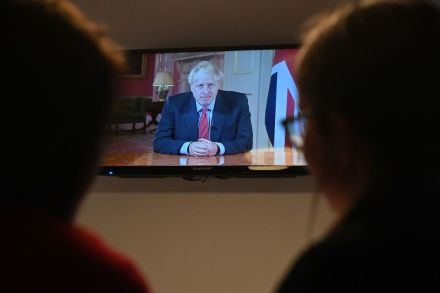
Has the coronavirus crackdown gone too far? Some of Boris Johnson's own MPs certainly think so. This week, Tory MP Edward Leigh accused the government of 'authoritarianism' over the decision to impose greater restrictions during this second wave of coronavirus infections. Leigh is right to be concerned: we have seen the rights and privileges that had taken centuries or millennia to achieve indifferently cast aside in the space of six months by public health measures outlined in the Coronavirus Act. We were told in the early days of the pandemic that the measures were necessary to 'protect the NHS' and 'flatten the curve'. But while those aims were achieved, I'm not convinced we can credit the strict rules which were introduced.

Are we becoming immune to the vaccine message?

From our UK edition

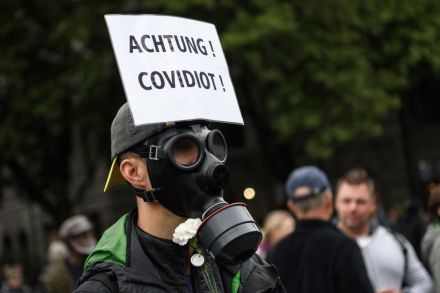
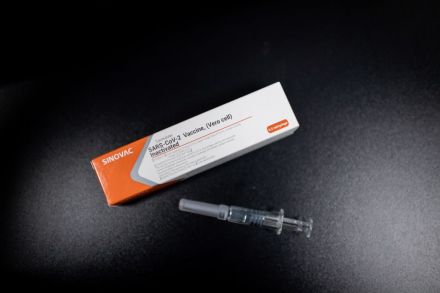
Much hope is being pinned to a vaccine as our route out of this Covid nightmare. But even if one is developed, would enough of the population be willing to take it? Amidst a growing movement of ‘vaccine scepticism’ online, there are signs that many people would take a lot of convincing to get themselves inoculated. In New Zealand, one in ten people would refuse a Covid-19 vaccine. In Belgium, 30 per cent of people are either sceptical about a vaccine or would refuse one; and in the USA, fewer than half would get the jab. In a worldwide survey carried out by the World Economic Forum, 29 per cent of those who didn’t want a vaccine were not convinced it would work.

Should a coronavirus vaccine be compulsory?

From our UK edition

The mandatory introduction of face masks in shops and a ban on families and friends from different households meeting in parts of northern England at a time when death rates and critical care admissions with Covid-19 are low, appears, on the surface at least, hard to explain. The original reason for lockdown – to protect the NHS – seems to have been replaced by weaker reasons to impose recurrent restrictions. This is worrying, not least because of the possibility that the Government could broaden out this approach of introducing policies based on low-grade evidence. Could it do the same in mandating vaccinations before their effectiveness and safety profiles have been definitively determined?

Is the Lancet becoming too political?

From our UK edition

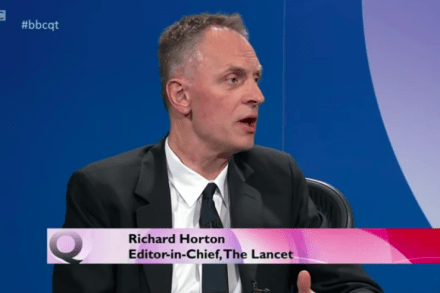
Doctors have always been political. Medical school is often a cradle of social activism, driven by a syllabus underlining health inequalities and the cultural aspects of disease. Some medics inevitably take up politics: Che Guevara, Salvador Allende and Bashar al-Assad are just a few (notorious) examples. But there are plenty of others, and this crossover between medicine and politics highlights how the study of medicine can easily influence ideology. A different challenge posed, however, is when ideology begins to influence medical policy, corrupting medical decisions. This can be particularly problematic in the field of medical publishing. Medicine relies on the integrity of up-to-date published scientific evidence to find the right treatment for a particular disease.

The drugs that can help us defeat Covid-19

From our UK edition

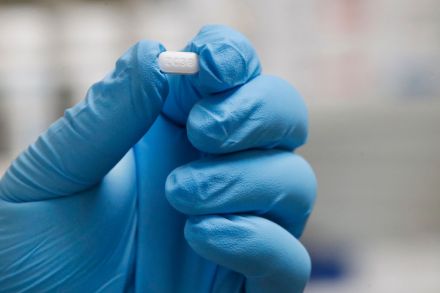
Covid-19 is here to stay. Whether it flickers in wait or rages like wildfire, it will remain part of our lives for the foreseeable future. As the vast majority of people who contract the SARS COV-2 virus recover after mild flu-like symptoms then, the onus should be on finding ways to reduce the mortality in the minority who suffer the worst, rather than keeping society as a whole under draconian restrictions. Anti-virals and anti-inflammatories are potential strategies for this. Death from the virus is invariably due to the direct damage it causes in the lungs or from the intense inflammatory response leading to multi-organ failure: The lung damage occurs when the virus’s spike protein binds to our lungs, allowing it to enter and release its genetic material (RNA).

Three reasons why a coronavirus vaccine might not be possible

From our UK edition

The world is being held hostage by an organism so small that even the most powerful microscope could miss it. It has taken thousands of lives and brought superpowers to their knees. It has also united us in suffering and opened our eyes to the fragility of our way of life. A proposed panacea is vaccination. But will a vaccine be found? Or is the search for one likely to prove fruitless? In order to appreciate the magnitude of such a task, it is important to understand a little of the biology, history and challenges of vaccine development. Here there emerge three good reasons why a vaccine might not be possible. Or, at best, is likely to be a long way off. Sars-CoV-2 (the virus that gives rise to Covid-19) has an outer membrane which protects the genetic material (RNA) inside.