Politics

Read about the latest political news, views and analysis

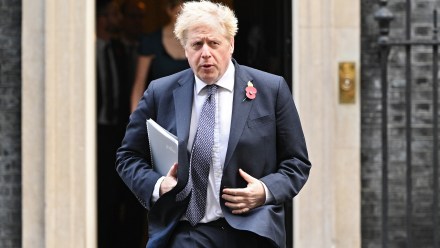
Boris in a spin: can the PM find his way again?

36 min listen

After two of Boris Johnson's most influential advisers left Downing Street last week, can the PM reset his relationship with the Tory party and find his way again? (00:58) Lara is joined by the Spectator's deputy political editor, Katy Balls, and former director of communications for David Cameron, Craig Oliver.A coronavirus vaccine seems to be the only way out of continued lockdowns, so should everyone be forced to have the jab? (13:49) The Spectator's literary editor, Sam Leith, joins the podcast with Professor Mona Siddiqui, who sits on the Nuffield Council on Bioethics.And finally, should we start referring to people by their surnames again? (25:30) Historian Guy Walters thinks so, and he's joined by the Spectator's etiquette expert, Mary Killen.Presented by Lara Prendergast.


When will Twitter crack down on Corbyn?

Whenever Donald Trump tweets something these days, it doesn't take long before Twitter moves in with a warning. 'This claim about election fraud is disputed,' is one of the latest hectoring messages to be slapped on the outgoing president's tweets. Yesterday no fewer than nine of Trump's tweets were accompanied by similar links added by moderators. It's clear that when Twitter wants to, it can act quickly.  So Mr S wonders how long it will be before it acts against another politician with a disputed claim on his profile? Jeremy Corbyn was told yesterday that he won't be getting the Labour whip back. This effectively means Corbyn is now an independent MP. Yet on his Twitter profile he describes himself as 'Labour MP for Islington North'.

Boris should heed Douglas Ross’s warning about the Union

Boris Johnson’s comments about devolution having been a ‘disaster’ were not entirely wrong: it is hard to point to a problem devolution has solved. But given the popular support for devolution, it was a mistake for Johnson to say this out loud, I say in the magazine this week. The comment was a gift to Scottish Nationalists who will now claim that Scots must vote for independence to stop Westminster from taking away their parliament. Given that the SNP could deprive him of his premiership — and end this 300-year-old Union — Johnson must learn how his words will be interpreted north of the border. His enemies seek to portray him as a blundering, aloof Old Etonian who embodies a dysfunctional UK government. He mustn’t give them the ammunition to do so.

Red Wall voters won’t be impressed by Boris’s green agenda

The Red Wall, Blue Collar Conservative, Old Labour, Workington Man – or whatever name you wish to attach to this loose coalition – will be unimpressed by Boris's 'green industrial revolution'. This group of voters, many of whom had never turned to the Tories before, backed Boris Johnson to 'get it done'. Their vote for Brexit was a vote for the economic prosperity that has eluded them for decades. Boris would be wise to remember this. Would Red Wall voters have got behind David Cameron? It's not likely, given that Cameron arguably saw his mission as being to ingratiate himself with disaffected Liberal Democrats and the great and the good on the international stage.

Portrait of the week: Cummings goes, Corbyn returns and pigeon sells for £1.4m

Home Dominic Cummings, the chief adviser to the Prime Minister, Boris Johnson, left Downing Street after a week in which the public learnt that Lee Cain was the director of communications at No. 10, and that he had resigned after his appointment as chief of staff was withdrawn. The imbroglio directed focus on the performance of the Prime Minister and gave an opportunity for politicians to air their grievances. Mr Johnson then went into 14 days of quarantine, having been contacted by the national Test and Trace system after breakfasting with Covid-ridden Lee Anderson, MP for Ashfield. Mr Johnson’s own Covid test proved negative. He had intended to set out his ‘personal ambition’ for the country (such as making it carbon neutral by 2050).

Are our churches safe from Justin Welby?

‘Frost & Lewis’. It sounds like a programme amalgamating two of the most famous TV detectives. The former diplomat, Lord (David) Frost, is our chief Brexit negotiator and Oliver Lewis, an expert on the Irish aspects, is his right-hand man. Until recently, they were simply considered the two best men for the job. Since the departure of Dominic Cummings, they have acquired a political role too. Close colleagues of Cummings who did not walk out with him, they stayed to Get Brexit Done, so they act as reassurance to anxious Brexiteers that the government will not throw in the sponge. Their staying also implies a threat. Dom has said he doesn’t want anyone else to leave No. 10 — yet. Tristram Hunt, director of the V&A, is a former Labour MP.

Inside the court of Carrie Symonds, princess of whales

Carrie Symonds, the Prime Minister’s fiancée, ‘gets’ the media. That’s what her friends are quick to tell you. She’s a PR professional. If she doesn’t like the thrust of a story, she lets you know. She contacts journalists to tell them how ‘disappointed’ she is in their sloppy work. And she doesn’t seem all that scared of senior newspaper editors, perhaps because her father co-founded the Independent. It’s said she even thinks she can ‘edit what goes in the Mail on Sunday’.

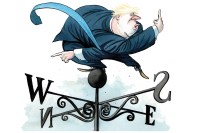
Boris in a spin: can the PM find his way again?

Something strange is going on in Westminster: nearly every minister and Tory MP has a spring in their step. It’s not (just) the vaccine breakthrough, or the magic money tree now bearing such fruit in the back garden of HM Treasury. The liberation-of-Paris feel in locked-down Westminster is inspired by the departure of Boris Johnson’s senior Vote Leave aides, Dominic Cummings and Lee Cain. Tories of all stripes seem to think they will now get what they want. When the news broke that the pair were to leave Downing Street with immediate effect — following a power tussle with the Prime Minister’s partner Carrie Symonds and new press spokeswoman Allegra Stratton — many in the parliamentary party were celebrating.

How moral is it to refuse a vaccine?

Well thank goodness for that, eh? Just as we reached our darkest hour and resigned ourselves to an endless series of lockdowns and the ruination of everything we once took for granted, we heard that help might be at hand. With the announcement of a Covid vaccine, what the Prime Minister called the ‘distant bugle of the scientific cavalry’ was at last audible. Think Pheidippides staggering into Athens, or the great horn of Helm ringing out. My instinct, and I expect yours, was to think something like: ‘Phew! It’ll take a month or two, maybe a year, but we’re in sight of things going back to normal. There is light at the end of the tunnel.

More devolution in England could save the Union

Tory MPs are already starting to talk about May’s various elections. Boris Johnson’s first post-Covid electoral test will take place on 6 May and will show the durability — or otherwise — of his 2019 electoral coalition now that Brexit is ‘done’ and Jeremy Corbyn is gone. Can the Tories hold on to the much-prized Teesside and West Midlands mayoralties? If the answer is yes, the party will feel it can face the future with confidence. If not, it will start to panic. But the most significant result of the night will be the most predictable one: a Scottish National party victory in Holyrood. The SNP is currently polling comfortably, and consistently, at more than 50 per cent.

Scotland can’t afford to remain part of the Union

Tony Blair’s biggest achievement was delivering a referendum that unified Scotland behind devolution and gave all parties a stake in its success. Boris Johnson is wrong to say it was ‘a disaster’, but in being wrong is helping precipitate the logical next step: independence. The opinion polls that show a growing majority for Scottish independence will mystify those who believe the lazy, metropolitan idea that independence is an emotional fantasy — all Braveheart, Bannockburn and bagpipes. How, they ask, could a band of Caledonian romantics ever convince the canny Scots to opt for such a thing? But what if the case for independence was a highly sophisticated position advocated by one of the most popular political leaders in the world?

The march of the fascist mushrooms

It has been too long coming. While conscientious and decent liberals have tried to explain why, to their horror, millions of people in Europe and the USA have embraced populist causes in recent years, none has really got near the nub of the issue, dug down to the very core. For example, I have long been of the opinion that the Brexit vote, along with the 2016 election of Donald Trump and the continued popularity of right-wing governments in Poland and Hungary, are almost entirely the consequences of the malign influence of fungi. I have attempted to advance this argument in political debates but am never taken seriously. Now at last I have some support.

Why can’t Starmer make blundering Boris pay?

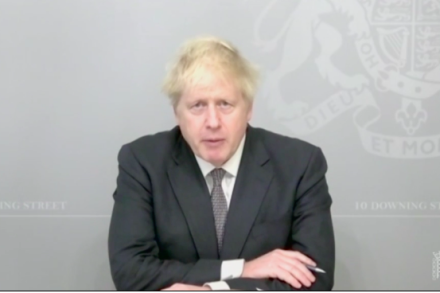
That looked pretty weird. The self-isolating PM attended parliament today from a remote location. His advisers had blundered badly. They might have created a warm, friendly look by seating Boris in a big leather armchair, lit by honey-coloured lamps, and surrounded by portraits of his latest children. Instead they’d emptied out a cubby-hole in a Downing Street attic and stuck him at a desk in a grey suit. He looked like a drug lord being quizzed in a Heathrow interview booth. It’s been a typical week for the PM. He’s lost two key advisers and let a rumour spread that his fiancée is running the country.

Does losing the Labour whip really matter to Corbyn?

Jeremy Corbyn's fan club has reacted with predictable outrage to the decision not to hand him back the party whip. Starmer's refusal to do so was not 'the right thing to do,' said Labour MP Clive Lewis. 'At a time of national crisis, division in the Labour party serves nobody but the Tory Government,' said Richard Burgon. But Mr S wonders whether Corbyn will really be that bothered by the decision? During Labour's last stint in power, Corbyn voted against the whip 428 times. And if you go further back, to when Corbyn first became an MP in 1983, he has voted against the whip 617 times during his time in Parliament.

No. 10’s Christmas trade-offs

The government’s Covid-19 strategy is designed to keep Christmas gatherings on the cards. But what might be the trade-offs? At this morning’s Downing Street press conference on Covid-19 data, Public Health England's Dr Susan Hopkins and deputy chief scientific adviser professor Dame Angela McLean gave some indication of what tactics could be used to make Christmas week feel as normal as possible. Dr Hopkins referenced Sage advice, suggesting that ‘for every day we release, we’ll need two days of tighter restrictions'. (Public Health England has since issued a correction to this statement, saying every day of 'release' will require five days of increased restrictions.

Keir Starmer can never allow Jeremy Corbyn to return

Keir Starmer had no control over whether to end the suspension of Jeremy Corbyn after only 19 days. Yet it was up to him, as party leader, whether or not to restore the party whip to the former leader. This choice represented another big moment for Starmer. He knew he had to do something before PMQs today, lest he hand Boris Johnson a PR coup. Starmer's decision not to give Corbyn back the whip is surely the right one. But for Starmer, here's the bad news: this drama is far from over. Starmer is now in a position where refusing to give the whip back to his predecessor as Labour leader will always be deeply within his political interests.