Politics

Read about the latest political news, views and analysis

The problem with Facebook’s ‘Supreme Court’

He might now be one of the most powerful men in global media, but I find whenever I see a photograph of Nick Clegg, Orwell’s quote about everyone getting the face they deserve by 50 comes to mind. Now 54, the remnants of the boyish idealist are still just about there, but the eyes to me are ledgers of too much unhappy compromise – deadened, I always assume, by the principles he felt forced by David Cameron to sacrifice for personal advancement, and by the amazing decision to see out the remaining years of a career spent failing upwards as Mark Zuckerberg’s lavishly remunerated PR lickspittle. For a decade and more, Clegg positioned himself as the good guy of British politics – radiating sixth form actor star power at every opportunity.
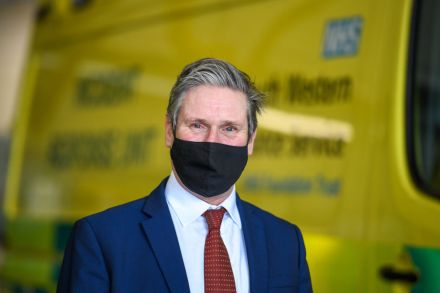
Voting down the police bill could backfire on Keir Starmer

Labour has decided today that it will be opposing the Police, Crime, Sentencing and Courts Bill when it has its second reading in the Commons tomorrow. Some of the party’s MPs say they had been told they would be whipped to abstain on this stage of the Bill, but following the scenes on Clapham Common last night, shadow frontbenchers have rushed to say they will vote against. I understand that the party hadn’t reached a firm position on whipping until today, though there had been discussions within the PLP about what the position would be.

Women have lost faith in the Metropolitan police

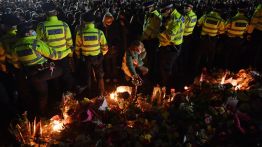
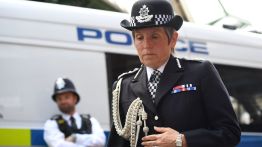
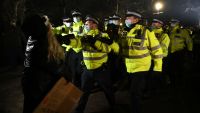
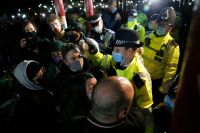
Sarah Everard, a 33-year-old marketing executive living in Brixton, and a ‘wonderful daughter and sister’, was killed earlier this month. Last night, the women trying to remember Sarah at a vigil in Clapham Common were dragged and arrested by Metropolitan police officers. Not only did this show poor judgement, it was an unnecessary and careless use of force. Sarah Everard was just trying to walk home, the women out last night were just trying to mourn her. The Met’s chief, Cressida Dick, said after Sarah Everard’s disappearance that ‘Every woman should feel safe to walk our streets without fear of harassment or violence.’ Yet on Saturday night, her officers disturbed a peaceful vigil, trampling the flowers left in memory of Sarah Everard.

Sunday shows round-up: minister says it’s right the police explain their actions

Victoria Atkins – Police response to Sarah Everard vigil ‘very upsetting’ On Saturday, a vigil was held on Clapham Common in memory of Sarah Everard, a 33-year-old woman who disappeared from London’s streets earlier in March and whose body was later found in a Kent woodland. After talks between the police and the organisers of the event broke down, the vigil was held unofficially, and the Metropolitan Police have been criticised for their conduct in managing the crowd of several hundred people. Andrew Marr spoke to the Home Office minister Victoria Atkins about the incident, which saw scuffles break out and four arrests made: https://twitter.com/BBCPolitics/status/1371036422598189057?

It’s too early to call for Cressida Dick’s scalp

Politics, at its most pathetic, is the Downing Street pack screaming at Prime Ministers, ‘Will you resign?’. At its best, politics and political journalism build up an unanswerable case against a miscreant and take a scalp. The scenes at Clapham Common, last night, were shocking. I have, however, worked in TV news for long enough to know that the cutting room is a minefield. As with vox-pops, the selection and rejection of pictures and voices is one of the most powerful editorial forces in a newsroom. I wasn’t at Clapham Common last night, nor were most in the mass-ranks of social media.

The Met badly mishandled the Clapham Common vigil

A vigil was held last night on Clapham Common to both honour the memory of Sarah Everard and to protest about the societal backdrop to her death. People were told to stay away by the police beforehand – they came anyhow. Unfortunately, the whole thing turned ugly as the London Met responded in a heavy-handed manner, clashing with those who attended, leading to at least five arrests. What made it all the worse was that the Duchess of Cambridge showed up at the vigil, giving it the feeling of an occasion that should have been tolerated. The reaction for some to this incident will be, ‘They were told to stay away’; that those who attended the vigil did so knowing they were going against a public order. I think this response ignores two big issues.

The Independent’s peer review disaster

Oh dear. Ever since Prince Harry and Meghan Markle's bombshell Oprah interview aired, a debate has been underway in the press over allegations of racism in the monarchy. So Mr S read a comment piece on the progressive newspaper-turned-website the Independent with intrigue. With the eye catching title: 'I'm a black British member of the aristocracy – I know what Meghan said was true', Alexander J. Maier-Dlamini the 11th Marquess of Annaville, said that he had no doubt the Duke and Duchess were telling the truth given his own experiences in aristocratic circles. The only problem? His title does not appear to actually exist.

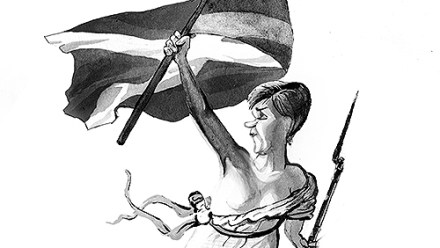
The SNP’s radical assault on freedom of speech

When Humza Yousaf first proposed his Hate Crime Bill, I compared it to the late, unlamented Offensive Behaviour Act. Similarly rushed through Holyrood by the SNP, it sought to rid Scottish football of sectarian behaviour by, among other things, criminalising the singing of certain songs at matches. The Act didn’t specify which songs and so it was left to the discretion of a police officer overhearing a chant to decide whether or not it would be offensive to a reasonable person. Astonishingly enough, this didn’t work out and such was the fan and legal profession backlash that the Act was eventually repealed — in the teeth of SNP opposition. The Hate Crime Bill was, in part, their revenge and it was of a nuclear variety.

In praise of bad mothers

It’s Mother’s Day and, once again, I muse on how little some friends really know one. I never expect anything in a friendship that I can’t return – hence I do not look for loyalty or kindness – but the only area in which I am ceaselessly short-changed is in the business of being seen as one truly is. Michel Polac may have opined that ‘To be loved is to accept to be mistaken for who you are not’, but I like someone who sees me clearly. You can slander my reputation and I won’t turn a hair (I’ll probably put you on the payroll), but if you dare insinuate at this time of year that I must be feeling mis because of my dismal record on that front, I will immediately dismiss you as a sentimental half-wit with the perception of a pit-pony.

How will politicians respond to the policing of the Clapham vigil?

Late last night, politicians started scrambling to express their concern about the policing of a vigil held on Clapham Common in the memory of Sarah Everard. After images of police officers arresting women on the ground emerged, Home Secretary Priti Patel said she found some of the footage ‘upsetting’ and would be asking the Metropolitan Police for a ‘full report’. Labour leader Sir Keir Starmer called the scenes ‘disturbing’ and said, ‘this was not the way to police this protest’. The political implications of last night’s policing decisions are going to be very difficult for both Patel and Starmer. This week, the Police, Crime and Sentencing Bill has its second reading in the Commons.

Britain isn’t racist. Here’s how the Tories can prove it

Is it racist to wonder what skin colour a baby might have? The reaction to Harry and Meghan's bombshell interview appears to suggest some people think it is. Even attempting to weigh up whether claims of racism within the Royal Family hold water or not is deemed to be unconscionable.  'It’s not any of our places to pick apart claims of racism in order to make us feel more comfortable,' according to GMB presenter and slayer of Piers Morgan, Alex Beresford. Labour leader Keir Starmer seemed to agree, setting aside his previous penchant for forensically picking over evidence to declare that Meghan’s experiences were a reminder of the racism that is all around us.

In defence of Shaun Bailey

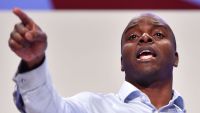
It’s possible I am alone in not minding about Shaun Bailey’s observations during the hunt for poor Sarah Everard. Before her body was found, he tweeted that ‘as a father and husband it breaks me to think that my wife and daughter have to live in fear in their own city. It doesn’t have to be this way. As Mayor, I‘ll ensure that we are working to deliver for the safety of women and girls in London.’ Was that wrong? We saw last night at that catastrophically mismanaged vigil at Clapham Common that women’s safety is a live issue. The subject of women living in fear was all anyone could talk about at the time, and ever since.

Why Great Britain matters even more after Brexit

We in the Middle East have been watching Britain with increased fascination. No, not because of the drama involving Meghan and Harry. But because of how the United Kingdom speaks to us across so many issues.  Its renewed independence with Brexit, the unstinting loyalty of Her Majesty the Queen to duty and country, the miraculous vaccine innovation and delivery success, David Attenborough’s warning to the UN on climate change, JK Rowling’s defence of women.  Despite pioneering change in the modern world, Britain has conserved its long tradition of the rule of law. Boris Johnson, Rishi Sunak, Dominic Raab, and Priti Patel – all children or grandchildren of migrants to Britain — now occupy the highest offices of state. How does Britain do it?

Ruth Davidson’s exit reveals Scottish Tories’ independence secret

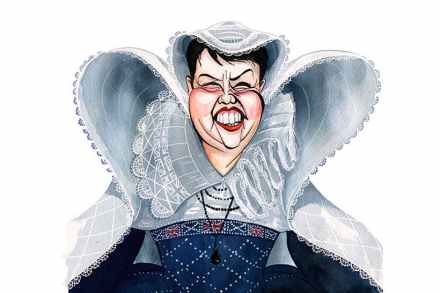
Ruth Davidson has used her final speech to the Scottish Conservative conference to appeal to pro-Union voters. In a video streamed on the first day of the event, the former party leader said Scotland had passed ‘peak Nat’ and that, while the SNP was bound to emerge as the largest party after the May 6 devolved elections, the Tories could still deprive Nicola Sturgeon of an overall majority. This was imperative, she said, so that the Scottish Government could be ‘held in check’. She contended: If there’s no check on an SNP government after May, they will put their obsession with securing a second independence referendum above Scotland’s national interest.

Life as a Lobby journalist

30 min listen

The Lobby refers to the group of political journalists with access to the Palace of Westminster. On this episode, three former Lobby hacks - Fraser Nelson, James Kirkup (of the Social Mobility Foundation) and Francis Elliott (retiring political editor of the Times) - discuss their rehabilitation from the job, the old days of boozing lunches and the impact of social media on the job today, and much more.

Anil Bhoyrul, Lionel Shriver and Melissa Kite

18 min listen

On this episode, Anil Bhoyrul starts by asking if it's racist to wonder what colour your child's skin will be. (01:05) Lionel Shriver is up next, and says the West has used China's totalitarian tactics to suppress Covid. (05:05) Melissa Kite finishes the podcast, and describes her encounter with 'obnoxious Surrey battleaxes'.

Boris Johnson’s new approach to an independence referendum

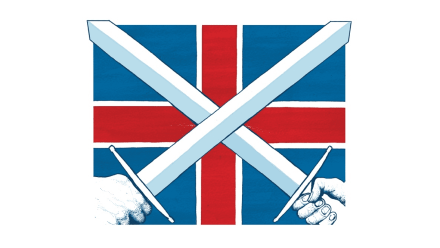
Unionists are finding reasons for optimism when it comes to saving the union. As Nicola Sturgeon comes under fire north of the border over her handling of the Alex Salmond inquiry, 'No' has taken the lead in several recent independence polls. A poll this week for the Scotsman also suggested the SNP is no longer set for a majority in May's Scottish parliament election; instead it predicted a hung parliament. Of course, the SNP could still secure a majority in the upcoming elections. If anything, that is still viewed as the more likely scenario by Tories in Westminster. This is in part why ministers are having to carefully plan their response as to what do in such a scenario.