Alastair Stewart

Alastair Stewart is a former ITV news presenter

It’s too early to call for Cressida Dick’s scalp

From our UK edition

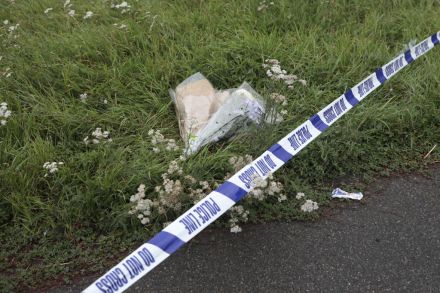
Politics, at its most pathetic, is the Downing Street pack screaming at Prime Ministers, ‘Will you resign?’. At its best, politics and political journalism build up an unanswerable case against a miscreant and take a scalp. The scenes at Clapham Common, last night, were shocking. I have, however, worked in TV news for long enough to know that the cutting room is a minefield. As with vox-pops, the selection and rejection of pictures and voices is one of the most powerful editorial forces in a newsroom. I wasn’t at Clapham Common last night, nor were most in the mass-ranks of social media.
Impartiality and the battle for broadcast

From our UK edition

Two big kites were launched by the Sunday Times that could, should they fly, redraw the broadcasting landscape. ‘BBC critics set for top jobs in broadcasting’ its front-page headline announced. The Prime Minister, it suggested, has offered Lord Charles Moore the chairmanship of the BBC and Paul Dacre, the chairmanship of the media regulator Ofcom. Both are former editors of newspapers of the right and neither has much love for what the BBC has become. For some, it is simply an obscene Tory stitch-up. The former Guardian editor, Alan Rusbridger, was perhaps the most succinct: ‘No process. No joke. This is what an oligarchy looks like.

How Boris’s ‘Operation Moonshot’ can get off the ground

From our UK edition

Jack Kennedy’s 1961 declaration 'We choose to go to the Moon’ was treated with a little more enthusiasm than Boris Johnson’s ‘Operation Moonshot’ pledge this week. Both caused eyebrows to be raised, on cost and practicality. But the former was done, eight years later; the later is, at best, a work in progress – at worst, it is just another pipe-dream. The siren voices, some better informed than others, have already dismissed it on scientific and economic grounds. Others say, like Lenin and the Duke of Windsor, that ‘something must be done’ to scale up rapid and reliable testing if we are to avoid losing a race somewhat more pressing and more vital than the space-race of the 1960s.

We’ve failed the class of 2020

From our UK edition

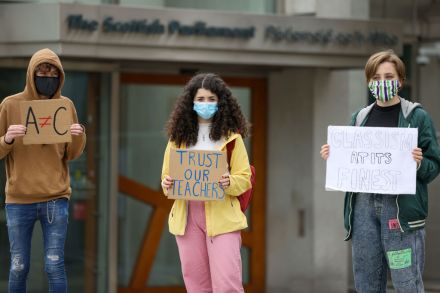
Much of the coverage of today’s exam results is dominated by disappointed Jacks and furious Jills. Determined parents are planning legal action against predicted grades which they say are inaccurate, unfair and result from a Government/Ofqual safety net that is not fit for purpose. While good state schools and many big-name private schools have done well, sixth form colleges have had a torrid time of it. Worst of all, individual candidates are having their predicted grades policed, statistically, by the historic average performance of their schools. It leaves the exceptional pupil, who burst a blood vessel or two to succeed, being down-graded. 'You can’t have done that well because no one else has ever done that well!

Was what I said about travellers offensive?

From our UK edition

Public discourse has become the linguistic equivalent of walking on egg-shells. Fear of causing offence is truncating open and free-ranging thought.  I took a call from a listener – Frankie from Huntingdon – on my Talk Radio show yesterday. He objected to something I'd said. I’d been discussing rural crime with the National Farmers Union (NFU) who had reported a surge due to Covid 19 and continuing greed. Quad bikes disappearing for cash; sheep & lambs, for food. Another caller – Mike from the New Forest – had observed: ‘When the fair happens, we know to lock everything up’. Political interviews and speeches · Alastair Stewart on rural crime I’d agreed.

The deliberate ambiguity over policing face masks

From our UK edition

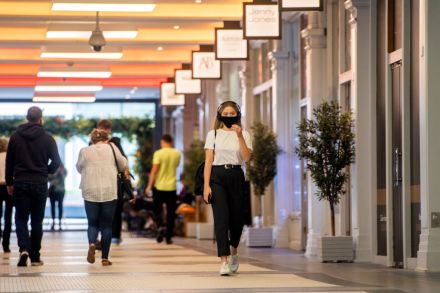
Today is the first day of the Covid-19 pandemic in England when you must wear a mask if you go shopping.  Up to now ministers and health and scientific advisors have played fast and loose with facial coverings. Judgements on their merit and usefulness have waxed and waned from the ‘yeah, but no, but yeah’ of some, to the complex virology of ‘better on than off’ of others. It was a mess. But now, nearly six months on, they are a legally enforceable must. Failure to wear one could land you with a £100 twang of a fine on the elastic on the mask you should have donned before setting off to the shops - or the bank, or any other enclosed space of exchange or consumption.

Boris’s TV briefings could end the lobby pantomime

From our UK edition

The daily coronavirus briefings from Downing Street were wildly popular by one measure, drawing in millions of viewers, but were they any use? Like them or loathe them, it seems that we will be seeing plenty more of them. Boris Johnson has decided that, from October, the 'briefings sessions’ should be televised. Journalists and former spin doctors from all sides have been hailing this as a move which will mean more transparency. But we can also expect to see many of the ridiculous stunts that plagued the coronavirus briefings. Political correspondents often asked the same questions, most seeking a ‘gotcha’ moment in relation to something that should have been done sooner, or better.

How the High Street can bounce back after Covid

From our UK edition

The death of the High Street has been greatly exaggerated before, but could this really be it for our town centre shops? The ease of Amazon has made life under lockdown bearable and has tempted people away from popping to the shops. As a result, more and more shops are boarded up. Even large companies aren't immune, as demonstrated by the collapse into administration of shopping centre giant Intu. But there might still be a way for our High Street shops to defy the odds. When I ventured out to the shops last week for the first time since March, I was anxious: I knew it wasn’t going to be like Bournemouth beach or the streets outside Anfield but I’d no idea quite what awaited me.

Emily Maitlis and the ‘Foxification’ of Britain’s broadcast media

From our UK edition

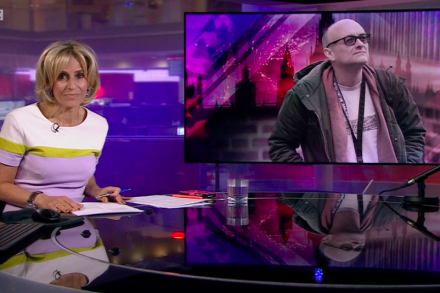
Was Emily Maitlis right or wrong to offer her views on the Dominic Cummings's row? The BBC decided she overstepped the mark. But while the corporation's investigation was concluded within a few hours of the programme being broadcast, this isn't a debate that will go away any time soon. And the fallout from this row makes me worry about the direction in which Britain's broadcast media is heading. A constant of Europe's post-1989 'Velvet revolution', which I helped cover for ITN, was the way those rising up against communism fought so hard for control of TV and radio stations. Information is power; control of it helps secure it.