Politics

Read about the latest political news, views and analysis

Tory nerves grow over Sunak’s budget

14 min listen

The Chancellor is expected to announce tax hikes in next week's budget as he looks to bolster the public purse and reassure markets. With capital gains and cooperation tax in his sights, how will the decision go down with Tory MPs? Katy Balls speaks to James Forsyth and Kate Andrews.

Tory nerves grow over Sunak’s Budget

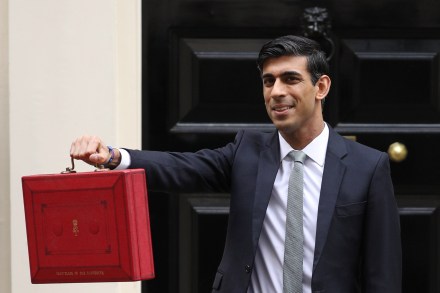
How will Rishi Sunak's Budget land with Tory MPs? As reports circulate in the press that the Chancellor is considering raising corporation tax and capital gains tax as well as bringing in a stealth tax for pensioner savings, nerves are growing among Conservative politicians.  The Northern Research Group of MPs, chaired by Johnson's old friend Jake Berry, have called on Sunak not to tax his way out of pandemic debt by raising business taxes in the budget. Tory MPs such as David Davis have warned they could refuse to vote for it if the reports are true. So who will Sunak listen to? Meanwhile, former prime minister David Cameron has popped up to say tax rises 'wouldn’t make any sense at all', comparing the Covid crisis to a wartime situation.

Why I joined the trans debate

It was easy to miss because even at the best of times the House of Lords doesn’t grab public attention. But this week, something remarkable happened in parliament. In narrow legislative terms, peers have forced the government to accept amendments to the Ministerial and Other Maternity Allowances Bill. The Bill will make it possible for a minister who is pregnant — such as Suella Braverman, the Attorney General — to take leave from work without resigning ministerial office. That should be uncontroversial, but the language of the Bill left something to be desired. The Bill passed the Commons earlier this month using phrases such as ‘the person is pregnant’ and ‘the person has given birth to a child’.

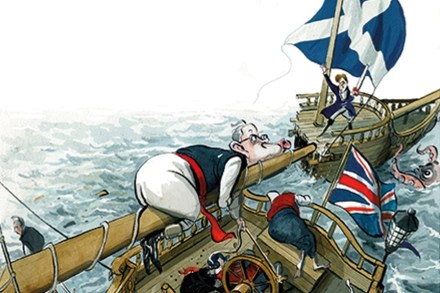
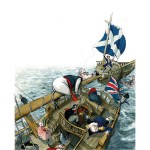
The break-up: Is Boris about to lose Scotland?

40 min listen

Could No. 10 infighting lose the Union? (00:40) When should the government tell us how to behave? (13:20) Can a relationship work without hugging for a year? (31:30) With The Spectator’s deputy political editor Katy Balls; The Spectator’s Scotland editor Alex Massie; vice chair of Ogilvy and Spectator columnist Rory Sutherland; Deirdre McCloskey, Professor of Economics, History, English and Communications at University of Illinois at Chicago; writer Rob Palk; and journalist Emily Hill.  Presented by Lara Prendergast. Produced by Max Jeffery and Charlie Price.

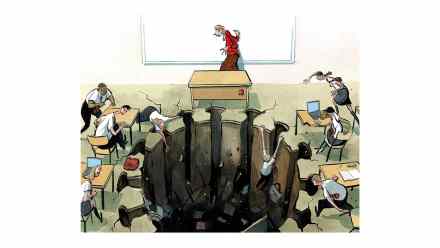
Will teacher assessed grades work?

17 min listen

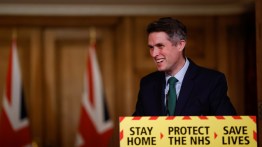
Teachers will assess pupil's grades next year, the Education Secretary said today. Has the decision come too late, and will it disadvantage students? Cindy Yu speaks to James Forsyth and Katy Balls.

Spare a thought for students

Spare a thought for those due to sit their A-Levels next summer. They have already had considerable disruption to their education. But today’s announcement that this year’s A-Level grades will be done by teacher assessment risks compounding their misfortune.  It means that the current lower sixth will be competing for university places — and jobs — against those who have received teacher assessed grades, which are bound to be more generous than those that an exam would produce. (For all sorts of understandable reasons, teachers will want to give their pupils the benefit of the doubt when awarding potentially life-changing marks). The disadvantage the current lower sixth cohort is being put at is so obvious that the government will have to address it.

Alex Salmond’s stubble trouble

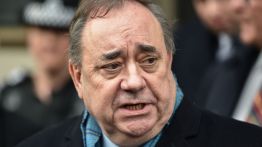
For most of the past year, Alex Salmond has been engaged in a vicious and high-profile war against his successor, Nicola Sturgeon, with Salmond suggesting that the Scottish establishment has conspired against him to keep him out of public life and have him jailed. Now it appears that Salmond has been waging war against a Scottish newspaper as well. Today the press regulator Ipso published details of a complaint made by Salmond against the Scotland on Sunday, sister paper to the Scotsman. Salmond had taken issue with an article published by the paper in April in the aftermath of his criminal trial – at which the former First Minister was acquitted on all counts.

The EU is stepping up its raid on the City of London

It is not usual for the Governor of the Bank of England to ask permission to make a statement about a completely unrelated issue when giving evidence on inflation to the Treasury Select Committee. So we knew it was serious when Andrew Bailey yesterday told us his concerns about Brussels trying to force banks to relocate their euro clearing from London to the EU.  It is not a surprise that the EU wants to do this – France has been pushing for this for years before Brexit, leading to it losing a case to the UK at the European Court of Justice – but what is concerning is the desperate extremes the EU seems prepared to go. It was, Mr Bailey said, bordering on the illegal.

Prepare for the next A-level fiasco

When I was at school, the best grade you could hope to achieve on your termly report card was A5, with A being the highest grade for attainment, and 5 being the lowest grade for effort. I expect there will be a lot more students hoping for, and outright expecting, their own A5s this summer.  In light of the news that GCSEs and A-levels exams will be cancelled this year, Ofqual has now confirmed that grades will be decided by teachers. Schools can use mock exams, coursework and essays, or assessments set by exam boards, but these are optional, will not be taken in exam conditions, nor decide final grades. Make no mistake: this is going to be a disaster.

It’s a pity that both Alex Salmond and Nicola Sturgeon can’t lose

Henry Kissinger’s sardonic appraisal of the Iran-Iraq War is increasingly applicable to the war between Alex Salmond and Nicola Sturgeon: it is a shame they can’t both lose. Disinterested observers, however, are under no obligation to pick a team. It is wholly possible neither protagonist has offered a convincing version of events. Treating Salmond’s claims sceptically imposes no requirement to swallow Sturgeon’s and, indeed, vice versa. Salmond’s allegations are so extraordinary they risk seeming incredible. It is one thing to allege that senior officials within the SNP – including but not limited to Peter Murrell, the party’s chief executive and Nicola Sturgeon’s husband – wished to destroy Salmond’s reputation.

The cautionary tale of the Christian teacher who criticised Ruth Davidson

When Richard Lucas, a maths teacher, uploaded a video criticising former Scottish Conservative leader Ruth Davidson for having what he called a 'fatherless child', he anticipated some controversy. But, nearly three years on, Lucas is still shocked by the reaction it sparked. Lucas, who is a Christian, was hauled in front of the General Teaching Council for Scotland. Finally, this month, a panel threw out allegations that his comments were 'offensive and discriminatory' and allowed him to continue to work as a teacher.

Blair’s back – and advising Tories on vaccine ID cards

When the Prime Minister mentioned ‘Covid status certification’ as part of his route back to normal life, one man must have enjoyed the moment. For Tony Blair it was yet one more little victory in his UK comeback tour, made all the sweeter because Boris Johnson was once a principal opponent of the idea of any ID card system. Blair has been pushing vaccine passports like nobody’s business. A recent paper published by his Institute for Global Change advocated that we carry ‘digital health passports’ on our smartphones, which we could scan on entry to bars, theatres and other places. If you don’t have a smartphone, the paper suggested, the venue could take a photo of you instead, and check it against a database of people who have been vaccinated.

The break-up: is Boris about to lose Scotland?

At the stroke of five o’clock last Friday, the new head of No. 10’s Union unit was due to brief government aides on the robust new strategy to counter the SNP. It was urgently needed: campaigning for the Scottish parliament election starts in a few weeks and if Nicola Sturgeon wins a majority — as looks likely — she’ll demand another independence referendum. Even if Boris Johnson refuses, the SNP will attempt to push on regardless. Any plan to save Britain must be put into action sooner rather than later. But an hour or so before the briefing, an email went around to say it was cancelled. What’s more its author, Oliver Lewis, had resigned, just two weeks into his job as head of the unit.

What will life look like after 21 June?

‘Alas’ is a word used many times by Boris Johnson during the pandemic. It is how he prefaces announcements that the data is getting worse and so the government has to impose further restrictions. In recent weeks, though, the numbers have been going in the right direction. The first stage of the vaccination programme was completed two days ahead of schedule. For the first time in this crisis, government targets are being moved forward, not back. Early results seem to show that the jabs are more effective than expected: a Public Health Scotland study suggests that the Oxford-Astra-Zeneca vaccine, the workhorse of the UK immunisation programme, cuts the risk of hospitalisation by 94 per cent. At the same time, take-up has been higher than predicted.

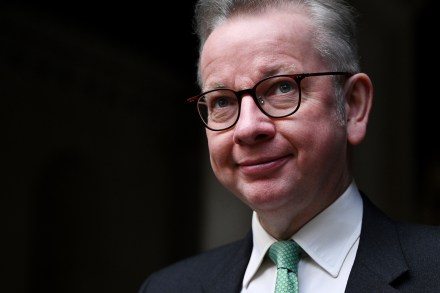
Will Gove greenlight immunity passports?

19 min listen

Michael Gove will lead a government review into immunity passports. Does his appointment make IDs a foregone conclusion, what will they look like, and when can we expect to see their domestic rollout? Katy Balls speaks to Fraser Nelson and James Forsyth.

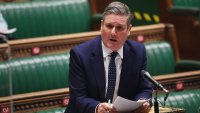
Why is Keir Starmer so bad at PMQs?

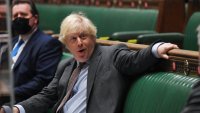
Sir Keir is having a wobble. That’s obvious. The Labour leader holds an equestrian title, so he naturally feels at home on his high horse. Today at PMQs he loftily commanded Boris not to raise taxes in the budget. That was hilarious. A Labour leader begging a Tory Prime Minister not to implement Labour policy. If Sir Keir had produced a viola from his trousers and played ‘Waltzing Matilda’ he couldn’t have looked more ridiculous. Boris was so stunned that he could barely speak. ‘Well, I don’t know about you Mr Speaker,’ he bumbled. Then he pointed out that in 2019 Sir Keir had ‘stood on a manifesto to put up taxes by the biggest amount in the history of this country.

Are lie detector tests for terrorists really a good idea?

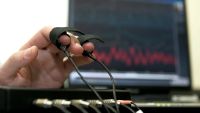
You might have assumed that the polygraph (or ‘lie detector’ as it is commonly known) was something used only for entertainment on the Jeremy Kyle Show. It is, after all, little more than a relic from the 1920s when people turned to psychic mediums and truth-telling machines in the misguided search for certainty after the horrors of the Great War. So it might come as a surprise that the polygraph has been used by the penal system in England and Wales for more than a decade. The Probation Service, in fact, uses them to monitor sex offenders released on licence. In the past five years alone, 5,228 mandatory polygraph examinations have been carried out on 2,249 sexual offenders, according to the Home Office.

PMQs: Boris sidesteps Starmer’s bait

Keir Starmer tried to use today’s PMQs to set up some future attack lines. First, he again tried to drive a wedge between Boris Johnson and the Covid Recovery Group, asking him to criticise the statements that members of it have made denouncing the lockdown easing plan.  Unsurprisingly, Johnson didn’t take the bait. But if the data continues to surprise for the better, these MPs will become more vocal in calling for a faster end to restrictions. Second, Starmer pressed Johnson to rule out tax rises for families or businesses — an attempt to lay down a marker before next week’s Budget where Rishi Sunak is predicted to announce an increase in corporation tax. Johnson again sidestepped. One can see what Starmer is trying to do on corporation tax.