Politics

Read about the latest political news, views and analysis

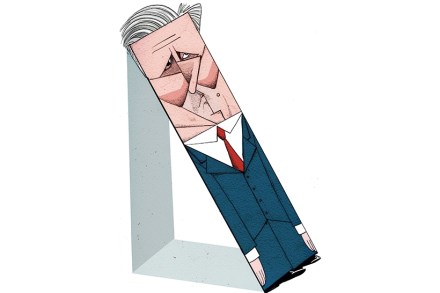
Why Starmer is no modern day Beveridge

15 min listen

Today's speech from the Labour leader was billed to be 'Beveridge-style'. On the podcast, Kate Andrews tells Katy Balls and James Forsyth why it was nothing of the sort, and they strategise what Starmer should have said.

Can Keir Starmer cut through?

It's been a difficult few weeks for Sir Keir Starmer with left-leaning commentators and MPs lining up to criticise the Labour leader. Among recent complaints include the idea that Starmer plays it too safe, has not held the Tories to account despite the high Covid death toll and has failed to make much of an impression on the general public. The polls also point to problems – with Savanta ComRes finding Boris Johnson has had a 5 point rise on the question of best Prime Minister in its monthly political tracker. Today Starmer attempted to turn the page by setting out his approach on the economy.

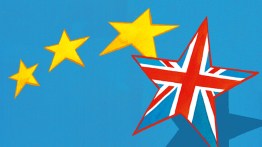
The EU needs to stop punishing Britain for Brexit

There have always been those on the European side who believe that for the EU project to succeed, Brexit must fail and must be seen to fail. So it is a problem that the first major act of Brexit Britain — going its own way to obtain and approve vaccines — appears to have been a success. For this reason, EU leaders must cast doubt on the achievement. As I say in the magazine this week, look at how Clément Beaune, Macron’s Europe Minister, went out of his way to tweet out his criticisms of the UK approach. (To be fair, there is a Brexiteer version of this hostile sentiment. You can find those on the Tory backbenches who think that Britain’s success requires the EU’s failure.

Starmer’s fundamental economic mistake

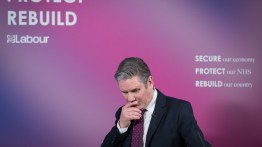
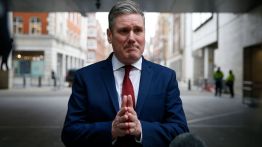
Keir Starmer’s speech on economic recovery, delivered at Labour’s Southside HQ on Thursday, was hyped as one of the most pivotal moments of his leadership so far. A Labour insider told Politico it had been 'six months in the making with a huge amount of work going into it’. It was designed to establish a clear ‘fork in the road’ between the Conservatives’ and Labour’s economic visions, both in the short term — leading up to the Budget next month — but also in the future, as Starmer pledged to shape the economy ‘to look utterly unlike the past’. But for a speech that was supposedly months in the making, there was surprisingly little substance.

There is something rotten in Scottish politics

It is now two years since Nicola Sturgeon accepted the need for a parliamentary inquiry into how, and why, her government’s investigation into Alex Salmond was so thoroughly tainted by apparent bias it was unlawful.   Ever since then, she has repeatedly promised that both she and her government will fully co-operate with the Holyrood committee — set up to investigate the Scottish government’s response to claims of sexual misconduct against her predecessor. Many hollow promises have been made in the still-short history of the Scottish parliament but few have been emptier than this.   It is necessary to insist upon what the committee is not investigating: it takes no view on the complaints made against Alex Salmond.

Vaccines are working – so why isn’t society reopening?

When the Prime Minister sets out his ‘roadmap’ for easing Covid restrictions on Monday, it will be against a backdrop that is both better and worse than could have been imagined six months ago. Worse because we have gone on to suffer a second wave of the disease that has seen almost as much excess death as the first wave. But better in the sense that we have vaccines that are in use and more effective than many hoped, with first doses given to 15 million people — almost a third of the adult population. On several occasions last year, Boris Johnson referred to vaccines as the cavalry coming over the hill. The cavalry is here, and most of those at serious risk of dying from Covid are being inoculated.

It is time to make friends with the EU

On Monday morning, Clément Beaune, Emmanuel Macron’s Europe Minister, clipped out the section of his media interview criticising Britain’s vaccination strategy and posted it on Twitter. He declared: ‘What is happening in the UK is not something I envy. It is a strategy of massive acceleration which also means taking more risks because the Covid situation is much worse there.’ Such remarks are becoming something of a habit for Beaune. He fired off tweets lambasting Brexit in the days after the deal was done and grinned broadly in an interview this year when he was questioned about reports that British cabinet ministers had asked him to tone it down on his Twitter account. Macron has also been critical of the UK vaccination programme.

What’s behind David Frost’s promotion?

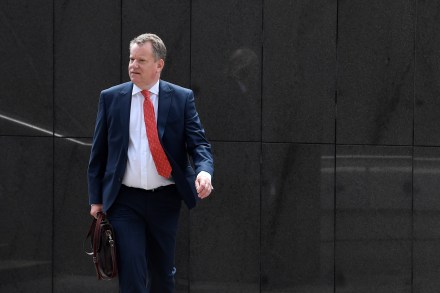
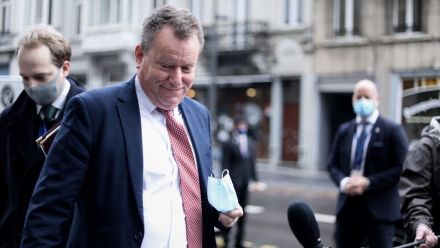
The news that David Frost is to be a Minister of State in the Cabinet Office and full member of cabinet has set the cat among the pigeons in Westminster this evening. The UK's lead Brexit negotiator had previously been lined up to be national security adviser. However, it was eventually decided that he did not have the right experience to take on the role and he was instead appointed as Johnson's representative on Brexit and International Policy. That Frost is to join the cabinet is a significant promotion — and it's a promotion that is already causing ripples across government with various briefings doing the rounds on reported unrest in Downing Street. So, what's going on?

Labour’s damning silence on Brexit

The Labour party has updated the old metaphysical question: ‘If a tree falls in a forest and no one is around to hear it, does it make a sound?’ It ought to be protesting on behalf of all who are suffering because of Brexit. It ought to be throwing the government’s broken promises back at it and ramming home the message that voters cannot trust Boris Johnson. And yet, listen as hard you like, you cannot hear a sound. If no one can hear Labour opposing, is it really an opposition? The Brexit debacle is drowning once viable business sectors in bureaucracy and threatening what peace and prosperity Northern Ireland enjoyed.

Watch: Boris Johnson’s OJ Simpson gag

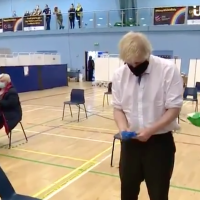
Boris Johnson was in Wales today visiting a mass vaccination centre – as part of the government's victory lap after meeting its target of giving 15 million people their first vaccine dose by mid-February. The occasion was perhaps the perfect opportunity to highlight the good work the government has done on vaccines in recent months. The Prime Minister though appeared to have somewhat darker preoccupations on his visit.  While struggling to put on a disposable glove at the centre, the PM joked that he felt like OJ Simpson, who infamously ‘struggled’ to put on a glove at his murder trial. Mr S isn't sure that's a comparison Number 10 aides will be wanting to encourage in future... Watch here: https://twitter.

Where are Keir Starmer’s ideas coming from?

Exactly what a Keir Starmer government would look like in terms of policy still remains a mystery to most people. During his leadership campaign Starmer ran on a platform consisting of ‘ten pledges’, which were essentially just reheated Corbynism. Without publicly disavowing them, Starmer seems to have been trying to move away from these pledges toward something that represents a solid break with his predecessor since winning the leadership contest. Yet we still don’t have a clear idea on what that would look like in real terms. Starmer has defined himself so far not on who he is, but rather, who he is not. To this end, Starmer’s people are talking about a ‘policy blitz’ in the coming weeks.

Will the economy really rebound after lockdown?

Bank of England chief economist Andy Haldane last week described the UK economy as a ‘coiled spring’ waiting to rebound just as soon as lockdown restrictions are eased. But is it a spring like the one on which Zebedee from the Magic Roundabout used to bounce around, or is it like a Slinky – the toy you place at the top of the stairs and watch, fixated, as it furls and unfurls itself right down to the bottom? Haldane, it is fair to say, sees it much like the former. He describes the economy as full of 'pent-up financial energy'. While the bank sees lockdown number three causing output to fall by 4.2 per cent in the first quarter of 2021, thereafter it sees a steady recovery.

The SNP’s education ‘stitch-up’

For anyone who assumes the SNP government’s secrecy and obstruction is limited to inquiries into itself and its past leaders, the fate of a major report into Scottish education is an instructive tale. Curriculum for Excellence (CfE), introduced in 2010, was the SNP’s grand idea for better learning in Scottish schools. Its ‘progressive’, ‘child-centred’ philosophy was contentious among teachers but was eagerly bought into by educationalists, educrats and teachers’ unions. Dissenters were generally caricatured as stuffy old reactionaries who wanted children bolted down in rows, facing a blackboard, as an authoritarian dominie catechised them in the rote memorising of formulae, dates and rules.
Lansman plots his Cornish comeback

Oh, how the mighty have fallen. Five years ago, Tony Benn's former bag carrier was staging the most extraordinary Labour coup, ushering in the disastrous Bennite restoration that was Jeremy Corbyn's rule.  Then he went on to found Momentum — Labour's party within a party, the vanguard of the proletariat that would keep Labour's wayward liberal MPs on the narrow path of socialism. That path so nearly reached its conclusion at the 2017 general election when Corbyn came within a few thousand votes of No. 10. Since then, catastrophe. Labour obliterated, the leadership lost to a competent social democrat.

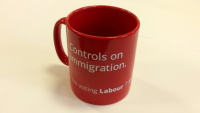
What Starmer can learn from Miliband’s mug

Since becoming Labour leader, Keir Starmer has single-mindedly been trying to persuade red wall voters that Labour is ‘patriotic’, just like them. He thereby hopes to clear away those cultural barriers that have arisen between Labour in the north and midlands where voting for the party used to be almost instinctive. As he said in his first leader’s speech back in September, Starmer wants red wall voters to ‘take another look’ at Labour now it is under his leadership: he wants to show them that it is no longer the party of Jeremy Corbyn and his supporters.

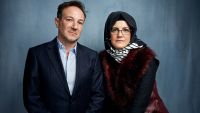
Bryan Fogel on turning Jamal Khashoggi’s murder into a film

Bryan Fogel seems to have done it all. It’s hard to think of a showbiz figure with a more varied career. He began as a stand-up and moved to play-writing and then to directing movies. In 2013, he reinvented himself as the producer of hard-hitting documentaries that focus on international scandals and cover-ups. He talks to me via Zoom from Los Angeles about his latest movie, The Dissident. ‘I was seeking what my next film was going to be – something that spoke to human rights and freedom of expression. It checked all those boxes’. The subject is the death of Jamal Khashoggi, the dissident journalist who was murdered in the Saudi embassy in Istanbul in 2018. ‘He’d left his country to be able to speak freely.